
Albert Fentress
Homicide Edward Charles Allaway
Homicide · USA · 1976
Edward Charles Allaway Edward Charles Allaway was found not guilty by reason of…
7 victims
Edward Charles Allaway
Homicide · USA · 1976
Edward Charles Allaway Edward Charles Allaway was found not guilty by reason of…
7 victims
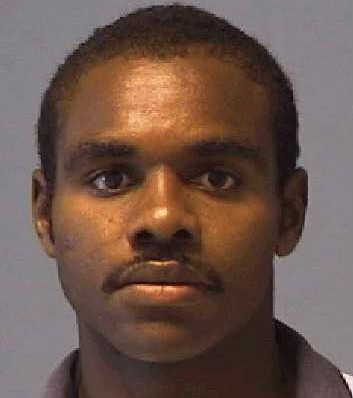 Clinton Bankston
Homicide · USA · 1987
15 August 1987 — Ann Morris (63), her sister Sally Nicholson (59), and Sally’s…
5 victims
Clinton Bankston
Homicide · USA · 1987
15 August 1987 — Ann Morris (63), her sister Sally Nicholson (59), and Sally’s…
5 victims
 David Francis Brom
Homicide · USA · 1988
David Francis Brom (born October 3, 1971) killed his parents, brother, and sist…
4 victims
David Francis Brom
Homicide · USA · 1988
David Francis Brom (born October 3, 1971) killed his parents, brother, and sist…
4 victims
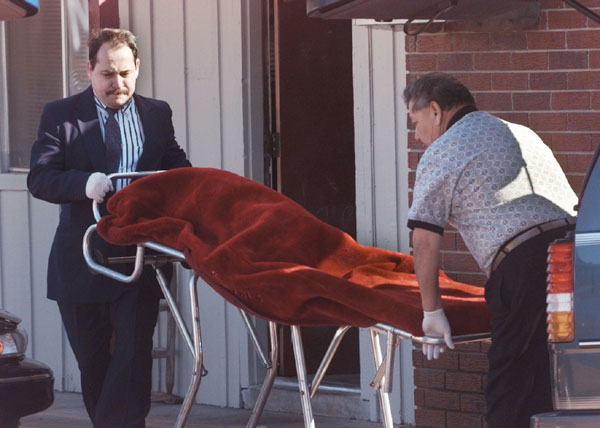 Edwin Bell
Mass murderer · USA · 1999
February 12, 1999 — Edwin Bell shot his estranged girlfriend, their three young…
5 victims
Edwin Bell
Mass murderer · USA · 1999
February 12, 1999 — Edwin Bell shot his estranged girlfriend, their three young…
5 victims
 Dena Schlosser
Homicide · USA · 2004
Dena Schlosser (born 1969) lived in Plano, Texas. She was the mother of Margare…
1 victim
Dena Schlosser
Homicide · USA · 2004
Dena Schlosser (born 1969) lived in Plano, Texas. She was the mother of Margare…
1 victim
 Debra Lynn Starr
Murderer · USA · 1984
Debra Lynn Starr was a Michigan woman involved in a 15-year-old murder mystery.…
1 victim
Debra Lynn Starr
Murderer · USA · 1984
Debra Lynn Starr was a Michigan woman involved in a 15-year-old murder mystery.…
1 victim
 Mark Alan Smith
Serial killer · USA · 1966
Mark Alan Smith was involved in multiple killings and was sentenced to a total…
12 victims
Mark Alan Smith
Serial killer · USA · 1966
Mark Alan Smith was involved in multiple killings and was sentenced to a total…
12 victims
 Joe Hill
Murderer · USA · 1914
Joe Hill was a Swedish-American labor activist, songwriter, and member of the I…
2 victims
Joe Hill
Murderer · USA · 1914
Joe Hill was a Swedish-American labor activist, songwriter, and member of the I…
2 victims
- Gender
- male
- Country
- USA
- Location
- Poughkepsie, New York, USA
- Date of birth
- 1942
- Age at first offence
- 37
- Characteristics
- cannibalism, rape, mutilation
- Victim profile
- Paul Masters, 18 (high school student)
- Method of murder
- Shooting
- Date(s) of murder
- August 20, 1979
- Years active
- 1979
- Date of arrest
- —
- Status
-
Acquitted / overturned
Found not guilty by reason of insanity in 1980 in the killing of Paul Masters; Suffolk County jury decided in April 1999 that Albert Fentress should go free but State Supreme Court Judge Harry E. Seidell set aside the verdict on June 11, 1999 and ruled Albert Fentress must remain in psychiatric care; June 21, 2006 was set as a date for Fentress to try again to obtain release
Case record: Albert Fentress
Background
Albert Fentress was a former school teacher and later lived in psychiatric hospitals. He was 57 during the April 1999 jury proceedings.
Albert Fentress was born in 1941, the oldest of three children, in Brooklyn. His father believed in physical punishment, and Fentress had an overall normal childhood.
At 12, he moved with his family to Long Island and continued in school until becoming one of the top 10 in his high school graduating class. He earned master’s degrees in history and education and became one of the best reputed high school teachers in the area where he lived. He lived alone and was a meticulous housekeeper. He drove a Cadillac and wore a Rolex watch. He owned a very valuable stamp collection.
Although he was beloved as a teacher, he did not have a romantic relationship or many friends. He described the most depressing point of his life as when his Cadillac was in the shop being fixed.
When he was 35, his house was robbed and his stamp collection was stolen. He believed a particular high school student had done it and lobbied to have him arrested. The student’s school friends found out and soon Fentress’ home was a target for vandalism and harassment. He obtained a gun permit.
After his arrest, he told interviewers that he wrote in his journal a series of events that came to him while he was in a dissociative state and, upon waking from it, was so horrified by what he’d written “like it was that of another person,” that he burned it immediately. Those events later took place at Fentress’ home.
In his neighborhood, while some juveniles were running from police officers, Fentress invited one boy in and won his trust with a beer. He then gained leverage on the boy, tied him up and tried to sexually assault him. When Fentress was unsuccessful, he castrated the boy, cooked and ate his genitals, then shot him and dragged him upstairs.
Fentress claimed that he woke up from what he said was another dissociative fugue. He called a friend, and the friend called the police, and Fentress was taken into custody.
Years passed after he was found not guilty by reason of insanity, and by the 1990s he was a favorite patient in the New York state forensic facility. He developed great computer skills and was teaching other patients and staff. He had suffered no more episodes. His official diagnosis was narcissistic personality disorder, obsessive compulsive disorder and dissociative fugues. The only time he received antipsychotic medication was in jail prior to his trial.
Because he was an outstanding patient, his treatment team, several psychologists, and several outside consultants suggested he be granted unaccompanied passes into the community. He was already out and about with an escort.
In 1997, John Oldham, M.D., Psychiatry and Behavioral Sciences chairman and professor, who worked in New York at the time, was asked by the state to review Fentress’ records and provide an opinion. Oldham was concerned that Fentress was not on medication and was unsure what could trigger another psychotic episode, saying: “If he couldn’t handle kids slashing his screens and burning his lawn, then how could he possibly handle the likely public reaction to his release, after he'd been demonized in the media as 'New York's own Hannibal Lector?'”
Fentress exercised his right to a jury trial for release. Oldham testified as an expert witness of the state, and he was described as disagreeing with recommendations of others within the same state agency. Oldham believed Fentress suffered from malignant narcissism, was not a candidate for release and was also still potentially dangerous.
In a retrial in the appellate court, the state called a witness who testified that, when he was a 10-year-old neighbor of Fentress, he was sexually molested on numerous occasions by Fentress. Fentress had not revealed this information before.
The offence
Paul Masters was an 18-year-old high school student. He was killed on a Sunday evening in August 1979 after wandering into Albert Fentress’s backyard.
Fentress confessed to the crime the day it happened. He told officials that with scenes from the movie “Deliverance” playing in his head, he lured the teen-ager into his basement, tied him to a post, sexually abused and mutilated him, shot him twice in the head, and cooked and ate parts of his body.
Fentress wrote a script for a torture and killing two days before, but was mortified by his own thoughts and burned it.
During the later jury trial that ended in April 1999, Fentress’s lawyer, Kim L. Darrow, did not ask him about the events of that August evening, so lawyers for the state were not allowed to bring it up on cross examination.
Investigation
No specific investigation steps were described beyond Fentress’s confession.
Arrest
Fentress was taken into custody after police were called, as described in relation to his earlier events in his dissociative state, when a friend called the police after Fentress called a friend.
Trial
Fentress was found not guilty by reason of insanity in 1980 in the killing of Paul Masters. Paul Masters was described as being killed in August 1979.
In April 1999, Fentress contested a decision by state judges to extend his confinement at Pilgrim State Psychiatric Center in Brentwood. A Suffolk County jury decided that he was no longer a danger to society and should go free.
After deliberating for more than six hours over two days, the six-person jury answered two questions posed by the court:
- Is the petitioner, Albert Fentress, presently suffering from mental illness, where he requires care, treatment and rehabilitation? The jury answered yes, by a vote of 6 to 0.
- Does Albert Fentress require inpatient care and treatment due to a real risk of substantial physical harm to his well being or others? The jury answered no by a vote of 5 to 1.
In effect, the jury decided that Fentress was still mentally ill, but not so ill that he had to be committed, as stated by Kim L. Darrow.
The jurors heard expert opinions from both sides: four for the defense, who said he was ready to resume life in society, and four for the prosecution, who said they believed Fentress’s mental demeanor had not changed in 18 years.
The jurors were told that Fentress’s therapists allowed him to walk freely about the hospital grounds, which were not enclosed by fence or barbed wire.
After the proceedings in April 1999, Fentress was returned after court proceedings to his room at Pilgrim State Psychiatric Center in Brentwood while Judge Harry E. Seidell considered a motion by prosecutors to overturn the jury’s decision.
At the time he was taken out of the courthouse in Riverhead without handcuffs, he was described as dressed in tan slacks, a blazer and a dark blue tie. He cleared his throat and said: “I am right now just so grateful to the jury and judge,”
Kim L. Darrow, of the state’s Mental Hygiene Legal Service, called the verdict a victory and said: “It holds out the promise that if a patient follows the plan, the rules, the treatment, some time your day may come” “But patients end up spending more time in the hospital than they ever anticipated. The person is spared a criminal conviction but tends to get a long confinement.” “Once he's not dangerous, he's supposed to be let go. I think he's been ready for a long time.” “We put our trust in the jury system and it worked. They did their job.”
The Dutchess County District Attorney’s office and the State Attorney General’s office argued that 20 years of therapy had failed to rehabilitate Fentress. William V. Grady, the Dutchess County District Attorney, said: “The man is a cannibal.” and “It is an utter outrage that a killer who is still mentally ill will be released into a community without supervision to wander about freely. It is beyond my comprehension.”
Governor George E. Pataki responded with a statement saying: “Justice can never be achieved as long as individuals like Albert Fentress can commit vicious crimes and hide behind an insanity plea to avoid the prison time they deserve,” and: “The Fentress case illustrates the glaring need to reform our state's laws that allow criminals not only to escape conviction and punishment but to avoid confinement in secure facilities.”
Sentencing
A conventional criminal sentence was not described. Fentress was confined to mental hospitals after the 1980 not guilty by reason of insanity finding.
Appeals
A motion by prosecutors sought to overturn the Suffolk County jury’s April 1999 decision.
On June 11, 1999, Judge Harry Seidell set aside the jury verdict. He ruled that for jurors to believe Fentress was mentally ill but not in need of institutional care, they would have to believe he “would somehow, on his own, develop self-control and not pose a danger to others,” and the judge concluded that Fentress remained a danger and should not be released.
A later statement attributed to the State Attorney General’s office in connection with the ruling stated: “Given the unspeakable crime which he committed, and his mental condition, we feel Fentress remains a danger and therefore should not be released,” said state Attorney General Eliot Spitzer.
Kim Darrow disagreed and said: “Once he's not dangerous, he's supposed to be let go,” and: “I think he's been ready for a long time.”
Fentress was granted a jury trial in April after he contested a decision to extend his confinement.
Fentress was scheduled to try again to obtain release on June 21, 2006.
Outcome
Barring a motion overturning the jury’s decision and a potentially lengthy appeals process, Fentress could have been released into a halfway house with little supervision by this fall, as described before the June 11, 1999 ruling set aside the jury’s verdict.
The June 11, 1999 ruling required him to remain in psychiatric care.
In 2002, a judge ordered Fentress transferred from King’s Park Psychiatric Center in Suffolk County, where he had lived for many years, to a locked ward at Mid-Hudson Forensic Psychiatric Center in Orange County. The judge did so after two witnesses testified that Fentress had molested them shortly before he killed Masters.
Fentress had never acknowledged the incidents during his more than 20 years of therapy, as stated in relation to the 2002 transfer decision.
Aftermath
After the April 1999 jury decision, the victim’s father, Burt Masters, said he learned of the jury’s decision in a phone call from the Dutchess County District Attorney while he was mowing his lawn in San Jose, Calif. Burt Masters said: “I wasn't angry with him, or the jury or anyone involved in this,” and “I'm angry with Mr. Fentress. He always seemed he was more interested in himself. I never heard him say he was sorry for what he did to my son. I think he's always just been sorry for himself.”
Some people in Poughkeepsie said they were uneasy. Ozell Daniels, 62, a retired psychiatric health-care worker who was buying a paper in downtown Poughkeepsie yesterday, said: “He knows himself better than we do, but you fear them letting people like that back into the community,” and “I worked at the hospital. They're never cured.”
Timeline
- 1980 — Albert Fentress was found not guilty by reason of insanity in the killing of teen-ager Paul Masters.
- August 1979 — Paul Masters was killed after wandering into Albert Fentress’s backyard; Fentress confessed that he lured Masters into his basement, tied him to a post, sexually abused and mutilated him, shot him twice in the head, and cooked and ate parts of his body.
- April 1999 — A Suffolk County jury decided that Albert Fentress should go free; Judge Harry E. Seidell considered prosecutors’ motion to overturn.
- June 11, 1999 — Judge Harry E. Seidell set aside the jury verdict and ruled Fentress must remain in psychiatric care.
- 2002 — Judge James Catterson ordered Albert Fentress transferred from King’s Park Psychiatric Center to a locked ward at Mid-Hudson Forensic Psychiatric Center.
- June 24, 2006 — Two psychiatrists told a judge that Fentress still belonged in a secured mental ward; hearing was to resume July 6.
- June 21, 2006 — Albert Fentress was set to try again to obtain release.
Other details
Petition and hearing details (2006)
Under state law, Fentress could petition the court every two years to be released from custody.
On Monday, state Supreme Court Judge James Catterson scheduled a hearing to begin at 10 a.m. Wednesday at the Suffolk County Courthouse annex. The hearing was to involve Fentress seeking release from a locked mental ward at an Orange County psychiatric hospital.
Fentress was represented by attorneys from Mental Hygiene Legal Services.
The petition for release was opposed by assistant state Attorney General Denis McElligott and Dutchess County Senior Assistant District Attorney Edward McLoughlin.
Denis McElligott said he planned to call two psychiatrists, Dr. Khin Myo and Dr. Muthaiah Chandrsekhara, to testify at Wednesday’s hearing. McElligott said both doctors were expected to testify that Fentress was not ready to be moved from the secure Orange County facility.
At the June 24, 2006 proceeding, Dr. Khin Myo testified that Albert Fentress did not currently display symptoms of major mental illness but said he cannot grasp Paul Masters’ murder, or why he sexually mutilated and cannibalized the young man.
The hearing was to resume July 6.
In June 2006 testimony, Dr. Khin Myo was quoted: “If he can't remember it, or talk about it, he isn't dealing with it,”
The psychiatrists, Dr. Khin Myo and Dr. Muthaiah Chandrasekhara, contended that Fentress suffered from sexual sadism and pedophilia.
Fentress’s petition sought release from a locked prison ward in Orange County, 50 miles north of New York City.
Fentress lured Paul Masters into his basement, tied him to a post, sexually abused and mutilated him, and shot him twice in the head before cooking and eating parts of his body.
Fentress lived in a nonsecure psychiatric hospital in Suffolk County until 2002.
Movement and legal status details
Fentress did not have to be registered as a sex offender because he committed the crime before the state law on such notification was enacted.
He could have been freed on Long Island or in Poughkeepsie if release conditions were worked out.
People named
- Albert Fentress — accused and later confined defendant
- Paul Masters — victim (18-year-old high school student)
- Burt Masters — victim’s father
- Kim L. Darrow — lawyer for Albert Fentress; Mental Hygiene Legal Service
- William V. Grady — Dutchess County District Attorney
- George E. Pataki — Governor of New York
- Eliot Spitzer — state Attorney General
- Harry E. Seidell — State Supreme Court judge who set aside the jury verdict
- James Catterson — State Supreme Court judge who scheduled a hearing and ordered transfer in 2002
- Denis McElligott — assistant state Attorney General opposing release
- Edward McLoughlin — Dutchess County Senior Assistant District Attorney opposing release
- Dr. Khin Myo — psychiatrist who testified in June 2006
- Dr. Muthaiah Chandrsekhara — psychiatrist; chairman of forensic services at Mid-Hudson Forensic Psychiatric Center; testified as part of the release hearing process
- John Oldham, M.D. — expert witness of the state in relation to release
- Ozell Daniels — retired psychiatric health-care worker who commented on public unease
- Jeremiah “John H. Cornell Jr.” — mentioned as part of a caption in relation to Albert Fentress entering court August 29, 2006
Places and facilities
- Pilgrim State Psychiatric Center in Brentwood
- Suffolk County Courthouse annex
- Riverhead
- King’s Park Psychiatric Center in Suffolk County
- Mid-Hudson Forensic Psychiatric Center in Orange County
- Orange County psychiatric hospital (locked prison ward)
- Grand Avenue in the City of Poughkeepsie
- San Jose, Calif.
- Brooklyn
- Long Island
- Poughkeepsie
- Town of Poughkeepsie
Additional claims and statements
In 1999, it was stated that Fentress could be released into a halfway house with little supervision by this fall if barriers to release did not occur.
During the 1999 proceedings, the jury trial followed Fentress’s contest of a decision by state judges to extend confinement at Pilgrim State. Such trials were described as rare under New York criminal law, and state lawyers said they did not believe one had ever been requested on Long Island. State lawyers also said they did not recall a criminally insane patient ever being released by a jury in the metropolitan region.
In 1999, it was stated that some jurors heard that Fentress’s therapists allowed him to walk freely about the hospital grounds, which were not enclosed by fence or barbed wire.
A caption stated that Albert Fentress, seen entering court August 29, 2006, said: “it’s entirely possible” two men’s claims of abuse are true.
Spotted an error, or have more information about this case?