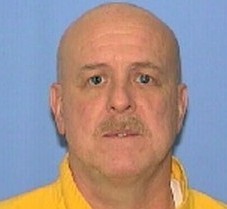
Mark Alan Smith
Serial killer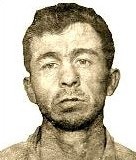 Donald Henry Gaskins
Serial killer · USA · 1969
Donald Henry Gaskins, also known as Donald “Pee Wee” Gaskins, was a serial kill…
200 victims
Donald Henry Gaskins
Serial killer · USA · 1969
Donald Henry Gaskins, also known as Donald “Pee Wee” Gaskins, was a serial kill…
200 victims
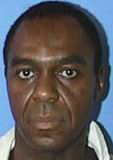 Carl Eugene Watts
Serial killer · USA · 1974
Carl Eugene Watts (born November 7, 1953; died September 21, 2007), also known…
100 victims
Carl Eugene Watts
Serial killer · USA · 1974
Carl Eugene Watts (born November 7, 1953; died September 21, 2007), also known…
100 victims
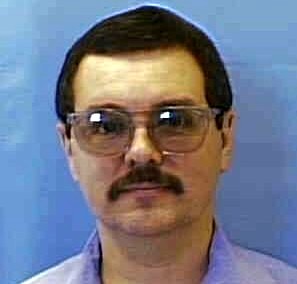 Donald Harvey
Serial killer · USA · 1970
Donald Harvey was known as an American serial killer and a self-professed “Ange…
87 victims
Donald Harvey
Serial killer · USA · 1970
Donald Harvey was known as an American serial killer and a self-professed “Ange…
87 victims
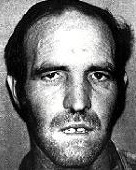 Ottis Toole
Serial killer · USA · 1961
Ottis Elwood Toole (sometimes misspelled as “Otis”) was an American serial kill…
65 victims
Ottis Toole
Serial killer · USA · 1961
Ottis Elwood Toole (sometimes misspelled as “Otis”) was an American serial kill…
65 victims
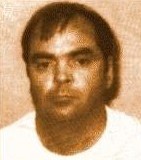 Donald Leroy Evans
Serial killer · USA · 1975
Donald Leroy Evans (born July 5, 1957) was an American serial killer who murder…
60 victims
Donald Leroy Evans
Serial killer · USA · 1975
Donald Leroy Evans (born July 5, 1957) was an American serial killer who murder…
60 victims
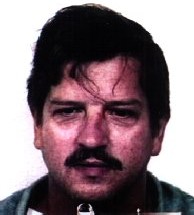 William George Bonin
Serial killer · USA · 1972
William George Bonin was executed by lethal injection in California on February…
44 victims
William George Bonin
Serial killer · USA · 1972
William George Bonin was executed by lethal injection in California on February…
44 victims
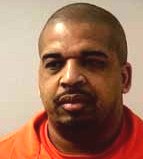 Robert Gattis
Murderer · USA · 1990
Robert Gattis (DOB: 11/18/1961) was a Black male. Gattis was convicted in Octob…
1 victim
Robert Gattis
Murderer · USA · 1990
Robert Gattis (DOB: 11/18/1961) was a Black male. Gattis was convicted in Octob…
1 victim
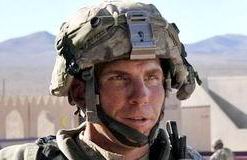 Robert Bales
Spree killer · Afghanistan · 2012
Robert Bales (born June 30, 1973) was a United States Army soldier. He murdered…
16 victims
Robert Bales
Spree killer · Afghanistan · 2012
Robert Bales (born June 30, 1973) was a United States Army soldier. He murdered…
16 victims
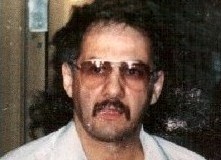 Allan Legere
Murderer · Canada · 1986
Name: Allan Legere · Citation: R. v. Legere (1988), 89 N.B.R. (2d) 361 · Other…
5 victims
Allan Legere
Murderer · Canada · 1986
Name: Allan Legere · Citation: R. v. Legere (1988), 89 N.B.R. (2d) 361 · Other…
5 victims
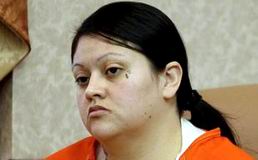 Asuncion Avila-Villa
Murderer · USA · 2009
Asuncion “Suzie” Avila-Villa was a Hamilton mother accused of killing her infan…
1 victim
Asuncion Avila-Villa
Murderer · USA · 2009
Asuncion “Suzie” Avila-Villa was a Hamilton mother accused of killing her infan…
1 victim
 John George Brewer
Murderer · USA · 1986
John George Brewer lived in a Flagstaff apartment with his girlfriend, Rita Bri…
1 victim
John George Brewer
Murderer · USA · 1986
John George Brewer lived in a Flagstaff apartment with his girlfriend, Rita Bri…
1 victim
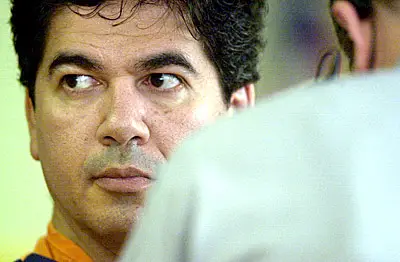 Reinaldo Rivera
Serial killer · USA · 1999
Reinaldo Rivera was arrested in a motel room where he tried to kill himself by…
4 victims
Reinaldo Rivera
Serial killer · USA · 1999
Reinaldo Rivera was arrested in a motel room where he tried to kill himself by…
4 victims
- Gender
- male
- Country
- USA
- Location
- Germany / Arkansas/Illinois, USA
- Date of birth
- June 27, 1949
- Age at first offence
- 17
- Characteristics
- rape, rape?, rapist
- Victim profile
- Eight women in Germany / Obie Faye Ash / Jean Irene Bianchi, 27 / Janice Bolyard, 23 / Jean Ann Lingenfelter, 17
- Method of murder
- St abbing with knife - Strangulation
- Date(s) of murder
- 1966 - 1970
- Years active
- 1966–1970
- Date of arrest
- —
- Status
-
Imprisoned
Sentenced consecutively to a total of 500 years in prison in Illinois in 1971
Case identification
Mark Alan Smith was involved in multiple killings and was sentenced to a total of 500 years in prison in Illinois in 1971.
Background
Mark Allen Smith was described as the first known serial killer to strike in Des Plaines. He grew up on Chicago's Northwest Side.
Smith was born June 27, 1949, at Illinois Masonic Hospital in Chicago. His mother was Sally Jean Chester, who was 19. His father was Dennis Smith, who was 21 and a U.S. Marines sergeant. Sally Jean Chester and Dennis Smith divorced after months. When Sally remarried, the family moved to the basement of her in-laws' Foster Avenue three-flat on the Far Northwest Side of Chicago.
The book "Legally Sane," written in 1972 by Harold C. McKenney and Jon K. Hahn, reported that Smith tried to strangle a female classmate behind the building at Edgebrook Public School when he was 8 and in third grade. The same book reported that when Smith was 9, he stabbed a 6-year-old playmate more than 20 times with a pen knife. The boy survived. Smith was sent to a psychiatrist, and the book described his actions as a prelude of what came later.
The offence
Smith killed at least three women while in service in the U.S. Army and after. He killed at least three women in Germany while serving in the U.S. Army. He then killed Obie Faye Ash, of Cotter, Ark., on Dec. 3, 1969, in Mountain Home, Ark. Smith killed Jean Irene Bianchi, of McHenry, on Jan. 27, 1970, in McHenry County. Smith killed Janice Bolyard, a chemist at the De Soto Chemical Plant at 1700 S. Mount Prospect Road, Des Plaines, on Feb. 27, 1970, in Des Plaines.
A parole-hearing argument described the offence involving Jean Bianchi: On January 27, 1970, at approximately 9:30 pm, Jean Bianchi, described as “a young wife and mother of two small children,” drove to a laundry mat in the town of McHenry. She called her husband about an hour later to tell him that the family laundry was almost done and that she would be home soon. Jean never returned home again, and she never saw her husband again and never saw her children again. Her vehicle was found near the laundry mat by the police. Her laundry was found at the laundry mat with a half-written letter to a friend nearby. For three days, Jean’s family searched frantically for her. On January 30, their worst nightmare came true; her body was found partially clothed, floating under an icy ledge in a small creek not from the laundry mat where she was abducted. Jean’s face was unrecognizable. Her teeth were knocked out, and her face was badly distorted from the vicious beating she endured. An autopsy revealed that Jean had been stabbed 17 times in the neck, back, and chest. Her liver was lacerated. Her vagina was traumatically lacerated. Sand and grass were discovered in her throat. The parole-hearing argument further stated that Smith admitted abducting Jean Bianchi at the laundry mat at knife point. The argument stated he confessed to forcing her into his car, raping her in the back seat, attempting to strangle her, beating her, throwing her from a bridge, attempting to drown her in the shallow icy creek, and ultimately stabbing her to death. It further stated that after Jean Bianchi lay dead or dying, Smith sexually assaulted her with his fist.
A parole-hearing argument also described the offence involving Jean Ann Lingenfelter: Exactly four months after murdering Jean Bianchi, on May 27, 1970, Smith viciously raped and murdered a seventeen-year-old high school senior named Jean Ann Lingenfelter. The argument stated Jean Ann was about to graduate from high school. The evening of the murder, Jean Ann’s parents became worried when she didn’t return home from studying for finals at a friend’s house. Like Jean, the search for Jean Ann began that night. The argument stated Smith feigned concern for Jean Ann and assisted law enforcement with their search for her. The argument stated Smith found Jean Ann’s body floating near the shore of a small lake and that he knew where to find her because he discarded her corpse there. The argument stated Jean Ann had been viciously beaten and strangled with her own bra. It stated her nose and jaw were broken. It stated her liver was lacerated. It stated her vagina was violently torn with the neck of a beer bottle. The argument stated Smith readily admitted these facts.
Smith also confessed to raping and murdering additional victims as described in the parole hearing: The parole-hearing argument stated that Smith admitted to raping and murdering “at least twelve” victims. It stated that his victims were not human beings to him and that abducting them, raping them, and murdering them was described as sport in the argument.
Investigation
The parole-hearing argument described what family searches and police findings followed Jean Bianchi’s abduction and death:
- Jean Bianchi’s vehicle was found near the laundry mat.
- Jean Bianchi’s laundry was found at the laundry mat with a half-written letter to a friend nearby.
- Her body was found partially clothed, floating under an icy ledge in a small creek.
Arrest
No arrest was described in the provided material.
Trial
Smith was sentenced for three murders in 1970 to a total of 500 years in prison in Illinois, as described in the provided material.
Sentencing
Smith was sentenced consecutively to a total of 500 years in prison in Illinois in 1971.
A parole hearing argument stated:
- “The inmate has been sentenced consecutively to a total of 500 years in the Department of Corrections for his horrific crimes against three innocent, unsuspecting, and defenseless women.”
- “The inmate agreed to this sentence.”
- “He has yet to serve even 10% of it.”
Appeals
No appeals were described in the provided material.
Parole hearings and statements
The provided material included discussion of parole hearings and statements opposing release.
Illinois Prison Review Board hearing at Cook County Criminal Court Building (June 18, 2008)
The material stated that Des Plaines Police Cmdr. Richard Rozkuszka and Des Plaines Detective Rafael Tovar appeared June 18 before the Illinois Prison Review Board at the Cook County Criminal Court Building in Chicago to tell why Smith, now 52 and eligible for parole from Pontiac Correctional Center, should never be released. It stated that the comments came Wednesday at the first part of Smith’s 11th parole hearing.
The material also stated that Smith first was eligible for parole in 1980, about three years after he was convicted of attempting to escape and sentenced to another 18 years. It stated that sentencing law allowed parole hearings every three years for those eligible and that “when Smith was convicted, a federal moratorium on the death penalty existed.”
State’s Attorney’s Office Criminal Division Chief Nicole Owens argued to keep Smith behind bars using details from two local murders:
- She described sand and grass inside the throat of Jean Bianchi.
- She stated Jean Bianchi was a 27-year-old mother of two who never came home from a McHenry laundromat, and she said Bianchi had been stabbed 17 times, her teeth were knocked out, and her face was distorted from a beating.
- She stated she also told the parole board about Jean Ann Lingenfelter, a 17-year-old who disappeared after studying for her senior finals at a friend’s house.
- She said Lingenfelter was strangled with her own bra by the man who had taken her friend to prom a few weeks earlier.
The material included a quote attributed to Nicole Owens: “These horrific facts are difficult to hear,” Nicole Owens said, “However, it is necessary that none of us forget how dangerous this confessed serial killer truly is.”
The material stated Owens bolstered her comments with:
- 21 pages of letters from victims’ families,
- 50 pages of petitions and letters from citizens,
- a dozen pages of crime-scene photographs,
- and a copy of “Legally Sane.”
The material included a quote attributed to Owens: “Our position is: If they can’t look at those photos, they shouldn’t even consider releasing this man into society,” Nicole Owens said.
Illinois Prison Review Board denied parole again (August 06, 2005)
The material described that Smith’s 10th bid for freedom was denied Thursday by the Illinois Prisoner Review Board. It stated:
- In 1970, Smith, now 56, was sentenced to 500 years in prison for murdering Jean Bianchi and Jean Ann Lingenfelter in McHenry.
- Smith was also convicted of murdering a woman in Des Plaines and a woman in Arkansas.
- Smith was believed to be responsible for eight murders in Germany.
- Portenlanger said it was “good news” and described expectations about formal denial.
Betty Portenlanger and the Lingenfelter family were described as being glad about the denial. The material included a quote attributed to Betty Portenlanger: “That’s good news,” Betty Portenlanger said. “I always expect this will be the answer, but it’s nice to know formally that it is.”
The material stated Smith would be eligible for parole again in July 2008 because of a law in place when Smith was sentenced, making him eligible every three years.
It described a letter-writing campaign since 1983 where Portenlanger asked hundreds of people to write letters urging the board to deny parole. The material stated prisoner review board received several thousand letters opposing Smith’s parole this year, according to Portenlanger.
On July 6, Portenlanger attended Smith's parole hearing at Pontiac Correctional Center with Mark Facchini, McHenry County assistant state's attorney, who delivered a statement asking the board to keep Smith in jail. The material included a quote attributed to Portenlanger: “We are so appreciative of the help that the McHenry County State's Attorney's office gives us and also very appreciative of the compassion and expertise that Mark Facchini brought to this,” Betty Portenlanger said.
The material stated Smith did appear before the review board to plead his case for the first time in nine years, but he and Portenlanger were never in the same room.
The material also included statements from Jean Ann Lingenfelter’s niece, Shannon Fazekas, 33, of McHenry: Fazekas said Thursday she was glad to hear that Smith wasn't getting out of prison. The material included quotes attributed to Fazekas: “I'm glad he was denied,” Shannon Fazekas said. “Everyone says there is no chance of him getting out, but it's still in the back of the families' minds.”
It also stated that Fazekas said “People used to say, 'Oh, you look just like her,'” and that Fazekas called it “spooky.” The material included those quotes: “People used to say, 'Oh, you look just like her,'” Shannon Fazekas said. “That's really spooky.”
The material stated Jean Ann Lingenfelter's father lived in Florida and was prevented from coming to the parole hearing because of his age, and that Fazekas' uncle, Tom Lingenfelter, lived in California. It stated Fazekas had never met her aunt but heard about her growing up.
Nicole Owens’ parole-hearing argument (June 18, 2008)
The material included an “Inmate Mark Smith Parole Hearing Argument Presented by Nichole D. Owens, McHenry County State’s Attorney’s Office” with content dated June 18, 2008.
It included multiple quotations. Verbatim quotations included:
- “everyone has to die sometime.” (attributed in context to Smith “to a former State’s Attorney” in the argument)
- “I speak from experience when I say a family of the victim is NEVER the same after such a death of a loved one. Emotional, mental suffering still continues for each one of us. "
- “The sentence of grief for the families of the murder victim is a life sentence. "
- “It cannot be commuted and parole is not possible.”
- “It was sort of like the so-called ecstasy of the hunt must be for animals, only I’m just a little bit above the hunt in snatching girls.”
- “Mark Alan Smith is always adapting, changing his story or his coloration to suit the circumstances. He will, no doubt, come up for parole within our lifetime, and he will look and sound like a repentant and rehabilitated sinner. "
- “That would be like giving a driver’s license to somebody who is blind and I don’t want to be on the road when he’s driving the car. "
- “Don’t let him out. He should remain in Stateville for the rest of his life.”
- “The inmate agreed to this sentence.” (not in quotation marks in the argument, but included as narrative text)
The argument also included a quoted statement attributed to “Jean Bianchi’s deceased mother”:
“I speak from experience when I say a family of the victim is NEVER the same after such a death of a loved one. Emotional, mental suffering still continues for each one of us. "
The argument included a quoted statement attributed to Smith (as stated in "Legally Sane"):
The argument included a quoted statement attributed to Dr. Joseph Wepman:
“Mark Alan Smith is always adapting, changing his story or his coloration to suit the circumstances. He will, no doubt, come up for parole within our lifetime, and he will look and sound like a repentant and rehabilitated sinner. "
“Don’t let him out. He should remain in Stateville for the rest of his life.”
The argument included a quote attributed to Smith in the context of his statement to a former State’s Attorney:
“everyone has to die sometime.”
Other details
The material listed demographic and case descriptors:
- SEX: M
- RACE: W
- TYPE: N
- MOTIVE: Sex.
- MO: Rape-slayer of young women on three continents
- DISPOSITION: 500 years for three counts in Ill., 1971
The material stated that Smith was described as a “confessed serial killer,” and it said murderers are sentenced to 20 to 60 years without potential for early release; life; or the death penalty under current standards described in the material.
It stated an Illinois Prisoner Review Board hearing in Chicago was the first in a three-step process. It stated Smith would present his arguments next month at a hearing at Pontiac Correctional Center, and that the board would announce its decision in August after a final presentation in Springfield.
The material included a statement attributed to McHenry County State’s Attorney Louis Bianchi (not related to Jean Bianchi) saying Thursday that he was confident Smith’s latest parole request would be denied.
The material stated Owens was using an addendum attached containing:
- 18 pages of protests to the inmate’s release from families of his victims,
- 50 pages of letters and petitions from citizens opposing parole,
- 12 pages of crime-scene photos of the Bianchi and Lingenfelter murders,
- 25 pages of autopsy reports of Jean Bianchi and Jean Ann Lingenfelter,
- and a copy of the book “Legally Sane.”
The material stated that Smith was eligible for parole from Pontiac Correctional Center and that he would present arguments in a subsequent hearing.
The material mentioned “SKcentral.com Owens argues to keep serial killer in prison” and “SKcentral.com Serial killer denied parole again August 06, 2005,” which were navigation or site labels rather than case facts.
Spotted an error, or have more information about this case?