Robert Dale Segee
Serial killer? - Mass murderer?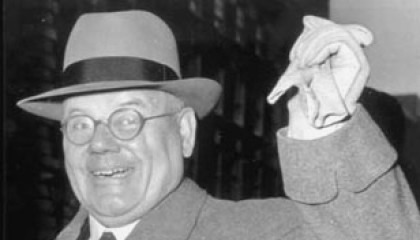 John Bodkin Adams
Serial killer ? · United Kingdom · 1935
John Bodkin Adams was a British general practitioner and euthanasia enthusiast,…
163 victims
John Bodkin Adams
Serial killer ? · United Kingdom · 1935
John Bodkin Adams was a British general practitioner and euthanasia enthusiast,…
163 victims
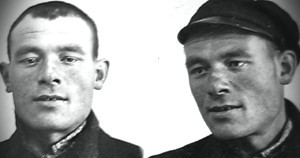 Bruno Lüdke
Serial killer · Germany · 1928
Bruno Lüdke (3 April 1908 – 26 April 1944) was an alleged German serial killer.…
84 victims
Bruno Lüdke
Serial killer · Germany · 1928
Bruno Lüdke (3 April 1908 – 26 April 1944) was an alleged German serial killer.…
84 victims
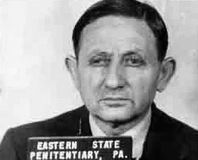 Morris Bolber
Serial killer · USA · 1932
Morris Bolber was prosecuted as part of a Philadelphia poison-murder ring invol…
50 victims
Morris Bolber
Serial killer · USA · 1932
Morris Bolber was prosecuted as part of a Philadelphia poison-murder ring invol…
50 victims
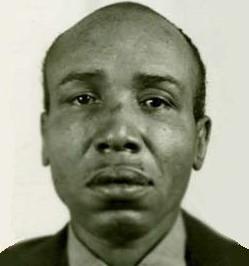 Jake Bird
Serial killer · USA · 1930
October 30, 1947 — Jake Bird broke into the home of Bertha Kludt and her daught…
44 victims
Jake Bird
Serial killer · USA · 1930
October 30, 1947 — Jake Bird broke into the home of Bertha Kludt and her daught…
44 victims
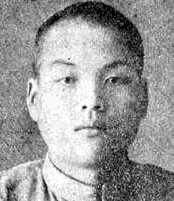 Mutsuo Toy
Spree killer · Japan · 1938
Mutsuo Toi (都井 睦雄; Toi Mutsuo) was a Japanese spree killer. Mutsuo Toi was born…
30 victims
Mutsuo Toy
Spree killer · Japan · 1938
Mutsuo Toi (都井 睦雄; Toi Mutsuo) was a Japanese spree killer. Mutsuo Toi was born…
30 victims
 Marcel Petiot
Serial killer · France · 1942
Marcel André Henri Félix Petiot was a French doctor. He was convicted of multip…
27 victims
Marcel Petiot
Serial killer · France · 1942
Marcel André Henri Félix Petiot was a French doctor. He was convicted of multip…
27 victims
 Lisa Ann Coleman
Murderer · USA · 2004
Lisa Ann Coleman was a Black female born on 10/06/1975. She was 30 when her cas…
1 victim
Lisa Ann Coleman
Murderer · USA · 2004
Lisa Ann Coleman was a Black female born on 10/06/1975. She was 30 when her cas…
1 victim
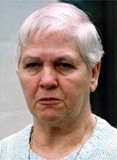 Marie Noe
Murderer · USA · 1949
Marie Noe was convicted in June 1999 of murdering eight of her children. Betwee…
8 victims
Marie Noe
Murderer · USA · 1949
Marie Noe was convicted in June 1999 of murdering eight of her children. Betwee…
8 victims
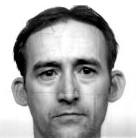 Stephen McCoy
Murderer · USA · 1980
Stephen A. McCoy was executed by lethal injection in Texas on May 24, 1989. He…
2 victims
Stephen McCoy
Murderer · USA · 1980
Stephen A. McCoy was executed by lethal injection in Texas on May 24, 1989. He…
2 victims
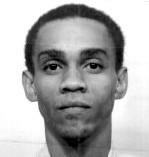 Walter Key Williams
Murderer · USA · 1981
Walter Key Williams grew up in San Antonio’s poor East Side. His childhood neig…
2 victims
Walter Key Williams
Murderer · USA · 1981
Walter Key Williams grew up in San Antonio’s poor East Side. His childhood neig…
2 victims
 Mustafa Raheem
Murderer · USA · 1999
Mustafa Raheem was sentenced to death for the 1999 murders of a mother and her…
2 victims
Mustafa Raheem
Murderer · USA · 1999
Mustafa Raheem was sentenced to death for the 1999 murders of a mother and her…
2 victims
- Gender
- male
- Country
- USA / Japan
- Location
- USA / Japan
- Date of birth
- 1929
- Age at first offence
- 9
- Characteristics
- arsonist, history of mental illness, motive unknown
- Victim profile
- Children / Men, women and children
- Method of murder
- Strangulation / Beating with a stone / Fire
- Date(s) of murder
- 1938 - 1950
- Years active
- 1938–1950
- Date of arrest
- —
- Status
-
Died in custody
Confessed in 1950; sentenced to 4 to 40 years for arson in Ohio in 1951; released from supervision in May 1959; died in August 1997
Background
Robert Dale Segee grew up in New Hampshire and Maine. He was described as a nervous boy taunted by siblings and schoolmates and continually berated by a brutal father. Segee said his father punished him by holding his fingers over a flame. Segee’s mother said he had bad dreams so often that he was afraid to go to bed. Segee was said to have sneaked out of the house and roamed the streets at night as young as 9 or 10 years old.
In May and June 1950, Ohio Deputy Fire Investigator R. Russell Smith went to Maine and New Hampshire to run a background check on Segee. Smith determined from interviews with relatives and law enforcement officials that in the years 1940 through 1946, there had been 28 major fires and 40 minor ones within 10 blocks of the Segees’ home in Portland, Maine.
The year before the Hartford circus fire, school records showed that Segee flunked all his sixth-grade subjects, and his IQ that year was judged to be 78. Segee had no juvenile criminal record. Segee’s sister, Dorothy Thompson, told Ohio investigators that her brother, as a young boy, had set two fires inside their home.
In June 1950, Segee’s confession included an account that he often set a fire after a frustrating sexual encounter and that he “wanted to burn out a lot of bad memories.” He said he could almost always recall striking the match, but that he “blacked out” afterward.
He described waking from a nightmare in which a “red man” had fangs, claws, fiery-red chest hair and flames coming out of the top of his head. Ohio investigators described this vision as a classic one for a chronic fire-setter.
Segee told Ohio authorities he had met and had “unsatisfactory” relations with a girl near the Hartford circus grounds just before the Hartford fire. He recalled that he returned to the circus grounds just after the 2 p.m. performance began. Fire engulfed the tent about 2:20 p.m. He said:
“I was still nervous and upset, and as far as I know, I thought I laid down and went to sleep and then there was the strike of the match again, and then the red man came,”
The offence
Hartford Circus Fire (Ringling Brothers and Barnum & Bailey Circus)
The Hartford Circus Fire occurred on July 6, 1944 in Hartford, Connecticut. It occurred during an afternoon performance of the Ringling Brothers and Barnum & Bailey Circus attended by approximately 7,500 to 8,700 people.
The fire began as a small flame about twenty minutes into the show on the southwest sidewall of the tent while the Great Wallendas were on. Circus bandleader Merle Evans was said to be the person who first spotted the flames and immediately directed the band to play “The Stars and Stripes Forever,” which was described as a tune that traditionally signaled distress to all circus personnel. Ringmaster Fred Bradna urged the audience not to panic and to leave in an orderly fashion, but power failed and he could not be heard.
Investigators at the time believed it was caused by a carelessly flicked cigarette, though others suspected an arsonist. The cause of the fire was described as unproven. The big top tent had been coated with 1,800 lb (816 kg) of paraffin and 6,000 US gallons (23 m³) of gasoline (some sources said kerosene), described as a common waterproofing method that helped the flames spread rapidly. The fiery tent collapsed in about eight minutes according to eyewitness survivors, trapping hundreds of spectators.
The account described that some victims died from injuries sustained after leaping from the tops of the bleachers in hopes of escaping under the sides of the tent. Others died after being trampled by other spectators, with some asphyxiating underneath piles of people. It was stated that most of the dead were found in piles, and a small number of people were found alive at the bottoms of these piles.
The number of people killed and injured was described with differing figures reported by sources and organizations. Various people and organizations said the number of deaths was 167, 168, or 169 persons, with the 168 figure described as usually based on official tallies that included a collection of body parts listed as a “victim.” Official treated injury estimates were described as running over 700 people, and the number of actual injuries was described as believed to be higher due to people seen leaving home in shock without seeking treatment. Only 100 of the dead were stated as older than 15.
The only animals in the big top at the time were the big cats trained by May Kovar and Joseph Walsh, which had just finished performing when the fire started. The big cats were herded through chutes to cage wagons and were unharmed except for a few minor burns.
Segee’s confession regarding the Hartford fire
Segee was described as employed by the Ringling Brothers and Barnum & Bailey Circus from June 30 to July 13, 1944. He joined the circus on June 30 at Portland, Maine, where the same day a fire on tent ropes was extinguished without loss. The circus moved to Providence, Rhode Island, where a small fire occurred on a tent flap that was also extinguished without loss. On July 6, 1944 at Hartford, Connecticut, Segee’s confession said that the major fire occurred that killed 168 people.
A prepared statement attributed to Henry J. Callan, Ohio fire marshal, said Segee admitted responsibility for that and other major fires, giving places and dates he was stated to be responsible for.
In 1950, Segee signed statements admitting he set the Ringling Brothers circus fire in Hartford, Connecticut that killed 168 persons and injured 412 others. Henry J. Callan made the disclosure.
Investigation
Henry J. Callan, Ohio fire marshal, disclosed that Segee signed statements admitting he set the Ringling Brothers circus fire in Hartford, Connecticut.
Callan also said that Segee admitted setting between 25 and 30 major fires in Portland, Maine between 1939 and 1946, as well as other fires in New Hampshire and Ohio. Callan stated that Segee was personally responsible for slaying four people.
Callan said that all of Segee’s statements had been carefully checked by his investigators since Segee was taken into custody last May 17 on the farm of a relative near East St. Louis, Illinois.
Ohio investigators described determining from interviews that 28 major fires and 40 minor ones occurred within 10 blocks of the Segees’ home in Portland, Maine during the years 1940 through 1946.
During interrogation in Ohio in June 1950, Segee admitted setting at least 25, perhaps 30 major fires in Portland between 1939 and 1946, described as the year he moved to Ohio.
The narrative later described that Hartford investigators raised doubts about Segee’s confession, including that his history included mental illness and that it could not be proven he was anywhere within the state of Connecticut when the fire occurred. It also described that Connecticut officials were not allowed to question Segee even though his alleged crime had occurred in their state.
Segee was described as denying setting the fire as late as 1994 during an interview.
Arrest
Segee was taken into custody last May 17 on the farm of a relative near East St. Louis, Illinois. After being taken into custody, his statements were checked by investigators.
Trial
A Pickaway county (Ohio) grand jury indicted Segee on two charges of arson stemming from fires in Circleville, Ohio.
In November 1950, Segee was convicted in Ohio of unrelated arson charges and sentenced to more than 40 years of prison time.
In 1950, in Connecticut, Segee was described as never having been tried for the Hartford fire and as being never charged with murder.
Sentencing
Segee was sentenced to more than 40 years of prison time in Ohio in November 1950, and the case record also states that he was sentenced to 4 to 40 years for arson in Ohio in 1951.
He was released from supervision in May 1959.
Appeals
No appeal information was provided.
Outcome
Legal outcome regarding Hartford fire
Segee confessed in 1950 to setting the Ringling Brothers circus fire in Hartford, Connecticut that killed 168 persons and injured 412 others. He was never tried for the crime and later recanted his confession.
Later narrative described that Hartford investigators raised doubts over his confession and that Connecticut officials were not allowed to question him.
Segee denied setting the fire as late as 1994 during an interview.
Other slayings attributed in confession
Henry J. Callan said Segee admitted his first slaying was a 9 year old girl beaten to death with a stone during a fit of anger. Callan said Segee identified the victim as Barbara Driscoll, 9, slain on a river bank at Portsmouth, New Hampshire, September 5, 1938.
Callan listed other victims identified by Segee: a watchman who caught Segee setting a fire in a warehouse in Portland, Maine, March 16, 1943; a 12 year old boy strangled to death on the beach at Cape Cottage, Maine in 1943, “to the best of his (Segee’s) recollection”; and a Japanese boy who was killed in Japan while Segee was in the United States occupation. Callan stated that the last three victims were not identified by name but that all three were actual slayings as shown by his and army investigations.
Aftermath
Segee’s confession was described as fitting the description of a serial arsonist right out of a psychiatrist’s textbook.
The narrative also described that Segee later recanted his confession and denied setting the Hartford fire.
The case record states that Segee died in August 1997.
A section of the narrative described a debate about the identity of “Little Miss 1565” and included details about Eleanor Emily Cook, disputes about dental records and physical characteristics, a reburial in Southampton, Massachusetts, and changes to a death certificate in 1992.
The narrative also described ongoing discussions after the fire, including the establishment of the Hartford Circus Fire Memorial Foundation, ground broken for a monument on July 6, 2004, and later reunions and reflections by survivors.
In 1991, a conclusion was described that the girl was Eleanor Cook, and the narrative stated that the Connecticut State Police Forensic Science Lab was reviewing the case as of 2005.
Spotted an error, or have more information about this case?