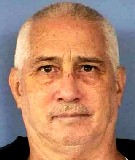
Richard Gerald Jordan
Murderer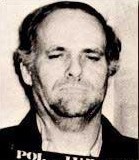 Ervil LeBaron
Murderer · USA · 1972
Ervil Morrell LeBaron (1925 to August 16, 1981) was the leader of a polygamous…
35 victims
Ervil LeBaron
Murderer · USA · 1972
Ervil Morrell LeBaron (1925 to August 16, 1981) was the leader of a polygamous…
35 victims
 Brian Kevin Rosenfeld
Murderer · USA · 1985
Brian Kevin Rosenfeld Brian Kevin Rosenfeld was sentenced to three concurrent l…
23 victims
Brian Kevin Rosenfeld
Murderer · USA · 1985
Brian Kevin Rosenfeld Brian Kevin Rosenfeld was sentenced to three concurrent l…
23 victims
 Marvin Gray
Murderer · USA · 1975
Marvin Gray was convicted killer who claimed responsibility for 23 slayings and…
23 victims
Marvin Gray
Murderer · USA · 1975
Marvin Gray was convicted killer who claimed responsibility for 23 slayings and…
23 victims
 Yahweh ben Yahweh
Murderer · USA · 1980
Yahweh ben Yahweh was born and legally named Hulon Mitchell Jr. (October 27, 19…
23 victims
Yahweh ben Yahweh
Murderer · USA · 1980
Yahweh ben Yahweh was born and legally named Hulon Mitchell Jr. (October 27, 19…
23 victims
 Cody Legebokoff
Serial killer · Canada · 2009
Cody Legebokoff (born c. 1990) was tried in the Supreme Court of British Columb…
4 victims
Cody Legebokoff
Serial killer · Canada · 2009
Cody Legebokoff (born c. 1990) was tried in the Supreme Court of British Columb…
4 victims
 Suzane von Richthofen
Murderer · Brazil · 2002
Suzane Louise Freiin von Richthofen was born on November 3, 1983. She was descr…
2 victims
Suzane von Richthofen
Murderer · Brazil · 2002
Suzane Louise Freiin von Richthofen was born on November 3, 1983. She was descr…
2 victims
 Jean Eric Gassy
Murderer · Australia · 2002
Jean Eric Gassy was a deregistered medical practitioner. He was struck off in 1…
1 victim
Jean Eric Gassy
Murderer · Australia · 2002
Jean Eric Gassy was a deregistered medical practitioner. He was struck off in 1…
1 victim
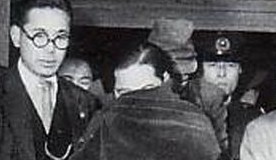 Miyuki Ishikawa
Murderer · Japan · 1944
Miyuki Ishikawa (石川 ミユキ, Ishikawa Miyuki; born 1897; date of death unknown) was…
169 victims
Miyuki Ishikawa
Murderer · Japan · 1944
Miyuki Ishikawa (石川 ミユキ, Ishikawa Miyuki; born 1897; date of death unknown) was…
169 victims
- Gender
- male
- Country
- USA
- Location
- Harrison County, Mississippi, USA
- Date of birth
- May 25, 1946
- Age at first offence
- 30
- Characteristics
- kidnapping
- Victim profile
- Edwina Marter
- Method of murder
- Shooting
- Date(s) of murder
- January 13, 1976
- Years active
- 1976
- Date of arrest
- —
- Status
-
Sentenced to death
Sentenced to death in 1976; death sentence vacated by the U.S. Court of Appeals for the Fifth Circuit for unconstitutional penalty-phase instructions; on remand, Jordan was again sentenced to death in 1983 and that sentence was affirmed; death sentence was vacated by the Supreme Court in 1986; Jordan accepted a sentence of life imprisonment without parole, later invalidated in 1994; on April 24, 1998, Jordan was again sentenced to death and that sentence was affirmed in 2001; leave to seek post-conviction relief was denied (March 10, 2005)
Case information
- Defendant: Richard Gerald Jordan
- Victim: Edwina Marter (husband: Charles Marter)
- Jurisdiction: Mississippi Supreme Court (death penalty case; post-conviction relief application)
Timeline
- January 1976 — Richard Gerald Jordan traveled to Gulfport from Louisiana; he telephoned the Gulf National Bank and asked to speak to a loan officer, then found Charles Marter’s Gulfport residence address and went to the Marter residence, pretending to be an employee of the electric company.
- January 13, 1976 — Jordan kidnapped Edwina Marter in Harrison County and shot her in the back of the head; the court records described him as collecting a $25,000 ransom from Edwina’s husband.
- 1976 — Jordan was convicted and sentenced to death for the murder of Edwina Marter and kidnapping. His conviction and sentence were vacated by the Mississippi Supreme Court in Jackson v. State, 337 So.2d 1242 (Miss.1976).
- 1977 — Jordan was retried in a bifurcated trial and was again convicted and sentenced to death; his conviction and sentence were affirmed in Jordan v. State, 365 So.2d 1198 (Miss.1978), and in In re Jordan, 390 So.2d 584 (Miss.1980) (on petition for writ of error coram nobis).
- 1982 — Jordan’s death sentence was vacated by the U.S. Court of Appeals for the Fifth Circuit; the court remanded for a new sentencing trial (Jordan v. Watkins, 681 F.2d 1067 (5th Cir.), rehearing denied sub nom. Jordan v. Thigpen, 688 F.2d 395 (5th Cir.1982).).
- 1983 — Jordan was again sentenced to death; his sentence was affirmed in Jordan v. State, 464 So.2d 475 (Miss.1985).
- 1986 — The Supreme Court vacated Jordan’s death sentence in Jordan v. Mississippi, 476 U.S. 1101, 106 S.Ct. 1942, 90 L.Ed.2d 352 (1986). On remand, Jordan agreed to forego another sentencing trial and accept life imprisonment without parole.
- 1987 — The case reached the point where Jordan v. State, 697 So.2d 1190 (Miss.1997) later invalidated the sentencing agreement based on Miss.Code Ann. § 97-3-21 (1987).
- 1994 — This Court invalidated the life-without-parole agreement, finding that life without parole was not an option under then Miss.Code Ann. § 97-3-21 (1987).
- 1997 — Jordan’s case was reversed and remanded for another sentencing hearing in Jordan v. State, 697 So.2d 1190 (Miss.1997).
- April 24, 1998 — Jordan was again sentenced to death; his conviction and death sentence were affirmed by this Court in 2001.
- 2001 — This Court affirmed the death sentence in Jordan v. State, 786 So.2d 987 (Miss.2001), cert. denied, 534 U.S. 1085, 122 S.Ct. 823, 151 L.Ed.2d 705 (2002).
- March 10, 2005 — The Mississippi Supreme Court denied Jordan’s application for leave to seek post-conviction relief (No. 2002-DR-00896-SCT, “EN BANC”).
Background
After Jordan’s conviction in 1976 for the murder of Edwina Marter, Jordan’s case was reviewed a total of six times by various courts, including the Mississippi Supreme Court, the United States Court of Appeals for the Fifth Circuit, and the United States Supreme Court.
The offence
In January 1976, Richard Gerald Jordan traveled to Gulfport from Louisiana. He telephoned the Gulf National Bank and asked to speak to a loan officer. When he was told that Charles Marter could assist him, Jordan ended the call and found Marter’s Gulfport residence address in the telephone directory. He went to the Marter’s residence and, pretending to be an employee of the electric company, gained entrance to the house.
Jordan kidnapped Charles Marter’s wife, Edwina, forcing her to leave her three-year-old son sleeping alone in the house. Jordan forced Edwina to drive to a deserted area of the DeSoto National Forest. Jordan shot Edwina in the back of the head.
- Defense position: The defense claimed Edwina tried to run away and that Jordan attempted to fire a warning shot over her head. The bullet entered her skull at the lower right occipital area of the brain and traveled upward, exiting above her left eye.
- State position: The State claimed Jordan executed Edwina by firing one bullet into the back of her head as she knelt in front of him.
Jordan disposed of the murder weapon and called Charles Marter, telling him that he had kidnapped Edwina and that she was alive and well. Jordan demanded Charles leave $25,000 on a blue jacket that Jordan would find on the side of U.S. Highway 49. When Charles attempted to leave the money, he did not find the jacket. Jordan called Charles the next day and again demanded the $25,000, assuring Charles that Edwina was fine and that she was concerned for her children. On the second attempt, Charles found the jacket and left the money as instructed. After Jordan retrieved the money, two officers attempted to arrest him. Jordan escaped but was later captured at a roadblock.
Jordan confessed to the crime and told police where to find Edwina’s body. He cooperated with investigating officers, telling them where he had disposed of the gun and showing them where he had hidden the money and his automobile.
Investigation and arrest
Jordan was captured at a roadblock after two officers attempted to arrest him following his retrieval of the ransom money.
Jordan confessed to the crime and directed police to Edwina’s body location. He cooperated with investigating officers by disclosing where he had disposed of the gun and by showing them where he had hidden the money and his automobile.
Trial
Jordan was convicted and sentenced to death in 1976. After changes in death-penalty law, his conviction and sentence were vacated in Jackson v. State, 337 So.2d 1242 (Miss.1976).
In 1977, Jordan was retried in a bifurcated trial and was again convicted and sentenced to death. The conviction and sentence were affirmed by the Mississippi Supreme Court in Jordan v. State, 365 So.2d 1198 (Miss.1978), and by In re Jordan, 390 So.2d 584 (Miss.1980) (on petition for writ of error coram nobis).
The subsequent death sentence was vacated by the Fifth Circuit and remanded for a new sentencing trial. In 1983, Jordan was again sentenced to death. That sentence was affirmed by the Mississippi Supreme Court in Jordan v. State, 464 So.2d 475 (Miss.1985). The Supreme Court later vacated the death sentence in Jordan v. Mississippi, 476 U.S. 1101, 106 S.Ct. 1942, 90 L.Ed.2d 352 (1986).
On remand, Jordan agreed to forego another sentencing trial and accept life imprisonment without parole. In 1994, this Court invalidated that agreement and reversed and remanded for another sentencing hearing in Jordan v. State, 697 So.2d 1190 (Miss.1997). On April 24, 1998, Jordan was again sentenced to death, and the sentence was affirmed in 2001 in Jordan v. denied, 534 U.S. 1085, 122 S.Ct. 823, 151 L.Ed.2d 705 (2002).
Blood spatter evidence and “execution-style” theory (post-conviction issues)
Jordan raised multiple post-conviction claims included under headings such as blood spatter and the “execution-style” theory. Jordan objected to the State’s presentation of the killing of Edwina Marter as “execution-style” and maintained that he shot Edwina when she ran away.
The State presented:
- Officer David Melton testimony that blood spatter patterns at the scene demonstrated Edwina was in a stationary position, standing or kneeling in front of Jordan when she was shot.
- Forensic pathologist Dr. William D. Atchison testimony that Edwina was not running away and was probably kneeling in front of him.
Jordan objected to Melton’s testimony and to Melton’s qualifications as an expert witness. The court noted Melton testified for the first time in Jordan’s 1983 trial and in every subsequent trial.
The court discussed procedural bars and merits analysis regarding:
- Jordan’s claim that Melton’s blood spatter interpretation involved false or misleading evidence.
- Jordan’s claim that the State pursued inconsistent “execution-style” theories in a way that violated law-of-the-case and collateral/equitable estoppel doctrines.
- Jordan’s claim that special prosecutor conduct and statements about transcript availability prevented defense counsel from realizing the State pursued inconsistent theories, including an alleged Brady v. Maryland violation.
- The court’s discussion included citations to Miss.Code Ann. § 99-39-21 and to various federal cases cited in Jordan’s arguments (Donnelly v. DeChristoforo, Smith v. Groose, and Drake v. Kemp), and to King v. State and the four-prong test for Brady violations.
Ineffective assistance of counsel claims (post-conviction issues)
Jordan raised ineffective assistance of counsel claims including:
- Claims regarding defense counsel Tom Sumrall’s preparation related to Melton’s blood spatter testimony, including failing to hire a blood spatter expert and failing to object to Melton’s qualifications.
- The court found Sumrall’s performance deficient regarding failure to realize blood spatter evidence would be presented, but found Jordan failed to show prejudice under the Strickland v. Washington standard; the claim was denied as without merit.
- Claims regarding jury instructions, including the especially heinous, cruel and atrocious instructions and the form of the verdict. The court discussed whether the jury instruction language improperly allowed an evidentiary shortcut and whether defense counsel was ineffective for not objecting.
- The court quoted the jury’s verdict in pertinent part:
“Three, Richard Jordan committed a capital offense which was especially heinous, atrocious & cruel & whether the murder was conscienceless and pitiless. In support of the circumstances the State claims that Edwina Marter was murdered in execution style & that she was subjected to extreme mental torture caused by her abduction from the home wherein she was forced to abandon her unattended three-year-old child & removed to a wooded area at which time she was shot in the back of the head by Jordan․”
The court also addressed Jordan’s argument that “especially heinous” improperly duplicated the kidnapping aggravator, referencing its prior statement in the 2001 Jordan opinion and finding the claim without merit.
Jordan also argued counsel should have objected to special prosecutor remarks during closing arguments that included references to privileges at Parchman and Jordan’s “scam artist or con man” characterization. The court held Jordan’s ineffective assistance claim lacked merit.
Mental health examination (post-conviction issues)
Jordan raised claims relating to the mental health examination conducted by Dr. Henry Maggio prior to Jordan’s 1998 re-sentencing:
- Jordan argued that Dr. Maggio was given a copy of a previous mental health examination report by Dr. Clifton Davis that contained materially false information and that the State knew the information was false.
- The court described the claimed false information as involving Dr. Davis’s report stating Jordan was dishonorably discharged from the Army, while other evidence indicated Jordan was honorably discharged.
- The court discussed the Dr. Maggio report’s use to cross-examine a mitigation witness, and it described that the report was not introduced into evidence or read to the jury.
- The court addressed claims regarding prejudice and constitutional standards discussed in cases such as United States v. Agurs and Estelle v. Smith.
- The court also addressed Jordan’s claim that he did not give a knowing and intelligent waiver prior to cooperating with Dr. Maggio, and it analyzed differences from Estelle v. Smith and Gardner v. Johnson.
- The court held related claims were procedurally barred under Miss.Code Ann. § 99-39-21 in some instances, but also addressed merits in others.
- The court addressed claims that trial counsel should have objected to the appointment of Dr. Maggio and should have requested appointment of a psychologist; the court stated Jordan was not entitled to a psychiatrist or psychologist of his choice, only a competent one, and found no prejudice.
Jury instruction claims (post-conviction issues)
Jordan argued the especially heinous, cruel and atrocious jury instructions were improper because the aggravating factors were not defined with specificity and created an evidentiary shortcut. The court discussed Jordan’s cited case Taylor v. State and the jury instruction given at the conclusion of the penalty phase.
The court described instruction number one advising the jury as follows regarding the especially heinous, atrocious and cruel aggravating circumstance:
“Whether Richard Jordan committed a capital offense which was especially heinous, atrocious and cruel and whether the murder was conscienceless and pitiless.”
The State’s supporting circumstances described in the instruction included:
- Edwina Marter was murdered in execution style.
- Edwina was subjected to extreme mental torture caused by her abduction from the home where she was forced to leave her unattended three-year-old child.
- Edwina was removed to a wooded area where she was shot in the back of the head by Jordan.
The court also addressed Jordan’s argument that the jury instructions improperly instructed the jury to disregard sympathy, describing the instruction:
“You should consider and weigh any aggravating and mitigating circumstances, as set forth later in this instruction, but you are cautioned not to be swayed by mere sentiment, conjecture, sympathy, passion, prejudice, public opinion or public feeling.”
Jordan argued for a “catch-all” instruction regarding mitigation. The court stated Jordan’s sentencing instructions advised that the jury could consider and weigh all of the evidence in mitigation, and it described several sentencing instructions:
- Sentencing instruction No. 1: the jury could objectively consider detailed circumstances of the offense for which the defendant was convicted and the character and record of the defendant.
- Sentencing instruction No. 3: sworn testimony read from the witness stand was entitled to the same consideration and should be judged as to credibility and weighed like live testimony.
- Sentencing instruction No. S-5: the jury had to apply reasoned judgment in light of the totality of the circumstance.
- Sentencing instruction No. D-3: each individual juror had to evaluate evidence in mitigation and weigh each mitigation circumstance.
The court found no merit to Jordan’s claims.
Due process and constitutional claims (post-conviction issues)
Jordan raised additional constitutional and due process claims, including:
- Jordan argued he was the only inmate remaining on death row among those sentenced to death prior to the change of law in Jackson v. State, 337 So.2d 1242 (Miss.1976), and that other inmates were resentenced to life based on sentencing agreements.
- The court held this claim was barred by res judicata under Miss.Code Ann. § 99-39-21(3) and also addressed equal protection arguments in the context of purposeful discrimination, discussing the burden of proof and required showings.
Jordan also argued:
- It was error to allow the special prosecutor to prosecute the case, claiming personal vendetta rather than disinterested prosecution. The court held the claim had been litigated and was procedurally barred, and it addressed merits by stating that district attorneys must retain control when special prosecutors are appointed, referencing Faulder v. Johnson, and it described that district attorney personnel were present during most pre-trial hearings and at trial. The court also found no prosecutorial vindictiveness based on the failure to offer proof.
- After four reversals and many years, Jordan argued denial of ability to present comprehensive mitigation because his parents were deceased and they could not testify live. The court held Jordan failed to show actual prejudice based on unavailable live testimony and found the claim without merit.
- Jordan challenged admission of a statement given to Officer Albritton, arguing it should have been excluded because it was given after Jordan’s arraignment when he asked for appointed counsel. The court discussed Michigan v. Jackson, and it stated that prior appellate decisions found the issue without merit, with the admission held harmless at best and cumulative of a properly obtained statement given to FBI Agent Watts. The court also stated the issue was procedurally barred and that Jordan had received multiple appellate reviews.
- Jordan argued cumulative effect entitlement to post-conviction relief; the court stated there could be no cumulative error where there were no individual errors, and it held Jordan received a fair trial.
Sentencing
Jordan was sentenced to death multiple times across different proceedings:
- 1976: sentenced to death; conviction and sentence were vacated in Jackson v. State.
- 1977: retried and sentenced to death again.
- 1983: sentenced to death again after Fifth Circuit remand.
- 1986: Supreme Court vacated the death sentence.
- Post-1986 remand: Jordan agreed to accept life imprisonment without parole.
- 1994: agreement invalidated and remand ordered.
- April 24, 1998: sentenced to death again; affirmed in 2001.
Appeals and post-conviction proceedings
Jordan’s post-conviction application raised thirty claims, consolidated by the court under headings including:
- Blood spatter and the “execution-style” theory.
- Ineffective assistance of counsel.
- Mental health examination.
- Jury instructions.
- Due process and other constitutional claims.
The Mississippi Supreme Court denied Jordan’s application for leave to file a petition for post-conviction relief in the trial court.
Outcome
- Leave to seek post-conviction relief: Denied.
- Disposition: “LEAVE TO SEEK POST-CONVICTION RELIEF, DENIED.”
Other details
- The Mississippi Supreme Court decision was delivered “EN BANC” on March 10, 2005.
- Judge/Justice participation: WALLER, Presiding Justice, wrote for the Court; SMITH, C.J., COBB, P.J., EASLEY, CARLSON, GRAVES, DICKINSON AND RANDOLPH, JJ., concur; DIAZ, J., did not participate.
- Jordan’s case included references to the Mississippi Supreme Court docket numbers:
- Mississippi Supreme Court No. 1998-DP-00901-SCT
- No. 2002-DR-00896-SCT
- The court identified counsel for the appellant and appellee:
- Office of Capital Post-Conviction Counsel by David P. Voisin and Robert Ryan, attorneys for appellant.
- Office of the Attorney General by Marvin L. White, Jr., attorney for appellee.
- The court repeatedly referenced Miss.Code Ann. § 99-39-21 for procedural bars in certain claims.
- The court addressed the Strickland v. Washington standard and applied it to Jordan’s ineffective assistance claims.

Spotted an error, or have more information about this case?