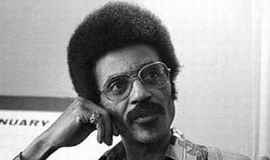
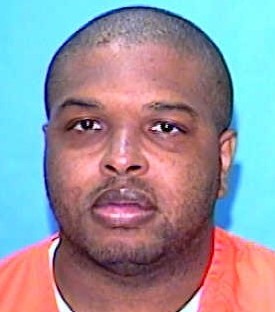
Warren Kimbro
Murderer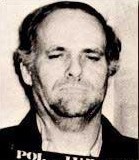 Ervil LeBaron
Murderer · USA · 1972
Ervil Morrell LeBaron (1925 to August 16, 1981) was the leader of a polygamous…
35 victims
Ervil LeBaron
Murderer · USA · 1972
Ervil Morrell LeBaron (1925 to August 16, 1981) was the leader of a polygamous…
35 victims
 Marvin Gray
Murderer · USA · 1975
Marvin Gray was convicted killer who claimed responsibility for 23 slayings and…
23 victims
Marvin Gray
Murderer · USA · 1975
Marvin Gray was convicted killer who claimed responsibility for 23 slayings and…
23 victims
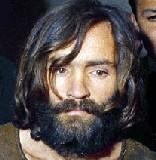 Charles Manson
Murderer · USA · 1969
Charles Milles Manson (born November 12, 1934) was an American criminal and mus…
9 victims
Charles Manson
Murderer · USA · 1969
Charles Milles Manson (born November 12, 1934) was an American criminal and mus…
9 victims
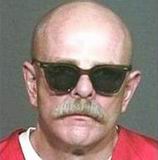 Barry Byron Mills
Murderer · USA · 1979
Barry Byron Mills (born 1948) was a leader of the Aryan Brotherhood (AB) prison…
8 victims
Barry Byron Mills
Murderer · USA · 1979
Barry Byron Mills (born 1948) was a leader of the Aryan Brotherhood (AB) prison…
8 victims
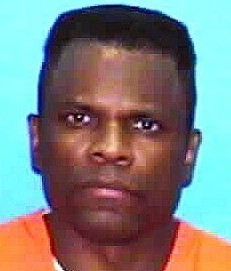 John Errol Ferguson
Murderer · USA · 1977
John Errol Ferguson was sentenced to death and was executed by lethal injection…
8 victims
John Errol Ferguson
Murderer · USA · 1977
John Errol Ferguson was sentenced to death and was executed by lethal injection…
8 victims
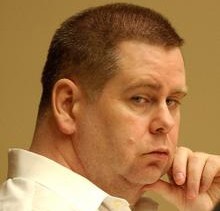 Thomas Huskey
Serial killer ? · USA · 1991
Thomas Huskey, also known as “Zoo Man,” was a former zoo elephant trainer. Loca…
4 victims
Thomas Huskey
Serial killer ? · USA · 1991
Thomas Huskey, also known as “Zoo Man,” was a former zoo elephant trainer. Loca…
4 victims
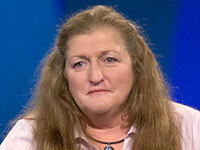 Brenda Hodge
Murderer · Australia · 1983
Brenda Hodge was born Dorothy Brenda White in Victoria in 1951 to Beryl Nanette…
1 victim
Brenda Hodge
Murderer · Australia · 1983
Brenda Hodge was born Dorothy Brenda White in Victoria in 1951 to Beryl Nanette…
1 victim
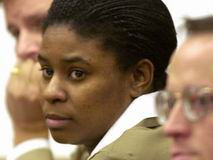 Angela Garcia
Murderer · USA · 1999
Angela Garcia was convicted in 2001 of setting a fire that killed her two young…
2 victims
Angela Garcia
Murderer · USA · 1999
Angela Garcia was convicted in 2001 of setting a fire that killed her two young…
2 victims
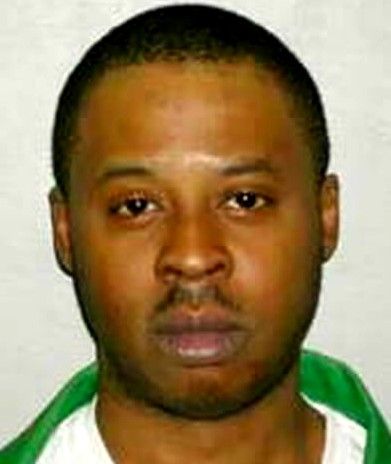 Joseph Gardner
Murderer · USA · 1992
Joseph Martin Luther Gardner was executed by lethal injection in South Carolina…
1 victim
Joseph Gardner
Murderer · USA · 1992
Joseph Martin Luther Gardner was executed by lethal injection in South Carolina…
1 victim
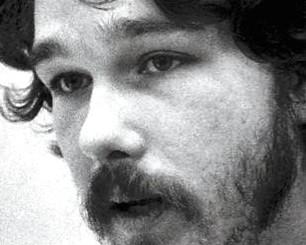 Edward Fitzgerald
Murderer · USA · 1980
Edward B. Fitzgerald Sr. was put to death in Virginia’s electric chair for the…
1 victim
Edward Fitzgerald
Murderer · USA · 1980
Edward B. Fitzgerald Sr. was put to death in Virginia’s electric chair for the…
1 victim
 Billy Bailey
Murderer · USA · 1979
Billy Bailey (1947? - January 25, 1996) was a convicted murderer who was execut…
2 victims
Billy Bailey
Murderer · USA · 1979
Billy Bailey (1947? - January 25, 1996) was a convicted murderer who was execut…
2 victims
- Gender
- male
- Country
- USA
- Location
- Middlefield, Connecticut , USA
- Date of birth
- April 29, 1934
- Age at first offence
- 35
- Characteristics
- torture, convicted rapist
- Victim profile
- Alex Rackley, 19 (New York Panther)
- Method of murder
- Shooting
- Date(s) of murder
- May 21, 1969
- Years active
- 1969
- Date of arrest
- —
- Status
-
Died in custody
Served four years of the mandatory life sentence for second degree murder; died on February 3, 2009
Background
Warren Aloysious Kimbro was a Black Panther Party member in New Haven, Connecticut. He lived at the New Haven Panther headquarters at 365 Orchard Street, where Alex Rackley was held and tortured for two days under suspicion of being an informant for the FBI's COINTELPRO program.
The offence
Kimbro was found guilty of the May 21, 1969, murder of New York Panther Alex Rackley. After Rackley was held and tortured at the New Haven Panther headquarters, Kimbro, Bridgeport, Connecticut Panther Lonnie McLucas, and national Panther field marshal George W. Sams, Jr. drove Rackley to the marshes of Middlefield, Connecticut. Kimbro and McLucas each shot Rackley, on Sams' orders.
Investigation
At trial, it was established that Rackley was held and tortured for two days at 365 Orchard Street under suspicion of being an informant for the FBI's COINTELPRO program.
Trial
Kimbro was tried in the first of the New Haven Black Panther trials, held in 1970, in connection with the murder of Alex Rackley.
During the trial, Sams testified that national Panther leader Bobby Seale, who had been speaking at Yale University the day before the murder, had personally ordered the killing. There was no corroborating evidence presented to support Sams' testimony. In Seale's subsequent trial, the jury was unable to reach a verdict, and the prosecution chose not to re-try the case.
Kimbro turned state's evidence in exchange for the reduced charge of second degree murder. He received the mandatory life sentence for second degree murder and served four years. Kimbro and Sams both turned state's evidence in exchange for the reduced charge of second degree murder, and they each received the mandatory life sentence and served four years. Many of the people in the New Haven chapter of the Panthers were described as middle class, defined more by propaganda than by their own personalities, and they were young and impressionable.
Michael Koskoff, one of the lawyers for McLucas, said: "Many of the people in the New Haven chapter of the Panthers were middle class. They were defined more by their propaganda than by their own personalities. And they were young and impressionable. At the trial, Sams and Kimbro both turned state's evidence in exchange for the reduced charge of second degree murder, for which each received the mandatory life sentence and served four years. Kimbro afterwards attended Harvard University."
Sentencing
Kimbro received the mandatory life sentence for second degree murder after turning state's evidence. He served four years.
Appeals
The jury in Seale's subsequent trial was unable to reach a verdict, and the prosecution chose not to re-try the case.
Outcome
Kimbro had been found guilty of the May 21, 1969, murder of Alex Rackley in 1970, in the first of the New Haven Black Panther trials. After trial developments, Kimbro was convicted under the reduced charge of second degree murder and served four years of the mandatory life sentence.
Aftermath
For more than 20 years, Kimbro was president and CEO of Project MORE, a non-profit agency in New Haven that offered both day programs and residence to ex-convicts, helping them to re-enter society.
Kimbro later attended Harvard University. He died on February 3, 2009.
The Rackley case and Kimbro's journey from murderer to one who rehabilitates convicts were the subjects of a 2006 book, Murder in the Model City: The Black Panthers, Yale and the Redemption of a Killer by Paul Bass, editor of The New Haven Independent, and Douglas Rae, professor of management and political science at the Yale School of Management (Basic Books, 304 pages).
Other details
Commentators believed that Sams orchestrated the murder to cover up the fact that he was the informant and agent provocateur, though they had no corroborating evidence to prove the claim. The narrative also included an urban legend that Hillary Clinton defended Bobby Seale and helped him get acquitted; this was said not to be the case because Clinton was a student at the time and not a lawyer. The legend also claimed that Kimbro and Al Gore became friends at Harvard; it was noted that Gore attended Harvard from 1965 through 1969, several years before Kimbro.
Spotted an error, or have more information about this case?