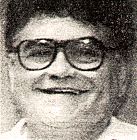
Gian Luigi Ferri
Mass murderer Gameel Al-Batouti
Mass murderer · USA · 1999
Gameel Al-Batouti (also rendered “Gamil ElBatouty” or “El Batouty” in U.S. offi…
216 victims
Gameel Al-Batouti
Mass murderer · USA · 1999
Gameel Al-Batouti (also rendered “Gamil ElBatouty” or “El Batouty” in U.S. offi…
216 victims
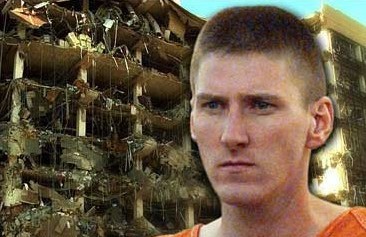 Timothy McVeigh
Mass murderer · USA · 1995
Timothy James McVeigh (April 23, 1968 – June 11, 2001) was a United States Army…
168 victims
Timothy McVeigh
Mass murderer · USA · 1995
Timothy James McVeigh (April 23, 1968 – June 11, 2001) was a United States Army…
168 victims
 Julio Gonzalez
Mass murderer · USA · 1990
Julio Gonzalez was sentenced to 174 twenty-five-year sentences (a total of 4,35…
87 victims
Julio Gonzalez
Mass murderer · USA · 1990
Julio Gonzalez was sentenced to 174 twenty-five-year sentences (a total of 4,35…
87 victims
 David Burke
Mass murderer · USA · 1987
David Augustus Burke (May 18, 1952–December 7, 1987) was an employee of USAir,…
43 victims
David Burke
Mass murderer · USA · 1987
David Augustus Burke (May 18, 1952–December 7, 1987) was an employee of USAir,…
43 victims
 George Jo Hennard
Mass murderer · USA · 1991
George Jo Hennard carried out a mass killing at a Luby’s Cafeteria in Killeen,…
23 victims
George Jo Hennard
Mass murderer · USA · 1991
George Jo Hennard carried out a mass killing at a Luby’s Cafeteria in Killeen,…
23 victims
 James Huberty
Mass murderer · USA · 1984
James Oliver Huberty was a 41-year-old unemployed security guard. He was born i…
21 victims
James Huberty
Mass murderer · USA · 1984
James Oliver Huberty was a 41-year-old unemployed security guard. He was born i…
21 victims
 Amy Lee Black
Homicide · USA · 1990
Amy Lee Black was 16 years and six months old at the time of the crime. She was…
1 victim
Amy Lee Black
Homicide · USA · 1990
Amy Lee Black was 16 years and six months old at the time of the crime. She was…
1 victim
 José Antonio Rodríguez Vega
Serial killer · Spain · 1987
José Antonio Rodríguez Vega was a Spanish serial killer nicknamed El Mataviejas…
16 victims
José Antonio Rodríguez Vega
Serial killer · Spain · 1987
José Antonio Rodríguez Vega was a Spanish serial killer nicknamed El Mataviejas…
16 victims
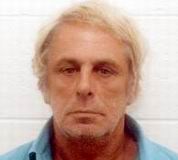 William Morrisette
Murderer · USA · 1980
William Wilton Morrisette, III was convicted in Virginia for the 1980 death of…
1 victim
William Morrisette
Murderer · USA · 1980
William Wilton Morrisette, III was convicted in Virginia for the 1980 death of…
1 victim
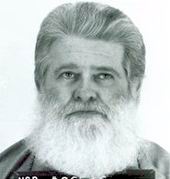 Michael Wayne Ryan
Murderer · USA · 1984
Michael Wayne Ryan (born 3 August 1948) was an American white supremacist and m…
2 victims
Michael Wayne Ryan
Murderer · USA · 1984
Michael Wayne Ryan (born 3 August 1948) was an American white supremacist and m…
2 victims
 Jerry White
Murderer · USA · 1981
Jerry White was the appellant, petitioner, and defendant in multiple proceeding…
1 victim
Jerry White
Murderer · USA · 1981
Jerry White was the appellant, petitioner, and defendant in multiple proceeding…
1 victim
- Gender
- male
- Country
- USA
- Location
- San Francisco, California, USA
- Date of birth
- December 29, 1937
- Age at first offence
- 56
- Characteristics
- revenge, shooting spree
- Victim profile
- Allen J. Berk , 52; Jack Berman , 36; Donald Merrill , 48; Shirley Mooser , 64; Deborah Fogel , 33; Jody Jones Sposato , 30; David Sutcliffe , 30; John Scully , 28
- Method of murder
- Shooting (two TEC-9's and a .45 semi-automatic pistol)
- Date(s) of murder
- July 1, 1993
- Years active
- 1993
- Date of arrest
- —
- Status
-
Died in custody
Committed suicide by shooting himself the same day; on 1 July 1993, Gian Luigi Ferri, 55, killed eight people and wounded six others at an office building at 101 California St. in San Francisco
Background
Gian Luigi Ferri was identified as a 55-year-old businessman and real estate speculator from Los Angeles who became involved with ADF Mortgage. Pettit & Martin advised Ferri in real estate transactions in 1981, mainly to buy several trailer parks in Indiana and Kentucky. The firm later helped him find local counsel in Indiana that helped him win a $1 million judgment. Ferri complained that a seller had made misrepresentations, and the firm had no records of any complaints about its own work from Ferri. Pettit & Martin had no contact with him since 1982. Ferri complained that the seller had made misrepresentations, and he sought local counsel in Indiana that helped him win a $1 million judgment there.
Ferri later approached an office in Hollywood seeking to file for personal bankruptcy. He told the lawyers in Hollywood that he had lost $300,000 in a land deal in Leadville, Colo., near Aspen.
A rambling letter left behind by Ferri was published in part and described his grievances. The letter ranted about a flavor enhancer in food, monosodium glutamate, the Food and Drug Administration, and the legal profession, and it included a list of complaints. Ferri said in his letter that he had been “raped” by Pettit & Martin, and he asserted that his complaints had been thwarted by “a corrupt legal system of 'esquires'.”
When Ferri entered Pettit & Martin, he was reported to have nursed an irrational grudge against Pettit & Martin for many years.
The offence
On 1 July 1993, Ferri entered the offices of Pettit & Martin on the 34th floor of 101 California Street in San Francisco. He entered the building at 2:57 PM and began shooting after exiting the elevator on the 34th floor. He donned ear protectors and opened fire with two TEC-9 handguns and a .45 semi-automatic pistol.
He continued shooting after roaming the 34th floor and then moved down one floor through an internal staircase and continued firing. The killings continued on several floors before Ferri eventually shot himself fatally as San Francisco Police closed in.
Eight people were killed in the attack, and six others were injured.
Investigation
A typed, four-page letter was found on Ferri’s body after he killed eight people, wounded six others, and finally killed himself. The letter was semiliterate and contained misspellings and grammatical errors. Excerpts were published in The San Francisco Chronicle.
The letter included the following passage:
“The last thing that made all of this come to a head is that I am one of those people of the 5% of the population (12.5 million people), where the poison monosodium glutamate (MGS) has reached such high levels in our cells, that a minimum amount more can kill us.”
The letter ended with a blast at lawyers:
“When you hire a consultant or an attorney you don't hire for the purpose of getting raped and than having all your efforts toward legal recourse totally thwarted by a corrupt legal system of 'esquires'. Esquires in the dark ages romed the countryside to steel from the working people and give tothe prince. Do attorney want us to call them esquires because their allegiance is to the monarchy?”
Ferri carried a list of more than 30 names described as apparently targets of his wrath, but no one on his list was among the victims. Investigators reported that the dead and wounded did not appear to have any connection with Ferri or to be on his list of criminals, rapists, racketeeres, or lobbyists.
Arrest
No arrest occurred because Ferri killed himself during the attack.
Trial
No trial proceedings were described in the provided material.
Sentencing
No sentencing was described in the provided material.
Appeals
No appeals were described in the provided material.
Outcome
Ferri committed suicide by shooting himself on 1 July 1993, the same day as the mass shooting. The attack resulted in eight deaths and six injuries.
Aftermath
Legal actions followed the shootings. Lawyers for the families sued both the gun makers and the store where the guns were purchased, charging that the sellers acted irresponsibly because they should have known the weapon was inappropriate for legal use. A series of lawsuits were named against gun makers and sellers, including Navegar Inc., Hell-Fire Trigger Systems, USA Magazines, and Superpawn.
A state court judge ruled that the maker of the guns used in the shooting could be sued for the deaths. The ruling was issued by Judge James Warren of San Francisco Superior Court on Monday, and it did not address whether the manufacturers of the magazines and ammunition could be included in the suits. The decision refused to dismiss the series of lawsuits against the makers of the guns Ferri used when he entered Pettit & Martin and sprayed the offices with bullets. Judge Warren ruled that gun manufacturer Navegar Inc. might be liable under theories of strict liability and negligence.
Ernest Getto, a lawyer for Navegar, contended that the semiautomatic guns Ferri used were legally made in Florida and sold in Nevada, and that neither state had a ban on assault weapons at the time. Getto said:
"The bottom line is that nothing Navegar did has any connection whatsoever to what happened,"
"We did nothing unlawful in California."
Judge Warren based the ruling on the fact that the TEC-DC-9 gun used by Ferri was a slightly modified version of one banned by the California Legislature in 1989. The judge reasoned that the company introduced the gun into the general market even though it could have foreseen that the weapon would eventually turn up in California and possibly be used for criminal purposes. The Center to Prevent Handgun Violence filed eight lawsuits in May on behalf of the survivors and the families of the victims. The suits maintained that the manufacturers negligently made and sold products that “would be used to kill or injure innocent people in a violent criminal act.”
The suits maintained that the makers were liable because the products had no legitimate sporting or self-defense purpose and were easily adapted to mass killings. The suits named Navegar, maker of the TEC-DC-9; Hell-Fire Trigger Systems, maker of the trigger accelerator used; USA Magazines, maker of the 32-round magazine standard in the TEC-DC-9; and Superpawn, the Nevada pawnshop where Ferr
Spotted an error, or have more information about this case?