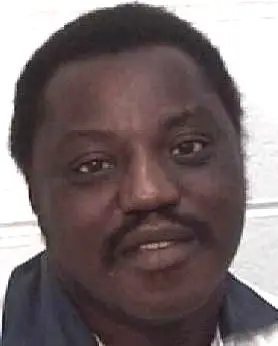
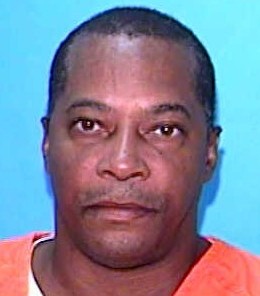
Eddie William Finney
Murderer Ervil LeBaron
Murderer · USA · 1972
Ervil Morrell LeBaron (1925 to August 16, 1981) was the leader of a polygamous…
35 victims
Ervil LeBaron
Murderer · USA · 1972
Ervil Morrell LeBaron (1925 to August 16, 1981) was the leader of a polygamous…
35 victims
 Brian Kevin Rosenfeld
Murderer · USA · 1985
Brian Kevin Rosenfeld Brian Kevin Rosenfeld was sentenced to three concurrent l…
23 victims
Brian Kevin Rosenfeld
Murderer · USA · 1985
Brian Kevin Rosenfeld Brian Kevin Rosenfeld was sentenced to three concurrent l…
23 victims
 Marvin Gray
Murderer · USA · 1975
Marvin Gray was convicted killer who claimed responsibility for 23 slayings and…
23 victims
Marvin Gray
Murderer · USA · 1975
Marvin Gray was convicted killer who claimed responsibility for 23 slayings and…
23 victims
 Yahweh ben Yahweh
Murderer · USA · 1980
Yahweh ben Yahweh was born and legally named Hulon Mitchell Jr. (October 27, 19…
23 victims
Yahweh ben Yahweh
Murderer · USA · 1980
Yahweh ben Yahweh was born and legally named Hulon Mitchell Jr. (October 27, 19…
23 victims
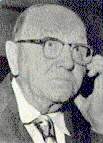 Frederick Edel
Murderer · USA · 1926
Frederick W. Edel was an ex-convict and habitual criminal. Edel was charged wit…
3 victims
Frederick Edel
Murderer · USA · 1926
Frederick W. Edel was an ex-convict and habitual criminal. Edel was charged wit…
3 victims
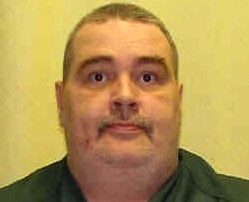 Jessie James Cowans
Homicide - Murderer · USA · 1977
Jessie James Cowans Jessie James Cowans was arrested for armed robbery when he…
2 victims
Jessie James Cowans
Homicide - Murderer · USA · 1977
Jessie James Cowans Jessie James Cowans was arrested for armed robbery when he…
2 victims
 Michael Carneal
Homicide · USA · 1997
Michael Carneal, aged 14, opened fire at Heath High School in West Paducah, Ken…
3 victims
Michael Carneal
Homicide · USA · 1997
Michael Carneal, aged 14, opened fire at Heath High School in West Paducah, Ken…
3 victims
 Laura Rogers
Murderer · USA · 2004
Laura Rogers was convicted of manslaughter after the shooting death of her husb…
1 victim
Laura Rogers
Murderer · USA · 2004
Laura Rogers was convicted of manslaughter after the shooting death of her husb…
1 victim
 Roxanne Severcool
Homicide · USA · 1980
Defendant: Roxanne Severcool (juvenile offender) · Co-defendant: Robert Fadden…
3 victims
Roxanne Severcool
Homicide · USA · 1980
Defendant: Roxanne Severcool (juvenile offender) · Co-defendant: Robert Fadden…
3 victims
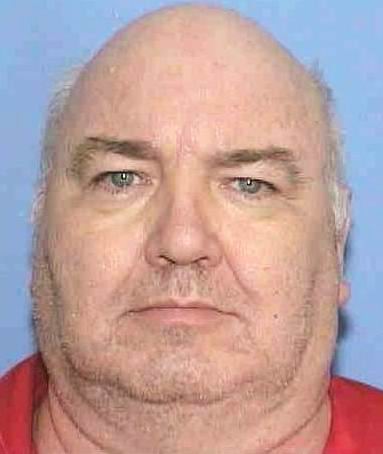 Paul Woodward
Murderer · USA · 1986
Paul E. Woodward was convicted of capital murder (with the underlying crime of…
1 victim
Paul Woodward
Murderer · USA · 1986
Paul E. Woodward was convicted of capital murder (with the underlying crime of…
1 victim
- Gender
- male
- Country
- USA
- Location
- Jones County, Georgia, USA
- Date of birth
- 1956
- Age at first offence
- 21
- Characteristics
- kidnapping, rape, robbery
- Victim profile
- Thelma Kalish, 69, and Ann Kaplan, 60
- Method of murder
- Beating with a two-by-four piece of lumber
- Date(s) of murder
- September 22, 1977
- Years active
- 1977
- Date of arrest
- —
- Status
-
Sentenced to death
Sentenced to death on January 11, 1978
Case record: Eddie William Finney
Background
Eddie William Finney Jr. was convicted and sentenced to death in Jones County in November 1977, about three months after the bodies of Thelma Kalish, 69, and Ann Kaplan, 60, were found in their home.
Finney was co-defendant with Johnny Mack Westbrook. Both were convicted and sentenced to death. Their sentences were affirmed on direct appeal.
Finney later returned to the trial court in April 1991 for a decision on the issue of mental retardation.
A resentencing trial for Finney was held in Morgan County in December 1983 after his motion for change of venue was granted.
The Georgia Supreme Court case FINNEY v. THE STATE was decided on September 13, 1984, with rehearing denied on October 1, 1984.
The offence
On September 23, 1977, Finney and one Eddie William Finney went to the home of Mrs. Thelma Kalish in Macon, Georgia, to cut her lawn. Shortly after they began cutting the grass, they decided that they did not desire to work and conceived the idea of robbing Mrs. Kalish. They lured Mrs. Kalish from her home on a pretext concerning the lawnmower, grabbed her, stuck a pistol in her side, and took her back into her house where they tied her up and both of them raped her.
Because Mrs. Kalish did not have any cash at home, they forced her at gunpoint to drive to her bank, to withdraw $600 in cash, and to give it to them. When they arrived back at her house, Mrs. Kalish jumped out of the car, screamed, and began running toward her neighbor, Mrs. Ann Kaplan, who was standing nearby. Finney caught Mrs. Kalish and hit her over the head with her pistol.
Finney grabbed Mrs. Kaplan and hit her with his fists and a pistol. Appellant and Finney put the two women into the back seat of Mrs. Kalish's car and drove to a remote, wooded area in Jones County. There they took both women into the woods and tied and gagged them with pieces of Mrs. Kaplan's clothing. They beat the two women to death with a two-by-four piece of lumber. Appellant killed Mrs. Kaplan and Finney killed Mrs. Kalish.
The jury found as statutory aggravating circumstances that each murder was committed during the commission of the capital felony of kidnapping with bodily injury, and that the murders were outrageously or wantonly vile, horrible or inhuman in that they involved torture, depravity of mind, or aggravated battery to the victims. The jury also found as a statutory aggravated circumstance that one murder was committed during the commission of the other.
Investigation
After returning to Macon, they abandoned Mrs. Kalish's car at the Fifth Street Bridge. Appellant went back to his apartment where he left Mrs. Kaplan's jewelry and his pistol. That night appellant and Finney took a cab to Mrs. Kalish's house. When they saw several police cars, appellant directed the cab driver back to the place where the driver had picked them up. When appellant paid the bill, the cab driver noticed that appellant had a large roll of bills which were still in the band from the bank.
Appellant and Finney were identified through an informer and were placed under arrest. When he was arrested, appellant had $500 in $20 bills in his right sock. A search of appellant's apartment revealed a .32 pistol and loaded clip under the mattress and Mrs. Kaplan's charm bracelet on top of the vanity.
After Finney was arrested, he took law enforcement officers to Jones County where they found the bodies and Mrs. Kalish's purse. Inside the purse was a savings withdrawal slip for $600, dated September 23, 1977. Finney's fingerprints were found on drinking glasses in Mrs. Kalish's bedroom.
Both appellant and Finney confessed to the crimes.
Trial
Finney and co-defendant Westbrook were indicted in Jones County for the murder and kidnapping of two elderly women. They were tried separately, convicted, and sentenced to death.
Finney’s evidentiary facts were set forth with reference to Westbrook v. State.
In his first enumeration, Finney complained of the trial court’s refusal to grant his request for funds to employ psychiatric and psychological experts of his own choosing. The court found no error. Finney’s request for an evaluation by experts at Central State Hospital was granted, and the experts were directed to determine whether Finney was incompetent or insane and whether he suffered from any mental disorders or defects pertinent to mitigation.
The report of the trial judge contained a copy of an evaluation of Finney dated October 27, 1983 done by a forensic team from the hospital composed of chief psychologist Gerald S. Lower, Ph.D., J.D.; Luis J. Jacobs, M.D.; and Gaye Cowan, R.N., B.S.N. The team reported no evidence of any major psychiatric disorder, delusional compulsion, or inability to distinguish right from wrong.
There was also a November 1, 1977 summary of a psychiatric evaluation attached to the trial judge’s report. In it, Carl L. Smith, M.D., reported that Finney was functioning in the borderline to dull normal range of intelligence, but was not mentally retarded. The evaluation results were not consistent with psychosis or insanity. The court concluded Finney was not deprived of expert assistance regarding his mental condition and that the trial court did not err by refusing to provide additional assistance of Finney’s own choosing.
In his second enumeration of error, Finney complained about the trial court’s denial of sequestered voir dire. The court held that sequestered voir dire was within the discretion of the court and that Finney had shown no prejudice.
In his third enumeration, Finney contended the trial court erred by refusing to excuse for cause three veniremen whose voir dire responses showed a bias in favor of the death penalty. The court found no error, holding that although the jurors’ initial answers indicated bias, all three ultimately testified they could consider a life sentence and could extend mercy if the facts warranted it, and that their bias was not unequivocal and absolute.
In his fourth enumeration, Finney contended the trial court erred by allowing in evidence four photographs. Two photographs depicted, from different angles, the victims’ bodies as they lay at the murder scene. The court found no error admitting them because photographs depicting the crime scene were relevant and admissible. The other two photographs depicted one victim while still living holding in her lap a small child. These photographs had been shown to Finney prior to his arrest while law officers were still searching for the missing victims. Finney stated he had cut grass for the woman but had not been to her house in over a year; the court noted he had been to her house the previous day and that he knew the victim had been raped, kidnapped, and beaten to death with a two-by-four and that her body lay in woods several miles outside of town. The court found the photographs were relevant at resentencing to rebut a claim about identity and to show lying to officers investigating the victim’s disappearance and lack of remorse.
In his sixth enumeration, Finney contended the prosecutor’s closing argument violated OCGA 17-8-76(a). The prosecutor told the jury that “if [Finney] is ever on the street again in his whole life, there is no doubt but what he'll commit crimes like this again.” The court held this did not violate OCGA 17-8-76(a) because the district attorney made no reference to pardon, parole, or clemency.
In his seventh enumeration, Finney contended the trial court erred in its charge by defining parties to a crime, conspiracy, and by charging that any act done in pursuance of an association by any one of the associates would, in legal contemplation, be the act of each of them. The evidence showed Finney and Westbrook, acting in concert, kidnapped and murdered two elderly women and that Finney had killed one while Westbrook had killed the other. The court agreed with the state that the charge was necessary to explain the legal basis for the statutory aggravating circumstance that murder of one victim was committed while the offender was engaged in the commission of the murder of the other victim. The court disagreed that the charge deprived Finney of the right to ask the jury to distinguish his acts from Westbrook’s acts when deciding culpability and appropriateness of the death penalty, stating that it examined the charge as a whole.
The jury also found aggravating circumstances as follows:
- Each murder was committed during the commission of the capital felony of kidnapping with bodily injury.
- Each murder was outrageously or wantonly vile, horrible or inhuman in that they involved torture, depravity of mind, or aggravated battery to the victims.
- One murder was committed during the commission of the other.
Finney’s eighth and ninth enumerations were resolved against him. The court concluded the death sentences were not excessive or disproportionate to penalties in similar cases and were not imposed under the influence of passion, prejudice, or other arbitrary factors.
Sentencing
Finney received a death sentence.
At issue in prior proceedings, the United States Court of Appeals, Eleventh Circuit, vacated death sentences for deficiencies in sentencing instructions in Finney’s and Westbrook’s respective trials. Finney was returned to Jones County for retrial as to sentence.
His case proceeded to a resentencing trial held in Morgan County in December 1983, and Finney was again sentenced to death.
Appeals
Finney’s sentences were affirmed on direct appeal in:
- Finney v. State, 242 Ga. 582 (250 SE2d 388) (1978)
- Westbrook v. State, 242 Ga. 151 (249 SE2d 524) (1978)
Their sentences were subsequently vacated by the United States Court of Appeals, Eleventh Circuit, on virtually identical deficiencies in sentencing instructions:
- Finney v. Zant, 709 F2d 643 (11th Cir. 1983)
- Westbrook v. Zant, 704 F2d 1487 (11th Cir. 1983)
The Georgia Supreme Court decided FINNEY v. THE STATE, 40891, at (253 Ga. 346) (320 SE2d 147) (1984), decided September 13, 1984, and rehearing was denied October 1, 1984.
Finney’s resentencing issues addressed denials of requests for funds for psychiatric and psychological experts, denial of sequestered voir dire, denial of excuses for cause of veniremen biased in favor of the death penalty, admission of photographs, and alleged improper prosecutor closing argument and jury charge.
Finney’s case was returned to the trial court in April 1991 for a decision on the issue of mental retardation.
Outcome
Eddie William Finney was sentenced to death, and the Georgia Supreme Court upheld the death penalty.
Other details
Thelma Kalish, 69, and Ann Kaplan, 60, were murdered.
An autopsy revealed that Mrs. Kaplan died of torn lacerations in the heart. Mrs. Kaplan had bruises on her upper trunk, shoulders and chest. Mrs. Kalish had a three-inch laceration in her forehead, a fractured jaw, a fractured rib, a fractured arm, and several broken teeth.
The court indicated that both women died of blows inflicted by appellant and Finney.
Names and roles connected to the appeal included:
- Joseph H. Briley, District Attorney
- Thomas J. Matthews, Assistant District Attorney
- Michael J. Bowers, Attorney General
- Susan V. Boleyn, Assistant Attorney General
- Groover & Childs, Craig M. Childs, and G. B. Moore III for appellant
Co-defendant Westbrook:
- The Georgia Supreme Court reversed Westbrook’s death sentence because the judge sent the jury back into the deliberation room when it first voted for life.
- Westbrook died of heart disease in prison in 1993.
Spotted an error, or have more information about this case?