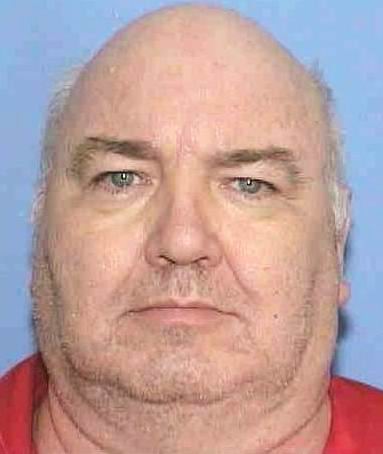
Paul Woodward
Murderer Brian Kevin Rosenfeld
Murderer · USA · 1985
Brian Kevin Rosenfeld Brian Kevin Rosenfeld was sentenced to three concurrent l…
23 victims
Brian Kevin Rosenfeld
Murderer · USA · 1985
Brian Kevin Rosenfeld Brian Kevin Rosenfeld was sentenced to three concurrent l…
23 victims
 Yahweh ben Yahweh
Murderer · USA · 1980
Yahweh ben Yahweh was born and legally named Hulon Mitchell Jr. (October 27, 19…
23 victims
Yahweh ben Yahweh
Murderer · USA · 1980
Yahweh ben Yahweh was born and legally named Hulon Mitchell Jr. (October 27, 19…
23 victims
 Russell Ellwood
Murderer · USA · 1991
Russell Ellwood was a former taxi driver. Authorities suspected him of killing…
20 victims
Russell Ellwood
Murderer · USA · 1991
Russell Ellwood was a former taxi driver. Authorities suspected him of killing…
20 victims
 Joshua Phillips
Homicide · USA · 1998
November 3, 1998 — Maddie Clifton vanished from her Jacksonville, Fla., neighbo…
1 victim
Joshua Phillips
Homicide · USA · 1998
November 3, 1998 — Maddie Clifton vanished from her Jacksonville, Fla., neighbo…
1 victim
 Justin Dickens
Homicide · USA · 1994
Justin Wiley Dickens (often referred to as “Chicken”) was convicted in the Marc…
1 victim
Justin Dickens
Homicide · USA · 1994
Justin Wiley Dickens (often referred to as “Chicken”) was convicted in the Marc…
1 victim
 Kelley Gann
Murderer · USA · 2012
Kelley Lynn Gann was a 32-year-old Rosenberg woman. Kelley Gann caused the deat…
1 victim
Kelley Gann
Murderer · USA · 2012
Kelley Lynn Gann was a 32-year-old Rosenberg woman. Kelley Gann caused the deat…
1 victim
 Bruce Charles Jacobs
Murderer · USA · 1986
Bruce Charles Jacobs was convicted of capital murder for killing Conrad Harris.…
1 victim
Bruce Charles Jacobs
Murderer · USA · 1986
Bruce Charles Jacobs was convicted of capital murder for killing Conrad Harris.…
1 victim
 Anthony Morley
Murderer · United Kingdom · 2008
Anthony Morley (born 1972) was an English model and convicted murderer. He won…
1 victim
Anthony Morley
Murderer · United Kingdom · 2008
Anthony Morley (born 1972) was an English model and convicted murderer. He won…
1 victim
- Gender
- male
- Country
- USA
- Location
- Perry County, Mississippi, USA
- Date of birth
- January 17, 1948
- Age at first offence
- 38
- Characteristics
- kidnapping, rape
- Victim profile
- Rhonda Holloman Crane (female, 24)
- Method of murder
- Shooting
- Date(s) of murder
- July 23, 1986
- Years active
- 1986
- Date of arrest
- —
- Status
-
Executed
Executed by lethal injection in Mississippi on May 19, 2010
Case overview
Paul E. Woodward was convicted of capital murder (with the underlying crime of rape), kidnapping, and sexual battery of Rhonda Crane in Perry County in 1986. The case was later moved to Hinds County. He was sentenced to death for capital murder and received additional thirty-year sentences in the Mississippi Department of Corrections for kidnapping and sexual battery, with the kidnapping and sexual battery sentences running consecutively. His death sentence was later vacated and remanded for a new sentencing hearing. On resentencing, he again received a death sentence.
On May 19, 2010, the Mississippi Department of Corrections conducted the mandated execution of state inmate Paul E. Woodward at the state penitentiary at Parchman. He was pronounced dead at 6:39 p.m. The execution was carried out by lethal injection.
Timeline
- July 23, 1986 — Rhonda Crane, age twenty-four, was kidnapped, raped, and murdered in Perry County.
- July 24, 1986 — Crane’s body was found; Paul Everette Woodward was arrested.
- April 29, 1987 — Woodward was convicted and sentenced to death by lethal injection.
- October 1988 — The Mississippi Supreme Court upheld Woodward’s conviction.
- October 1993 — The state high court ordered a resentencing hearing for Woodward due to a U.S. Supreme Court decision prohibiting prosecutors from using the words “heinous,” “atrocious” and “cruel” to describe a death.
- Sept. 1995 — A Perry County jury handed down another death sentence to Woodward.
- Dec. 18, 1997 — The state Supreme Court refused to grant Woodward a new sentencing.
- March 6, 2003 — Mississippi justices turned down Woodward’s post-conviction petition.
- August 2009 — The 5th Circuit Court of Appeals denied Woodward’s request for habeas relief.
- May 4, 2010 — The Mississippi Supreme Court set Woodward’s execution date.
- May 19, 2010 — Woodward was executed by lethal injection at 6:39 p.m. at the state penitentiary at Parchman.
- 6:39 p.m. — Woodward was pronounced dead by lethal injection at the state penitentiary at Parchman.
Background
Rhonda Crane was a volunteer, court-appointed, special advocate for children in the Jackson County Youth Court. On July 23, 1986, she was traveling alone on Highway 29 in Perry County to meet her parents, who were camping at Flynt Creek Water Park.
Paul Everette Woodward was described as a logger at the time of the offense. He was later held as a death row inmate and inmate identified as death row Inmate Paul E. Woodward, MDOC #45981.
The offence
On July 23, 1986, Rhonda Crane was traveling on Mississippi Highway 29 south of New Augusta in Perry County, Mississippi to join her parents on a camping trip. A white male driving a white log truck forced her car to stop in the middle of the road. The white male exited the truck with a pistol in his hand and forced Crane to get into his truck. He drove the victim to an isolated area, forced her out of his truck and into the woods at gunpoint, and forced her to have sexual relations with him. Crane was shot in the back of her head and died.
Crane’s automobile was left on the highway with the engine running, the driver’s door open, and her purse on the car seat.
A motorist traveling in a vehicle on the same highway saw a white colored, unloaded, logging truck moving away from the Crane vehicle and notified the authorities. A housewife residing on a bluff along the highway at the location of the Crane car noted a logging truck with a white cab stop in front of her driveway. A white male exited and walked toward the back of his truck and returned with a blonde haired woman wearing yellow clothing. The housewife heard the words “get in, get in” and the male forced the blonde woman into the driver’s door of the truck and then drove off.
Evidence described as found at the scene included a blonde haired woman wearing yellow clothing and a blue topped fountain pen found at the scene. Crane’s body was later located in a nearby wooded area by her father and a friend.
In the later legal proceedings, Woodward was convicted of capital murder (with the underlying crime of rape), kidnapping, and sexual battery.
Investigation
Law enforcement officers began an investigation to locate Rhonda Crane. Their investigation developed facts including that Woodward unloaded logs at Leaf River Forest Products, a pulp mill, and departed the yard at 11:36 a.m. in a white Mack log truck. Woodward arrived at his wood yard at approximately 12:45 to 1:00 p.m. The yard manager noted that he was late arriving at the yard and was wet from sweating, and that a drive from Leaf River to Walley takes approximately thirty minutes.
A sheriff’s deputy stopped Woodward around 2:00 p.m. on the afternoon of July 23 in a white Mack logging truck and asked whether he had seen anything that would assist in the investigation of Rhonda Crane’s disappearance. Woodward replied that he had not seen anything. Through the investigation, it was ascertained that Woodward was the only driver of a white colored logging truck operating at the nearby timber yards on that date.
A blue topped fountain pen was reported as found at the scene, and a blue topped fountain pen was also found in Woodward’s shirt pocket during events described in later proceedings related to suppression.
Arrest
Woodward was arrested following the discovery of Crane’s body on July 24, 1986. His arrest occurred after an investigation developed the facts about his truck and his location at the relevant times.
Trial
Charges and venue
Woodward was indicted for capital murder (with the underlying crime of rape), kidnapping, and sexual battery. The venue was changed from Perry County to Hinds County due to pretrial publicity.
The defense contested aspects of the indictment process, including claims that the multi-count indictment was prejudicial, that certain venirepersons were excused for cause improperly, and evidentiary and procedural matters including suppression of physical evidence and confessions. The trial court’s rulings on these issues were affirmed on appeal.
Guilt and verdict
After a separate sentencing hearing, the jury convicted Woodward of capital murder, kidnapping, and sexual battery. Following a bifurcated process, the jury returned three separate guilty verdicts to all charges.
Sentencing
First sentencing (death sentence)
After the jury’s guilty verdicts, the trial court deferred sentencing on kidnapping and sexual battery until after the bifurcated hearing on the capital murder charge.
At the sentencing trial, the jury returned a verdict finding aggravating circumstances and imposing death for capital murder. The jury found the aggravating circumstances included:
- that the capital murder of Rhonda Crane was committed while Paul Woodward was engaged in the commission of rape;
- that the capital murder of Rhonda Crane was especially heinous, atrocious or cruel;
- that the capital murder offense was committed for the purpose of avoiding or preventing a lawful arrest, or effecting an escape from custody.
The jury also found insufficient mitigating circumstances to outweigh the aggravating circumstances. The court entered three separate sentences: thirty years in the Mississippi Department of Corrections for kidnapping and thirty years for sexual battery, with the sentences for these two crimes to run consecutively with each other. After the jury verdict of death on capital murder, the court entered the order reflecting that verdict.
Post-sentencing history and resentencing
Woodward sought post-conviction relief. His death sentence was vacated and remanded for a new sentencing hearing.
On remand, the trial judge again sentenced Woodward to death.
For the resentencing in Perry County, jury selection began on September 13, 1995. The jury rendered its verdict on September 20, 1995, sentencing Woodward to death. The jury found:
- attempted to kill the victim,
- actually killed the victim,
- intended the killing of the victim,
- contemplated that lethal force would be employed.
The jury also found aggravating factors:
- the murder was committed while Woodward was engaged in the commission of rape;
- the murder was especially heinous, atrocious, or cruel;
- the murder was committed for the purpose of avoiding or preventing a lawful arrest, or effecting an escape from custody.
Woodward moved for judgment notwithstanding the verdict or, in the alternative, a new trial; the trial judge denied the motion on October 12, 1995.
Appeals and post-conviction proceedings
Direct appeal
Woodward v. State (533 So.2d 418) affirmed his conviction and addressed issues including the indictment and suppression matters. The court held, among other things, that no error occurred in charging three felony counts in a single indictment since the indictment returned after the effective date of the relevant multi-count indictment statute followed its dictates. It also addressed excusing jurors for cause, denial of a motion to quash the jury panel due to opening statement remarks prior to voir dire, denial of suppression of physical evidence consisting of a pack of Reliance ink pens, denial of suppression of confessions, the sufficiency of evidence to prove rape as an underlying felony, and whether cumulative errors warranted reversal.
The Mississippi Supreme Court affirmed the guilt and sentencing phases of the trial and affirmed the penalty of death.
Post-conviction relief
After affirmance of conviction of capital murder, kidnapping, and sexual battery, Woodward sought postconviction relief. The Mississippi Supreme Court vacated the death sentence and remanded for a new sentencing hearing. The court held that counsel’s performance at the penalty phase involved ineffective assistance, including counsel’s statements during closing argument and failure to offer all evidence in mitigation, and that an instruction on the “especially heinous, atrocious, or cruel” aggravating factor required remand for a new sentencing hearing.
On remand, the Mississippi Supreme Court later affirmed the death sentence again. In that appeal, it considered several issues including requests for psychiatric evaluation by choice, Batson challenges regarding peremptory strikes, admission of photographs, the validity of limiting instructions for “especially heinous, atrocious, or cruel,” sufficiency of evidence for the “avoiding lawful arrest” aggravator, and alleged prosecutorial misconduct.
Federal habeas corpus
Following state court proceedings, Woodward filed a federal habeas petition. The district court denied requested relief but issued certificates of appealability on certain issues. The United States Court of Appeals for the Fifth Circuit affirmed denial of habeas relief.
The Fifth Circuit addressed ineffective assistance claims including counsel’s concession of guilt to the jury without first securing Woodward’s consent, counsel’s failure to object to the State’s use of other bad acts in closing argument, and the trial court’s refusal to provide funds for an independent psychiatrist.
The Fifth Circuit also affirmed the denial of relief on the Batson claim concerning the State’s peremptory challenges during resentencing.
Execution details
Execution date and pronouncement
Woodward.
Woodward was pronounced dead at 6:39 p.m. The Sunflower County Coroner Heather Burton pronounced Woodward dead at 6:39 p.m.
MDOC press conference statements
MDOC Commissioner Christopher Epps said during a press conference following the execution that the evening marked the close of the Paul E. Woodward case and that justice was carried out professionally with dignity and decency.
Epps also made the following statements at the press conference:
- “It is our agency’s role to see that the order of the court is carried out professionally with dignity and decency. That has been done and justice was championed today,”
- “In this final chapter tonight, it is our heartfelt hope that the family of Rhonda Crane may now begin the process of healing. Our prayers go out to you as you continue life’s journey,” said Epps.
- Epps concluded his comments by commending Deputy Commissioner of Institutions Emmitt Sparkman and the entire Mississippi State Penitentiary security staff for their professionalism during the process.
Events in the hours leading up to execution
Visits and telephone calls
On Tuesday, May 18, 2010, Woodward visited from 1:15 p.m. until 3:00 with attorneys C. Jackson Williams and Nina Rifkind.
On Wednesday, May 19, 2010, allowed visits with attorneys, spiritual advisor and family and friends were from 1:00 p.m. until 3:00. Woodward requested no visits with family. The approved visitation list included:
- C. Jackson Williams (Attorney)
- Nina Rifkind (Attorney)
- Spiritual advisor William “Buck” Buchanan
Woodward requested no spiritual advisor witness the execution and requested no family witness the execution.
Woodward made no phone calls yesterday and made no calls thus far on the day of execution. He had access to a telephone to place unlimited collect calls to persons on his approved telephone list from 8:00 a.m. to 5:00 p.m. on Tuesday and from 8:00 a.m. until 5:00 p.m. on May 19.
Activities and last meal
On May 19, 2010, Woodward was observed to be active and talkative.
For breakfast on the morning of May 19, 2010, he was offered 4oz oatmeal, 1 roll, ham, milk, 2 eggs, and syrup, and he consumed the roll, the syrup, and the milk.
For lunch on May 19, 2010, he was offered 1 roll, 4oz pork, 4oz pinto beans, 1 square cake, 4oz steamed cabbage, and 1 milk. He consumed ½ portion of cabbage, ½ portion of pork, and the milk.
Woodward requested that his body be released to the University of Mississippi Medical Center.
Woodward requested the following as his last meal:
- hamburger (grilled, well done, seasoned with salt & pepper) on a real bun with mustard, mayonnaise, lettuce, tomato, onion and dill pickle,
- French fries with salt,
- fried onion rings,
- a bowl of chili without beans,
- a pint of vanilla ice cream,
- two 20oz. root beers.
Epps stated that Woodward ate everything “except a few of his French fries.”
Woodward finished his last meal at about 5 p.m. while meeting with Mississippi State Penitentiary chaplain James Whisnet. Epps also stated that Woodward did not take a sedative before the execution.
Protesters
Three protesters wearing shirts with anti-death penalty slogans stood at the Parchman entrance.
Witnesses and media list
Attorneys for the condemned were listed as:
- C. Jackson Williams
Members of the victim’s family were listed as:
- Renee Ladner (Sister of Rhonda Crane)
Sheriff:
- Sheriff Jimmy Dale Smith, Perry County
Governor’s witness:
- Serena Clark
Members of the media were listed as:
- Rick Cleveland, Clarion Ledger
- Woodrow Wilkins, WXVT-TV
- Carl Gibson, MS Public Broadcasting
- Randy Bell, Clear Channel Radio
- Mike McDaniel, WDAM-TV
- Jack Elliott, Associated Press
- Keith Hill, Mississippi News Network
- Ed Kemp, Hattiesburg American
Final statements and actions in the execution room
Woodward asked witnesses to join him in reciting the Lord's Prayer and recited the Lord’s Prayer verbatim. In the CBS/AP account, Woodward said:
- “I would like to say the Lord's Prayer,” inviting others in the execution room to join in.
After the prayer, Woodward thanked Epps. His final words were:
- “Thank you warden - I'm sorry, I mean commissioner.”
Epps recounted that he asked Woodward about remorse privately, and Woodward answered:
- “Yes sir, I do. I wish I could take it all back,”
Victim
Rhonda Crane was the victim. The record describes her as age twenty-four. The underlying offense for capital murder included rape and kidnapping, and sexual battery was also charged.
Other details
- In the sentencing-related appellate proceedings, the Mississippi Supreme Court described separate aggravating circumstances found by the jury and procedural rulings on instructions.
- Woodward was described as 62 years old at the time of execution.
- A CBS/AP account described Woodward as 305 pounds, clad in a red prison jumpsuit and sandals.
- A report described Woodward as having been executed as part of back-to-back executions scheduled for that week, with Gerald Holland scheduled for execution the same week.

Spotted an error, or have more information about this case?