
Jock Palfreeman
Murderer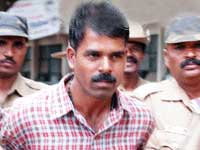 Umesh Reddy
Murderer · India · 1998
Umesh Reddy was sentenced to death on October 27, 2006. The Karnataka High Cour…
18 victims
Umesh Reddy
Murderer · India · 1998
Umesh Reddy was sentenced to death on October 27, 2006. The Karnataka High Cour…
18 victims
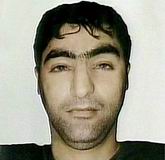 Farda Gadirov
Murderer · Azerbaijan · 2009
Farda Gadirov (also given as Farda Asad oglu Gadirov; Azeri: Fərda Qədirov; Geo…
12 victims
Farda Gadirov
Murderer · Azerbaijan · 2009
Farda Gadirov (also given as Farda Asad oglu Gadirov; Azeri: Fərda Qədirov; Geo…
12 victims
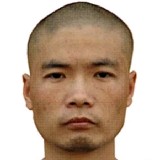 Zhou Kehua
Murderer · China · 2004
Zhou Kehua (simplified Chinese: 周克华 ; traditional Chinese: 周克華 ; pinyin: Zhōu K…
10 victims
Zhou Kehua
Murderer · China · 2004
Zhou Kehua (simplified Chinese: 周克华 ; traditional Chinese: 周克華 ; pinyin: Zhōu K…
10 victims
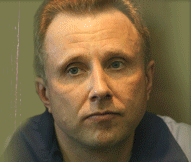 Alexey Pichugin
Murderer · Russia · 1998
Alexei Vladimirovich Pichugin (Aleksey Pichugin) was born in the town of Orekho…
5 victims
Alexey Pichugin
Murderer · Russia · 1998
Alexei Vladimirovich Pichugin (Aleksey Pichugin) was born in the town of Orekho…
5 victims
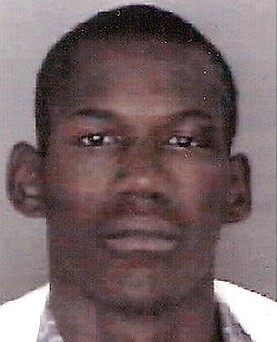 Joshua Wayne Andrews
Murderer · USA · 2000
Joshua Wayne Andrews was a serial killer accused of killing several people in V…
5 victims
Joshua Wayne Andrews
Murderer · USA · 2000
Joshua Wayne Andrews was a serial killer accused of killing several people in V…
5 victims
 Bennie Lawson
Murderer · USA · 1994
Bennie Lawson was a “street thug” who was described as having been concerned ab…
3 victims
Bennie Lawson
Murderer · USA · 1994
Bennie Lawson was a “street thug” who was described as having been concerned ab…
3 victims
 Sharee Miller
Murderer · USA · 1999
Sharee Paulette Miller was an American woman who was accused of plotting the mu…
1 victim
Sharee Miller
Murderer · USA · 1999
Sharee Paulette Miller was an American woman who was accused of plotting the mu…
1 victim
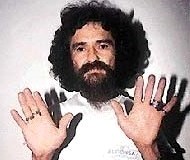 Dorancel Vargas
Serial homicide · Venezuela · 1995
Dorancel Vargas, also known as “el comegente,” was born in 1957. He was describ…
10 victims
Dorancel Vargas
Serial homicide · Venezuela · 1995
Dorancel Vargas, also known as “el comegente,” was born in 1957. He was describ…
10 victims
 Cynthia Pugh
Murderer · USA · 1983
Cynthia Pugh was convicted in 1984 of murdering her boss and lover, Manlius bus…
1 victim
Cynthia Pugh
Murderer · USA · 1983
Cynthia Pugh was convicted in 1984 of murdering her boss and lover, Manlius bus…
1 victim
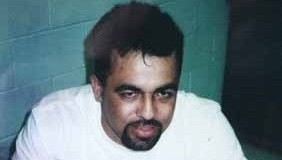 Edwin Rios Romero
Murderer · USA · 1995
Edwin Rios Romero was 43 years old. He was convicted alongside George Ivan Lope…
1 victim
Edwin Rios Romero
Murderer · USA · 1995
Edwin Rios Romero was 43 years old. He was convicted alongside George Ivan Lope…
1 victim
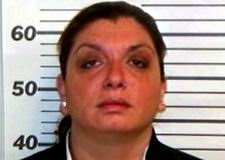 Brenda Nicholas
Murderer · USA · 2011
Brenda Nicholas was sentenced to 34 years in prison for the robbery and stabbin…
1 victim
Brenda Nicholas
Murderer · USA · 2011
Brenda Nicholas was sentenced to 34 years in prison for the robbery and stabbin…
1 victim
- Gender
- male
- Country
- Bulgaria
- Location
- Sofia, Bulgaria
- Date of birth
- 1986
- Age at first offence
- 21
- Characteristics
- murder for hire, motive unclear, fugitive
- Victim profile
- Andrei Monov, 20
- Method of murder
- St abbing with knife
- Date(s) of murder
- December 28, 2007
- Years active
- 2007
- Date of arrest
- Same day
- Status
-
Imprisoned
Confirmed on appeal; sentenced to 20 years in prison on December 2, 2009
Case overview
Jock Palfreeman was an Australian convicted of murder in Bulgaria.
Background
In December 2007, Palfreeman was involved in an incident in Bulgaria in which Bulgarian student Andrei Monov was fatally stabbed. Palfreeman also stabbed another young man, Antoan Zahariev, who survived after being saved in hospital.
Palfreeman claimed that he went to protect two Roma men from a group of thugs and that after the mob turned on him, he drew a knife for protection. His plea of not guilty based on self-defence was defeated partially because Monov had been stabbed in the back. The location of the wound was disputed by Palfreeman’s father, Dr. Simon Palfreeman, who stated that the wound was “high and towards the back of the armpit” as opposed to what he claimed was the popularised version in Bulgarian media.
It was alleged that Palfreeman had a previous history of violent behaviour and had stabbed another two young people in Australia in 2004. An investigation at the time did not result in charges, with Australian police citing a lack of evidence.
Palfreeman maintained that he was not responsible for the people being stabbed. A campaign in his defence alleged that he did not receive a fair trial, including issues such as potential CCTV footage not being used.
The offence
Palfreeman was accused of attacking two male Bulgarian students and stabbing them, killing Monov instantly.
The prosecution alleged that the incident involved an unprovoked knife attack on a group of Bulgarian youths as they were returning from a night out in Sofia city centre on the night of December 28, 2007. The prosecution maintained that Palfreeman first attacked Antoan Zahariev, wounding him in the chest, before stabbing and killing Andrei Monov, described as the son of prominent Bulgarian psychologist Hristo Monov and the former deputy head of the child protection agency.
The prosecution stated the motive as “hooliganism”. A judge’s reasoning for the verdict described Palfreeman as a man eager to “impose his concepts of justice” on a group of people that Palfreeman (erroneously in the prosecutor’s view) believed to be “fascist”, based solely on their boisterous chanting of football songs.
Palfreeman was said to have been out drinking with friends in central Sofia. It was reported as about 1.15am when Palfreeman and a couple of friends, including one young Bulgarian man he had just met in a bar, encountered a large group of Levski fans running up from Maria Luisa Boulevard towards Vitosha Boulevard. The prosecution maintained that Palfreeman unleashed his attack based on his own misreading of the group.
Investigation
Two eyewitnesses were said to have seen an incident resembling what Palfreeman claimed occurred at Serdika metro station. These witnesses were described as two guards in the car park in front of the Sheraton Hotel, about 50m from Serdika station. They testified that they saw a man being beaten and then saw another man run over and intervene. Dr. Palfreeman said the guards’ version was consistent with his son’s account.
A defence request to re-examine CCTV footage and forensic evidence was turned down. It was described as involving issues including lost CCTV footage on the Ministry of Health’s camera and the failure to cordon off the crime scene and track down the Roma boys that the defence claimed were the trigger for Palfreeman’s intervention.
Experts commissioned by the court conducted psychometric and psychological tests and concluded that Palfreeman was not inherently violent and did not have an aggressive demeanour in dealings with others. A character assessment described Palfreeman as socially conscious and as an anti-Iraq war activist with a keen awareness of the plight of minorities.
A key plank of the prosecution case was described as involving the chief pathologist characterising the knife wound as “forceful”, equating that with purposeful intent. Dr. Palfreeman said:
“A key plank of the prosecution case was that the chief pathologist characterised the knife wound as ‘forceful’, equating that with purposeful intent. When we cross-examined him we said that every textbook of forensic pathology says that a pathologist cannot be dogmatic about the force, direction or characteristic of knife wounds,” Dr Palfreeman said.
Dr. Palfreeman said that these aspects of the case would not be re-examined, but that pre-trial statements given by the group, which the defence claimed conflicted with their court statements, would now be considered.
Arrest and custody
Palfreeman was jailed in December 2007 immediately after the incident. He was refused bail and spent two years in prison awaiting trial.
During incarceration, he was described as residing in Sofia Central Prison and sharing a cell with other (non-Bulgarian) inmates, spending 23 hours a day in a cell. He was described as unable to use the internet or make phone calls and as communicating with his parents in Australia by letter. He was described as able to receive visitors every second and fourth Wednesday each month, including many Bulgarian friends.
Trial
On December 2, 2009, Palfreeman was convicted of the murder of Andrei Monov and the wounding of Zahariev. He was also ordered to pay 200 000 leva to each of Andrei Monov’s parents and another 50 000 leva to Zahariev.
A question raised in the narrative involved the failure of the trial court to take into account the evidence of witnesses not associated with Monov and the failure to admit CCTV footage shot on the night of the stabbing.
Sentencing
On December 2, 2009, Palfreeman was convicted and sentenced to 20 years in prison.
Appeals
On 20 January 2011, a Bulgarian appellate court reserved a decision on an appeal against Palfreeman’s conviction.
On 27 July 2011, the Bulgarian Supreme Court rejected Palfreeman’s appeal and confirmed the 20-year sentence for the murder of Andrei Monov.
It was stated that Palfreeman’s family had earlier said they would be prepared to appeal to the European Court of Human Rights if their final appeal in the Bulgarian courts was unsuccessful.
It was also described that Sofia’s appeal court decided to re-examine five witnesses. Dr. Palfreeman said:
“These are witnesses identified by the defence as having significantly changed their stories between their police statements and evidence given in court,” Dr Palfreeman told us earlier this month.
He said:
“Reading of these statements was blocked by the civil claimants in the original trial but due to a change in the law this is now not possible. One of these witnesses will be one of the civil claimants himself.”
Dr. Palfreeman also said that certain issues would not be re-examined in the way requested.
Outcome
The Bulgarian Supreme Court rejected Palfreeman’s appeal and confirmed the 20-year sentence for the murder of Andrei Monov.
Aftermath and related events
Andrei Monov’s parents demanded that Palfreeman serve life without the possibility of parole and believed the original sentence was too lenient. It was stated that the prosecution pointed to Palfreeman’s decision to carry a knife as proof of his decision to engage in violence.
Palfreeman’s defence, as cited in the narrative, explained his readiness to carry a knife by describing a youth sub-culture in Sofia and incidents of anti-Roma violence encountered elsewhere in Bulgaria, and stated that Palfreeman explained he had a “bad feeling” about Sofia.
Dr. Palfreeman made statements about witness testimony and the judge’s handling of evidence. He said:
“One of the guards says the attack on the man on the ground continued for about 30 to 40 seconds,” Dr Palfreeman told The Sofia Echo in December 2009, immediately after his son's conviction.
He continued:
“The evidence is absolutely insurmountable that the violence was started by the group and perpetuated by the group. Jock’s intervention could have saved his (the man presumed to be a Roma) life or certainly saved him from a lot worse damage,” he told us.
It was described that Andrei Monov had a website dedicated to his memory and that his funeral was attended by prominent figures in the Bulgarian judicial system, including judges, lawyers and police. On the anniversary of his death, Hristo Monov held a commemorative vigil and reminded the crowd of the “evil” that had snatched his son that night.
It was described that Hristo Monov had refused interviews with Australian media and that he declined to “speak to a country that produced such a monster” (as Palfreeman). In December 2009, Hristo Monov was described as telling The Sofia Echo that he would agree to speak only after all court instances had confirmed Palfreeman’s sentence.
The narrative also described an Australian ABC documentary, One Night in Sofia, which was broadcast in 2009 before the verdict, and said that it drew letters of support for Palfreeman. Presenter Belinda Hawkins was described as believing that the “Anglicisation” of Palfreeman’s manner—having spent some time in the UK serving in the British army—might have created the perception that Palfreeman was an outsider.
Friends and family of Jock were described as supporting his case since the initial incident and organising a rally ahead of his appeal.
It was described that there was no official prospect of Palfreeman being sent back to Australia to serve the remainder of his sentence because Bulgaria and Australia do not have a bilateral agreement on prisoner transfers.
The next hearing of the appeal court was described as scheduled for November 11, and it was described that two days later Palfreeman would turn 24 years of age. The narrative also mentioned that rallies and protest vigils were held in Australia.
Other details
The narrative described blood alcohol levels on the night of the stabbing as 0.29 per cent for Andrei Monov and 0.19 per cent for Antoan Zahariev, as opposed to 0.1 per cent for Palfreeman.
It was described that Monovs wanted life without parole and that Palfreeman’s family had discussed the possibility of appealing to the European Court of Human Rights.
It was stated that the spot where Andrei Monov collapsed and died on Stamboliiski Boulevard was still commemorated with flowers.
It was also described that Dr. Simon Palfreeman was Sydney-based and had visited his son 25 times in the past three years, and that he took pains not to criticise Bulgaria.
Dr. Palfreeman said he had faith shaken in the judicial process, and that his son’s version of what happened differed from the prosecution’s.
The narrative described that two guards saw an attack resembling events at Serdika metro station and that the guards were in the car park in front of the Sheraton Hotel, about 50m from Serdika station.
It was also described that the prosecution alleged Palfreeman had psychopathic tendencies, and that an Australian journalist said Palfreeman was sustained by meetings with visitors.
It was stated that photographs of Monov on his website showed him as a smartly dressed young man with a ready smile, described as a law student who aimed to follow his mother into the profession.
Timeline
- December 28, 2007 — Palfreeman was accused of attacking Bulgarian youths returning from a night out in Sofia city centre, and Andrei Monov was fatally stabbed while Antoan Zahariev was wounded.
- December 2007 — Palfreeman was jailed immediately after the incident and refused bail.
- December 2, 2009 — Palfreeman was convicted of the murder of Andrei Monov and the wounding of Zahariev; he received a 20-year prison sentence and was ordered to pay 200 000 leva to each of Monov’s parents and 50 000 leva to Zahariev.
- December 2009 — Hristo Monov told The Sofia Echo he would speak only after all court instances confirmed Palfreeman’s sentence.
- 2006 — Palfreeman was described as having lived for several months in Samokov and making many friends there.
- 2004 — Palfreeman was alleged to have stabbed another two young people in Australia; an investigation resulted in no charges being laid due to lack of evidence.
- 20 January 2011 — A Bulgarian appellate court reserved a decision on Palfreeman’s appeal.
- 27 July 2011 — The Bulgarian Supreme Court rejected Palfreeman’s appeal and confirmed the 20-year sentence.
- November 11 — The next hearing of the appeal court was scheduled.
Spotted an error, or have more information about this case?