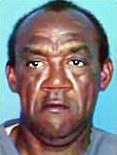
Jerry Frank Townsend
Serial killer? Wayne Williams
Serial killer? · USA · 1979
Wayne Bertram Williams was sentenced to two consecutive terms of life imprisonm…
24 victims
Wayne Williams
Serial killer? · USA · 1979
Wayne Bertram Williams was sentenced to two consecutive terms of life imprisonm…
24 victims
 Tommy Lynn Sells
Serial killer? · USA · 1980
Tommy Lynn Sells was a white male. He was 35 at the time of the offence and 36…
13 victims
Tommy Lynn Sells
Serial killer? · USA · 1980
Tommy Lynn Sells was a white male. He was 35 at the time of the offence and 36…
13 victims
 John Norman Collins
Serial killer? · USA · 1967
John Norman Collins was implicated in a series of killings targeting students a…
8 victims
John Norman Collins
Serial killer? · USA · 1967
John Norman Collins was implicated in a series of killings targeting students a…
8 victims
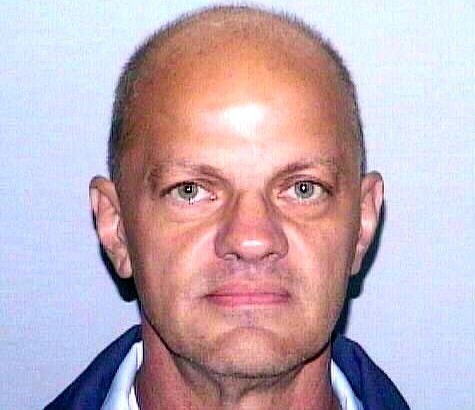 Major Morris
Serial killer? · USA · 1972
Major Morris was a male with the motive listed as sex. He was described as a “l…
6 victims
Major Morris
Serial killer? · USA · 1972
Major Morris was a male with the motive listed as sex. He was described as a “l…
6 victims
 Warren Leslie Forrest
Serial killer? · USA · 1974
Warren Leslie Forrest was described as 25 years old, 5’9” tall, 155 lbs, with l…
6 victims
Warren Leslie Forrest
Serial killer? · USA · 1974
Warren Leslie Forrest was described as 25 years old, 5’9” tall, 155 lbs, with l…
6 victims
 Anders Behring Breivik
Mass murderer · Norway · 2011
Anders Behring Breivik (born 13 February 1979) was the perpetrator of the 2011…
77 victims
Anders Behring Breivik
Mass murderer · Norway · 2011
Anders Behring Breivik (born 13 February 1979) was the perpetrator of the 2011…
77 victims
 David Shearing
Mass murderer · Canada · 1982
David Shearing was arrested after police received a caller tip about him in a c…
6 victims
David Shearing
Mass murderer · Canada · 1982
David Shearing was arrested after police received a caller tip about him in a c…
6 victims
 Cavona Flenoy
Murderer · USA · 2010
Cavona C. Flenoy, 20, was sentenced to 25 years in prison for second degree mur…
1 victim
Cavona Flenoy
Murderer · USA · 2010
Cavona C. Flenoy, 20, was sentenced to 25 years in prison for second degree mur…
1 victim
 Flemming Nielsen
Murderer · Denmark · 1994
Flemming Nielsen had been a student at the university since 1986. On Tuesday, 5…
2 victims
Flemming Nielsen
Murderer · Denmark · 1994
Flemming Nielsen had been a student at the university since 1986. On Tuesday, 5…
2 victims
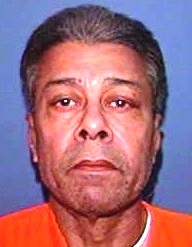 Angel Nieves Diaz
Murderer · USA · 1979
Angel Nieves Diaz was a male convicted prisoner executed in Florida by lethal i…
3 victims
Angel Nieves Diaz
Murderer · USA · 1979
Angel Nieves Diaz was a male convicted prisoner executed in Florida by lethal i…
3 victims
- Gender
- male
- Country
- USA
- Location
- Broward/Miami-Dade Counties, Florida, USA
- Date of birth
- 1952
- Age at first offence
- 21
- Characteristics
- abuser, convicted rapist
- Victim profile
- Women
- Method of murder
- Shooting
- Date(s) of murder
- 1973 - 1979
- Years active
- 1973–1979
- Date of arrest
- —
- Status
-
Released
Sentenced to seven concurrent life sentences in 1980; cleared of all the charges and released on June 15, 2001
Case record: Jerry Frank Townsend
STATUS and release
Jerry Frank Townsend was sentenced to seven concurrent life sentences in 1980. He was cleared of all the charges and released on June 15, 2001.
Background
Jerry Frank Townsend was mentally retarded, with the mental capacity of an eight-year-old. Experts said Townsend had an IQ between 50 and 60, and other statements in the case described his IQ as 60 and 56. Defenders described him as a “human parrot” who would say or do anything to please authority figures, especially police.
Townsend was linked to multiple rapes and murders through confessions during interrogations in the 1970s. Police took Townsend to murder scenes and recorded his confessions.
The offence
Townsend was convicted of six murders and one rape, and he pleaded guilty to four other killings after confessing to six killings.
A jury in 1980 convicted Townsend of two killings. Two years later, he pleaded no contest to two other murders.
The case included:
- Murders in Broward County connected to confessions, including the 1973 killings of Naomi Gamble and Barbara Brown.
- A 1979 killing of 13-year-old Sonja Marion.
- A murder of 20-year-old Terry Cummings, a McDonald's employee, in 1979, where her body was found dressed in her McDonald's uniform in a burned-out building.
- Miami-Dade charges, where prosecutors alleged a rape and two murders.
Investigation
DNA evidence later cleared Townsend of some of the murders and pointed to Eddie Lee Mosley, a suspected serial killer in jail who also had mental retardation. The DNA findings cast substantial doubt on the accuracy of Townsend’s confessions.
In 1998, Sonja Marion’s mother had a Fort Lauderdale police detective review the Townsend cases. In 2000, DNA testing of a semen sample on Sonja Marion’s shorts implicated another man. DNA evidence cleared Townsend for two of the six murders, and the evidence pointed to Eddie Lee Mosley.
In April 2001, further DNA testing cleared Townsend of two Broward killings, eliminating two of his seven life sentences.
A detective who reopened Townsend’s Miami-Dade case in April 2001 said: “The confessions do not fit the physical evidence.” The detective continued: “This case was bad.”
Arrest and confinement
Townsend was imprisoned for twenty-two years. At the time of his release, he was 49 years old.
Townsend was behind bars after his convictions in 1979 and 1980, with concurrent life sentences.
Trial
In 1980, Townsend was convicted of first-degree murder for the 1973 killings of Naomi Gamble and Barbara Brown in Broward County. He also confessed to the murder of 13-year-old Sonja Marion in 1979.
In 1980, a jury convicted Townsend of two killings and sentenced him to life in prison.
In 1982, Townsend pleaded guilty to two slayings in Miami in the late 1970s and entered a no contest plea to two 1979 murders in Broward County.
For the Miami-Dade charges, Townsend agreed to plead guilty to one rape and two murders that happened in Miami-Dade.
The Miami-Dade pleas occurred after Townsend was told that if he went to trial on the Miami-Dade charges, prosecutors planned to use the Broward convictions against him. Townsend pleaded guilty to avoid the death penalty.
Sentencing
Townsend received seven concurrent life sentences in 1980.
A quotation from the sentencing clearance proceeding was given by Judge Scott Silverman:
“Given the . . . deficiency in the state's evidence, a lack of trust in its evidence including the obtained confession, and in some cases what may very well be Mr. Townsend's outright innocence, it is abundantly clear that he is the victim of an enormous tragedy,”
Appeals and post-conviction developments
DNA evidence cleared Townsend of multiple murders after long-term confinement.
Broward officials dropped convictions in April 2001 because they were based on Townsend’s confessions, which could no longer be trusted, rather than on evidence.
By June 2001, Townsend was cleared of the one rape and two murder convictions that had remained in Miami-Dade, and the remaining Miami-Dade convictions were set aside.
State attorney Katherine Fernandez Rundle commented:
“By law, once the Broward sentences were set aside Mr. Townsend's pleas to concurrent life sentences in the Miami-Dade cases must also be set aside,”
Outcome
Townsend was cleared of all the Broward charges and released on June 15, 2001, at age forty-nine.
Aftermath
Townsend was released from Polk Correctional Institution after being cleared of the six murder convictions that had kept him behind bars since 1979.
After his release, his mother and sister arrived shortly after his release to greet him with hugs and tears. Townsend left the facility shortly after midnight Saturday morning with an uncle who lives near Orlando.
The case also affected the case of Frank Lee Smith, who died while on Florida’s death row before being exonerated by postconviction DNA testing. DNA testing in Smith’s case implicated Eddie Lee Mosley.
Townsend sued the Broward County Sheriff’s Office and two former deputies for forcing him to confess and for civil rights violations and racketeering. In a 61-page complaint, the suit alleged detectives also tampered with witnesses and fabricated and concealed evidence. The named defendants included Sheriff Ken Jenne, Major Anthony Fantigrassi (now Jenne’s head of criminal investigations), and Mark Schlein (who worked for the state attorney general’s office). Townsend’s attorney Barbara Heyer stated:
“He's going to be adjusting for years, and finding his place,”
Townsend also sued the city of Miami and two police officers whose testimony helped put him behind bars. The lawsuit accused the city of Miami of failing to institute supervisory and training reforms in the 1970s that might have changed the situation for Townsend. He sued in federal court, and the suit also followed another suit filed September 2002 against the Broward County Sheriff’s Office, Sheriff Ken Jenne, Major Anthony Fantigrassi, and Mark Schlein.
“There were studies telling them what needed to be corrected,”
“To date, they have not been corrected.”
Quotations and statements (verbatim)
Detective Confesor Gonzalez, who reopened Townsend’s Miami-Dade case in April 2001, said:
“The confessions do not fit the physical evidence,”
“This case was bad.”
Judge Scott Silverman said:
Katherine Fernandez Rundle, state attorney for Miami-Dade, said:
Barbara Heyer, Townsend’s attorney, said:
Other details
During the confessions, detectives pressed Townsend with questions, asked him questions that led him to give answers investigators wanted, and in some instances turned off the recorder when Townsend started giving details not consistent with the facts in the case. After the recorder was turned back on, the details he gave were correct.
Miami police reviewed two cases to which Townsend had pleaded guilty in 1982. Prosecutors said they would ask a judge to vacate the remaining murder convictions, and they said there had never been any physical evidence that backed up the confessions in those cases.
Townsend’s confessions were described as being inconsistent with physical evidence in spite of eventual DNA findings pointing to another perpetrator.
Eddie Lee Mosley was identified through DNA testing as the person to whom the evidence pointed, and he was also described as having mental retardation.
Some of Townsend’s confessions involved claims that did not align with physical evidence, including his statement in connection with Terry Cummings that she was a white woman wearing shorts and that he had killed her in an apartment. Cummings’ body was found dressed in her McDonald’s uniform in a burned-out building in 1979.
Townsend’s confessions were described as covering a string of previously unsolved rapes and murders of women and teenage girls in the Ft. Lauderdale and Miami area throughout the 1970s.
Townsend’s release was accompanied by statements that he probably would not grant interviews.
Spotted an error, or have more information about this case?