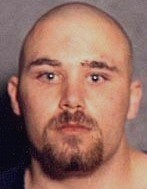
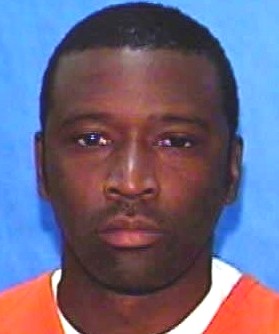
Zane Michael Floyd
Mass murderer Gameel Al-Batouti
Mass murderer · USA · 1999
Gameel Al-Batouti (also rendered “Gamil ElBatouty” or “El Batouty” in U.S. offi…
216 victims
Gameel Al-Batouti
Mass murderer · USA · 1999
Gameel Al-Batouti (also rendered “Gamil ElBatouty” or “El Batouty” in U.S. offi…
216 victims
 Timothy McVeigh
Mass murderer · USA · 1995
Timothy James McVeigh (April 23, 1968 – June 11, 2001) was a United States Army…
168 victims
Timothy McVeigh
Mass murderer · USA · 1995
Timothy James McVeigh (April 23, 1968 – June 11, 2001) was a United States Army…
168 victims
 Julio Gonzalez
Mass murderer · USA · 1990
Julio Gonzalez was sentenced to 174 twenty-five-year sentences (a total of 4,35…
87 victims
Julio Gonzalez
Mass murderer · USA · 1990
Julio Gonzalez was sentenced to 174 twenty-five-year sentences (a total of 4,35…
87 victims
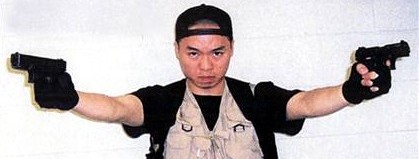 Seung-Hui Cho
Mass murderer · USA · 2007
Seung-Hui Cho was a mass murderer who shot and killed 32 people and wounded man…
32 victims
Seung-Hui Cho
Mass murderer · USA · 2007
Seung-Hui Cho was a mass murderer who shot and killed 32 people and wounded man…
32 victims
 George Jo Hennard
Mass murderer · USA · 1991
George Jo Hennard carried out a mass killing at a Luby’s Cafeteria in Killeen,…
23 victims
George Jo Hennard
Mass murderer · USA · 1991
George Jo Hennard carried out a mass killing at a Luby’s Cafeteria in Killeen,…
23 victims
 Eric Harris
Mass murderer · USA · 1999
Eric Harris committed suicide by gunshot to the roof of the mouth on April 20,…
13 victims
Eric Harris
Mass murderer · USA · 1999
Eric Harris committed suicide by gunshot to the roof of the mouth on April 20,…
13 victims
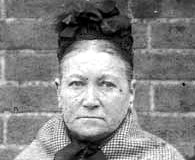 Amelia Dyer
Serial killer · United Kingdom · 1880
Amelia Dyer was convicted for the murder of Doris Marmon. She was known as a “b…
100 victims
Amelia Dyer
Serial killer · United Kingdom · 1880
Amelia Dyer was convicted for the murder of Doris Marmon. She was known as a “b…
100 victims
 Joe Angel Cordova
Murderer · USA · 1982
Feb. 27, 1982 — Cordova, his 16-year-old nephew, and two other teens abducted M…
1 victim
Joe Angel Cordova
Murderer · USA · 1982
Feb. 27, 1982 — Cordova, his 16-year-old nephew, and two other teens abducted M…
1 victim
 Kathleen Hagen
Homicide · USA · 2000
August 2000 — Kathleen Hagen smothered her parents, Idella Hagen (92) and James…
2 victims
Kathleen Hagen
Homicide · USA · 2000
August 2000 — Kathleen Hagen smothered her parents, Idella Hagen (92) and James…
2 victims
 James Michael Isom
Murderer · USA
James Michael Isom was an Oregon death row inmate. He died in prison in 1997. I…
1 victim
James Michael Isom
Murderer · USA
James Michael Isom was an Oregon death row inmate. He died in prison in 1997. I…
1 victim
 James Demouchette
Murderer · USA · 1976
James Demouchette was executed by lethal injection in Texas on September 22, 19…
3 victims
James Demouchette
Murderer · USA · 1976
James Demouchette was executed by lethal injection in Texas on September 22, 19…
3 victims
- Gender
- male
- Country
- USA
- Location
- Las Vegas, Nevada, USA
- Date of birth
- 1976
- Age at first offence
- 23
- Characteristics
- rape, mentally ill, alcohol, drug addict
- Victim profile
- Thomas Michael Darnell, 40, Carlos "Chuck" Leos, 41, Dennis Troy Sargent, 31, and Lucille Tarantino, 60 ( employees of the Albertsons supermarket )
- Method of murder
- Shooting
- Date(s) of murder
- June 3, 1999
- Years active
- 1999
- Date of arrest
- Same day
- Status
-
Sentenced to death
Sentenced to death on July 21, 2000
Case record: Zane Michael Floyd
Background
Zane Michael Floyd (born 1976) had attended high school, enlisted in the United States Marine Corps, and was honorably discharged. He was told that he was not welcome to reenlist due to his heavy drinking. He was honorably discharged from the Marine Corps in Camp Pendleton less than a year before the June 3, 1999 supermarket attack. Floyd was fired from a local bar where he worked as a bouncer. After that, he had trouble holding down jobs and moved into a guest home behind his parents’ house two days before the shootings. Floyd’s parents were Michael and Valerie Floyd. Michael Floyd adopted him as a young boy.
A psychologist, Edward Dougherty, testified that Floyd suffered from “mixed personality disorder with borderline, paranoid and depressive features.” Dougherty also testified that Floyd continued to suffer from attention-deficit disorder, for which he received treatment as a teen-ager. Dougherty said the symptoms of Floyd’s mental disease were exacerbated by a long history of drug and alcohol abuse, and he described Floyd as “a very fragile personality.” Dougherty also testified that Floyd had “some kind of ‘psychotic break’ on the morning of the shootings,” and said, “He snapped.”
A psychiatrist, Dr. Norton Roitman, testified that Floyd was taking Ritalin, a stimulant used to treat attention-deficit disorder, when the boy was referred to him in 1989. Roitman said the medication was not working, so he prescribed an anti-depressant instead, and testified that he had no contact with Floyd since that year.
Michael Floyd testified that when Zane was in first or second grade, a teacher said the child needed to be placed in a special education program. Michael Floyd rejected the idea because he believed such programs were “for retarded people.” Michael Floyd said he now regretted “not being smart enough to realize” his son needed help. He testified that before the killings occurred he had been planning a heart-to-heart talk with his son but never did, saying: “I wanted to explain to him how tough this stage of his life was going to be.” Michael Floyd testified that he knew his son was trying to figure out what to do with his life, and said, “It’s very easy to get despondent, and I just wanted to let him know I understood.”
Valerie Floyd testified during the penalty hearing that she failed her son at times in his life and said, “And by doing that, I failed everybody in here,” tearfully. She also showed jurors pictures of her son from his childhood. She said she and her husband sent a letter to the families of their son’s victims shortly after the shootings to let them know their thoughts were with them, and that they were “sorry.” She said, “My heart's broken for them,” and described losing her first child to sudden infant death syndrome in 1974. After learning about the shootings, Michael Floyd said he went home and watched news accounts of his son’s arrest and saw an individual on television that he did not know. Michael Floyd testified that he did not know what caused the attack and said, “But the son and the man I raised was incapable of an act like this.”
The offence
On June 3, 1999, Floyd entered an Albertson’s supermarket in Las Vegas, Nevada at approximately 5:15 in the morning and opened fire on random individuals with a shotgun. He wore Marine Corps camouflage and had a shaved head. Floyd picked victims at will in a calm manner.
The victims and their ages included:
- Thomas Darnell, 40 — shot in the back twice and killed
- Carlos “Chuck” Leos — killed (age given as 41)
- Dennis Troy Sargeant, 31 — killed
- Lucille Alice Tarantino, 60 — shot in the head at point-blank range and killed
Zachary T. Emenegger, 21 — fled when he saw the gunman pointing the shotgun, hid under a produce table, avoided gunfire for 15 seconds, later succumbed to gunshots, and Floyd shot him again. Emenegger survived.
In total, Floyd shot seven shotgun shells, killing four people and critically wounding another, and was out of the supermarket in seven minutes. A 911 call was placed at 5:16 a.m. from an elevated office at the front of the store by Christine Goldsworthy.
The store was later described as being a Raley’s. The store sat at Sahara Avenue and Valley View Boulevard.
During the incident, police and witnesses described the attack as Floyd “roamed through the store” and that he “took the path of least resistance, shooting at everybody he saw.” Investigator testimony in reporting also described that “he quit because there was no one else to victimize.”
Earlier events relating to sexual assault and attempted murder
Prosecutors alleged that Floyd raped and threatened an escort service employee about an hour before the rampage and told her he planned to kill the first 19 people he saw.
An employee at Love Bound told The Associated Press that a man named Zane had called for the services of a young woman, age 18 to 21, at his home on West Oakey. The service dispatched a 20-year-old woman to the address about 3:30 a.m. The employee said the young woman arrived and that “as soon as she walked in the door he grabbed her, handcuffed and taped her, then raped and sodomized her.” The employee said the man threatened to kill the young woman, fired five shots from a pump-action shotgun, then released her and “toward the supermarket.”
In court-focused reporting, the woman (described as a 20-year-old Love Bound outcall service worker) told police Floyd grabbed a shotgun immediately after she arrived at his home about 4 a.m. She said Floyd told her she was going to help him fulfill “a sick fantasy inside of his head.” She said he raped and terrorized her for about an hour, then donned combat boots and his Marine Corps camouflage shirt and pants, placed a bathrobe over his clothing, and before leaving told the woman he planned to kill the first 19 people he encountered. She also said that about 15 minutes later Floyd walked into the Albertson’s about a half-mile from his home and began firing.
Confessions and statements after the shootings
After the shootings, Floyd gave officers a taped statement in which he described the carnage. In reporting about the immediate post-arrest period, Floyd was described as giving taped confessions to police in the hours after the shootings.
In court, Floyd made an unsworn statement to the jury during the penalty phase. He said:
“There's not a whole lot I can say to the families of the four people I killed,”
“I can't take back what I've done. If there was any way I could, I would.”
He also said:
“I can tell you I didn't kill those people for fun,”
“I didn't do that -- not for fun.”
During testimony, Floyd called his actions inexcusable and said:
“I know what I did, and I'm going to take responsibility for what I did, but I can't tell you why I did it,”
He also apologized for his conduct and said he would regret what he did for the rest of his life.
In reporting about his arrest statements, Floyd told a detective:
“Call me crazy, psychotic, whatever. I've just always wanted to know what it's like to shoot someone,”
He also said:
“I was just thinking, 'What's it going to be like to shoot somebody?' ”
He described wanting to kill himself as he left the supermarket and encountered police but said he could not do it, saying he had too much respect for law enforcement to draw their fire by pointing the weapon at them.
In reporting about his taped statement after arrest, Floyd described being “so (expletive) far in debt, dude. The blackjack table's calling me, man,” and later said:
“I got nowhere to go in life, dude. You know, I'm a (expletive) loser. I'm a bouncer, and I just moved back in with my parents,”
Investigation
Police homicide Sgt. Kevin Manning said it was “remarkable that we didn’t end up with more victims” and that “we believe what happened was that he quit because there was no one else to victimize.”
Floyd’s actions included threatening to kill himself during the incident by pointing the shotgun to his head during an eight-minute standoff, after which police convinced him to surrender.
Arrest
Floyd exited the supermarket’s north doors to meet the Las Vegas Metropolitan Police Department, who had been called by an employee who had escaped the store. Without exchanging any gunfire, Floyd ran back into the supermarket and exited through the west doors. When he noticed the complex was surrounded by officers, he threatened to kill himself. Police persuaded him to surrender after an eight-minute standoff. They immediately arrested him on charges of murder, and he confessed that he had killed all of the people inside the supermarket.
Victim identification and survival
Victims killed included Thomas Darnell, Carlos “Chuck” Leos, Dennis Troy Sargent, and Lucille Tarantino. Zachary Emenegger was shot twice and survived.
Trial
Floyd pleaded guilty, and the Nevada state jury tried him under Nevada law.
Charges addressed at trial
Floyd was found guilty of four counts of first-degree murder. The jury also convicted him of burglary and attempted murder in connection with the shooting rampage, and four counts of sexual assault in connection with the earlier rape.
Defense attorneys acknowledged he raped an outcall dancer and committed the shootings at the Albertson’s (now Raley’s) at Sahara Avenue and Valley View Boulevard.
Jury and verdict details
A jury recommended death and delivered the maximum verdict: four consecutive death penalties. The jury also ordered restitution totaling more than $180,000 dollars.
Jurors deliberated some 16 hours over three days before reaching their decision in sentencing, and several cried as their verdicts were announced in District Judge Jeffrey Sobel’s courtroom. The jury included nine women and three men, and they chose Tim LeMaster to act as spokesman.
LeMaster read a statement to reporters after the verdicts:
“On July 21, 12 compassionate people made the most difficult decisions of our lives thus far,”
“The death penalty verdict required a great deal of soul searching for all 12 of us.”
He also mentioned each of the four murder victims by name and also mentioned a fifth shooting victim who survived and a woman Floyd raped shortly before he went on his shooting spree. LeMaster said:
“They will never be the same,”
“These families and friends need our prayers right now.”
He said Floyd, 24, and his family needed prayers as well:
“We ask that when you pray for the victims, all of us pray for Zane's family as well,”
LeMaster had a message to the Las Vegas community:
“Do not assume any part of this process has been easy,”
“If you have not sat on a jury and considered the death penalty, you simply cannot understand.”
He added after Sobel’s remarks:
“It's an awesome responsibility, and I know how it's tearing some of you up to have done this,”
Sobel thanked the jurors for their service.
Arguments and aggravating and mitigating circumstances
Under Nevada law, Floyd’s death sentences were automatically appealed. The jury found that aggravating circumstances outweighed mitigating circumstances. The jury found that prosecutors proved all three aggravating factors alleged:
- Floyd created a great risk of death to more than one person
- Floyd killed the victims at random and without apparent motive
- Floyd was convicted of more than one count of murder in connection with the shootings
Defense attorneys prepared a list of 16 mitigating factors, including Floyd’s youth; his service in the military; his lack of a significant history of prior criminal activity; and his cooperation with police. Defense attorneys also claimed he committed the murders while under the influence of “extreme mental or emotional disturbance.”
In reporting, District Judge Jeffrey Sobel was scheduled to sentence Floyd Aug. 31 for all crimes other than the murders.
Testimony about conduct and mental state
Psychologist Edward Dougherty testified that “Zane has a conscience,” saying “It's quite clear.” Dougherty testified that Floyd was not a sociopath, and he said:
“Zane has a conscience,”
“It's quite clear.”
Deputy Public Defender Curtis Brown stated defense attorneys were seeking a change of venue on the grounds that massive publicity had caused the public to reach certain conclusions in advance of trial, and he declined to discuss Floyd’s statements in detail, saying any comments would be inappropriate while seeking a change of venue. Brown said the jury was of the opinion that Floyd had a choice, and he made that choice. Brown also said they were disappointed in the choice.
Chief Deputy District Attorney Bill Koot said he was surprised at the length of jury deliberations in the trial’s penalty phase and said:
“I think it has to be because of Zane Floyd's parents, rather than because of Zane Floyd,”
“The way our system works, I'm sure he'll outlive me,”
Clark County District Attorney Stewart Bell said the killings made June 3, 1999 “a day Las Vegas will never forget.”
When Floyd addressed the jury, he said he could not explain his actions and denied killing the victims for a thrill. Brown said Floyd had been taking medication at the jail throughout the trial to help him sleep at night, and the medication caused Floyd’s calm appearance in court.
Sentencing
Floyd was sentenced to death by a Nevada jury on July 21, 2000. The jury delivered four consecutive death penalties, one for each of the four victims killed. The jury also ordered restitution totaling more than $180,000.
Appeals
Per Nevada law, Floyd’s death penalty was automatically appealed and it sat in the federal court system at the time described.
Outcome
The jury returned the maximum verdict and sentenced Floyd to death, and restitution of more than $180,000 was ordered. The death sentences were automatically appealed.
Aftermath
Floyd’s parents, Michael and Valerie, testified during their son’s penalty hearing and sat in court with a group of supporters to hear the jury’s decision. Valerie Floyd said she failed her son at times in his life. Michael Floyd told jurors he regretted “not being smart enough to realize” his son needed help. After the penalty hearing, Floyd’s parents declined a request for an interview as they left the Clark County Courthouse.
Valerie Floyd testified that she and her husband moved to another location about three months later because she could not stay in the house with the memories and could not go to the store she had shopped at for 12 years or face people.
During the penalty hearing, a witness advocate, Sue Lopez, stated that some relatives lived in other areas and had to return to their homes before the jury finished deliberating, while others found it too difficult to watch.
Other details
Floyd’s attempted suicide threat during the standoff involved pointing the shotgun to his head.
During the supermarket incident, Floyd encountered Zachary T. Emenegger and, after Emenegger pretended to be dead, Floyd whispered “yeah, you're dead” to Emenegger and exited the store.
During court reporting about victims, the killed employees were identified as:
- Thomas Michael Darnell, 40
- Carlos “Chuck” Leos, 41
- Dennis Troy Sargent, 31
- Lucille Tarantino, 60
Employee Zachary Emenegger, 21, survived after being shot twice.
Witnesses included Christine Goldsworthy, Stephen Johnson, Aimie West, Mark Schmitt, Kelly Pearce, and Linda Torres, who described hiding and hearing gunshots. Kelly Pearce said she was talking to Leos when the shooting began and she ran to Linda Torres, the bakery manager, and pulled her toward a nearby freezer. Linda Torres testified she saw “a man there with a shotgun chasing another man” and later joined Pearce in the freezer. Pearce testified about hearing a brief exchange between a man and Tarantino, and said:
“He either said,
Hi, how are you doing?' or,Hi, what are you doing?' ”
Pearce said Tarantino responded a moment before a shot rang out:
“Oh my God,”
The security videotape captured the shooting of Emenegger, including that Floyd exited another aisle and blocked his path, Emenegger ducked behind a produce island containing watermelons, and Floyd shot him. The tape showed Floyd peered down at Emenegger after returning and left again before Emenegger rose, took several steps toward the rear door, and collapsed while trying to get to a phone to call 911. Emenegger said:
“I was trying to get to a phone to call 911,”
Reporting described Floyd’s trial as involving 19 witnesses and included two taped confessions.
Floyd’s attorneys asked Sobel to sequester jurors to prevent the panel from being influenced by the outcome of another case in the building; Sobel denied the request and said he would tell the jury not to read any print media or watch any television news when they went home that night.
Spotted an error, or have more information about this case?