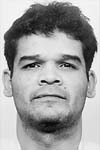
Joe Angel Cordova
Murderer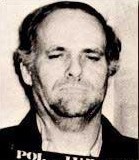 Ervil LeBaron
Murderer · USA · 1972
Ervil Morrell LeBaron (1925 to August 16, 1981) was the leader of a polygamous…
35 victims
Ervil LeBaron
Murderer · USA · 1972
Ervil Morrell LeBaron (1925 to August 16, 1981) was the leader of a polygamous…
35 victims
 Brian Kevin Rosenfeld
Murderer · USA · 1985
Brian Kevin Rosenfeld Brian Kevin Rosenfeld was sentenced to three concurrent l…
23 victims
Brian Kevin Rosenfeld
Murderer · USA · 1985
Brian Kevin Rosenfeld Brian Kevin Rosenfeld was sentenced to three concurrent l…
23 victims
 Marvin Gray
Murderer · USA · 1975
Marvin Gray was convicted killer who claimed responsibility for 23 slayings and…
23 victims
Marvin Gray
Murderer · USA · 1975
Marvin Gray was convicted killer who claimed responsibility for 23 slayings and…
23 victims
 Yahweh ben Yahweh
Murderer · USA · 1980
Yahweh ben Yahweh was born and legally named Hulon Mitchell Jr. (October 27, 19…
23 victims
Yahweh ben Yahweh
Murderer · USA · 1980
Yahweh ben Yahweh was born and legally named Hulon Mitchell Jr. (October 27, 19…
23 victims
 Russell Ellwood
Murderer · USA · 1991
Russell Ellwood was a former taxi driver. Authorities suspected him of killing…
20 victims
Russell Ellwood
Murderer · USA · 1991
Russell Ellwood was a former taxi driver. Authorities suspected him of killing…
20 victims
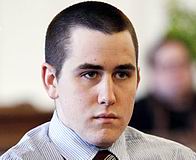 Matthew Cushing
Murderer · USA · 2008
Matthew Cushing was convicted for killing his mother, stepfather, and stepbroth…
3 victims
Matthew Cushing
Murderer · USA · 2008
Matthew Cushing was convicted for killing his mother, stepfather, and stepbroth…
3 victims
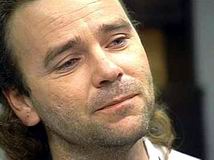 Tommy Lynn Sells
Serial killer? · USA · 1980
Tommy Lynn Sells was a white male. He was 35 at the time of the offence and 36…
13 victims
Tommy Lynn Sells
Serial killer? · USA · 1980
Tommy Lynn Sells was a white male. He was 35 at the time of the offence and 36…
13 victims
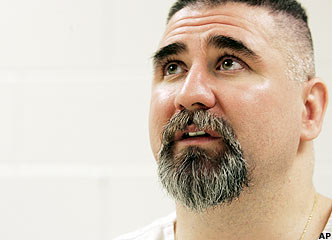 James Filiaggi
Murderer · USA · 1994
James J. Filiaggi (also referred to as James J. Filiaggi) was a death-row priso…
1 victim
James Filiaggi
Murderer · USA · 1994
James J. Filiaggi (also referred to as James J. Filiaggi) was a death-row priso…
1 victim
 Penny Bjorkland
Murderer · USA · 1959
Rosemarie Diane “Penny” Bjorkland (1941-?) — defendant; US murderer who killed…
1 victim
Penny Bjorkland
Murderer · USA · 1959
Rosemarie Diane “Penny” Bjorkland (1941-?) — defendant; US murderer who killed…
1 victim
- Gender
- male
- Country
- USA
- Location
- Harris County, Texas, USA
- Date of birth
- 1952
- Age at first offence
- 30
- Characteristics
- abduction, robbery, alcohol
- Victim profile
- Masel Williams (male, 31)
- Method of murder
- Shooting (shotgun)
- Date(s) of murder
- February 27, 1982
- Years active
- 1982
- Date of arrest
- —
- Status
-
Executed
Executed by lethal injection in Texas on January 22, 1992
Case record: Joe Angel Cordova
Timeline
- Feb. 27, 1982 — Cordova, his 16-year-old nephew, and two other teens abducted Masel Williams after drinking and sniffing paint fumes, forced Williams to drive to a wooded area, and Cordova shot Williams in the chest with a shotgun.
- Feb. 27, 1982 — Cordova was convicted in connection with abducting Masel Williams from a telephone booth in Houston and shooting him to death.
- Dec. 15, 1982 — Cordova was convicted of the murder of Masel Lee Williams and sentenced to death.
- March 11, 1987 — The Texas Court of Criminal Appeals affirmed Cordova’s conviction.
- Jan. 17, 1992 — Cordova filed his first federal habeas petition.
- Jan. 19, 1992 — The federal district judge denied relief.
- Jan. 21, 1992 — The United States Court of Appeals for the Fifth Circuit denied Cordova’s certificate of probable cause and denied his motion for a stay of execution.
- Jan. 21, 1992 — The petition for rehearing was denied.
- Jan. 22, 1992 — Cordova was executed by lethal injection in Texas; he was pronounced dead at 12:18 A.M.
Background
Joe Angel Cordova was 39 years old and had completed 11th grade. He was on parole for burglary at the time of the offense.
Cordova was convicted of the murder of Masel Lee Williams and was sentenced to death. The Texas Court of Criminal Appeals affirmed the conviction on March 11, 1987.
Cordova filed two state habeas petitions, and both were denied. After those petitions were denied, he filed his first federal habeas petition on January 17, 1992. The federal district judge denied relief on January 19, 1992.
The offence
On Feb. 27, 1982, Cordova, his 16-year-old nephew, and two other teens spent the evening drinking and sniffing paint fumes before abducting Masel Williams, 31, who was using a pay phone along the Eastex Freeway.
Cordova abducted Williams from the pay phone and forced Williams to drive to a wooded area. Cordova shot Williams in the chest with a shotgun. Williams was robbed, stripped, and shot in the chest at close range with a shotgun.
Cordova then took Williams’ car.
Investigation
At trial, witnesses testified that Cordova and three teen-agers had drunk beer and sniffed paint fumes to get high before abducting Williams.
Arrest
Cordova brought a first federal petition for a writ of habeas corpus while his execution was scheduled for January 22, 1992.
Trial
Cordova was convicted in connection with abducting Masel Williams from a telephone booth in Houston on Feb. 27, 1982, and shooting him to death. On Dec. 15, 1982, Cordova was convicted of the murder of Masel Lee Williams and sentenced to death.
Witnesses at Cordova’s trial said that he and three teen-agers had drunk beer and sniffed paint fumes to get high before abducting Masel Williams.
Cordova’s defense lawyer blamed alcohol for Cordova’s actions, contending that:
"when Joe Cordova is drunk, he's crazy."
During jury selection and voir dire:
- Cordova argued that the trial court violated his constitutional right to an impartial jury by refusing to excuse prospective jurors David Andrew Link and Charles Bair for cause.
- Cordova also claimed the trial court erred in refusing to excuse prospective juror Jane Wood Sullivan for cause.
- Cordova claimed that the trial court violated his Sixth Amendment right by granting the State’s request to excuse for cause venire members Sims, Detorre and Hampton.
- Cordova contended that the trial court violated his Sixth Amendment right by ruling that venire members Kucera, Kruse, and Guest should not be excluded for cause.
At sentencing, the Texas capital sentencing statute required the jury to answer special issues concerning deliberateness and future dangerousness, and it included rules about unanimous agreement thresholds. The sentencing jury instructions included the following instruction without any objection:
"[i]f ten or more jurors vote "no" in the jury deliberations as to a special issue, then the answer of the jury is "no" regarding that special issue."
Cordova argued that the sentencing-phase instruction led jurors to believe they could not vote “no” unless ten jurors agreed to vote “no,” and that this would allow a jury to return twelve “yes” votes.
Cordova also argued that the prosecutor’s closing argument purposefully diminished the jury’s sense of responsibility in answering special issues. He pointed to the prosecutor’s statements:
The jury is not to decide what the punishment should be in this case....
Again, the jury is not to decide what the punishment should be in this case.
They shouldn't decide whether it is life or death.
They should decide did the state prove that the answers to the questions are yes.
If not, then they should be answered no.
That is the proper deliberations you have taken an oath to follow. Vol XVII at 8.
Sentencing
Cordova was sentenced to death on Dec. 15, 1982 after the jury answered special issues.
At sentencing, the first special issue required a finding that:
"the conduct of the defendant that caused the death of the deceased was committed deliberately and with the reasonable expectation the death of the deceased or another would result...." Tex.Code Crim.Proc.Ann. art. 37.071(b)(1)
The second special issue required the jury to determine whether:
"there is a probability that the defendant would commit criminal acts of violence that would constitute a continuing threat to society." Tex.Code Crim.Proc.Ann. art. 37.071(b)(2)
Cordova argued that the trial court refused to instruct the jury to consider intoxication and mitigating factors in answering the special issues.
Appeals
Direct appeal and state post-conviction proceedings
On March 11, 1987, nearly five years after Cordova’s conviction, the Texas Court of Criminal Appeals affirmed that conviction.
Cordova filed two state habeas petitions. Both were denied.
In his state habeas action, the Court of Criminal Appeals declined to consider a “chilling” claim because it was procedurally barred, stating that absent a contemporaneous offer of proof or bill of exception detailing what mitigating evidence was tactically withheld, it would not consider such evidence in post-conviction proceedings. The Court of Criminal Appeals held:
"absent a contemporaneous offer of proof or bill of exception detailing what mitigating evidence was TACTICALLY withheld by the [defendant] during trial," it will not consider such evidence in post-conviction proceedings. Ex parte Goodman, 816 S.W.2d 383, 386 n. 6 (Tex.Ct.Crim.App.1991).
Federal habeas corpus and Fifth Circuit decision
Cordova was scheduled to be executed on January 22, 1992 and brought his first federal petition for a writ of habeas corpus, urging fifteen separate grounds of constitutional error.
The United States Court of Appeals for the Fifth Circuit agreed with the district court that some claims were procedurally barred and that the remaining ones lacked arguable merit. The Fifth Circuit denied:
- the certificate of probable cause, and
- the motion for a stay of execution.
The petition for rehearing was addressed on Jan. 21, 1992, and:
- the petition for rehearing was denied,
- PER CURIAM stated that the petition for rehearing was correct only in its characterization of the effect of 28 U.S.C. § 1746 and was factually incorrect in other respects.
In the Fifth Circuit decision, the court addressed Cordova’s claims:
- Claims 1 and 10 concerned jury instructions about considering intoxication and mitigating factors during sentencing special issues; the court found the claims lacked arguable merit.
- Claim 2 alleged a Brady violation and failure to correct false testimony related to cooperation by co-defendant Paul Guillory; the court found the claim lacked arguable merit.
- Claims 3 and 4 concerned refusals to excuse prospective jurors David Andrew Link and Charles Bair; the court found no arguable constitutional claim.
- Claim 5 concerned a statutory prohibition about informing jurors of the effect of failing to agree on punishment phase issue responses; the court found it procedurally barred.
- Claim 6 alleged improper prosecutor closing argument under the rule discussed in Caldwell v. Mississippi; the court found the claim lacked merit.
- Claims 7 and 8 concerned Texas practice of refusing to instruct capital juries on parole considerations; the court found the claims would have been procedurally barred and declined to address them.
- Claim 9 concerned admission of a photograph of the victim’s body taken during autopsy; the court found no arguable merit.
- Claim 11 concerned the sentencing statute precluding investigation and presentation of mitigating evidence about childhood hardships and abuse and family history of alcoholism; the court found it procedurally barred.
- Claim 12 concerned vagueness of special issues and lack of limiting instruction; the court found it procedurally barred.
- Claim 13 concerned exclusion of venire members Kucera, Kruse, and Guest; the court found no arguable merit.
- Claim 14 concerned refusal to excuse prospective juror Jane Wood Sullivan for cause; the court found no constitutional challenge of arguable merit.
- Claim 15 concerned granting the State’s request to excuse for cause venire members Sims, Detorre and Hampton; the court found no arguable merit.
Gamino claim discussion in petition for rehearing
A portion of the opinion addressed a “Gamino” claim about a promise not to prosecute a different codefendant as an adult in exchange for testimony. The opinion explained that the Gamino claim was not properly presented and had not been submitted for review; it also noted the materials Cordova provided and their evidentiary status.
Other people involved
Cordova abducted and killed Masel Williams with the involvement of juveniles and other teens:
- Cordova’s 16-year-old nephew stood trial as an adult and was sentenced to 15 years in prison for aggravated robbery.
- “The others were sent to a juvenile detention home.”
The Fifth Circuit decision referenced a co-defendant named Paul Guillory in connection with a claim about cooperation information.
The Fifth Circuit also referenced Edward Gamino in a discussion of a claim that had not been properly presented, including an affidavit or statement submitted by Cordova.
Other details
Cordova was pronounced dead at 12:18 A.M. and became the 43d inmate executed in Texas since the state resumed capital punishment in 1982. The New York Times account stated that the total was the highest in the nation among states.
The Fifth Circuit identified the proceeding as:
- Joe Angel Cordova, Petitioner-Appellant, v. James A. Collins, Director Texas Department of Criminal Justice, Institutional Division, Respondent-Appellee
- No. 92-2037, United States Court of Appeals, Fifth Circuit.
- It included Jan. 21, 1992 entries for an opinion on petition for rehearing and for appeal from the United States District Court for the Southern District of Texas.
The opinion described that the court denied:
- the motion for stay of execution.
Spotted an error, or have more information about this case?