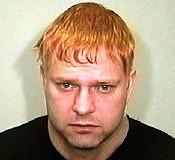
David Bieber
Murderer Dale Cregan
Murderer · United Kingdom · 2012
Dale Christopher Cregan (born 6 June 1983) was convicted in the United Kingdom…
4 victims
Dale Cregan
Murderer · United Kingdom · 2012
Dale Christopher Cregan (born 6 June 1983) was convicted in the United Kingdom…
4 victims
 Rahan Arshad
Murderer · United Kingdom · 2006
Rahan Arshad (born 1970) was a taxi driver. He lived at Turves Road, Cheadle Hu…
4 victims
Rahan Arshad
Murderer · United Kingdom · 2006
Rahan Arshad (born 1970) was a taxi driver. He lived at Turves Road, Cheadle Hu…
4 victims
 Anthony Smith
Murderer · United Kingdom · 2001
Anthony Smith was a former sergeant in the Coldstream Guards. He had left the C…
3 victims
Anthony Smith
Murderer · United Kingdom · 2001
Anthony Smith was a former sergeant in the Coldstream Guards. He had left the C…
3 victims
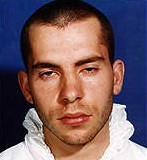 David John Copeland
Murderer · United Kingdom · 1999
David John Copeland was born in Isleworth, in the London Borough of Hounslow, a…
3 victims
David John Copeland
Murderer · United Kingdom · 1999
David John Copeland was born in Isleworth, in the London Borough of Hounslow, a…
3 victims
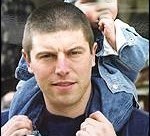 Karl Bluestone
Murderer · United Kingdom · 2001
Karl Bluestone was a Gravesend police officer. · 28 August 2001 — Karl Blueston…
3 victims
Karl Bluestone
Murderer · United Kingdom · 2001
Karl Bluestone was a Gravesend police officer. · 28 August 2001 — Karl Blueston…
3 victims
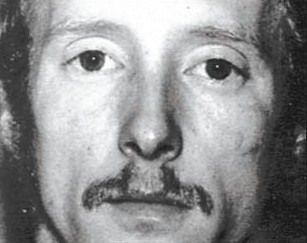 Richard Boggs
Murderer · USA · 1984
Richard T. Boggs was convicted and sentenced to death for the capital murder of…
2 victims
Richard Boggs
Murderer · USA · 1984
Richard T. Boggs was convicted and sentenced to death for the capital murder of…
2 victims
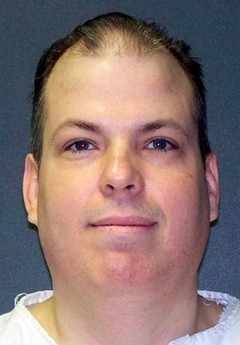 Karl Eugene Chamberlain
Murderer · USA · 1991
Karl Eugene Chamberlain was a white male from Oklahoma who was executed in Texa…
1 victim
Karl Eugene Chamberlain
Murderer · USA · 1991
Karl Eugene Chamberlain was a white male from Oklahoma who was executed in Texa…
1 victim
 Angela McAnulty
Murderer · USA · 2009
Angela McAnulty (mother of Jeanette Maples) Angela McAnulty was born in Califor…
1 victim
Angela McAnulty
Murderer · USA · 2009
Angela McAnulty (mother of Jeanette Maples) Angela McAnulty was born in Califor…
1 victim
 Christopher Richee
Murderer · USA · 1996
Christopher Richee was a former hotel handyman and the maintenance manager of t…
1 victim
Christopher Richee
Murderer · USA · 1996
Christopher Richee was a former hotel handyman and the maintenance manager of t…
1 victim
 Thomas Creech
Serial killer · USA · 1967
Defendant: Thomas Creech (also referred to as Thomas Eugene Creech) Jurisdictio…
10 victims
Thomas Creech
Serial killer · USA · 1967
Defendant: Thomas Creech (also referred to as Thomas Eugene Creech) Jurisdictio…
10 victims
 John Matthew Stephenson
Murderer · USA · 1996
John Matthew Stephenson was sentenced to death on June 17, 1997. He was on deat…
3 victims
John Matthew Stephenson
Murderer · USA · 1996
John Matthew Stephenson was sentenced to death on June 17, 1997. He was on deat…
3 victims
- Gender
- male
- Country
- United Kingdom
- Location
- Leeds, West Yorkshire, England, United Kingdom
- Date of birth
- February 3, 1966
- Age at first offence
- 37
- Characteristics
- fugitive, rape, abuse, attempt to collect insurance money, drug dealer, to avoid arrest
- Victim profile
- Police Constable Ian Broadhurst
- Method of murder
- Shooting ( 9 mm handgun)
- Date(s) of murder
- December 26, 2003
- Years active
- 2003
- Date of arrest
- 5 days after
- Status
-
Life imprisonment
Sentenced to life in prison on December 2, 2004
Background
David Francis Bieber (born 3 February 1966) was known under the alias Nathan Wayne Coleman. He was an American convicted murderer.
Bieber was originally from Fort Myers, Florida. He was the son of a high school principal. After leaving school, he was briefly a US Marine before being discharged for going AWOL. He became a drug dealer and bodybuilder.
Bieber had a history of mental illness.
In February 1995, a fellow bodybuilder Markus Mueller was shot in Fort Myers.
Police arrested Bieber, thinking he had hired a hitman, but later released him due to lack of evidence.
In November 1995, Bieber’s former girlfriend Michelle Marsh was attacked by the same gunman who had attacked Mueller. All four shots missed.
Bieber fled the state, assuming the identity of Nathan Wayne Coleman through a stolen passport, before escaping the country in 1996.
Bieber married Denise Horsley in Kendal, Cumbria in March 1997. His wife petitioned for divorce, and a decree absolute was granted in 5 May 2002.
Bieber arrived in Yorkshire in 1998, where he worked as a nightclub doorman. He acquired an arsenal of illegal firearms.
Bieber was involved in an escape plot with two other prisoners in 2007.
Danielle Labelle divorced Bieber in 2003.
The offence
On 26 December 2003 in Leeds, traffic policemen Ian Broadhurst and Neil Roper saw Bieber’s car parked suspiciously outside a betting shop. They identified the registration plates as being false and asked him to accompany them to the police car, where Bieber sat in the back seat. Neil Roper then went to handcuff Bieber. Backup was called and received from colleague James Banks.
Bieber drew a 9 mm handgun and fired four shots at the unarmed police officers, who tried to flee. Roper was hit twice in the shoulder and abdomen but managed to get away. Broadhurst was shot once in the back and became immobilised. Banks escaped injury after a bullet hit his radio.
Bieber then went over to where Broadhurst was lying and shot him in the head at point blank range while Broadhurst pleaded for his life.
Investigation
The shootings sparked a nationwide hunt for the killer.
On 27 December, Bieber took a taxi journey in Bradford.
On 28 December, armed police raided Bieber’s flat.
Bieber was named as chief suspect on 29 December.
Police received a tip from an anonymous phone call. The caller said: "I know an American guy. He has a gun and he has a black BMW," and gave the name Nathan and a mobile phone number. Through that mobile phone number, police tracked that down to a man using the name Nathan Wayne Coleman.
Audio expert Dr. Peter French was called to analyze a recording. French said: "He’d made a claim during the course of the arrest that he was, in fact, Canadian,” and French stated: "To French's trained ear, that claim was a lie." French further said: "Analyzing the tape, French says the man was not Canadian but American, specifically from the south." French stated: "I couldn’t say exactly where in the southern states, because it is quite widespread. You’d find it in Georgia, Alabama and, of course, Florida,” and: "An American from the South."
Chief Superintendent Chris Gregg said: "The first four shots were fired in three seconds. So this happened very, very quickly. One has hit PC Broadhurst in the stomach," and stated: "Two have hit PC Roper's, who's running away. One of the bullets that was fired at Neil Roper actually went through his left arm and struck this door here. And the other one has gone through Banks' radio." Gregg also described: "But then there is a five second delay. And you can hear the officer now saying, 'Please don't shoot.' It was as cold-blooded execution as you can imagine. This was a dangerous criminal who was on the run."
Gregg said evidence was found behind. Gregg stated: "In the stolen BMW, he left two newspapers. In the patrol car, a half-eaten candy bar." Gregg further said: "All had fingerprints on them." Gregg said the prints yielded no immediate match and videotape from a nearby shop showed a man buying those items just minutes before the shooting.
Gregg said: "Just as important as his picture was his voice that Roper had recorded on tape."
Gregg also described a later development: "Having found no fingerprint match in their own database, police had submitted the prints to the FBI." Gregg said: "On day four of the manhunt, they got a hit." Gregg stated: "Those fingerprints were identified in the States as those of David Bieber." Gregg said the Americans told him that Bieber was wanted in the States for conspiracy to murder, and that they had seen nothing of him since 1996.
Lead detective Chris Gregg described a further tip: "And on Dec. 30, day five of the chase, a tip was called in that he had been spotted at a train station in York, only about 20 miles from the scene of the crime." Gregg said: "By the time police arrived, there was no sign of Bieber."
Bieber was found to have used a stolen passport and an identity change. Police obtained a Tennessee driver’s license in his name.
Police believed Bieber had changed his hair and started gaining weight.
Arrest
Bieber was arrested by armed police at 2:25am on the 31 December 2003 in a hotel room near Gateshead. Police found a pistol ready to fire under his bed. He had dyed his hair ginger in an attempt to avoid detection.
The arresting officers opened the door and found Bieber. One officer recalled: "When he first came to the door, we didn't actually see him. The door opened by about an inch, an inch and a half, and then slammed shut quickly after that," and: "For seven tense minutes there was silence while Bieber considered his options."
Chief Superintendent Chris Gregg said: "He couldn't go out of the window, he had to go out of the door," and added: "And I think he was weighing up his chances of surviving. And I think he realized that if he was going into a shoot out here, he would end up being killed himself."
Bieber surrendered after opening the door. An arresting officer recalled: "After that, the door fully opened and the subject stood in the doorway fully dressed and the most distinctive part was his hair," and: "His hair was distinctive because the one-time master of disguise had done a rather bad job dyeing it, which was now an odd orangey-blonde. He fooled no one."
Gregg stated: "But there was the most cruel irony in his surrender," and the arresting officer described Bieber saying: "You wouldn't shoot an unarmed man would you?"
Police found the gun that killed Ian Broadhurst fully loaded under Bieber’s bed, along with almost 300 rounds of ammunition.
Bieber was taken to a high-security jail and held at gunpoint every step of the way.
Gregg said: "When David Bieber was arrested, he never spoke one word to us," and: "He never opened his mouth. He never uttered one word."
Trial
The trial was held at Newcastle Crown Court and ended on 2 December 2004.
Bieber was charged with murder and two accounts of attempted murder on 1 January 2004. He was also charged with possession of a firearm with intent to endanger life and possession of 200 9 mm pistol cartridges.
Bieber denied murder, the two accounts of attempted murder, and possession of a firearm with intent to endanger life and possession of 200 9 mm pistol cartridges. Bieber admitted possession of 298 9 mm cartridges without a firearms certificate.
The prosecution presented evidence from eye-witnesses, identification of Bieber's voice, and DNA evidence.
Bieber’s defence was that it was his friend who looked like him, from Florida, who committed the offences and had asked him to look after the murder weapon. Bieber said he could not name this friend for fear of reprisals.
The trial ended with Bieber found guilty unanimously of the murders and various firearms.
Bieber testified in his own defence, admitting he was on the scene when Ian Broadhurst was murdered, but claiming the actual shooter was a friend of his from Florida whom he refused to name. Prosecutors dubbed the unnamed shooter “Mister X” and ridiculed the story.
The jury found Bieber guilty in just three hours.
Sentencing
On 2 December 2004, the judge Mr Justice Moses told Bieber he had shown "no remorse or understanding of the brutality" of his crime.
The judge described an aggravating feature: that Bieber did not need to shoot Broadhurst through the head, and the judge stated: "You had already disabled him and he was defenceless. You could have escaped then but you chose to wait and fire a second shot at point blank range. To shoot and kill an officer in such circumstances, doing no more than trying to serve us all, is an attack on all of us "It must be acknowledged that he might have died as a result of your first shot, but you made certain of his death."
Bieber was given three life sentences.
The judge recommended that Bieber should never be released, applying a whole-life tariff. Gregg said: "This is a whole life sentence, which is very unusual in this country," and: "Very few and far between a sentence of whole life. So, he will never be granted parole." Gregg also stated: "It was the first whole-life tariff to be set by a judge, previous tariffs being set by the Home Secretary before that was declared illegal."
It was stated that should he be released, the State of Florida would seek his extradition, though he could not face the death penalty due to extradition treaties.
Appeals
On 24 October 2006, the Appeal Court rejected a bid from Bieber for his convictions to be overturned, but ruled that he could appeal against the trial judge’s recommendation that he should never be released.
In February 2007, Bieber’s case was delayed due to a European Court of Human Rights review on whether lifelong imprisonment violated human rights. The review would result in Bieber and all other such prisoners having their cases recalled to court for a new minimum term to be decided.
On 23 July 2008, the High Court told Bieber he would not have to serve a full life sentence, as originally recommended by the trial judge, but would still have to serve a minimum of 37 years before being considered for parole. This meant he was set to remain in prison until at least 2041 and the age of 75.
Bieber’s lawyers made an appeal on the basis that the sentence amounted to 'inhuman treatment'. Paul McKeever, chairman of the Police Federation, described it as "[leaving] the judiciary with blood on its hands".
Outcome
Bieber was sentenced to life in prison on December 2, 2004 and received whole-life tariff recommendations later modified on 23 July 2008 to a minimum term of 37 years before parole consideration.
Aftermath
Bieber was involved in an escape plot in October 2007.
It was stated that since he was serving life without parole, there were no plans to try him for Markus Mueller’s murder.
Home Secretary whole-life tariff-setting was referenced as being illegal, but the judge’s whole-life tariff was described as the first set by a judge before later developments.
On his release from British custody, it was stated he would be extradited to the United States where he would face charges relating to the murder of Markus Mueller and the attempted murder of former girlfriend Michelle Marsh in Florida in 1995.
Timeline
- 26 December 2003 — Traffic officers Ian Broadhurst and Neil Roper saw Bieber’s car outside a betting shop in Leeds; backup from James Banks arrived; Bieber fired four shots, killing Broadhurst and attempting to murder Roper and Banks.
- 27 December 2003 — Bieber took a taxi journey in Bradford.
- 28 December 2003 — Armed police raided Bieber’s flat.
- 29 December 2003 — Bieber was named as chief suspect.
- 30 December 2003 — A tip was called in that Bieber had been spotted at a train station in York; by the time police arrived there was no sign of Bieber.
- 31 December 2003 — Bieber was arrested by armed police at 2:25am in a hotel room near Gateshead.
- 1 January 2004 — Bieber was charged with murder and two accounts of attempted murder.
- 2 December 2004 — Trial ended at Newcastle Crown Court; Bieber was sentenced to three life sentences and received whole-life tariff recommendations.
- 24 October 2006 — The Appeal Court rejected an attempt to overturn convictions but allowed an appeal against the never-release recommendation.
- February 2007 — The case was delayed due to a European Court of Human Rights review on lifelong imprisonment.
- 2007 — Bieber was involved in an escape plot with two other prisoners.
- 23 July 2008 — The High Court ruled Bieber would not have to serve a full life sentence, setting a minimum of 37 years before parole consideration.
Other details
Bieber weighed about 220 pounds and had a background as a former professional bodybuilder.
During the Leeds investigation, it was described that Broadhurst and Roper were partners for only a few months and had developed an ability to spot stolen cars.
Roper said: "It (the first time I’ve ever done this)," and described police recording: "In the police car there is a button that you press which gives you the facility, obviously, to record anything that’s being said in the car. This is the first time I’ve ever done this."
Roper recalled: "I just basically saw this black 3-series BMW parked up on the causeway in a - how can I put it - a peculiar position."
Roper said he saw "just this white man reading a racing post."
Roper recalled he decided to handcuff and called for backup: "Roper was growing more wary by the minute and decided he should handcuff this suspect and got out of the car to call for backup, leaving Broadhurst alone."
Roper said: "I said to James, 'When I’m cuffing him, can you just watch me back,' " and: "As I’ve looked forward, I’ve just seen this gun coming up to my face and what can I say from there. I’ve just shouted, he’s got a gun."
Roper radioed for help: "I’ve been shot twice. I don’t know about Ian, he’s down on the floor," and he later described his injuries as "Roper was hit twice in the shoulder and stomach."
One witness, Vicky Brown, recalled what she saw at the Royal Hotel: "Very big, very tall and he looked quite broad and he was wearing this black, wooly hat pulled right down over his ears, and a big pair of old fashioned glasses." She also said: "It wasn't until I looked at the photograph and I seen this picture of what this guy might look like. So, I sat and drew a pair of glasses on this paper and that's when I thought, 'Yeah, could be,' " and: "She remembers being "terrified.""
The nurse or other family detail included Ian Broadhurst’s mother, Cindy Eaton. She stated: "Just tell me he’s not dead." She said: "She just said, 'I’m afraid he is.' My whole world collapsed." She later said: "I’m old enough to be able to remember the time when if the news told us that somebody had been shot in this country, you stopped what you were doing and said, shot? Not here," and: "That happens maybe in America, but not here. We don’t stop any more."
Chief Superintendent Chris Gregg described the manhunt evidence: "We found items in there which we knew were connected to the shooting. Whoever had this flat had got the interest in gambling. A gun cleaning kit was under his bed. There was a bulletproof vest in there," and: "Meanwhile, Bieber - a.k.a. Coleman - was popping up on security cameras all around Leeds."
Gregg said about the storage unit: "There were hundreds and hundreds of rounds of home-made ammunition, nine millimeter bullets," and: "And there was a bullet reloading machine there. So, there was a bullet press to make all the bullets, there was the gunpowder, the primers, the cartridge cases. The bullet heads. It was all there."
Gregg said about surveillance: "It (the surveillance tape) showed this character going in with one bag and coming out with another. And we thought that rucksack is probably packed with ammunition."
Bieber’s defence and story included the claim that a friend from Florida looked like him and committed the offences; Bieber said he could not name the friend for fear of reprisals.
In the background account of Fort Myers, police officers and witnesses included Lee County Sheriff’s Det. Barry Futch and Danielle Labelle. Futch said: “Just nonchalant. Just like nothing was going on. He did seem like he was concealing something,” and: “I think Dave shot him,” as Danielle Labelle’s accusation during a 911 call was quoted. Futch also stated: "Just nonchalant. He did seem like he was concealing something," and: "I was convinced from the start that Bieber was behind the murder," describing: "He had two reasons for knocking Markus off. One was the steroid business. And two was Danielle," and: "So he just decided to get rid of him. And then he would have the girl and he would have the drugs … And I told him that day, 'You know you’re involved in this. And we’re gonna prove it.' ”
Spotted an error, or have more information about this case?