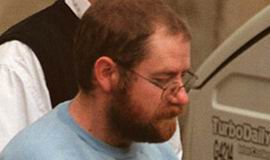
John Justin Bunting
Serial killer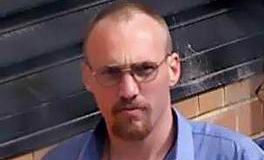 Robert Joe Wagner
Serial killer · Australia · 1992
Robert Joe Wagner (born 28 November 1971 in Parramatta, New South Wales) was an…
10 victims
Robert Joe Wagner
Serial killer · Australia · 1992
Robert Joe Wagner (born 28 November 1971 in Parramatta, New South Wales) was an…
10 victims
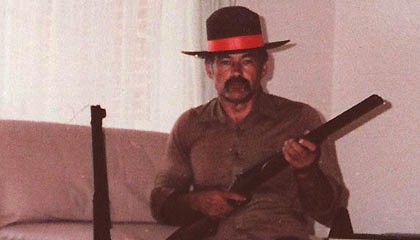 Ivan Milat
Serial killer · Australia · 1989
Ivan Milat was convicted of seven murders and received multiple life sentences.…
7 victims
Ivan Milat
Serial killer · Australia · 1989
Ivan Milat was convicted of seven murders and received multiple life sentences.…
7 victims
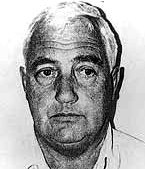 John Wayne Glover
Serial killer · Australia · 1989
John Wayne Glover (26 November 1932 – 9 September 2005) was a British-born Aust…
6 victims
John Wayne Glover
Serial killer · Australia · 1989
John Wayne Glover (26 November 1932 – 9 September 2005) was a British-born Aust…
6 victims
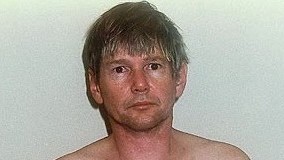 Peter Dupas
Serial killer · Australia · 1997
Peter Norris Dupas was an Australian serial killer known for violence against w…
6 victims
Peter Dupas
Serial killer · Australia · 1997
Peter Norris Dupas was an Australian serial killer known for violence against w…
6 victims
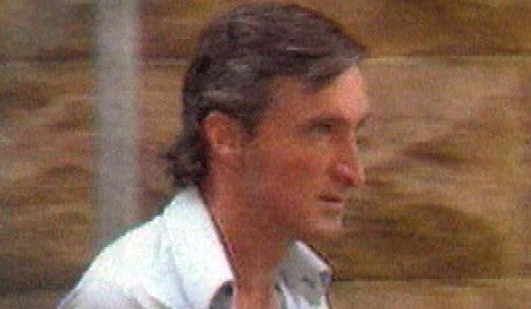 David Birnie
Serial killer · Australia · 1986
David John Birnie (16 February 1951 – 7 October 2005) was an Australian serial…
4 victims
David Birnie
Serial killer · Australia · 1986
David John Birnie (16 February 1951 – 7 October 2005) was an Australian serial…
4 victims
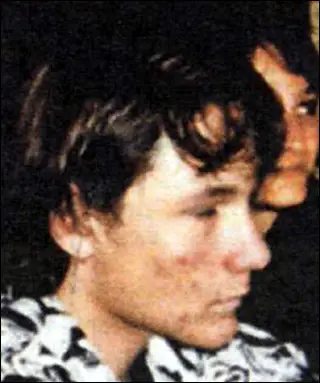 James Vlassakis
Serial killer · Australia · 1997
James Spyridon Vlassakis (born 24 December 1979) was an Australian serial kille…
4 victims
James Vlassakis
Serial killer · Australia · 1997
James Spyridon Vlassakis (born 24 December 1979) was an Australian serial kille…
4 victims
 Robert Louis Cromwell
Murderer · USA · 2001
Robert Louis Cromwell (inmate) was convicted in Maricopa County CR-2001-095438.…
1 victim
Robert Louis Cromwell
Murderer · USA · 2001
Robert Louis Cromwell (inmate) was convicted in Maricopa County CR-2001-095438.…
1 victim
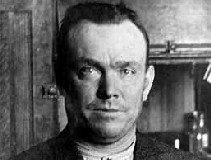 Albert Horsley
Murderer · USA · 1905
Albert Edward Horsley was sentenced to death for the 1905 political assassinati…
1 victim
Albert Horsley
Murderer · USA · 1905
Albert Edward Horsley was sentenced to death for the 1905 political assassinati…
1 victim
 Harvey Earvin
Murderer · USA · 1976
Harvey Earvin was convicted of capital murder by a jury and was sentenced to de…
1 victim
Harvey Earvin
Murderer · USA · 1976
Harvey Earvin was convicted of capital murder by a jury and was sentenced to de…
1 victim
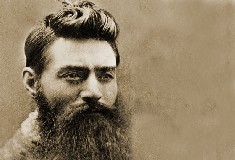 Ned Kelly
Murderer · Australia · 1878
Edward “Ned” Kelly (June 1854 or 1855 – 11 November 1880) was an Irish Australi…
6 victims
Ned Kelly
Murderer · Australia · 1878
Edward “Ned” Kelly (June 1854 or 1855 – 11 November 1880) was an Irish Australi…
6 victims
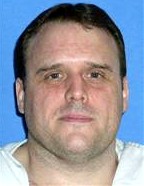 Patrick Bryan Knight
Murderer · USA · 1991
Patrick Bryan Knight (also known as “Dead Man Laughing”). Walter Werner and Mar…
2 victims
Patrick Bryan Knight
Murderer · USA · 1991
Patrick Bryan Knight (also known as “Dead Man Laughing”). Walter Werner and Mar…
2 victims
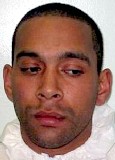 Wayne Edwards
Murderer · United Kingdom · 2009
Wayne Edwards was 33 years old and lived with his grandfather, Paul Peters, in…
1 victim
Wayne Edwards
Murderer · United Kingdom · 2009
Wayne Edwards was 33 years old and lived with his grandfather, Paul Peters, in…
1 victim
- Gender
- male
- Country
- Australia
- Location
- Snowtown, South Australia, Australia
- Date of birth
- September 4, 1966
- Age at first offence
- 26
- Characteristics
- cannibalism, torture, abuse
- Victim profile
- Clinton Trezise, 22 / Ray Davies, 26 / Michael Gardiner, 19 / Barry Lane, 42 / Thomas Trevilyan, 18 / Gavin Porter, 29 / Troy Youde, 21 / Frederick Brooks, 18 / Gary O'Dwyer, 29 / Elizabeth Haydon, 37 / David Johnson, 24
- Method of murder
- Shooting - Strangulation
- Date(s) of murder
- 1992 - 1999
- Years active
- 1992–1999
- Date of arrest
- May 19, 1999
- Status
-
Life imprisonment
Sentenced to eleven consecutive sentences of life imprisonment without the possibility of parole on September 8, 2003
Case record: John Justin Bunting
John Justin Bunting (born 4 September 1966 in Inala, Queensland) was an Australian serial killer from Adelaide, South Australia, who was serving eleven consecutive sentences of life imprisonment without the possibility of parole.
Bunting was convicted for his role in the murder of 11 victims in the Snowtown murders and was described as “Australia’s worst serial killer”. He was characterised as the ringleader of a “degenerate sub-culture” of murderers whose victims were people they already knew.
Bunting was described as driven to murder by hatred for pedophiles and homosexuals and as a skilled manipulator of people. His crimes included torture and the group stole welfare payments after targeting victims.
Bunting lived in Murray Bridge, South Australia from November 1991, living on Lohman Street until he moved to Burdekin Avenue in May 1997 and remaining there until September 1998.
The offence
Ringleader role and group conduct
Bunting was the ringleader of a group that preyed upon people they regarded as weak so they could steal their welfare payments. The group’s motivation was associated with Bunting’s hatred for pedophiles and homosexuals.
The “rock spider wall” fashioned by Bunting was located on a wall of a spare room in his house. The interconnected web of names, created using paper notes and wool, included people Bunting suspected to be pedophiles or homosexuals. Bunting would randomly select a name from the wall and call the person, insinuating they were pedophiles and “would get what’s coming to them”.
Relationship with Elizabeth Harvey and James Vlassakis
Bunting was married to Elizabeth Harvey, mother of co-offender James Vlassakis. Bunting spent a lot of time with Vlassakis, assuming the role of a father figure.
Bunting regularly communicated to Vlassakis his hatred for pedophiles and homosexuals. Vlassakis confided in Bunting that his stepbrother, Troy Youde, had molested him at the age of 13. Bunting replied by suggesting that Youde be bashed.
Vlassakis later gave evidence against Bunting, Wagner, and Haydon at their criminal trials. Elizabeth Harvey later died of cancer after the arrests of Bunting, Wagner, Vlassakis, and Haydon.
Relationship with Robert Wagner and Barry Lane
Bunting met Robert Wagner when he moved to Waterloo Corner Road. Wagner was living with Barry Lane at the time; both men assisted Bunting in disposing of the body of Bunting’s first victim, Clinton Trezise.
Wagner later assisted Bunting in the remaining ten murders.
Victim selection and welfare/payment deception
Bunting moved into the Salisbury North home in 1991 and quickly befriended Wagner and his boyfriend Barry Lane, and Mark Haydon, who all lived nearby.
Victims were mainly chosen on a whim by Bunting for imagined infractions. Some were murdered because Bunting suspected them of being a paedophile, usually based on flimsy evidence or rumour; others were killed due to dislike of obese people, drug users, or because they were gay men. Most victims were friends or acquaintances of at least one of the group; others were relatives, sometimes living in the same house as one of the killers.
Usually victims’ social security and bank details were obtained, and the murderers or associates impersonated the victims to continue to collect pensions after the victims’ deaths. A total of $97,200 was obtained in this manner, but social security fraud was not judged to have been the primary motive for the killings.
Investigation and storage of bodies
Discovery of bodies and locations
The Snowtown murders involved the murders of 12 people in South Australia between August 1992 and May 1999. The crimes were uncovered when the remains of eight victims were found in barrels of acid located in a rented former bank building in Snowtown, South Australia on 20 May 1999. Snowtown was described as 145 km north of Adelaide. Only one victim was killed in Snowtown; none of the victims or the perpetrators were from that town.
The bodies had been held in a series of locations around Adelaide for some time, and were moved to Snowtown in early 1999, very late in the crime spree that had spanned several years.
Eight bodies were found in plastic barrels in the disused bank vault on 20 May. Three days later two bodies were found buried in a backyard in Salisbury North, a suburb north of Adelaide. By the end of June, nine of the ten victims had been identified.
The discoveries followed a lengthy, covert criminal investigation by South Australian Police. During the investigation, two mysterious deaths already known to authorities were found to have been murders perpetrated by the “Snowtown” murderers.
A total of four people were arrested and charged over the murders, and all were convicted of the murders or assisting in the murders. Much detail was not made public because the cases had been subject to over 250 suppression orders, many of which had not yet been lifted.
Bodies in barrels and acidic storage
Examiners attempting to identify the remains found them mummified rather than dissolved, which was described as the apparent intention of storing bodies in barrels of acid. The killers chose hydrochloric acid, which mummified the remains.
The final murder was conducted in the bank building after the barrels had been moved there for storage.
The bodies in barrels were variously stored in several places before finally being moved to the bank vault in Snowtown. This included a shed behind Bunting’s house at Murray Bridge in April 1998; three barrels moved to Haydon’s property at Smithfield Plains later in 1998; five barrels stored in a Toyota Land Cruiser at Hoyleton; and a sixth in a Mitsubishi Sigma back at Murray Bridge. Both vehicles were later moved to Snowtown. Afterwards, the barrels moved into the bank vault that had been rented by Haydon using the name “Mark Lawrence”, the name he had used before he married.
A local police source said:
“From what I understand there was no person involved in those murders from within Snowtown or the surrounding district. They were murdered elsewhere and the drums were brought to Snowtown because it was a quiet little town and there was a premises ideal for the persons involved.”
Listening device and court evidence
After Elizabeth Haydon’s disappearance, police installed a listening device in Mark Haydon’s house in Smithfield Plains. Recordings from the listening device were later used as court evidence.
Lower Light remains and early clues
Police involvement with the then unlinked crimes began with discovery of human remains at Lower Light. The remains found at Lower Light were later determined to have been those of Clinton Trezise, who had been murdered in Bunting’s living room at Salisbury North.
Ray Davies and Suzanne Allen were found buried in the back yard of that house.
The discovery that Trezise and Lane had known each other was one of the first clues police used to determine there was more than a routine missing person investigation.
Timeline
- 8 September 2003 — Bunting was found guilty and convicted on 11 counts of murder.
- 21 June 2001 — Vlassakis was given four life sentences after pleading guilty to four murders.
- 14 October 2002 — The Supreme Court trial for Wagner and Bunting began.
- 2 August 2004 — A trial opened for Mark Haydon charging him with two counts of murder and six counts of “assisting offenders”.
- 19 December 2004 — The jury convicted Haydon of five counts of assisting in the crimes and reached no verdict on two counts of murder and the remaining assistance charge.
- May 2005 — The Supreme Court dismissed an appeal by Bunting and Wagner.
- 7 May 2007 — Final outstanding murder charges against John Bunting and Robert Wagner, concerning Suzanne Allen, were dropped when a jury was unable to reach a verdict.
- 20 May 1999 — Eight bodies were found in plastic barrels in the disused bank vault in Snowtown.
- 23 May 1999 — Two bodies were found buried in a backyard in Salisbury North.
- 3pm — Elizabeth Haydon was reported missing by her brother Garion Sinclair to police at 3pm the following day.
Trial
Trial together with Robert Wagner
Bunting was tried together with Robert Wagner.
On 8 September 2003, Bunting was found guilty and convicted on 11 counts of murder.
He was Australia's most prolific serial killer.
Evidence and jury difficulties
After a series of pre-trial hearings, the first of the accused to be sentenced was Vlassakis, who received four life sentences on 21 June 2001 after pleading guilty to four murders. Later that summer, Bunting, Haydon, and Wagner each pleaded not guilty to 10 counts of murder. Many of the charges against Haydon were later dropped due to insufficient evidence.
The Supreme Court trial for Wagner and Bunting began on 14 October 2002 and experienced difficulties with the jury. At least one juror refused to continue due to the horror of the evidence, and some sources reported that a total of three jurors withdrew from the panel for this reason.
Both Bunting and Wagner were found guilty on 8 September 2003. Bunting was convicted of eleven murders and Wagner, who had pleaded guilty to three murders, was convicted of seven. Both appealed their convictions.
The presiding judge, Justice Brian Martin, stated that the men were “in the business of killing for pleasure” and were also “incapable of true rehabilitation”.
Haydon proceedings
Proceedings against Haydon continued into 2004. On 2 August, a trial opened charging him with two counts of murder and six counts of “assisting offenders”. Haydon testified that he was not party to the crimes.
On 19 December, after four days of deliberations, the jury convicted Haydon of five counts of assisting in the crimes and reached no verdict on the two counts of murder and the remaining charge of assistance. Haydon was held in detention as of December 2004 awaiting a possible retrial.
In May 2005, the Supreme Court dismissed an appeal by Bunting and Wagner, and both had exhausted their avenues of appeal in South Australia.
In September 2005, the murder charges against Haydon were dropped in return for guilty pleas to two new charges of assisting in the killings of his wife, Elizabeth Haydon, and Troy Youde. Prosecutors agreed to drop an additional charge of assisting offenders in relation to the murder of David Johnson.
The final outstanding murder charges against Bunting and Wagner concerning Suzanne Allen were dropped on 7 May 2007, when a jury was unable to reach a verdict.
Sentencing
Bunting and Wagner were sentenced to imprisonment for life on each count to be served cumulatively. Justice Brian Martin stated that the men were “in the business of killing for pleasure” and were also “incapable of true rehabilitation”.
Bunting was sentenced to eleven consecutive sentences of life imprisonment without the possibility of parole on September 8, 2003.
Offence details: murders and torture
Tools and torture scene description
The bank vault scene included tools used by the killers to torture and murder their victims, including knives, a bloodstained saw, double barrel shotgun, coils of rope, rolls of tape, rubber gloves, cloths, and a variac metallurgy tool used to administer electric shocks to the genitals and other sensitive parts of the victim’s body.
A pathologists’ report later revealed that prolonged torture had taken place using everyday tools such as pincers, pliers and clamps, and examples of these were found in the vault.
The jury was unable to decide without doubt that Suzanne Allen had been murdered based on evidence presented at trial.
The victims were forced to call their torturers “God”, “Master”, “Chief Inspector” and “Lord Sir”.
Wendy Abraham QC, the deputy Director of Public Prosecutions, reported at the Supreme Court of South Australia that the victims were forced to call their torturers “God”, “Master”, “Chief Inspector” and “Lord Sir”.
A local quote about encountering the building was:
“It was a scene from the worst nightmare you’ve ever had, I don’t think any of us was prepared for what we saw.”
Clinton Trezise
Clinton Trezise was 22 and was murdered in August 1992. He was killed in Bunting's living room at Bunting's home in Salisbury North after being invited inside for a social visit and being bashed to death with a shovel.
Bunting accused Trezise of being a pedophile and referred to him in conversations after his murder as “Happy Pants”.
Trezise was found buried two years after his murder in a shallow grave on 16 August 1994 at Lower Light, South Australia.
Trezise’s murder remained unsolved for some time, and in 1997 he was the subject of two episodes of the Australian television show “Australia’s Most Wanted”. Bunting watched an episode with Vlassakis and his mother.
Bunting boasted to Vlassakis, “That’s my handiwork”, and revealed that he had murdered Trezise while living at Waterloo Corner Road, Salisbury, and that he disposed of Trezise’s body in Lower Light with Wagner and Lane's assistance.
Murders Clinton Trezise also preceded a murder spree beginning in August 1992.
Ray Davies
Ray Davies was an intellectually disabled man who lived in a caravan behind the house of Suzanne Allen in Salisbury North. Davies was a former lover of Allen and became a target for murder after Allen accused him of making sexual advances to her grandsons.
Davies was murdered by Bunting and Wagner in December 1995 and was never reported missing. Bunting and Wagner were later seen cleaning Davies’ caravan.
The caravan was moved to a house in nearby Elizabeth, where it was painted and sold two months after Davies’ murder.
Davies’ body was later recovered by police buried in the backyard at Bunting’s former home in Waterloo Corner Road, Salisbury North.
Ray Davies was garrotted with a piece of rope and a tyre lever after being placed in a bath, attacked with clubs, repeatedly beaten about his genitals, and having a toe crushed with a pair of pliers.
Suzanne Allen
Suzanne Allen was 47. Her remains were found buried at Bunting’s house at Salisbury North, wrapped in 11 different plastic bags.
The death of Suzanne Allen was concealed by the accused, who continued to collect her pension, claiming a total of $17,000. They claimed she had died of a heart attack.
Murder charges regarding the death of Allen were eventually dropped by the prosecution due to lack of evidence.
Her remains were found buried above Ray Davies in the garden of the house at Salisbury North.
Based on the evidence presented at trial, the jury was unable to decide without doubt that she had been murdered.
Michael Gardiner
Michael Gardiner was 19 and was an openly gay man. He was murdered by Bunting and Wagner in August 1997.
Gardiner shared a house with friends nearby. Robert Wagner did not like Gardiner due to his open homosexuality.
After Gardiner’s murder, Bunting had Frederick Brooks call friends of Gardiner and impersonate him. Brooks demanded from them belongings such as Gardiner’s wallet, saying Gardiner required it for identification purposes.
His body was found by police stored in one of six drums in the bank vault in Snowtown.
Barry Lane
Barry Lane was 42, an open homosexual and crossdresser. He had been in a relationship with Robert Wagner from 1985 until 1996 and they shared a house in Bingham Road, Salisbury North near Bunting’s home.
Lane’s relationship with Wagner began when Wagner was 13. He was last seen alive in October 1997.
On the day of his murder, Lane was forced by Bunting to call his mother; he told her he would be moving to Queensland and that he wanted nothing further to do with her.
Bunting referred to Lane as being “dirty” and as a pedophile and learned of Lane telling others about the earlier murder of Clinton Trezise. Lane had assisted Bunting to conceal Trezise’s body.
After Lane’s murder, Bunting assumed control of Lane’s vehicle and claimed his welfare payments.
Thomas Trevilyan was involved in the murder of Lane. Lane’s dismembered body was found by police in a drum in the bank vault in Snowtown, along with the body of Michael Gardiner. One of Gardiner’s feet had been removed so the lid of the drum could be closed.
Lane had been tortured by having his toes crushed with pliers.
Thomas Trevilyan
Thomas Trevilyan was 18 and had psychiatric problems and wore only army style clothing. He ran outside his house with a knife if he heard unfamiliar noises and regularly traveled long distances on foot.
He shared a house with Barry Lane for a period of five months from April to October 1997. Trevilyan assisted Bunting and Wagner in the earlier murder of Barry Lane.
Bunting murdered Trevilyan after finding out he told others of his involvement in Lane’s murder.
Bunting told others that Trevilyan had started to “fuck up” and “go mental” and that he would be a risk.
Trevilyan was driven to Kersbrook in the Adelaide Hills by Bunting and Wagner. He was forced to stand on a box while a noose was fastened around his neck and the box kicked from under him.
Trevilyan’s body was found on 5 November 1997. Police initially treated Trevilyan’s death as a suicide.
He was known to his family to have suffered from paranoid schizophrenia and was easily persuaded.
Gavin Porter
Gavin Porter was 31. He was a friend of Vlassakis’ from Victoria and moved into the house shared by Bunting and Vlassakis in 1988.
Bunting referred to Porter, a heroin addict, as a “waste” who no longer deserved to live.
Bunting was angered after being pricked by a used syringe discarded by Porter on the sofa.
Porter was murdered by Bunting and Wagner while sleeping in his car in the driveway of Bunting’s house after working on his car. His body was stored in a barrel before being moved to Snowtown.
Troy Youde
Troy Youde was a half brother of Vlassakis. Vlassakis had earlier confided to Bunting that Youde had molested him when younger.
In August 1998, Bunting, Wagner, Vlassakis, and Haydon visited Youde. Bunting, Wagner and Vlassakis dragged him from his bed and murdered him.
Youde’s body was dismembered and stored in a barrel and later moved to Snowtown.
Frederick Brooks
Frederick Brooks was the intellectually disabled son of Jodie Elliot and nephew of Elizabeth Haydon.
He was murdered by Bunting, Wagner, and Vlassakis on 17 September 1998. Brooks’ body was moved to a car that was later collected by Mark Haydon. The body was later located by police in the disused bank vault in Snowtown.
Frederick Brooks received electric shocks to his penis and testicles, and had a burning sparkler pushed down into his penis; after his toes were crushed and his nose and ears burned with cigarettes, he was allowed to choke to death on his gag.
Gary O’Dwyer
Gary O’Dwyer was 29 and was an intellectually disabled man who lived alone in Frances Street, Murray Bridge. His disabilities arose from a car accident earlier in life.
Bunting had Vlassakis learn personal information about O’Dwyer and whether he had any family. O’Dwyer was seen by Bunting as an easy target and was murdered so Bunting could gain from O’Dwyer’s welfare payments.
O’Dwyer’s body was found by police in the bank vault in Snowtown. His body contained burn marks inflicted by using a variac machine to apply electric shocks.
Elizabeth Haydon
Elizabeth Haydon was the wife of Mark Haydon and shared a house with him at Blackham Crescent, Smithfield Plains, a northern suburb of Adelaide. Elizabeth’s sister Jodie Elliot lived at the rear of the Haydons’ house.
Elizabeth was Bunting and Wagner’s second-to-last murder victim and the only female victim. She was murdered on 20 November 1998 while Haydon and Elliot were away from the house.
Elizabeth was reported missing by her brother Garion Sinclair to police at 3pm the following day. Haydon assisted in concealing his wife’s murder.
Police inquiries into Elizabeth Haydon’s disappearance led them to the disused bank in Snowtown, which eventually led to discovery of eight bodies stored in a vault, including that of Elizabeth Haydon.
David Johnson and final murder
David Johnson was lured to the disused bank in Snowtown by his stepbrother, James Vlassakis, on 9 May 1999.
Johnson was not homosexual, but Bunting referred to him as a “faggot” and said he needed to die. Vlassakis had earlier told Johnson about a computer for sale near Clare, South Australia.
Vlassakis drove Johnson to Snowton to look at this computer. Shortly after Johnson entered the bank building, he was grabbed by Wagner around the throat and strangled. Wagner then applied handcuffs to Johnson and Johnson was forced by Bunting to read a script Bunting had prepared, and to provide his bank account PIN.
Johnson’s voice was recorded on a computer equipped with a microphone. Wagner and Vlassakis drove to Port Wakefield and attempted to access Johnson’s bank account, leaving Bunting and Haydon with Johnson in the disused bank.
Wagner and Vlassakis were unsuccessful in withdrawing funds. When they returned to Snowtown, Johnson was dead. Bunting and Wagner dismembered Johnson’s body, then fried and ate parts of his flesh.
Johnson was the final murder victim before the group was apprehended. The only victim to have died in Snowtown was David Johnson.
A piece of the flesh of David Johnson was fried and eaten by Bunting and Wagner.
Other individuals mentioned
Mark Haydon
Mark Haydon continued to access the welfare payments of Brooks.
Haydon later assisted in concealing the murder of Elizabeth Haydon.
Jodie Elliott
Jodie Elliott was Elizabeth Haydon’s sister and lived at the rear of the Haydons’ house.
She had a brief relationship with Bunting in 1998 and was described as a woman with below-average intelligence who became besotted with Bunting. Elliott impersonated a deceased former acquaintance of Bunting, Suzanne Allen, to collect her social security payments.
Troy Youde and prior molestation
Vlassakis confided to Bunting that his stepbrother Troy Youde had molested him at age 13. Bunting replied suggesting Youde be bashed.
Elizabeth Harvey and witness evidence
Elizabeth Harvey was Vlassakis’ mother and assisted in one of the murders with Bunting’s encouragement.
Community impact and later media
The murders were described with backpacker murders killer Ivan Milat as Australia’s worst serial killers. The manner in which victims were found horrified and fascinated the public. The murders garnered Snowtown unwanted attention, and the town became best-known for the murders.
In the 18 months following the discovery in the disused bank vault, residents reported a steady stream of unwelcome visitors stopping to look at and photograph the building.
At the time, the local press reported a suggestion that the town’s name be changed to avoid stigma associated with the name, though the suggestion was never acted upon. One suggested new name in press reports was “Rosetown”.
The house in Salisbury North was owned by the South Australian Housing Trust and was demolished; units for older people were built in its place.
Films and books
In March 2010, Screen Australia announced funding support for the film “Snowtown”, a true crime film based on the murders. It was to be produced by Warp Films Australia and was to be the first full length feature directed by Justin Kurzel.
A movie, “Snowtown”, regarding the life of John Bunting, was released in Australia on 19 May 2011.
Books listed included:
- “Snowtown Murders: The Real Story Behind the Bodies in the Barrels Killings”, Andrew McGarry, ISBN 0-7333-1482-1
- “Snowtown: The Bodies In Barrels Murders: The Grisly Story of Australia’s Worst Serial Killings”, Jeremy Pudney, ISBN 0-7322-6716-1
- “All Things Bright And Beautiful: Murder In The City Of Light”, Susan Mitchell, ISBN 1-4050-3610-9
Spotted an error, or have more information about this case?