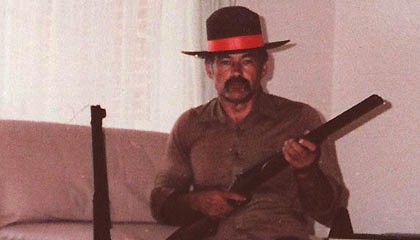
Ivan Milat
Serial killer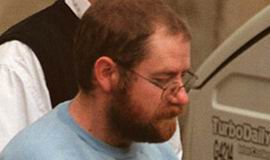 John Justin Bunting
Serial killer · Australia · 1992
John Justin Bunting (born 4 September 1966 in Inala, Queensland) was an Austral…
11 victims
John Justin Bunting
Serial killer · Australia · 1992
John Justin Bunting (born 4 September 1966 in Inala, Queensland) was an Austral…
11 victims
 Robert Joe Wagner
Serial killer · Australia · 1992
Robert Joe Wagner (born 28 November 1971 in Parramatta, New South Wales) was an…
10 victims
Robert Joe Wagner
Serial killer · Australia · 1992
Robert Joe Wagner (born 28 November 1971 in Parramatta, New South Wales) was an…
10 victims
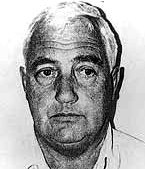 John Wayne Glover
Serial killer · Australia · 1989
John Wayne Glover (26 November 1932 – 9 September 2005) was a British-born Aust…
6 victims
John Wayne Glover
Serial killer · Australia · 1989
John Wayne Glover (26 November 1932 – 9 September 2005) was a British-born Aust…
6 victims
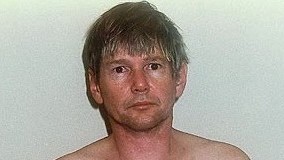 Peter Dupas
Serial killer · Australia · 1997
Peter Norris Dupas was an Australian serial killer known for violence against w…
6 victims
Peter Dupas
Serial killer · Australia · 1997
Peter Norris Dupas was an Australian serial killer known for violence against w…
6 victims
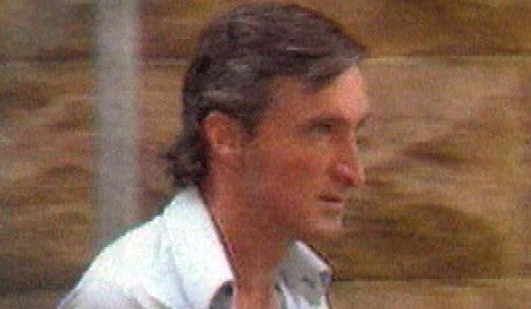 David Birnie
Serial killer · Australia · 1986
David John Birnie (16 February 1951 – 7 October 2005) was an Australian serial…
4 victims
David Birnie
Serial killer · Australia · 1986
David John Birnie (16 February 1951 – 7 October 2005) was an Australian serial…
4 victims
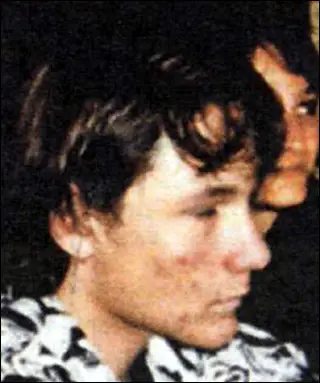 James Vlassakis
Serial killer · Australia · 1997
James Spyridon Vlassakis (born 24 December 1979) was an Australian serial kille…
4 victims
James Vlassakis
Serial killer · Australia · 1997
James Spyridon Vlassakis (born 24 December 1979) was an Australian serial kille…
4 victims
 Anthony Nathaniel Bonham
Murderer · USA · 1981
Anthony Nathaniel Bonham (also shown as Antonio Nathanial Bonham) was executed…
1 victim
Anthony Nathaniel Bonham
Murderer · USA · 1981
Anthony Nathaniel Bonham (also shown as Antonio Nathanial Bonham) was executed…
1 victim
 Leroy Drayton
Murderer · USA · 1984
Leroy Joseph "Ricky" Drayton was executed by lethal injection in South Carolina…
1 victim
Leroy Drayton
Murderer · USA · 1984
Leroy Joseph "Ricky" Drayton was executed by lethal injection in South Carolina…
1 victim
 Anthony Charles Williams
Murderer · USA · 1978
Anthony Charles Williams Williams was executed by lethal injection in Texas on…
1 victim
Anthony Charles Williams
Murderer · USA · 1978
Anthony Charles Williams Williams was executed by lethal injection in Texas on…
1 victim
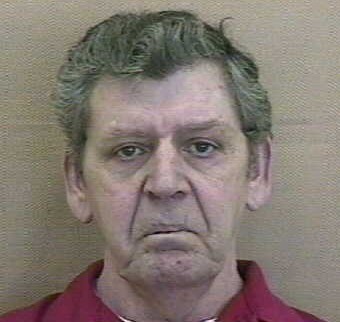 George Franklin Page
Homicide · USA · 1995
George Franklin Page was male, white, and aged 63. He served 16 years in the mi…
1 victim
George Franklin Page
Homicide · USA · 1995
George Franklin Page was male, white, and aged 63. He served 16 years in the mi…
1 victim
 Randall Knese
Murderer · USA · 1996
State of Missouri v. Randall Knese, 985 S.W.2d 759 (Mo. banc 1999) The case was…
1 victim
Randall Knese
Murderer · USA · 1996
State of Missouri v. Randall Knese, 985 S.W.2d 759 (Mo. banc 1999) The case was…
1 victim
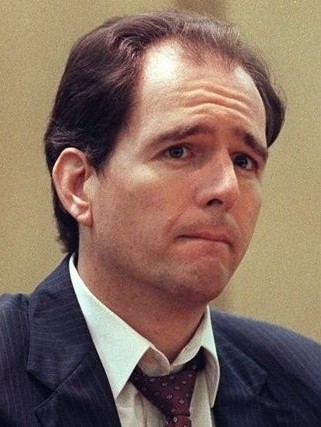 Danny Rolling
Serial killer · USA · 1989
Danny Harold Rolling was executed by lethal injection in Florida on October 25,…
8 victims
Danny Rolling
Serial killer · USA · 1989
Danny Harold Rolling was executed by lethal injection in Florida on October 25,…
8 victims
- Gender
- male
- Country
- Australia
- Location
- New South Wales, Australia
- Date of birth
- December 27, 1944
- Age at first offence
- 45
- Characteristics
- rape
- Victim profile
- James Gibson , 19, and Deborah Everist , 19 / Simone Schmidl, 21 / Gabor Neugebauer , 21, and Anja Habschied, 20 / Caroline Clarke , 21, and J oanne Walters, 22
- Method of murder
- Stabbing with knife / Shooting
- Date(s) of murder
- 1989 - 1992
- Years active
- 1989–1992
- Date of arrest
- May 22, 1994
- Status
-
Life imprisonment
Sentenced to seven consecutive life sentences plus 18 years on July 27, 1996
Case record: Ivan Milat
Identity
Ivan Milat was convicted of seven murders and received multiple life sentences.
The offence
A series of killings occurred involving hitchhikers and backpackers in New South Wales, Australia, during the late 1980s and early 1990s. Victims were abducted, bound and killed after being taken on drives in remote areas, with evidence indicating sexual assault in the cases described.
Victims
The killings resulted in the deaths of:
- Caroline Clarke and Joanne Walters, who were British and traveling together on foot
- James Gibson and Deborah Everist, who were identified as hitchhikers
- Simone Schmidl, a hitchhiker who disappeared in January 1991
- Anja Habschied and Gabor Neugebauer, a couple who were missing after December 1991
Investigation
Locations and discoveries in Belangalo State Forest
Bodies were discovered in the Belangalo State Forest. The location was marked on maps as “Executioner’s Drop” in some descriptions. The case involved multiple successive discoveries over a period of time, beginning with remains found by a pair of trail runners/orienteers.
Further discoveries were made after the initial finds, and items associated with victims were also found near the remains.
Identifications and injuries described in the case narrative
The case material described different causes of death across victims, including stabbing and shooting:
- Clarke and Walters were described as having been stabbed and shot with multiple injuries
- Gibson was described as repeatedly stabbed
- Everist was described as slashed in the face in addition to stab wounds
- Schmidl was described as stabbed
- Habschied was described as decapitated
- Neugebauer was described as shot in the head multiple times
The narrative also described similarities across the killings, including:
- Stab wounds associated with spinal cord injury that rendered victims helpless
- Evidence of crude bondage and strangulation in most cases
- Victims being partially undressed with pants buttoned but not zipped, in some described scenes
- Camping gear and personal items connected to victims being found in connection with the discoveries
Paul Onions and identification of Ivan Milat
Authorities were described as stumped until 1993, when a man named Paul Onions identified Ivan Milat as the person who attacked him after picking Onions up near the forest.
Onions described being attacked by a driver using the name “Bill” and identifying a moustache handlebar image as part of the police sketch preparation. Later, he positively identified Milat as the attacker in 1994.
Investigators were also described as reviewing old sex crimes, including a rape allegation filed against Ivan Milat in December 1974, and learning about an incident involving hitchhikers and rape allegations that had been dropped.
Arrest
Police raids and custody
In May 1994, police conducted dawn raids involving multiple properties. Ivan Milat was described as being taken into custody and held as a suspect for armed robbery and discharging a firearm, before being charged with murder offences.
The narrative described the arrest as involving a large police presence surrounding the premises where Milat lived, and police searching multiple locations connected to Milat and his family.
Court appearance for initial charges
Ivan Milat appeared in court for initial robbery and weapon charges on May 23. He did not enter a plea.
Trial
Opening of trial and evidence described
The trial opened in March 1996 and lasted multiple weeks.
The prosecution case included identification testimony from Paul Onions, and evidence described as including weapons and ammunition linked to the murders, along with camping gear and items said to have belonged to victims.
The narrative also described expert evidence about firearms and ballistics, including discussion of a .22 Ruger rifle/10-22 type and the presence of cartridges and rifle parts found in Milat’s home during searches.
Defence
Milat’s defence was described as focusing on alternative suspects and arguing that he had been set up, including claims implicating members of his family.
Milat testified and denied knowledge or involvement in the deaths and in the abduction/attempt involving Paul Onions. The narrative also described cross-examination in which defence explanations were challenged on possession and evidence issues.
Verdict and sentencing
On July 27, 1996, jurors returned guilty verdicts covering:
- seven counts of willful murder (one for each of the seven victims identified in the case narrative)
- attempted murder, false imprisonment and robbery of Paul Onions
The presiding judge issued sentencing that resulted in:
- life sentences on each murder count, described as running consecutively and without the possibility of parole in one passage
- an additional term for the Paul Onions offences
STATUS: Sentenced to seven consecutive life sentences plus 18 years on July 27, 1996
Appeals
Ivan Milat appealed against his convictions on grounds described as involving the quality of legal representation and breach of the common law right to legal representation established in Dietrich v The Queen.
The NSW Court of Criminal Appeal dismissed the appeal, holding that the right to legal representation did not depend on any level or quality of representation unless the quality were so low that the accused were no better off with it.
In 2004, Milat filed an application in the High Court heard by Justice McHugh seeking orders to allow oral submissions or attendance via video link for an impending appeal for special leave. The application was dismissed on grounds that the issues could be addressed by written submission, and McHugh J indicated the appeal might be defeated because it had been brought out of time.
The grounds described for the impending appeal included arguments that:
- the trial judge erred by allowing the Crown to put a case to the jury unsupported by its own witnesses
- the trial judge put forward alternative cases to the jury, one of which had not been argued by the Crown
Aftermath
Prison incidents described
The narrative described multiple prison events after sentencing, including:
- an escape attempt foiled by guards involving Milat and other inmates
- Milat being transferred to maximum-security prison in Goulburn, New South Wales
- Milat attempting suicide by swallowing materials including razor blades and staples
- later self-inflicted injury on 26 January 2009 involving cutting off his little finger with a plastic knife, and surgery being assessed as not possible for reattachment on 27 January 2009
- restrictions and surveillance following suicide threats, including placement in a “safe cell” and 24-hour video surveillance
- a controversy in June 2006 about television and toaster privileges in a prison cell that were described as being withdrawn after media attention
Statements and contested involvement
Milat’s appeals and subsequent statements described him denying involvement and expressing plans to escape at every opportunity.
The narrative also included claims that Milat was acquitted on rape charges in 1971, while other sections also described later allegations and disputes about whether he acted alone.
Other investigations and possible links described
The narrative described that investigators considered linking additional disappearances to Milat’s movements dating back to the late 1970s, including reinterviews of rape victims and investigations into disappearances presumed to be murders. It also described investigations into other missing persons and searches for possible additional burial sites.
Other details
Inquest participation described
In June 2001, Milat appeared at an inquest into the deaths of three women in 1978 and 1979. The three women described were:
- Robyn Hickie, 17
- Amanda Robinson, 14
- Leanne Goodall, 20
Milat denied having known the women or having picked up a hitchhiker in the area and offered nothing to help investigators.
Personal and biographical details included in the narrative
The case narrative included biographical details such as:
- Milat’s birth in 1944 in Newcastle
- descriptions of his ancestry and work as a highway construction worker
- descriptions of hobbies and activities, including hunting and motorcycle riding
- descriptions of family relationships and a large family in the narrative
Sexual assault and rape references
The narrative described sexual assault and rape in connection with the victims’ deaths, and it also referenced Milat having been acquitted on rape charges in 1971 in one passage. The “rape” characteristic tag is supported by these references in the provided material.

Spotted an error, or have more information about this case?