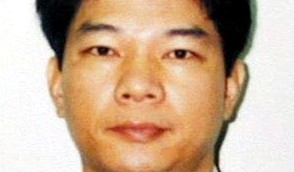
Mamoru Takuma
Mass murderer Tomohiro Kato
Mass murderer · Japan · 2008
Tomohiro Katō was held in custody and was in prison awaiting trial. Tomohiro Ka…
7 victims
Tomohiro Kato
Mass murderer · Japan · 2008
Tomohiro Katō was held in custody and was in prison awaiting trial. Tomohiro Ka…
7 victims
 Mitsuhiro Kobayashi
Mass murderer · Japan · 2001
Mitsuhiro Kobayashi was a former taxi driver. During the trial, he admitted set…
5 victims
Mitsuhiro Kobayashi
Mass murderer · Japan · 2001
Mitsuhiro Kobayashi was a former taxi driver. During the trial, he admitted set…
5 victims
 Yasuaki Uwabe
Mass murderer · Japan · 1999
Yasuaki Uwabe (Japanese: 上部康明) was born in Shimonoseki, Yamaguchi. After gradua…
5 victims
Yasuaki Uwabe
Mass murderer · Japan · 1999
Yasuaki Uwabe (Japanese: 上部康明) was born in Shimonoseki, Yamaguchi. After gradua…
5 victims
 Yang Ning
Mass murderer · Japan · 2003
Yang Ning was a Chinese man sentenced to death over the killing of a family of…
4 victims
Yang Ning
Mass murderer · Japan · 2003
Yang Ning was a Chinese man sentenced to death over the killing of a family of…
4 victims
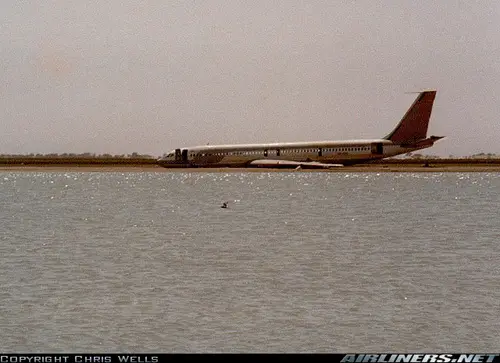 Seiji Katagiri
Mass murderer · Japan · 1982
Seiji Katagiri (片桐 清二 Katagiri Seiji) served as Captain of Japan Airlines Fligh…
24 victims
Seiji Katagiri
Mass murderer · Japan · 1982
Seiji Katagiri (片桐 清二 Katagiri Seiji) served as Captain of Japan Airlines Fligh…
24 victims
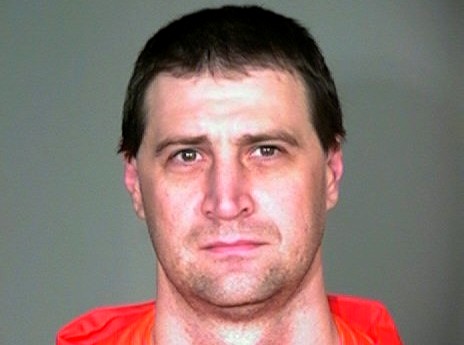 Michael Apelt
Murderer · USA · 1988
Michael Apelt and his brother, Rudi, came to Arizona from West Germany and bega…
1 victim
Michael Apelt
Murderer · USA · 1988
Michael Apelt and his brother, Rudi, came to Arizona from West Germany and bega…
1 victim
 Joseph Prystash
Murderer · USA · 1994
Joseph Andrew Prystash was charged with capital murder in connection with the h…
1 victim
Joseph Prystash
Murderer · USA · 1994
Joseph Andrew Prystash was charged with capital murder in connection with the h…
1 victim
 Dominique Green
Murderer · USA · 1992
Dominique Green was sentenced to death in Texas for the capital murder of Andre…
1 victim
Dominique Green
Murderer · USA · 1992
Dominique Green was sentenced to death in Texas for the capital murder of Andre…
1 victim
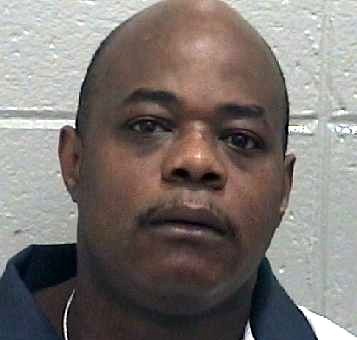 Robert Wayne Holsey
Murderer · USA · 1995
Robert Wayne Holsey Robert Wayne Holsey was 31 at sentencing. He was convicted…
1 victim
Robert Wayne Holsey
Murderer · USA · 1995
Robert Wayne Holsey Robert Wayne Holsey was 31 at sentencing. He was convicted…
1 victim
- Gender
- male
- Country
- Japan
- Location
- Ikeda, Osaka Prefecture, Japan
- Date of birth
- November 23, 1963
- Age at first offence
- 38
- Characteristics
- convicted rapist, mentally ill
- Victim profile
- Seven girls and one boy, ranging in age from 6 to 8
- Method of murder
- St abbing with knife
- Date(s) of murder
- June 8, 2001
- Years active
- 2001
- Date of arrest
- Same day
- Status
-
Executed
Executed by hanging on September 14, 2004
Overview
Mamoru Takuma (宅間 守; November 23, 1963 – September 14, 2004) was a Japanese janitor who committed a mass murder at an elementary school in Ikeda. He killed eight first- or second-grade students and wounded others during the Osaka school massacre in June 2001. He was later found guilty of multiple counts of murder and sentenced to death, and he was executed by hanging on September 14, 2004.
Timeline
- November 23, 1963 — Mamoru Takuma was born.
- November 1984 — Takuma was arrested for raping a woman and sentenced to three years in prison.
- 1984 — Takuma lived with his mother secretly.
- 1998 — After assaulting a passenger over the smell of her perfume, Takuma was fired and later became a maintenance man at Itami Elementary School.
- October 1998 — Takuma was arrested on suspicion of assaulting his former wife.
- March 3, 1999 — Takuma dissolved tranquilizer temazepam into tea served in the teachers' room, sending 4 people to the hospital.
- After March 3, 1999 — Takuma was diagnosed with schizophrenia and released after one month as “capable of taking care of himself.”
- November 1999 — Takuma was arrested on suspicion of entering into a private home; charges were dropped.
- September 2000 — Takuma got a job as a taxi driver.
- October 16 — Takuma was fired after assaulting a hotel bellhop in Osaka and breaking his nose.
- May 23, 2001 — Takuma was committed to a hospital, but left after one day and did not return.
- June 8, 2001 — On the day of his court hearing for the bellboy assault case, Takuma went on a murderous rampage at Ikeda Elementary School in Ikeda, Osaka Prefecture.
- December 2001 — Takuma pleaded guilty when his trial opened.
- August 28, 2003 — Takuma was found guilty of multiple counts of murder and sentenced to death.
- August 28, 2003 — Takuma was ejected from the court before the sentence because he continued to verbally insult the victims and the victims' parents.
- September 14, 2004 — Takuma was executed by hanging.
Background
Takuma dropped out of high school and was disowned by his father. He entered the Japan Air Self Defense Force but was soon discharged due to having sexual intercourse with a minor. In 1984, Takuma lived with his mother secretly. His father took back his wife after being very angry.
Takuma married four times before the massacre. He was described by coworkers as quiet and unremarkable, and as a loner who did not like dealing with customers and preferred working alone.
The offence
On June 8, 2001, Takuma went on a murderous rampage in Ikeda Elementary School. He carried out the attack armed with a kitchen knife.
School officials called police and rushed children out to the playground as Takuma tussled with two teachers. Police said Takuma worked as a janitor at an elementary school in a nearby city about two years earlier and had been fired after spiking the tea of four teachers with tranquilizers.
The victims were first- or second-grade students, ranging in age from 6 to 8. The attack killed eight children and wounded others, with the accounts in the material giving a range of wound figures for children and adults:
- One account described wounded 18 other children and three adults.
- Another account described wounded 15 children and two teachers.
- Another account described wounded 13 other children and two teachers.
- Another account described wounded 15 others at the school.
Takuma admitted he targeted the school and stated that he wanted “the clever children of rich families” to be shown as killable quickly. He also said he wanted to be caught and executed, and he described his motives in terms of being disgusted with everything and having tried to kill himself several times but failing.
Verbatim statements made during arrest/interrogation
Takuma initially repeated:
“I went to the elementary school”
He then said:
“I went to the train station and stabbed 100 people with my knife. I did not go to the elementary school.”
Later, when interrogated, he stated:
“I've become disgusted with everything. I've tried to kill myself several times, but couldn't. Give me a death sentence.”
He also stated:
“Anything and everything has become unbearable. Time and time again I tried kill myself but I could not do it. I wanted to be arrested and get the death sentence.”
Investigation
Takuma was wrestled down by staff within minutes of the attack. He was described as being in an extremely confused state when arrested.
There were also contemporary discussions about how mentally ill offenders were handled and whether systems were too lenient with mentally ill criminals. Prime Minister Junichiro Koizumi was quoted as pushing to consider toughening the penal code. Justice Minister Mayumi Moriyama urged caution.
Arrest and pretrial conduct
Takuma was arrested at the scene and taken to a hospital with self-inflicted injuries reported.
Prior to the massacre, Takuma had been arrested multiple times and had previously been committed for psychiatric treatment. After his release from jail following a rape conviction, he moved to Ikeda and found work as a bus and garbage truck driver. After the 1998 assault on a passenger over perfume smell, he was fired and became a maintenance man at Itami Elementary School, 6 kilometers away from Ikeda.
Trial
Takuma’s illness was eventually diagnosed as paranoid personality disorder, borderline personality disorder and antisocial personality disorder. One account states that his psychiatrist denied that he suffered from schizophrenia, while other accounts describe earlier diagnosis of schizophrenia.
At first, he claimed he took a 10× overdose of his psychiatric drugs on the day, but medical analysis found no trace of them in his body. The judge at Osaka District Court ruled that he was responsible for his actions and mentally fit enough to face punishment.
Verdict and sentencing
On August 28, 2003, Takuma was found guilty of multiple counts of murder and sentenced to death.
He was ejected from the court before the sentence because he continued to verbally insult the victims and the victims' parents.
Takuma remained unrepentant, refused to apologize to the families of the victims, and asked for the sentence to be fulfilled as fast as possible. He said:
“I should have used gasoline, so I could have killed more than I did.”
During the sentencing proceedings, he demanded to make a final statement and made abusive remarks on bereaved families before leaving. He was quoted as saying:
“Let me say something as I'll be sentenced to death anyway”
He also said:
“I'm going to get death anyway, so let me say what I have to say.”
He withdrew an appeal filed by his defense lawyers.
The Osaka District Court described the case as an unprecedented atrocity. The court’s quoted remarks included:
“This is an unprecedented case of atrocity in the nation's criminal history,”
“The grief and anger of the bereaved families is profound. There is no alternative but the death penalty.”
Victims
The material listed the deceased victims by name and school year:
- The boy was in the first year and the girls were in the second year.
The deceased students named were:
- Yuki Hongo (本郷優希 Hongō Yūki)
- Mayuko Isaka (猪阪真宥子 Isaka Mayuko)
- Yuka Kiso (木曽友香 Kiso Yūka)
- Ayano Moriwaki (森脇綾乃 Moriwaki Ayano)
- Maki Sakai (酒井麻希 Sakai Maki)
- Takahiro Totsuka (戸塚健大 Totsuta Takahiro) (the only male student to die in the attack)
- Hana Tsukamoto (塚本花菜 Tsukamoto Hana)
- Rena Yamashita (山下玲奈 Yamashita Rena)
Additional criminal history and psychiatric history
Takuma had been convicted and imprisoned for rape before the massacre.
In November 1984, he was arrested for raping a woman and sentenced to three years in prison.
He had been arrested at least eleven times and had married four times before the massacre. After his release from jail, he moved to Ikeda and found work as a bus and garbage truck driver.
In 1998, he assaulted a passenger over the smell of her perfume, and he was fired. He became a maintenance man at Itami Elementary School. In October 1998, he was arrested on suspicion of assaulting his former wife.
On March 3, 1999, Takuma dissolved tranquilizer temazepam into tea served in the teachers' room, sending 4 people to the hospital. He was arrested and sent to a psychiatric hospital, where he was diagnosed with schizophrenia. After one month of treatment, he was judged “capable of taking care of himself” and released.
In November 1999, he was arrested on suspicion of entering into a private home, but charges were dropped.
In September 2000, he got a job as a taxi driver, and on October 16 he was fired after he assaulted a hotel bellhop in Osaka and broke his nose. He was kicked out of several apartments for, among other things, throwing his garbage out from the balcony.
On May 23, 2001, he was again committed to the hospital but left after one day and did not return.
Other details
Takuma told a hearing that he targeted the school attached to Osaka Kyoiku University because of its elite status and stated:
“I had a variety of reasons for targeting the school,”
“One of them is that I wanted the public to know that even clever children of wealthy families can be killed in five or six seconds.”
He also stated:
“I don't think scholastic studies are everything in the world,”
He said days after the attack that he targeted the school out of “envy at elite people.”
He told police he had attempted suicide several times but failed to kill himself, and he had stated he had attempted suicide several times but could not do it.
He was quoted by public broadcaster NHK as saying:
In one account, it was stated that the attack led to calls for greater security at schools. The material described safety measures such as setting up alarms against intruders and monitoring cameras, and requiring students to bear name patches on their uniforms. It also described education ministry manuals on crime prevention and crisis management.
It further described legislation authorizing the creation of panels of judges and doctors to deal with people with mental disorders who commit serious crimes.
A named journalist quote included:
“Mental illness can attack anyone,”
Outcome
Takuma was executed by hanging on September 14, 2004. Media reported the execution date and described the execution as taking place with unusual speed, less than a year after his death sentence was finalized for the attack at Ikeda Elementary School in Ikeda, Osaka Prefecture.


Spotted an error, or have more information about this case?