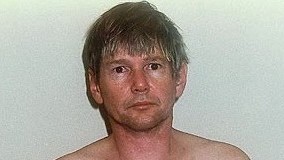
Peter Dupas
Serial killer John Justin Bunting
Serial killer · Australia · 1992
John Justin Bunting (born 4 September 1966 in Inala, Queensland) was an Austral…
11 victims
John Justin Bunting
Serial killer · Australia · 1992
John Justin Bunting (born 4 September 1966 in Inala, Queensland) was an Austral…
11 victims
 Robert Joe Wagner
Serial killer · Australia · 1992
Robert Joe Wagner (born 28 November 1971 in Parramatta, New South Wales) was an…
10 victims
Robert Joe Wagner
Serial killer · Australia · 1992
Robert Joe Wagner (born 28 November 1971 in Parramatta, New South Wales) was an…
10 victims
 Ivan Milat
Serial killer · Australia · 1989
Ivan Milat was convicted of seven murders and received multiple life sentences.…
7 victims
Ivan Milat
Serial killer · Australia · 1989
Ivan Milat was convicted of seven murders and received multiple life sentences.…
7 victims
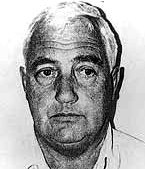 John Wayne Glover
Serial killer · Australia · 1989
John Wayne Glover (26 November 1932 – 9 September 2005) was a British-born Aust…
6 victims
John Wayne Glover
Serial killer · Australia · 1989
John Wayne Glover (26 November 1932 – 9 September 2005) was a British-born Aust…
6 victims
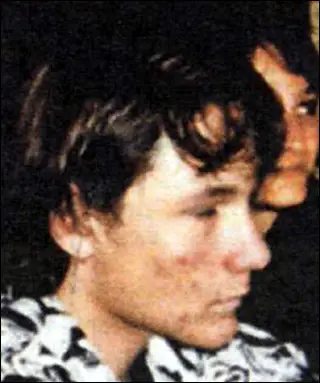 James Vlassakis
Serial killer · Australia · 1997
James Spyridon Vlassakis (born 24 December 1979) was an Australian serial kille…
4 victims
James Vlassakis
Serial killer · Australia · 1997
James Spyridon Vlassakis (born 24 December 1979) was an Australian serial kille…
4 victims
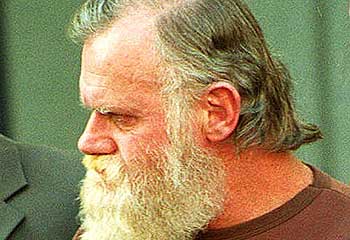 Leonard John Fraser
Serial killer · Australia · 1998
Leonard John Fraser, also known as “The Rockhampton Rapist,” was an Australian…
4 victims
Leonard John Fraser
Serial killer · Australia · 1998
Leonard John Fraser, also known as “The Rockhampton Rapist,” was an Australian…
4 victims
 Patrick David Mackay
Serial killer · United Kingdom · 1973
Patrick David Mackay was born on September 25, 1952, in England. He was the son…
11 victims
Patrick David Mackay
Serial killer · United Kingdom · 1973
Patrick David Mackay was born on September 25, 1952, in England. He was the son…
11 victims
 George Chapman
Serial killer · United Kingdom · 1897
George Chapman was the English name taken by serial killer Seweryn Antonowicz K…
3 victims
George Chapman
Serial killer · United Kingdom · 1897
George Chapman was the English name taken by serial killer Seweryn Antonowicz K…
3 victims
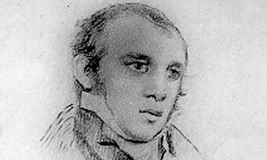 Mark Jefferies
Murderer · Australia · 1820
Mark Jefferies was an escaped convict who was described as a rapist and a canni…
5 victims
Mark Jefferies
Murderer · Australia · 1820
Mark Jefferies was an escaped convict who was described as a rapist and a canni…
5 victims
 Amber Hill
Homicide · USA · 2007
Amber Hill was a 23-year-old Cleveland woman who drowned her two young daughter…
2 victims
Amber Hill
Homicide · USA · 2007
Amber Hill was a 23-year-old Cleveland woman who drowned her two young daughter…
2 victims
- Gender
- male
- Country
- Australia
- Location
- Melbourne, Victoria, Australia
- Date of birth
- J uly 6, 1953
- Age at first offence
- 44
- Characteristics
- rape, mutilation, torture
- Victim profile
- Margaret Josephine Maher, 40 / Mersina Halvagis, 25 / Nicole Amanda Patterson, 28
- Method of murder
- St abbing with knife
- Date(s) of murder
- 1997 - 1999
- Years active
- 1997–1999
- Date of arrest
- April 22, 1999
- Status
-
Life imprisonment
Sentenced to life imprisonment with no possibility of parole on August 22, 2000; sentenced to a second term of life imprisonment on August 16, 2004; sentenced to his third life sentence with no minimum term on August 17, 2007
Case record: Peter Dupas
Background
Peter Norris Dupas was an Australian serial killer known for violence against women. He was born on 6 July 1953. He was the youngest of three children born into what was described as “a fairly normal family”. His family moved to Melbourne while he was still a toddler.
Dupas left high school after completing Form 5, and later obtained his Higher School Certificate while in custody.
While imprisoned at Melbourne’s Pentridge Prison, Dupas formed a relationship with mental health nurse Grace McConnell, who was 16 years his senior. The pair married in 1987 inside Castlemaine Gaol.
McConnell described Dupas during the inquest into the murder of Mersina Halvagis:
“He insisted that he was in love with me .... and that with my help he could come out of himself and become a normal person. I agreed (to marry Dupas), not out of particular love for this man but from a sense of responsibility to helping him become a useful member of the community. In my mind, our relationship was mother and son.
“Our sex life was very basic, almost non-existent. I would go along with it out of a sense of responsibility … It got to the stage where I could not bear him touching me. His new wife found him to be a self-obsessed, lazy, needy, and a snob, and they divorced during the mid 1990s.”
As of 2006, Dupas was serving sentences between the maximum security protection unit of Port Phillip Correctional Centre at Laverton and HM Prison Barwon in Lara, a northern suburb of Geelong. He attempted suicide several times while imprisoned. Prison staff described him as a model prisoner while in custody and “a monster” whenever released.
Senior Detective Ian Armstrong, who interviewed Dupas on November 30, 1973, at the Nunawading Police Station, described Dupas as “weak and compliant” when confronted by authority:
“He stood out. To me the guy was just pure evil … His attacks were all carefully planned and he showed no remorse. We could see where he was going. I remember thinking, 'This guy could go all the way'. He is an unmitigated liar … he is a very dangerous young person who will continue to offend where females are concerned and will possibly cause the death of one of his victims if he is not straightened out.”
Other details
Dupas had a criminal history involving sexual violence spanning more than three decades. Before his first conviction for murder, he had 16 prior convictions involving acts of sexual violence from six court appearances between March 27, 1972 and November 11, 1994.
He was described in connection with the removal of breasts from female victims. Police and sentencing remarks referenced a violent sexual pattern involving knife use and the removal of breasts.
Police believed Dupas was a major suspect in several other Melbourne killings, including:
- the murder of Mersina Halvagis (unsolved until his later prosecution),
- the murder of Margaret Josephine Maher (for which he was convicted),
- the murder of Helen McMahon (murder officially remained unsolved),
- the murder of 31-year-old Renita Brunton at Sunbury, Victoria in 1993 (Dupas was a suspect),
- the murder of 95-year-old Kathleen Downes at the Brunswick Lodge nursing home in Brunswick (Dupas was a suspect; no charges were laid; her murder was being considered for referral to the State Coroner).
The Victorian state government and police offered an AUD$1 million reward for information leading to an arrest relating to the murder of Halvagis. The large reward was the fourth such reward of AUD$1 million in Victoria’s history.
Timeline
- October 3, 1968 — At age 15, Dupas visited his next door neighbour requesting to borrow a knife for the purpose of peeling vegetables; he was apprehended after he stabbed the woman in the face, neck and hand as she attempted to fight off his attack.
- November 30, 1973 — Senior Detective Ian Armstrong interviewed Dupas at the Nunawading Police Station.
- July 25, 1974 — Dupas was sentenced to nine years imprisonment with a minimum period of five years for rape committed against a married woman in her own home.
- June 28, 1985 — Dupas was sentenced to 12 years imprisonment for the Blairgowrie rape.
- February 28, 1980 — Dupas received a five year minimum prison sentence for three charges including assault with intent to rape, malicious wounding, assault with intent to rob, and indecent assault.
- January 3, 1994 — A false imprisonment occurred at Lake Eppalock.
- August 18, 1994 — Dupas entered a guilty plea to one count of false imprisonment in the County Court in Bendigo and was sentenced to three years and nine months imprisonment with a minimum period of two years and nine months.
- February 13, 1985 — Helen McMahon was found bashed to death on a Rye beach.
- April 19, 1999 — The body of Nicole Amanda Patterson was discovered in the front room of her Harper Street, Northcote residence.
- April 22, 1999 — Police arrested Dupas at midday at the Excelsior Hotel in Thomastown and charged him with the murder of Patterson later the same day.
- August 22, 2000 — Dupas was sentenced to life imprisonment with no possibility of parole for the murder of Nicole Patterson.
- October 4, 1997 — Margaret Josephine Maher was last seen alive at the Safeway supermarket at 12.20 a.m. in Broadmeadows; her body was discovered at 1.45 p.m. the same day under a cardboard box containing computer parts.
- August 16, 2004 — Dupas was convicted of the murder of Margaret Josephine Maher and sentenced to a second term of life imprisonment.
- November 1, 1997 — Mersina Halvagis was murdered in an attack while visiting her grandmother’s grave in the Greek Orthodox section of Fawkner Cemetery in Fawkner.
- November 5, 1997 — Halvagis’ body was discovered at 4.35 a.m. in an empty plot, three graves from where her grandmother was buried.
- September 2, 2006 — After obtaining a court order permitting police to interview Dupas, police collected Dupas from HM Prison Barwon and took him to St Kilda Road Police Headquarters in Melbourne for questioning.
- September 11, 2006 — Police charged Dupas with the murder of Mersina Halvagis; Andrew Fraser revealed a confession to police.
- September 26, 2006 — Dupas appeared via video link in the Supreme Court of Victoria charged with Halvagis’ murder and entered a plea of not guilty.
- November 14, 2006 — Dupas appeared before Justice John Coldrey and requested an opportunity to be able to cross-examine witness Andrew Fraser.
- December 12, 2006 — The Supreme Court of Victoria ordered Dupas be presented directly to trial for the murder of Mersina Halvagis, bypassing the usual committal hearing process.
- August 9, 2007 — Dupas was found guilty of the murder of Mersina Halvagis.
- August 17, 2007 — Dupas was sentenced to his third life sentence with no minimum term.
- September 10, 2007 — Lawyers for Dupas submitted an appeal on the basis the verdict was unsafe and unsatisfactory.
- September 17, 2009 — Dupas’s appeal against the conviction for the murder of Halvagis was upheld in Victoria’s Court of Appeal by a two to one majority.
- October 14, 2009 — A date was set by Justice Paul Coghlan for the trial to be April 7, 2010.
- December 31, 1997 — Kathleen Downes was stabbed to death at 6:30 a.m. at the Brunswick Lodge nursing home in Brunswick.
The offences
Murder of Nicole Amanda Patterson
Nicole Amanda Patterson was 28 years old. She was a psychotherapist and youth counsellor employed with the Ardoch Youth Foundation, an organisation formed to assist young drug users. Patterson had a Northcote home that she used as an office.
Patterson placed several classified ads in a local newspaper, the Northcote Leader, to expand her client base. She placed an advertisement indicating she engaged in counselling of persons with respect to relationship and sexuality problems and that strict confidentiality was maintained.
On March 19, 1999, Dupas posed as a potential client and visited Patterson at her Northcote home for a scheduled appointment. He instead killed her, stabbing her 27 times.
Two neighbours reported hearing screams of a young woman from Patterson’s house between 9.00 a.m. and 9.30 a.m. on the day of her murder. Attempts by Patterson’s boyfriend to contact her in the afternoon failed.
On April 19, 1999, the body of Nicole Amanda Patterson was discovered by a friend in the front room of her Harper Street, Northcote residence. The friend had visited for a dinner engagement. Upon hearing music from a radio and discovering the front door unlocked, she entered the house and found the body severely mutilated.
Patterson died from 27 stab wounds to her chest and back. Her body was discovered naked from the waist down. Her skirt was found in a nearby bedroom and her underwear was around her ankles. Small pieces of yellow PVC tape were attached to her body. Both of her breasts had been removed using a sharp knife.
Patterson’s handbag and driver’s licence were stolen during the attack. The murder weapon and Patterson’s breasts have never been recovered.
Investigation
Police investigations revealed Patterson had a 9.00 a.m. appointment with a new client named “Malcolm” as noted in her personal diary, alongside a mobile telephone number. The number was traced to an Indian student studying at La Trobe University named “Harry”.
Police learned Dupas approached Harry with an offer of labouring work.
Telephone records revealed Dupas made three prior telephone calls to Patterson to arrange a counselling session to treat depression and a gambling addiction. The first call was from a public telephone booth approximately six weeks before her murder. Over the next six weeks, Dupas made calls in an attempt to establish her vulnerability.
Dupas later told police he cancelled his appointment with Patterson after being told by her that his problem was something he was able to work through of his own accord.
Police noticed scratches on Dupas’s face and hand consistent with a recent struggle. Dupas claimed the scratches occurred while working in his backyard shed when a piece of wood hit him while using a lathe; Dupas did not own a lathe. He later changed his story, saying the injuries were sustained while working in the shed and walking by a protruding piece of wood.
A police search of Dupas’s home revealed blood stained clothing, PVC tape similar to that located at the crime scene, a ski mask, newspaper clippings detailing Patterson’s murder, and a paper containing Patterson’s advertisement for psychotherapy services.
Arrest
On April 22, 1999, police arrested Dupas at midday at the Excelsior Hotel in Thomastown and charged him with the murder of Patterson later the same day.
Trial
A jury returned a guilty verdict after retiring for less than three hours.
Dupas was convicted of the murder of Nicole Amanda Patterson at a trial in the Supreme Court of Victoria, sitting as the Criminal Division.
Dupas appeared in the Supreme Court of Victoria Court of Appeal in August 2001 to appeal his conviction for the murder of Patterson. His appeal was dismissed.
Sentencing (Nicole Patterson)
On August 22, 2000, while sentencing Dupas to life imprisonment, Judge Frank Vincent remarked:
“…the prospects of your eventual rehabilitation must be regarded as so close to hopeless that they can be effectively discounted. There is no indication whatsoever that you have experienced any sense of remorse for what you have done, and I doubt that you are capable of any such human response. At a fundamental level, as human beings, you present for us the awful, threatening and unanswerable question: How did you come to be as you are?”
Dupas was sentenced to life imprisonment with no possibility of parole.
In sentencing remarks, Judge Vincent stated that Dupas had been found guilty by the jury empanelled on his trial for the murder at Northcote in Victoria on April 19, 1999 of Nicole Amanda Patterson.
Judge Vincent also discussed that Patterson carried out practice as a qualified psychotherapist and youth counsellor, worked at the Ardoch Centre, and had an ambition to develop her own private practice by inserting an advertisement in a local newspaper circulating in the Northcote area. Judge Vincent referenced cross-examination and Dupas’s admission about calling Patterson on a public telephone “a day or so before 3 March 1999”, approximately six weeks before she was killed.
Judge Vincent addressed the appointment “Malcolm” and a mobile telephone number from Patterson’s diary. He described that Dupas struck Patterson “again and again, using a knife capable of inflicting deep wounds” and that altogether Patterson received 27 stab wounds. Judge Vincent stated that Patterson’s breasts were completely cut from her body, probably but not necessarily after death, and that they were never located. He stated that Dupas checked the house and collected Patterson’s handbag and driver’s licence as trophies, then returned to his home.
Judge Vincent described that duplication of details and the diary reference to the appointment and incriminating telephone number led to police suspicion and arrest.
Judge Vincent stated:
“You must as a consequence of the commission of the terrible crime which has brought you before this Court be removed permanently from the society upon whose female members you have preyed for over 30 years.”
He also stated that he did not consider it appropriate to fix a minimum term and declared:
“The sentence of the Court is that you be imprisoned for the rest of your natural life and without the opportunity for release on parole.”
Judge Vincent declared that the period of 489 days Dupas had undergone as pre-sentence detention was reckoned as having been served under the imposed sentence.
Judge Vincent made additional remarks about victim-impact statements and included a quotation from “R v. Beckett, unreported, 20 August 1998”:
“The introduction of such statements was not, as I see it, intended to effect any change in the sentencing principles which govern the exercise of discretion by a sentencing judge. What such statements do is to introduce in a more specific way factors which a Court would ordinarily have considered in a broader context. They constitute a reminder of what might be described as the human impact of crime. They draw to the attention of the judge, who would, of necessity, have to consider the possible and probable consequences of criminal behaviour, not only its significance to society in general but the actual effect of a specific crime upon those who have been intimately affected by it. The statements provide an opportunity for those whose lives are often tragically altered by criminal behaviour to draw to the court's attention the damage and sense of anguish which has been created and which can often be of very long duration. To that extent, they relate to an aspect of the criminal law to which reference is not often made. They play their part in achieving what might be termed social and individual rehabilitation. Rehabilitation, in this sense, is not perceived from the perspective of the offender, but from that of those persons who have sustained loss and damage by reason of the commission of an offence. To that extent, statements of this kind place the crime in a wider and yet paradoxically more specific context to be considered by a judge when imposing sentence. This notion of social rehabilitation to which I have referred is one that I do not believe has been accorded anything approaching significant recognition as an identifiable underlying object of the criminal justice system. It seems to me that the process of social and personal recovery which we attempt to achieve in order to ameliorate the consequences of crime can be impeded or facilitated by the response of the courts. The imposition of a sentence often constitutes both a practical and ritual completion of a protracted painful period. If the balancing of values represented by the system is perceived as just, the process of recovery will be assisted. If not, there will be created within the minds of those directly affected by the crime, and the wider community generally, a sense of injustice and hurt and of the failure of the system that may never be removed.”
He also stated:
“At a fundamental level, as human beings, you present for us the awful, threatening and unanswerable question - how did you come to be as you are?”
Murder of Margaret Josephine Maher
The offence
Margaret Josephine Maher was 40. She was a prostitute working in the Melbourne area who was last seen alive at the Safeway supermarket at 12.20 a.m. in Broadmeadows on October 4, 1997.
Her body was discovered under a cardboard box containing computer parts at 1.45 p.m. on October 4, 1997 by Ronald Frank McDonald, who made the discovery while collecting aluminium cans beside Cliffords Road, Somerton with his wife, Eva and their children.
A black woollen glove was found near Maher’s body which police later confirmed contained DNA matching that of Dupas.
A post-mortem examination revealed Maher had suffered a stab wound to her left wrist, bruising to her neck, blunt force trauma to the area of her right eyebrow and lacerations to her right arm. Maher’s left breast had been removed and placed into her mouth.
At the time of Maher’s murder, Dupas had been out of prison for just over a year after serving time for rape offences and was no longer under the supervision of the government corrections agency, Corrections Victoria. Dupas was already serving a life sentence without parole for the murder of Nicole Patterson at the time of his arrest for Maher’s murder.
With Dupas in custody, police were able to obtain a DNA sample linking him to the 1997 murder of Maher.
Trial
During a trial lasting three weeks, evidence was presented to the jury that the removal of Patterson’s and Maher’s breasts were so “strikingly similar” as to be a signature or trademark stamp common to both crimes, thereby identifying Dupas as the killer of both women.
The jury was not told Dupas was already serving a life term of imprisonment for the murder of Patterson, and it took less than a day to convict him of the second murder conviction.
After the guilty verdict, Dupas claimed “it’s a kangaroo court” before being led away by court staff to begin his sentence.
Kylie Nicholas, Nicole Patterson’s sister, described Dupas:
“…the most evil predator, a psychopath, a true evil predatory, cunning repulsive person. It's such a rare evil that comes into this world that's destroyed these women and our lives. We're just praying that this man is held accountable for everything he has done.”
On August 16, 2004, Dupas was convicted of the October 4, 1997 murder of Maher.
Sentencing (Margaret Maher)
On August 16, 2004, Dupas was sentenced to a second term of life imprisonment. Kaye stated during sentencing:
“In view of your appalling criminal history, and in view of the particularly serious nature of the crime for which you have been convicted, it is only appropriate that you be sentenced to life imprisonment. Even if the murder of Nicole Patterson had never occurred, I would have no hesitation in imposing a term of life imprisonment upon you.
“It is clear, both in the present case and from your previous convictions for rape and like offences, that your offending is connected with a need by you to vindicate a perverted and sadistic hatred of women and a contempt for them and their right to live. As such the present offence must be characterised as being in one of the most serious categories of murders which come before this Court.
“You intentionally killed a harmless, defenceless woman who, like all your other victims, had no prospect of protecting herself against you. At the time you committed that offence, you had, over almost three decades, terrorised women in this State. You have repeatedly violated a central norm of a decent civilised society. Your conduct in the present case is without mitigation or palliation. There has been no recognition by you of your wrongdoing. Rather, you repeated the same offence, with even more brutality, 18 months after murdering Margaret Maher.
“Based on your repeated violent offences, and on the gravity of this offence, there is no prospect of your rehabilitation. Nothing was advanced on your behalf to reflect that there is even the faintest glimmer of hope for you. Even if there were, any considerations of rehabilitation must, in this case, be subordinated to the gravity of your offending, the need for the imposition of a just punishment, and the principle of general deterrence. All those circumstances combine, in my view, not only to justify, but also to require that I do not fix a minimum term.”
Ian Joblin, a Melbourne-based forensic psychologist, released a report to the court:
“Dupas attacked women to fulfil fantasies of conquest and control…For Dupas, the actual assault has not lived up to the fantasy which preceded the assault, and is seen at times as disappointing…He does not feel reassured by either his performance or his victim’s response and must find another victim, this time ‘the right one’. Thus, his offences become quite repetitive.”
After the second murder conviction, Victorian Attorney General Rob Hulls stated judges needed discretionary powers to tailor punishments and that more training may be needed:
“There's no question that a formalised judicial education and training needs to be introduced in Victoria. I intend to investigate how that can best be done”.
Felicity Hampell QC, president of civil liberties group Liberty Victoria, replied:
“Neither imprisonment in itself nor parole in itself is going to stop everybody from committing offences. What's important to bear in mind is that a person has to be sentenced for the offence they've committed, and that might mean that somebody gets a sentence that is proportionate for the crime, but it doesn't cure them of the dangerousness or the characteristic that makes them continue to offend”.
Appeal (Maher)
On July 25, 2005, Dupas appeared in the Supreme Court of Victoria Court of Appeal to appeal his conviction for the murder of Maher on the grounds of:
- “whether the judge erred in ruling that the facts of the mutilation of Patterson’s body should have been admitted at trial”
- “whether the directions of the judge aimed at keeping the evidence of the Patterson murder discrete were sufficient”
- “whether the judge incorrectly directed the jury regarding the compression applied to the deceased’s neck as one of three possible causes of death”
- “if the matters relied upon in the other grounds listed above did not result in a miscarriage of justice, their "aggregate effect" did”.
His appeal was dismissed.
Murder of Mersina Halvagis
Mersina Halvagis was 25. She was murdered in an attack on November 1, 1997, while visiting her grandmother’s grave in the Greek Orthodox section of Fawkner Cemetery in Fawkner, a northern suburb of Melbourne.
The alarm was raised by Halvagis’ fiancée when she failed to meet with him later that day as the couple had planned.
Halvagis’ body was discovered at 4.35 a.m. on November 5, 1997 by Halvagis’ fiancée in an empty plot, three graves from where her grandmother was buried.
Police believed Halvagis was attacked from behind while kneeling to attend to a flower arrangement. They believed she died from massive injuries, including 87 stab wounds about her knees and neck, with most wounds concentrated around her breasts. Her upper clothing had been pulled over her head towards her chest.
Dupas’s home in Coane Street, Pascoe Vale was near the cemetery.
Halvagis’ murder remained unsolved since 1997, with police and the Victorian state government offering the AUD$1 million reward described above.
Frank Cole, an elderly resident of Pascoe Vale, claimed he saw Dupas leaving the Fawkner Cemetery on the day of the murder. Cole had earlier claimed he shot a dingo he suspected had killed two-month-old Azaria Chamberlain who went missing at an Ayers Rock camping ground on August 17, 1980.
An anonymous female visiting her parents’ grave on the day of the murder had seen Dupas wearing sunglasses jogging through the cemetery casually.
Inquest and evidence
An inquest into Halvagis’s death before coroner Graeme Johnstone heard circumstantial evidence in the case against Dupas. Nine witnesses identified Dupas as a man they saw at Fawkner Cemetery on the day Halvagis was attacked. Dupas’s grandfather’s gravesite was located 128 metres from the crime scene.
Dupas frequented the ‘First and Last Hotel’, located opposite Fawkner Cemetery.
The inquest heard that Dupas lied to police about a facial injury received about the time of the attack on Halvagis. It also heard that Dupas attempted to alter his appearance after Halvagis’ murder.
Dupas was identified by a woman from police photographs, who said she saw him minutes before the attack 20 metres from where Halvagis’ murder occurred.
Senior Detective Scarlett told the inquest a car known to be used by Dupas at the time of the murder was sold to a work associate in the month following the murder. The car had since been crushed for scrap metal and was never examined by detectives.
Forensic pathologist Professor David Ransom compared wounds suffered by Halvagis to wounds suffered by Patterson and Maher and told the inquest there was insufficient evidence to suggest the wounds suffered by Halvagis were inflicted using the same knife or by the same person who had murdered Patterson and Maher.
Dupas’s lawyer, David Drake, advised the inquest that the only evidence linking Dupas to Halvagis’s murder was that Dupas lived nearby and his reputation based on prior convictions for similar offences. He further said police relied on beliefs that Dupas had a propensity to attack women using knives, thereby linking him to the crime.
On August 1, 2006, the inquest was adjourned indefinitely following charges laid by police on Dupas for the murder of Halvagis.
Arrest and charging
After obtaining a court order granting permission to interview Dupas regarding Halvagis’s murder, police collected Dupas from HM Prison Barwon on September 2, 2006 and took him to St Kilda Road Police Headquarters in Melbourne for questioning.
On September 11, 2006, police charged Dupas with the murder of Mersina Halvagis after disgraced Melbourne lawyer Andrew Fraser revealed Dupas confessed to the killing of Halvagis while gardening weeds in Port Phillip Prison during 2002.
Fraser told police:
"We regularly used to find stuff hidden in the garden, drugs, weapons and other stuff. I once found a homemade knife and called Dupas over to show it to him. He took it off me and started handling it, almost caressing it in a sexual way. Dupas then started saying 'Mersina, Mersina' over and over with this strange look on his face. I was certainly left in no doubt that Dupas murdered Mersina.
"This wasn't some sort of jailhouse confession where somebody has gone in and sat in a cell one night and had a brew with another prisoner and somebody has allegedly said something. It's a lot stronger than that. Dupas and I spoke regularly, just the two of us. This was over months and months that he was talking to me and confiding in me.
"There was one occasion when another prisoner came up to us when we were gardening and started abusing Dupas. This prisoner was yelling at Dupas saying 'You killed Mersina, you killed Mersina'.
"After he had gone, Dupas turned to me and said 'How does that cunt know I did it?'"
After agreeing to give evidence against Dupas, Fraser was released from Fulham Correctional Centre in Sale on September 11, 2006, two months early of his five year sentence for drug trafficking. The Victorian government said Fraser was now eligible to apply for a share of the AUD$1 million reward offered for information leading to an arrest on Halvagis’ murder.
Direct presentment to trial
The Victorian Director of Public Prosecutions withdrew the charge of murder in the Melbourne Magistrates Court and requested the case against Dupas be sent directly to trial, bypassing the committal hearing process.
On September 26, 2006, Dupas appeared via video link in the Supreme Court of Victoria charged with Halvagis’ murder and entered a plea of not guilty.
Dupas’s barrister David Drake told the Supreme Court his client was being unfairly dealt with by skipping the usual process of a committal hearing in the Magistrates’ Court.
On November 14, 2006, Dupas appeared in the Supreme Court of Victoria before Justice John Coldrey where he requested an opportunity to be able to cross-examine witness Andrew Fraser before a criminal trial takes place.
On December 12, 2006, the Supreme Court of Victoria ordered Dupas be presented directly to trial for the murder of Mersina Halvagis, bypassing the usual committal hearing process.
Trial and verdict (Halvagis)
The trial for the murder of Mersina Halvagis ran for 22 days.
On July 9, 2007, the jury selected for the trial was discharged on a “legal technicality” when prosecutor Colin Hillman, SC advised Justice Philip Cummins that a failure to comply with the Jury Act had occurred when potential jurors were not advised of the possible duration of the trial.
Dupas was found guilty of the murder of Mersina Halvagis on August 9, 2007. He appeared for a pre-sentencing hearing eight days later.
The sentencing judge allowed permission for one television camera to record the sentencing of Dupas.
Upon sentencing Dupas, the judge said: “life means life”.
Sentencing (Halvagis)
Dupas was sentenced to his third life sentence with no minimum term on August 17, 2007.
Appeal (Halvagis)
On September 10, 2007, lawyers for Dupas submitted an appeal based on the verdict of guilty being unsafe and unsatisfactory.
On September 17, 2009, Dupas’s appeal against the conviction for the murder of Halvagis was upheld in Victoria’s Court of Appeal by a two to one majority. The Court ruled that the directions of the judge in the original trial were inadequate.
On October 14, 2009, Victorian Supreme Court Justice Paul Coghlan disagreed with a request to stay the proceedings permanently based on publicity and set the trial date for April 7, 2010.
Murder of Helen McMahon
Helen McMahon was 47. She was found bashed to death on a Rye beach in February 13, 1985.
Although Dupas was imprisoned at the time of McMahon’s murder and was not released until two weeks later, investigators learned Dupas was on pre-release leave from prison and living in the Rye area when McMahon was killed.
McMahon was sunbathing topless on the beach when attacked. Her body was discovered naked, covered by her beach towel.
Investigators believed McMahon may have been Dupas’s first murder victim, although her murder officially remained unsolved.
The location of the murder was nearby to the location where Dupas had earlier raped a 21-year-old woman at a beach in Blairgowrie, for which he was convicted and served a term of imprisonment.
Other suspected murders
Dupas was a suspect in the murder of 31-year-old Renita Brunton at Sunbury, Victoria in 1993.
Dupas was also a suspect in the murder of 95-year-old Kathleen Downes at the Brunswick Lodge nursing home in Brunswick. Downes was stabbed to death at 6:30 a.m. on December 31, 1997, a month after Halvagis’ murder. Police investigations revealed Dupas had telephoned the nursing home some time before the murder. No charges had been laid, and the case was being considered for referral to the State Coroner.
Earlier criminal convictions (sex offences and false imprisonment)
Rape and other sexual offences
On October 3, 1968, at age 15, Dupas visited his next door neighbour requesting to borrow a knife for peeling vegetables and was apprehended after he stabbed the woman in the face, neck and hand as she attempted to fight off his attack. Dupas told police he could not help himself and did not know why he began to attack the woman. He was placed on 18 months probation and admitted to the Larundel Psychiatric Hospital for evaluation. He was released after two weeks and treated as an outpatient.
In October 1969, a mortuary located at the Austin Hospital was broken into. The bodies of two elderly women were mutilated using a pathologist’s knife. One body contained a strange wound inflicted with a knife to the area of the thigh. Police believed Dupas was involved as the wounds inflicted matched that of a later murder victim, Nicole Patterson.
After receiving a term of nine years imprisonment for rape in 1974, prison psychiatrist Dr. Allen Bartholomew noted Dupas was in constant denial of his criminal activity. Bartholomew noted:
"I am reasonably certain that this youth has a serious psychosexual problem, that he is using the technique of denial as a coping device and that he is to be seen as potentially dangerous. The denial technique makes for huge difficulty in treatment."
On July 25, 1974, Dupas was sentenced to nine years imprisonment with a minimum period of five years for an attack on a married woman in her own home. Dupas broke into the victim’s house, threatened her with a knife, tied her up with cord and raped her. He threatened to harm her baby when she resisted his attack. The sentencing judge described the offence as “one of the worst rapes that could be imagined”.
In 1979, approximately two months after his release from prison, Dupas again molested women in four separate attacks over a 10 day period.
On February 28, 1980, Dupas received a five year minimum prison sentence for three charges of assault with intent to rape, malicious wounding, assault with intent to rob, and indecent assault.
A 1980 report on Dupas stated:
"There is little that can be said in Dupas' favour. He remains an extremely disturbed, immature and dangerous man. His release on parole was a mistake."
Dupas was released in February 1985. Approximately one month later, he raped a 21-year-old woman on a beach at Blairgowrie. After alighting from his car, Dupas followed the woman and attacked her, holding her to the ground at knifepoint before raping her. He later told police:
"I'm sorry for what happened. Everyone was telling me I'm OK now. I never thought it was going to happen again. I only wanted to live a normal life."
On June 28, 1985, Dupas was sentenced to 12 years imprisonment for the Blairgowrie rape, and he was released in 1992 after serving seven years of his sentence.
On 18 August 1994, after entering a guilty plea to one count of false imprisonment, Dupas was sentenced to three years and nine months imprisonment with a minimum period of two years and nine months.
False imprisonment at Lake Eppalock
Less than two years after his release from prison, Dupas was arrested on charges of false imprisonment over an incident at Lake Eppalock in January 1994. Wearing a hood and armed with a knife, insulation tape and handcuffs, Dupas followed a woman who was picnicking and held her at knifepoint in a toilet block but was chased off by her friends.
On August 18, 1994, Dupas pleaded guilty to one count of false imprisonment in the Country Court in Bendigo. Judge Hart sentenced him to three years and nine months imprisonment, with a minimum period of two years and nine months.
Appendix A: Previous convictions listed at sentencing (Patterson)
The Director of Public Prosecutions presented the following previous convictions:
- 27 March 1972 — at the Magistrates’ Court at Oakleigh: being found on premises without lawful excuse; fined $50 in default to be imprisoned for 14 days.
- 2 April 1974 — at the Magistrates’ Court at Dromana: loitering with the intent to commit a felony; behaving in an offensive manner in a public place; fined $100 in default to be imprisoned for 20 days on the first charge; the matter was adjourned to a date not exceeding one month on the second charge.
- 1 July 1974 — at the County Court at Melbourne: rape, housebreaking and stealing; housebreaking; housebreaking and stealing; sentenced to 9 years for the first count; 6 months for each of counts 2 and 3 served concurrently; total effective sentence 9 years; ordered to serve a minimum of 5 years before eligibility for parole.
- 2 June 1980 — at the County Court at Melbourne: rape; assault with intent to rape (3 counts); malicious wounding; assault with intent to rob; indecent assault; sentenced to 5 years for the first count; 4 years for the second count with 3½ years concurrent; 3 years for each of counts 3 and 4 with 2½ years concurrent; 3 years for the fifth count; 2 years for the sixth count; all concurrent to the first; total effective sentence 6½ years; ordered to serve a minimum of 5 years before eligibility for parole.
- 3 June 1985 — at the County Court at Melbourne: aggravated rape; indecent assault with aggravating circumstances; sentenced to 12 years for the first count; 6 years for the second count served concurrently; ordered to serve a minimum of 10 years before eligibility for parole.
- 21 November 1994 — at the County Court at Bendigo: false imprisonment; sentenced to 3 years and 9 months; ordered to serve a minimum of 2 years and 9 months before eligibility for parole.
Spotted an error, or have more information about this case?