DeWitt Clinton Cook
Murderer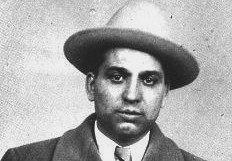 Harry Maione
Murderer · USA · 1937
Harry “Happy” Maione (1908 – February 19, 1942) was a New York mobster who serv…
12 victims
Harry Maione
Murderer · USA · 1937
Harry “Happy” Maione (1908 – February 19, 1942) was a New York mobster who serv…
12 victims
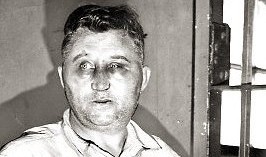 Harry Powers
Murderer · USA · 1931
Harry Powers was executed by hanging on March 18, 1932, at the West Virginia Pe…
5 victims
Harry Powers
Murderer · USA · 1931
Harry Powers was executed by hanging on March 18, 1932, at the West Virginia Pe…
5 victims
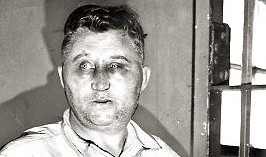 Herman Drenth
Murderer · USA · 1931
Herman Drenth was also known by the aliases Harry F. Powers and Cornelius O. Pi…
5 victims
Herman Drenth
Murderer · USA · 1931
Herman Drenth was also known by the aliases Harry F. Powers and Cornelius O. Pi…
5 victims
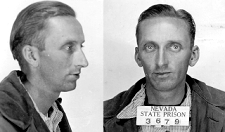 Luther Jones
Murderer · USA · 1936
Luther Jones Luther Jones was executed by asphyxiation-gas in Nevada on January…
4 victims
Luther Jones
Murderer · USA · 1936
Luther Jones Luther Jones was executed by asphyxiation-gas in Nevada on January…
4 victims
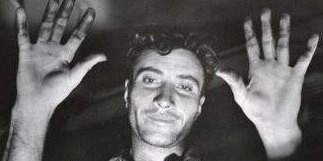 Albert Dyer
Murderer · USA · 1937
Albert Dyer was a 32-year-old WPA crossing guard and traffic guard at Centinela…
3 victims
Albert Dyer
Murderer · USA · 1937
Albert Dyer was a 32-year-old WPA crossing guard and traffic guard at Centinela…
3 victims
 Ernest Lee Johnson
Murderer · USA · 1994
Name: Ernest Lee Johnson Case style: State of Missouri v. Earnest Lee Johnson C…
3 victims
Ernest Lee Johnson
Murderer · USA · 1994
Name: Ernest Lee Johnson Case style: State of Missouri v. Earnest Lee Johnson C…
3 victims
 Cherrylle Dell
Murderer · Canada · 1995
Cherrylle Dell poisoned her husband, Scott Dell, with antifreeze-laced wine. Sc…
2 victims
Cherrylle Dell
Murderer · Canada · 1995
Cherrylle Dell poisoned her husband, Scott Dell, with antifreeze-laced wine. Sc…
2 victims
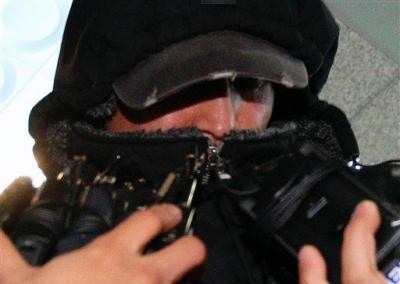 Kang Ho-sun
Serial killer · South Korea · 2006
Kang Ho-sun was a Korean serial killer who was sentenced to death on April 22,…
10 victims
Kang Ho-sun
Serial killer · South Korea · 2006
Kang Ho-sun was a Korean serial killer who was sentenced to death on April 22,…
10 victims
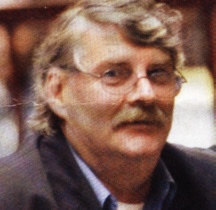 Malcolm Joseph Clarke
Murderer · Australia · 1980
Malcolm Joseph Thomas Clarke was 51 years old. His date of birth was 16-1-1955.…
2 victims
Malcolm Joseph Clarke
Murderer · Australia · 1980
Malcolm Joseph Thomas Clarke was 51 years old. His date of birth was 16-1-1955.…
2 victims
 Walter Key Williams
Murderer · USA · 1981
Walter Key Williams grew up in San Antonio’s poor East Side. His childhood neig…
2 victims
Walter Key Williams
Murderer · USA · 1981
Walter Key Williams grew up in San Antonio’s poor East Side. His childhood neig…
2 victims
- Gender
- male
- Country
- USA
- Location
- Los Angeles, California, USA
- Date of birth
- 1920
- Age at first offence
- 19
- Characteristics
- rape
- Victim profile
- Anya Sosoyeva, 32
- Method of murder
- Clubbed with a 30-inch piece of scantling
- Date(s) of murder
- February 24, 1939
- Years active
- 1939
- Date of arrest
- August 28, 1939
- Status
-
Executed
Executed by asphyxiation-gas at San Quentin Prison on January 31, 1941
Background
DeWitt Clinton Cook was a young man twenty years of age at the time of the offence. He was a former printer for a Hollywood trade paper, and he lived with his wife and mother.
Cook was born in Waterloo, Iowa. He did not finish high school and served eleven months in the Iowa State School for Boys for petty crime, after which he was paroled. He moved to Los Angeles with his parents at the age of sixteen. Shortly afterward, his father was killed in a car accident.
On June 19, 1938, Cook married Lorraine Levy, his first cousin, in Tijuana, Mexico. They had another ceremony at a downtown Los Angeles wedding chapel in October. Cook resided with his wife and his mother, Mrs. Ruby Cook, 45, at 1300 1/2 North Sycamore Avenue in Los Angeles.
The offence
On the evening of February 24, 1939, Cook struck Russian dancer Anya Sosoyeva, 32, on the head with a piece of two-by-four on the campus of Los Angeles City College. A few hours after the assault was committed, Sosoyeva died from the effects of the blow. In his confession to police, Cook said: “She screeched a little, so I hit her some more. Then she only moaned.”
In the evening of the day of the offence, Cook left his home at about 7 o’clock. Instead of going to work, he went to the campus grounds of the Los Angeles City College and looked around the adjoining neighborhood with a view to burglarizing a house. When he did not locate a suitable house, he decided to seize a purse instead and began to search for an object with which to strike his intended victim. Underneath a bench beside a walk leading to the administration building, he noticed a piece of two-by-four, picked it up, and carried it while he resumed his walk around the neighborhood. He returned to the vicinity of the bench after walking back and forth about forty-five minutes, observed Sosoyeva coming toward him along the walk, turned and followed her a few feet, and struck her on the head with the piece of two-by-four held in both hands. After Sosoyeva fell to the ground, Cook partly dragged and partly carried her to a tree located a distance of from eight to fifteen feet from the paved walk. He attempted to stifle her outcries by placing his hand over her mouth, but he fled the scene because she was “making lots of noise,” without taking her purse. He escaped through a portion of the campus grounds known as the Shakespearian Gardens.
Police removed Sosoyeva to an emergency hospital. A police officer testified that shortly after 9 o’clock P. M. he was called to the scene of the attack, and that Sosoyeva was seated beside a desk in a room of the administration building with her head cradled in her arms; there was blood on her face, she was moaning, and her only intelligible words were, “Oh, he hit me.” Medical testimony stated that Sosoyeva was in a semi-conscious condition at arrival, bleeding from her left ear, with blood on her face and head and a traumatic injury to the back of her head. She was transferred to another hospital and died at about 1:20 o’clock on the following morning.
Sosoyeva was identified by a young woman with whom she shared an apartment near the college campus. Her roommate testified that Sosoyeva appeared to be about twenty-seven years of age and that when she was last seen at their apartment at approximately 6:30 P. M. on the evening of the assault, Sosoyeva was dressing and making preparations for a theatrical performance to be held that night in the administration building of the Los Angeles City College.
Cook later clubbed film studio dancer Delia Bogard, 17, on March 28 as she returned home from an evening at the movies near her Hollywood home. He was frightened away by her screams before he could further his attack. A piece of wood similar to the Sosoyeva murder “scantling” was found nearby. Bogard suffered a severe head injury, was hospitalized for weeks, and later moved in with her parents.
On Thursday night, August 24, 1939, Cook clubbed and raped Myrtle Wagner, 17, a domestic worker for Mr. and Mrs. M. W. Lippman, at their residence in Hollywood as she was crocheting a towel in the kitchen. Wagner’s head injuries were so severe that she had to use a cane for weeks after the assault.
Four nights later, Mr. and Mrs. W. F. Warnock were relaxing at their home on Oakwood Avenue in Hollywood. According to Mrs. Warnock, “We were going out to play badminton. My husband was in the front room with our little daughter and our dog. When I finished dressing in the bedroom I went to the front room to leave but at the last moment decided to return for a hat. Then I saw a man in a brown suit in front of the dresser. I screamed. He jumped out of the window which had been opened. My husband came running but the burglar was gone.”
Investigation
Police patrols were increased in the Hollywood area by LAPD Homicide Captain Dalton R. Patton and Deputy Chief Homer B. Cross.
Clues found at the scene around Sosoyeva’s death consisted mainly of an old pair of shoes retrieved near the scene by a dog, a pair of gloves, a size 38 blue serge coat, and a 30-inch piece of scantling believed to have been used to bludgeon Sosoyeva as she walked across the campus to attend an evening dramatics class.
On making an examination of the ground, Captain D. R. Patton found leaning against a tree a section of two-by-four about which blonde hair strands adhered; a comb; a right-hand glove stained with blood; and several spots of blood on the walk and on the ground a few feet therefrom. The left glove found in the Shakespearian Gardens, through which Cook fled after the assault, was marked with blood and with lipstick stains.
Blonde hairs found on the piece of two-by-four were of the same color and texture as Sosoyeva’s hair. The lipstick marks found on the left glove matched the color and chemical content of lipstick found in Sosoyeva’s handbag.
Cook’s confessions and extra-judicial statements established that the gloves had been identified by Cook as the same gloves he secured in a burglary previously committed by him and which he admitted wearing on the occasion of the assault in question to avoid leaving fingerprints.
On August 28, 1939, Cook was taken into custody for questioning by the police in connection with certain burglary and other charges. While being taken to the police station in the police car, a piece of two-by-four approximately eleven inches long was found on the rear seat of the automobile. Cook was said to have remarked when he observed it: “My God, not that!” Neither the accompanying police officers were able to account for its presence in the automobile, and later it was shown that it was not the same piece of two-by-four used in committing the assault on Sosoyeva.
After being questioned specifically with regard to the “campus” crime, Cook made a full and complete confession of his connection with it and later repeated the same confession before the grand jury.
At the trial, a sound motion picture was presented in evidence depicting a purported reenactment by Cook of the several incidents related to the assault.
Arrest
Cook was arrested by LAPD Sergeants E. L. Berger and A. D. McCoole a short distance from the Warnock home. An eighteen-inch piece of two-by-four, a long screwdriver, a pocket knife, and several pairs of gloves were found on Cook. He was also wearing tennis shoes that matched a footprint left at the scene of the Wagner assault. Police also found at Cook’s home a pair of moccasin shoes whose soles matched perfectly the unusual pattern found beside Miss Bogard’s unconscious form.
Confession and police procedures
Cook confessed on August 29 to the Sosoyeva murder and the Bogard and Wagner assaults in the presence of LAPD homicide officers and a representative from the district attorney’s office.
After the confession, Cook ate lunch with the officers at a Sunset Boulevard coffee shop, where he ate a plate of spaghetti, ravioli, spinach and mashed potatoes. During lunch, Cook estimated that he had committed approximately three hundred burglaries in two years.
After finishing lunch, the group proceeded to the three crime scenes, and Cook re-enacted the clubbings for police and reporters.
Cook was given a physical and psychiatric exam before spending the night at Central Jail in downtown Los Angeles.
Edward D. Radin, in his book 12 Against Crime, described Dr. de River’s involvement in Cook’s confession of the Sosoyeva murder:
After examining the suspect, Dr. de River, who has a flair for well-rounded phrases, told the officers, 'This fellow’s mind is like a house with the shutters drawn, concealing in its shadows the mystery of what goes on behind the curtain. Wiry, catlike, he is of sadistic tendencies, but legally sane and knows right from wrong. He is the lone-wolf type – a nocturnal prowler who likes to wander in lonely out-of-the-way places at night.'
The psychiatrist added that he was certain that the prisoner was the moonlight attacker. Guided by this opinion, police resumed their questioning of the youth and he finally admitted the murder of the pretty dancer and the attacks on the others.
Trial
Cook entered a plea of guilty to four of the nine felony charges against him after the case was called. Cook refused, however, to repeat his confession in court on September 1, and his pleas were set aside for trial by Superior Judge Clarence L. Kincaid.
Cook’s trial opened on October 4, 1939, before Superior Judge Thomas L. Ambrose. He was prosecuted by Deputy District Attorney Ugene U. Blalock and defended by Deputy Public Defenders Ellery Cuff and William B. Neely. A jury of twelve men was selected.
When the case was called for the taking of evidence by the trial court in the matter of fixing the degree of the crime of murder, Cook refused to testify. The trial court then, on its own motion, set aside the plea of guilty to the first count of the indictment and entered a plea of not guilty thereto.
During the trial, on October 11, the jury and courtroom watched Cook re-enact on film the murder of Anya Sosoyeva. As reported, “He [Cook] intently watched the screen, working his jaws vigorously on some chewing gum, as he saw himself demonstrating to officers how he assertedly struck Miss Sosoyeva on the head...”
On October 13, the jury took only forty minutes to find Cook guilty. The report stated: “The case is considered one of the strangest in criminal law because there was no defense offered and Cook never once denied the murder, nor did he himself enter a plea of not guilty.... The value of sound motion pictures of a defendant re-enacting a murder, which were shown during this trial for the first time in the history of California jurisprudence, was pointed out by members of the jury after they brought in the verdict. Judge Ambrose declared he questioned the jurors in his chambers to determine how valuable they thought the pictures were from the standpoint of evidence. Members of the jury felt that by seeing the re-enactment of the crime in sound pictures in which Cook answered questions to police about the murder, they were assisted materially in clearing up several points they had under discussion, Judge Ambrose said.”
In the appellate opinion, the defendant’s legal case was described as follows: the indictment had charged murder in the first count and other offences including two counts of assault with a deadly weapon with intent to commit murder, one count of robbery, one count of rape, and three counts of burglary, with pleas of guilty. After testimony was addressed to fixing the degree of murder and Cook refused to testify, the plea was set aside and not guilty was entered. After trial by jury on the charge of murder, Cook was convicted of first degree murder without recommendation, and a motion for a new trial was denied. The appeal was automatically presented to the appellate court.
Cook’s principal contention on appeal was that the jury should have found his crime amounted only to murder of the second degree rather than first degree. He argued lack of premeditation based on circumstances including that he did not know Sosoyeva, that the blow was struck by an immature youth, that one seeking to take life would not choose an instrument found by chance near the scene, and that a person seeking to take life would not have contented himself with a single blow while the victim still lived. He also argued that the evidence outside his confessions showed the homicide was not committed in perpetration of or attempt to perpetrate crimes enumerated in section 189 of the Penal Code, and that absence of proof of premeditation required a verdict of murder of the second degree. He further argued premeditation could not be presumed or inferred and had to be proved as an element of the offence, and that the degree was an essential element of the corpus delicti and could not be established by admissions and confessions. He cited People v. Howard, 211 Cal. 322, 329 [295 P. 333, 71 A.L.R. 1385].
The appellate opinion discussed murder definitions and the statutes governing first degree murder, including that murder is defined as unlawful killing of a human being with malice aforethought, malice being express or implied. It also described that murder is first degree where it is perpetrated by means of poison, lying in wait, torture, by any wilful, deliberate and premeditated killing, or where committed in perpetration of or attempt to perpetrate arson, rape, robbery, burglary, or mayhem.
The appellate opinion stated that the prosecution’s theory was that Cook intended to commit rape when he made the assault and that, excluding confessions and admissions, the facts and circumstances were sufficient to show intent to commit such offence. It also stated that aside from confessions and extra-judicial statements, there was no direct evidence to show perpetration or attempt to perpetrate the enumerated offences named in the code section, though it held that if evidence apart from the confessions did not show such attempt, the jury would have been entitled to infer premeditation from the totality of facts and circumstances. The opinion referenced People v. Owens, People v. Wells, People v. Spinelli, People v. Campos, and People v. Johnson, including quoted language about inference of deliberate purpose and the role of the jury.
The appellate opinion further addressed instructional issues. Cook contended prejudicial error occurred because the trial court refused to give an instruction that “The law presumes a man to intend what he does, but the law does not presume a killing with premeditated design. It is like every other element of murder in the first degree and must be proved beyond a reasonable doubt before the jury would be entitled to find the defendant guilty.” The appellate opinion discussed objections to instructions that presumed intent and that “Therefore, if you are satisfied to a moral certainty and beyond a reasonable doubt that the defendant did assault, on the date mentioned, one Anya Sosoyeva violently with a dangerous weapon, likely to kill, and which did in fact destroy the life of said Anya Sosoyeva the natural presumption is that such assailant intended death or great bodily harm, and in the absence of evidence to the contrary this presumption must prevail.” It also discussed language that “The wilful use of a deadly weapon without excuse or provocation, in such a manner as to imperil life, generally indicates a felonious intent.”
The appellate opinion concluded that no prejudicial error appeared in the record, and ordered that the judgment and the order denying a new trial be affirmed.
Sentencing
Cook was sentenced on October 18 to the gas chamber at San Quentin.
As he was being led away from the courtroom, Cook “wisecracked” to news photographers: “Oh, let ’em take a picture. It’s the last one they’ll ever get of me.”
On the same day, two resolutions were unanimously adopted by the Police Commission commending LAPD Chief of Police Arthur C. Hohmann and officers who had brought Cook “to justice.” The officers named were “Sergts. D. A. McCoole and Edwin L. Berger, Deputy Chief Homer B. Cross, Capt. C. B. Horrall, Acting Captain Dalton Patton and Ray Pinker, laboratory expert.”
On October 26, 1939, Cook was transported by train to San Quentin Prison.
Appeals
Cook’s appeal was turned down.
His wife obtained an annulment on May 24, 1940.
Cook pleaded for his life in a letter to California Governor Olson on July 22, writing:
If I were older by twenty years, I would perhaps not wish for a commutation. But I am a young man still. To me, life is life, whether in a penitentiary or elsewhere. I stand convicted of murder, but I am not a murderer in my heart. Surely this is the contingency for which the alternative penalty was prepared. There is no doubt in my mind that when my term expired, I would emerge a better man in all ways, spiritually, mentally and physically.
Cook received a temporary reprieve from Governor Olson on November 25, 1940, and filed for clemency on December 30. Clemency was denied on January 5, 1941.
Outcome
On January 31, 1941, DeWitt Clinton Cook was executed at 10:02 a.m. in the San Quentin gas chamber.
According to the Times, “All night long in his death cell he had played a small radio, making no attempt to sleep. He ate no breakfast. He told a guard last night ‘I have made up my mind I have to go; that is all there is to it.’ ”
Other details
Cook refused to offer any evidence whatever in his own behalf at trial.
At the time of the Sosoyeva assault, Cook was described as married and living with his wife and mother.
At the time of the Warnock burglary, Cook was described by Mrs. Warnock as a man in a brown suit who jumped out of the window after she screamed.
The appellate record described that the defendant’s confessions and extra-judicial statements were introduced on stipulation of counsel and without objection on his part, and that they were not challenged as incorrectly reflecting true recitals of the several statements and admissions attributed to him.
Spotted an error, or have more information about this case?