Roderick Herman Frey
Murderer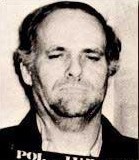 Ervil LeBaron
Murderer · USA · 1972
Ervil Morrell LeBaron (1925 to August 16, 1981) was the leader of a polygamous…
35 victims
Ervil LeBaron
Murderer · USA · 1972
Ervil Morrell LeBaron (1925 to August 16, 1981) was the leader of a polygamous…
35 victims
 Brian Kevin Rosenfeld
Murderer · USA · 1985
Brian Kevin Rosenfeld Brian Kevin Rosenfeld was sentenced to three concurrent l…
23 victims
Brian Kevin Rosenfeld
Murderer · USA · 1985
Brian Kevin Rosenfeld Brian Kevin Rosenfeld was sentenced to three concurrent l…
23 victims
 Marvin Gray
Murderer · USA · 1975
Marvin Gray was convicted killer who claimed responsibility for 23 slayings and…
23 victims
Marvin Gray
Murderer · USA · 1975
Marvin Gray was convicted killer who claimed responsibility for 23 slayings and…
23 victims
 Yahweh ben Yahweh
Murderer · USA · 1980
Yahweh ben Yahweh was born and legally named Hulon Mitchell Jr. (October 27, 19…
23 victims
Yahweh ben Yahweh
Murderer · USA · 1980
Yahweh ben Yahweh was born and legally named Hulon Mitchell Jr. (October 27, 19…
23 victims
 Nikko Jenkins
Murderer · USA · 2013
Nikko Jenkins spent nearly his entire life in prison. In 1993, a 7-year-old boy…
4 victims
Nikko Jenkins
Murderer · USA · 2013
Nikko Jenkins spent nearly his entire life in prison. In 1993, a 7-year-old boy…
4 victims
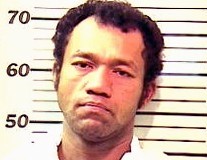 Lam Luong
Mass murderer · USA · 2008
Lam Luong was a Vietnamese refugee who was sentenced to death in Alabama for th…
4 victims
Lam Luong
Mass murderer · USA · 2008
Lam Luong was a Vietnamese refugee who was sentenced to death in Alabama for th…
4 victims
 Alyssa Bustamante
Homicide · USA · 2009
Alyssa Bustamante was a juvenile at the time of the offence and later pleaded g…
1 victim
Alyssa Bustamante
Homicide · USA · 2009
Alyssa Bustamante was a juvenile at the time of the offence and later pleaded g…
1 victim
 Tyler Edmonds
Miscarriage of justice · USA · 2003
Tyler Edmonds was a 19-year-old man from Mississippi who was tried and convicte…
0 victims
Tyler Edmonds
Miscarriage of justice · USA · 2003
Tyler Edmonds was a 19-year-old man from Mississippi who was tried and convicte…
0 victims
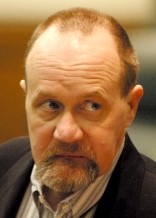 Rocky Barton
Murderer · USA · 2003
Defendant: Rocky Barton · Victim: Kimbirli Jo Barton (fourth wife) · The grand…
1 victim
Rocky Barton
Murderer · USA · 2003
Defendant: Rocky Barton · Victim: Kimbirli Jo Barton (fourth wife) · The grand…
1 victim
- Gender
- male
- Country
- USA
- Location
- Pennsylvania, USA
- Date of birth
- 1937
- Age at first offence
- 42
- Characteristics
- murder for hire
- Victim profile
- Barbara Frey (his wife)
- Method of murder
- Shooting
- Date(s) of murder
- November 8, 1979
- Years active
- 1979
- Date of arrest
- December 6, 1979
- Status
-
Life imprisonment
Death sentence vacated; remanded for further proceedings including a new sentencing hearing or life imprisonment
Case information
Defendant: Roderick Herman Frey Victim: Barbara Frey Victim count: 1 Other named persons: Charles Zehring, Richard Heberlig, Barbara Frey’s divorce proceedings (referenced), Sharon Bowers, Dr. Bruce Wittmaier, James Sorrentino, Thomas A. Fulcomer, Henry S. Kenderdine, Jr., John A. Kenneff, Penn B. Glazier, Louis M. Natali, Jr., BECKER, GREENBERG, COWEN, ROTH, McKEE, and additional jurors referenced as “Members of the jury.”
Timeline
- 1956 — Roderick and Barbara Frey were married.
- 1977 — One of Roderick and Barbara Frey’s sons died in an automobile accident in late 1977.
- mid-1979 — Roderick Frey told Charles Zehring of his marital woes; Zehring agreed to serve as a private detective to surveil Mrs. Frey.
- October 1979 — Barbara Frey sued for divorce; Roderick Frey moved out of their home.
- 1979 (after October; “around the same time”) — Roderick and Zehring finalized an arrangement for Roderick to pay Zehring $5,000 to kill Barbara Frey, with $3,000 paid in advance and the remainder after the killing.
- November 7, 1979 — Roderick Frey asked Barbara Frey to meet him early in the morning at the Turkey Hill convenience store.
- November 8, 1979 — At approximately 4:00 a.m., Zehring and Heberlig, posing as police officers, pulled over Barbara Frey’s car; after the beating plan failed, Heberlig shot Barbara Frey in the chest. The men moved her and her car into a cornfield and attempted to set the vehicle on fire. Barbara Frey was later discovered dead by a passerby later that morning.
- December 6, 1979 — Roderick Frey gave a detailed confession to police.
- May 14, 1980 — The jury returned a guilty verdict of first degree murder. The sentencing hearing began shortly thereafter, before the same judge and jury.
- May 14, 1980 (jury deliberations) — The jury retired shortly before 10 a.m.; deliberations later continued, and the sentencing verdict was returned at 1:18 a.m. the next day.
- May 15, 1980 — The jury sentenced the defendant to death.
- September 1980 — Zehring pleaded guilty to murder.
- March 28, 1991 — The federal district court granted a writ of habeas corpus, vacating Frey’s death sentence, without prejudice to resentencing to life imprisonment or conducting further proceedings.
- July 10, 1991 — The United States Court of Appeals for the Third Circuit granted the Commonwealth’s unopposed motion to stay the district court’s mandate pending appeal.
- August 20, 1992 — The Third Circuit decided its decision in 974 F.2d 348 (Roderick Herman Frey v. Thomas A. Fulcomer).
- September 15, 1992 — Rehearing was denied.
- 1997 — The Third Circuit granted a writ and vacated the death sentence, commuting the punishment to life in prison (as described in the narrative portion of the provided text).
- October 1995 — After an additional hearing and supplemental briefing, the district court denied the petition.
- December 30, 1997 — The United States Court of Appeals for the Third Circuit decided the appeal directing conditional habeas relief and a new sentencing proceeding or life imprisonment.
Background
Roderick and Barbara Frey were married in 1956 and had three sons; one of whom died in an automobile accident in late 1977. By 1979, the Freys’ relationship had become strained. Roderick Frey openly spoke of his desire for a divorce but expressed concern that the settlement would be a severe financial drain on him.
Roderick Frey worked as a truck driver for the Turkey Hill dairy and made deliveries to a Turkey Hill convenience store managed by Charles Zehring. The Pennsylvania Supreme Court described Zehring as “a paranoid schizophrenic who collected exotic weaponry and anarchist/survivalist literature.”
Some time in mid-1979, Roderick Frey told Zehring of his woes, and Zehring agreed to serve as a private detective to surveil Mrs. Frey. Zehring suggested that, instead of proceeding with a divorce financially unattractive to Roderick Frey, Mrs. Frey might have her killed in a manner that made her death appear accidental.
Although the Freys attempted to reconcile later, by October 1979 Barbara Frey sued for divorce, and Roderick Frey moved out of their home. Around that time, Roderick Frey and Zehring finalized an arrangement in which Roderick agreed to pay Zehring five thousand dollars to kill his wife, financed by borrowing the money from Barbara against their expected property settlement. The district court described this financing as:
“[i]n a display of sensitivity which no doubt later contributed to the verdict and sentence, [Mr. Frey] financed the transaction by borrowing the money from his wife, against their future property settlement.”
Zehring arranged most details of the murder, and Roderick Frey was crucially involved in at least some planning.
Roderick Frey asked Barbara Frey to meet him very early in the morning of November 8, 1979 at the Turkey Hill convenience store where she worked, so she could deliver some luncheon meat that she was to slice for him. Roderick advised Zehring of Barbara Frey’s probable route and the time of her journey to the store. Roderick spent part of the evening before the planned murder engaging in intimate relations with his girlfriend, who was also a Turkey Hill employee and apparently ignorant of any plot.
To assist in the murder, Zehring recruited a young ex-Coast Guardsman named Richard Heberlig in exchange for $500. Zehring misled Heberlig to believe their role would be to rough up the victim to collect a debt, but by the time they set out at approximately 4:00 a.m. on the morning of November 8, 1979, Heberlig was aware that murder was planned.
The offence
Zehring and Heberlig set out at four a.m. on November 8, 1979 to locate and kill Barbara Frey. Posing as police officers, they pulled her car over to the side of the road and approached her. Their plan was to beat Barbara Frey into unconsciousness and stage an auto accident as cover.
When Barbara Frey remained conscious despite severe beating, Heberlig panicked and shot Barbara Frey in the chest. After the shooting, they moved Barbara Frey and her car to a cornfield and attempted unsuccessfully to set the car on fire. Barbara Frey was later discovered dead from massive hemorrhaging / a massive gunshot wound to her chest.
After the killing, Zehring met with Roderick Frey and received the final payment for the contract killing.
Investigation and arrest
When Barbara Frey failed to appear for work, the police began inquiries. Roderick Frey denied involvement. Police were suspicious after examining Barbara Frey’s bank records, which revealed a substantial payment to Roderick shortly before the murder.
Roderick Frey at first attempted to explain that he had gambled away the money (which he no longer possessed). On December 6, 1979, he gave a detailed confession implicating Zehring, who in turn implicated Heberlig. All three men were arrested and charged with murder and conspiracy.
Trial
Roderick Frey elected to stand trial in the Court of Common Pleas of Lancaster County.
Guilty phase evidence (summary as provided)
The prosecution relied primarily on Roderick Frey’s voluntary confession to police, corroborated with extensive evidence of Zehring’s perpetration, circumstantial evidence including bank and phone records showing Roderick Frey had paid Zehring to commit the killing, and evidence of motive.
During trial, the defense called inmates who testified that while in prison Zehring had boasted about setting up the murder scheme to extort money from Frey and that Zehring intended to kill Frey once Zehring had milked Frey for money, including money that came to Frey upon his wife’s death. The defense also called a psychologist, Dr. Bruce Wittmaier, who testified in detail about Frey’s low-to-normal IQ and his psychological tendencies.
Roderick Frey recanted parts of his confession during the trial, and explained that he had paid Zehring $5,000 as extortion payments to prevent Zehring from harming the Frey family. Frey suggested that Zehring had harassed him and repeatedly threatened to harm him, his wife, and their family.
Neither Zehring nor Heberlig testified.
The jury found Frey guilty of first degree murder.
Sentencing phase evidence and proceedings
The sentencing hearing began shortly after the guilty verdict. The Commonwealth proceeded first and proposed to call Sharon Bowers, an acquaintance of both Freys who had not appeared during the guilt phase. The Commonwealth explained that it became aware of Bowers’s knowledge the day before after it had rested its guilt phase case-in-chief, and that the trial judge had refused to allow Bowers during rebuttal in the guilt phase due to uncertainty about her availability.
The trial judge allowed Bowers to testify at the sentencing phase, ruling that it was proper for the Commonwealth to counter the expected defense theory that Zehring had dominated Frey. Bowers testified she knew Frey well because he frequently delivered dairy products to her Turkey Hill store and recounted Frey chronically complained about his marital problems. She specifically recalled a conversation in May or June of 1979 in which Roderick Frey said:
“I would kill the son of a bitch [sic] if I knew I could get away with it.”
Bowers testified she responded:
“Oh come on, Rod, you don’t mean that,”
and Frey replied:
“Yes, I do,”
and explained his wife “couldn’t enjoy her money.”
Defense sentencing presentation and closing argument
Freys trial counsel James Sorrentino called Frey’s mother, father, and brother. They testified that based on their knowledge of Frey’s personality, Frey could not have cold-bloodedly paid to have his wife killed unless he was under coercion or duress. Frey’s father also testified that his son “never been in trouble before in his life.”
Sorrentino then called Frey, who asserted his guilt phase testimony that Zehring threatened him and his family (including an incident in which Zehring held a flashlight and gun in his face) was true. Frey also stated he had never told Bowers that he would kill his wife if he could get away with it.
Sorrentino’s closing argument involved a reading from what he erroneously thought was Pennsylvania’s death penalty statute, supplemented with commentary. At a key juncture Sorrentino told the jury that if it found a mitigating circumstance, Frey should be sentenced to life imprisonment. Sorrentino told the jury the relevant aggravating circumstance was contract murder and the relevant mitigating circumstances were “two, perhaps only one”: (1) age, lack of maturity, or youth of the defendant; and (2) duress not sufficient to be a complete defense to the crime.
Sorrentino focused on duress, emphasizing the jury should find Zehring threatened and coerced Frey. Sorrentino recited testimony supporting that theory, including threats by Zehring and Zehring’s statements to other prisoners about extorting Frey’s money and then killing Frey. Sorrentino also referred to Dr. Wittmaier’s testimony about Frey’s susceptibility to pressure.
The Commonwealth argued it had “a little different understanding of what this death penalty law says.” The Commonwealth conceded at least one mitigating circumstance: Frey’s lack of a significant criminal record. The Commonwealth contested duress and argued Frey’s confession indicated the contract murder was Frey’s own decision. The Commonwealth also argued the jury was required to balance aggravating and mitigating circumstances, stressing planning over a long period, Roderick Frey’s involvement in planning by advising the wife’s route to work, the execution being callous because Frey borrowed money from his wife to finance the murder, and motive being greed.
Jury instructions (as provided)
The court instructed the jury that the verdict had to be death if the jury unanimously found at least one aggravating circumstance and no mitigating circumstance, or if it unanimously found one or more aggravating circumstances outweighed any mitigating circumstances; otherwise, the verdict had to be life imprisonment.
The court noted the only relevant aggravating circumstance was contract murder, but it provided a list of six potentially relevant mitigating circumstances:
- the lack of a significant history of prior criminal convictions;
- influence of extreme mental or emotional disturbance;
- substantial impairment of capacity to appreciate criminality or to conform conduct to the law;
- youth or advanced age;
- extreme duress or substantial domination by another person; and
- “any other mitigating matter concerning the character or record of the defendant or the circumstances of his offense.”
The court instructed that aggravating circumstances must be proven beyond a reasonable doubt, mitigating circumstances by a preponderance of the evidence, and the verdict had to be unanimous.
The jury retired at 7:38 p.m. on May 14, 1980 and returned its verdict at 1:18 a.m. the next day, unanimously voting for the death penalty. Post-trial motions were denied.
Sentencing verdict details
The jury sentenced the defendant to death. The record includes a reproduced verdict form excerpt:
“NOTE: OPINION CONTAINS TABLE OR OTHER DATA THAT IS NOT VIEWABLE”
The sentencing verdict slip required the jury to list the aggravating circumstances; the box checked required listing the aggravating circumstances unanimously found.
Sentencing
Roderick Frey was sentenced to death.
Appeals
1991-1992 federal habeas proceedings (974 F.2d 348)
Roderick Frey petitioned for habeas corpus relief in federal district court under 28 U.S.C. § 2254 (1988). The district court found no merit in challenges to the conviction but held Frey received ineffective assistance of counsel at the sentencing stage and that the trial court improperly admitted testimony by Sharon Bowers at that stage. The district court vacated Frey’s death sentence without prejudice to Pennsylvania resentencing Frey to life imprisonment or conducting a new sentencing hearing.
On appeal, the Third Circuit considered the admission of Bowers testimony and concluded the admission did not deprive Frey of a fair trial under federal due process standards. The Third Circuit also addressed ineffective assistance at the penalty phase. It described counsel’s error as tailoring argument to a Pennsylvania death penalty statute that had been declared unconstitutional three years earlier, and concluded that while performance was deficient, prejudice under Strickland was not established because it was not reasonably probable that the jury would have sentenced Frey to life imprisonment. The Third Circuit vacated the district court’s grant of habeas corpus relief and remanded for further consideration of issues not yet decided.
COWEN, Circuit Judge, dissented and would have affirmed the district court’s order granting habeas corpus relief.
1997 Mills/McKoy penalty phase jury instruction ruling
Roderick Frey appealed a subsequent district court denial of habeas corpus relief, raising the issue whether the jury charge at the penalty phase violated the Eighth Amendment as construed in Mills v. Maryland and McKoy v. North Carolina.
The Third Circuit concluded the jury charge violated Mills by being reasonably likely to have led jurors to think they could only consider mitigating factors unanimously found to exist. The Third Circuit reversed the district court and directed it to grant a conditional writ of habeas corpus, permitting Pennsylvania either to conduct a new sentencing proceeding within 120 days or to sentence Frey to life imprisonment.
The Third Circuit’s decision noted a key portion of the trial court’s jury instruction and treated it as ambiguous under Mills: the instruction emphasized unanimity in close proximity to the mitigating circumstances clause, and the opinion stated that it was reasonably likely the jury could have believed unanimity was required for interim findings regarding mitigating circumstances.
Outcome
The Third Circuit directed conditional habeas relief: the death sentence was vacated, and Pennsylvania could conduct a new sentencing hearing or sentence Frey to life imprisonment in a manner not inconsistent with the opinion.
Other details
Named court and case information (as provided)
- Appellate case: Roderick Herman Frey, Appellee, v. Thomas A. Fulcomer, Warden, State Correctional Institution at Huntingdon, Appellant.
- United States Court of Appeals: Third Circuit.
- No.: 91-1344.
- Argued: Nov. 21, 1991.
- Decided: Aug. 20, 1992.
- Rehearing denied: Sept. 15, 1992.
Named court and later appeal (as provided)
- Appeal: Roderick Herman Frey, Appellant, v. Thomas A. Fulcomer, Warden, State Correctional Institution at Huntingdon.
- Argued: Dec. 17, 1996.
- Decided: Dec. 30, 1997.
- Panel: BECKER, ROTH, and McKEE, Circuit Judges.
Other procedural and evidentiary points described
- The trial court admitted Sharon Bowers’s sentencing-phase testimony at the beginning of the penalty phase.
- The defense psychologist Dr. Bruce Wittmaier testified that Frey had a 91 I.Q. and described psychological characteristics including submissiveness, noncompetitive behavior, and lack of emotional display; Wittmaier also conceded statistical abnormalities in only three categories and testified that Frey would be unlikely to stand up for himself and would likely feel intimidated and go along with others’ suggestions.
- The opinions discussed that Frey’s counsel read from and argued based on an unconstitutional statute previously held unconstitutional three years earlier in Commonwealth v. Moody.
- The Third Circuit’s later decision focused on the penalty phase jury charge’s unanimity language and its interaction with Mills and McKoy.
Spotted an error, or have more information about this case?