
Lavell Frierson
Homicide - Murderer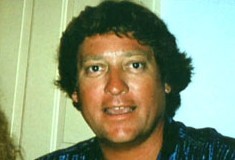 Carl Brandt
Homicide - Murderer · USA · 1971
Carl “Charlie” Brandt · Jan. 3, 1971 — Carl Brandt killed his pregnant mother a…
6 victims
Carl Brandt
Homicide - Murderer · USA · 1971
Carl “Charlie” Brandt · Jan. 3, 1971 — Carl Brandt killed his pregnant mother a…
6 victims
 Dwaine Little
Homicide - Murderer · USA · 1964
Name: Dwaine Little (Dwain Lee Little) · Birth year: 1948 · Little raped and ki…
5 victims
Dwaine Little
Homicide - Murderer · USA · 1964
Name: Dwaine Little (Dwain Lee Little) · Birth year: 1948 · Little raped and ki…
5 victims
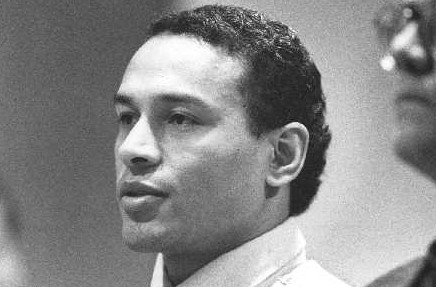 Richard Grissom
Homicide - Murderer · USA · 1966
Richard Grissom Jr. was sentenced to life in prison on November 20, 1990. In th…
4 victims
Richard Grissom
Homicide - Murderer · USA · 1966
Richard Grissom Jr. was sentenced to life in prison on November 20, 1990. In th…
4 victims
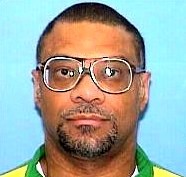 Henry Brisbon
Homicide - Murderer · USA · 1973
Henry Brisbon was a juvenile (17) when he was convicted for double murder. The…
3 victims
Henry Brisbon
Homicide - Murderer · USA · 1973
Henry Brisbon was a juvenile (17) when he was convicted for double murder. The…
3 victims
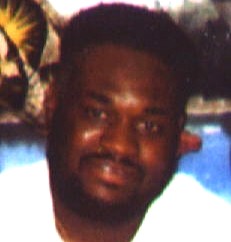 Abdullah Hameen
Homicide - Murderer · USA · 1980
Abdullah Hameen was executed by lethal injection in Delaware on May 25, 2001. H…
2 victims
Abdullah Hameen
Homicide - Murderer · USA · 1980
Abdullah Hameen was executed by lethal injection in Delaware on May 25, 2001. H…
2 victims
 David Lee Holland
Murderer · USA · 1985
David Lee Holland was convicted for the capital murder of Helen Barnard while i…
2 victims
David Lee Holland
Murderer · USA · 1985
David Lee Holland was convicted for the capital murder of Helen Barnard while i…
2 victims
 LaShanda Armstrong
Murderer · USA · 2011
LaShanda Armstrong was 25 when she drove a minivan into the Hudson River, killi…
3 victims
LaShanda Armstrong
Murderer · USA · 2011
LaShanda Armstrong was 25 when she drove a minivan into the Hudson River, killi…
3 victims
 Roger Girerd
Mass murderer · France · 1965
Roger Girerd was the perpetrator of a mass murder in Charvieu-Chavagneux on May…
10 victims
Roger Girerd
Mass murderer · France · 1965
Roger Girerd was the perpetrator of a mass murder in Charvieu-Chavagneux on May…
10 victims
 Jack Howard Potts
Murderer · USA · 1975
Jack Howard Potts was sentenced to death in March 1976 in two counties, Forsyth…
1 victim
Jack Howard Potts
Murderer · USA · 1975
Jack Howard Potts was sentenced to death in March 1976 in two counties, Forsyth…
1 victim
 Garry Dean Miller
Murderer · USA · 1988
Garry Dean Miller — offender · April Marie Wilson — victim (7-year-old) Garry D…
1 victim
Garry Dean Miller
Murderer · USA · 1988
Garry Dean Miller — offender · April Marie Wilson — victim (7-year-old) Garry D…
1 victim
 David Ivy
Murderer · USA · 2001
David Ivy was on parole in June 2000, with parole status scheduled to terminate…
1 victim
David Ivy
Murderer · USA · 2001
David Ivy was on parole in June 2000, with parole status scheduled to terminate…
1 victim
- Gender
- male
- Country
- USA
- Location
- Los Angeles County, California, USA
- Date of birth
- 1957
- Age at first offence
- 15
- Characteristics
- juvenile, robbery, mentally ill
- Victim profile
- Douglas Green (a rival gang member) / Edgardo Kramer, 29 (Peruvian airline employee)
- Method of murder
- Shooting
- Date(s) of murder
- May 20, 1972 / January 3, 1978
- Years active
- 1972–1978
- Date of arrest
- —
- Status
-
Sentenced to death
Sentenced to death on November 19, 1986; conviction and death sentence reversed by the 9th U.S. Circuit Court of Appeals on a ruling that defense counsel rendered constitutionally defective assistance, with the district court ordered to commute the death sentence to life in prison without parole unless California prosecutors decide to retry the penalty phase
Case record: Lavell Frierson
Status and procedural history
Lavell Frierson was sentenced to death on November 19, 1986.
The death sentence was reversed by the 9th U.S. Circuit Court of Appeals on a ruling that defense counsel rendered constitutionally defective assistance by failing to present evidence that could have kept Frierson from being condemned. A three-judge panel reversed a lower court and ordered the district court to commute Frierson's sentence to life in prison without parole unless California prosecutors decide to retry him on the penalty phase with hopes of securing another death sentence.
Timeline
- November 19, 1986 — Lavell Frierson was sentenced to death.
- 1978 — Frierson was convicted of murdering Edgardo Kramer, 29, a Peruvian airline employee.
- 1979 — The California Supreme Court reversed Frierson's capital punishment conviction because another defense lawyer did not present a diminished capacity defense.
- Thursday (date not stated) — The 9th U.S. Circuit Court of Appeals reversed the death sentence for the third time, ordered commuting to life in prison without parole unless prosecutors retry the penalty phase, and stated counsel rendered constitutionally defective assistance.
- Third death sentence upheld (date not stated) — The Supreme Court upheld Frierson's third death sentence; the 9th Circuit later reversed it.
Background
Lavell Frierson was 49 when the 9th Circuit ruling was issued.
Frierson had been on death row at San Quentin State Prison since he was convicted of murdering Edgardo Kramer in 1978.
The death sentence reversed Thursday was the third one Frierson had overturned after arguing he received inadequate counsel.
Frierson had been one of California’s longest-serving death row inmates, and the 27 years and one month he had been on death row was described as a record among the state's 653 condemned prisoners.
The offence
In 1978, Frierson was convicted of murdering Edgardo Kramer, 29, a Peruvian airline employee.
The court documents stated that Frierson kidnapped, robbed and shot Kramer and a colleague in the head when the two men went to a motel near Los Angeles International Airport allegedly looking for a prostitute.
Investigation and legal counsel
The 9th U.S. Circuit Court of Appeals found that defense lawyer Arnold Lieman "rendered constitutionally defective assistance" by failing to tell jurors that Lavell Frierson had a history of mental retardation, child abuse, brain damage and drug use.
The panel stated there was a reasonable probability that, had the jury been able to consider this evidence, the outcome of the penalty proceedings would have been different.
Judge Richard A. Paez wrote for a three-judge panel.
A telephone call to Lieman was not immediately returned.
Frierson’s current lawyer, Gwen Freeman, reacted jubilantly to the news of Thursday’s ruling.
Trial and appellate rulings
After the 1979 California Supreme Court reversal of Frierson's capital punishment conviction, a second jury found Frierson guilty and recommended the death penalty.
The California Supreme Court upheld the conviction but threw out the sentence because lawyers only presented testimony about Frierson's mental capacity during the penalty phase of the trial.
The Supreme Court upheld Frierson's third death sentence.
In Thursday’s ruling, the 9th Circuit said that while Lieman presented evidence of Frierson's drug use, he did not give the jury information about Frierson's low IQ, emotional problems and childhood brain injuries.
The panel said Lieman was inadequately prepared because the lawyer did not read the transcripts of Frierson's second trial.
Judge Richard A. Paez wrote: "rendered constitutionally defective assistance" Judge Richard A. Paez also wrote: "There is a reasonable probability that, had the jury been able to consider this evidence, the outcome of the penalty proceedings would have been different,"
Sentencing outcome
The 9th Circuit ordered the district court to commute Frierson’s sentence to life in prison without parole unless California prosecutors decide to retry him on the penalty phase with hopes of securing another death sentence.
Other details
Terry Thornton, described as a spokeswoman for the state Department of Corrections, confirmed that the 27 years and one month Frierson had been on death row was a record among the state's 653 condemned prisoners.
Gwen Freeman said:
"If he had the trial that I think any competent attorney would have been able to provide for him, there is no question in my mind he never would have gotten the death penalty," Freeman said.
Spotted an error, or have more information about this case?