
David Ivy
Murderer Russell Ellwood
Murderer · USA · 1991
Russell Ellwood was a former taxi driver. Authorities suspected him of killing…
20 victims
Russell Ellwood
Murderer · USA · 1991
Russell Ellwood was a former taxi driver. Authorities suspected him of killing…
20 victims
 Robert Martines Perez
Murderer · USA · 1994
Name: Robert Martines Perez · Other name used in proceedings: Robert Martinez P…
15 victims
Robert Martines Perez
Murderer · USA · 1994
Name: Robert Martines Perez · Other name used in proceedings: Robert Martinez P…
15 victims
 Billy Frank Vickers
Murderer · USA · 1993
Billy Frank Vickers Vickers was executed by lethal injection in Texas on Januar…
14 victims
Billy Frank Vickers
Murderer · USA · 1993
Billy Frank Vickers Vickers was executed by lethal injection in Texas on Januar…
14 victims
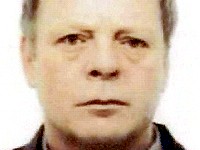 William Horncy
Mass murderer · United Kingdom · 2003
William Horncy (born 1954) was a British murderer. He was convicted of murderin…
5 victims
William Horncy
Mass murderer · United Kingdom · 2003
William Horncy (born 1954) was a British murderer. He was convicted of murderin…
5 victims
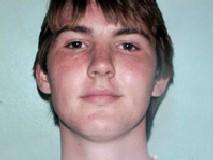 Stuart Harling
Murderer · United Kingdom · 2006
Stuart Harling was sentenced to life in prison (minimum 20 years) on June 28, 2…
1 victim
Stuart Harling
Murderer · United Kingdom · 2006
Stuart Harling was sentenced to life in prison (minimum 20 years) on June 28, 2…
1 victim
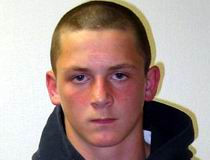 Brandon McInerney
Homicide · USA · 2008
Lawrence “Larry” Fobes King was born on January 13, 1993 at the Ventura County…
1 victim
Brandon McInerney
Homicide · USA · 2008
Lawrence “Larry” Fobes King was born on January 13, 1993 at the Ventura County…
1 victim
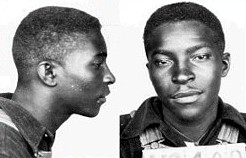 J. C. Levice
Murderer · USA · 1942
J. C. Levice · Charles Sanders · Grady B. COLE · Coy Collier Qualls (deceased)…
1 victim
J. C. Levice
Murderer · USA · 1942
J. C. Levice · Charles Sanders · Grady B. COLE · Coy Collier Qualls (deceased)…
1 victim
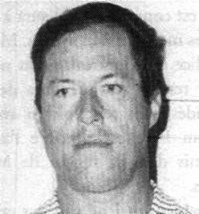 Léopold Dion
Serial killer · Canada · 1963
Léopold Dion (c. 1921 - 17 November 1972, Québec) was a Canadian sex offender a…
4 victims
Léopold Dion
Serial killer · Canada · 1963
Léopold Dion (c. 1921 - 17 November 1972, Québec) was a Canadian sex offender a…
4 victims
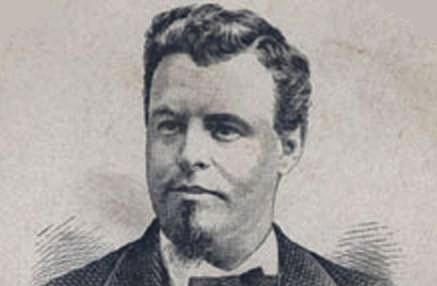 Rev. Herbert Hayden
Murderer · USA · 1878
Rev. Herbert H. Hayden was a married father and a minister of a Methodist churc…
1 victim
Rev. Herbert Hayden
Murderer · USA · 1878
Rev. Herbert H. Hayden was a married father and a minister of a Methodist churc…
1 victim
- Gender
- male
- Country
- USA
- Location
- Memphis, Tennessee, USA
- Date of birth
- January 15, 1972
- Age at first offence
- 29
- Characteristics
- domestic violence, revenge
- Victim profile
- Lakisha Thomas (his ex-girlfriend)
- Method of murder
- Shooting
- Date(s) of murder
- June 8, 2001
- Years active
- 2001
- Date of arrest
- June 27, 2001
- Status
-
Sentenced to death
Sentenced to death on March 6, 2003
Case record: David Ivy
Background
David Ivy was on parole in June 2000, with parole status scheduled to terminate in the year 2020. Tommy Westbrooks served as Ivy’s parole officer in February 2001.
On May 16, 2002, Ivy escaped from the Shelby County Jail. Ivy was eventually located in San Diego, California.
The offence
Lakisha Thomas was assaulted on the morning of June 6, 2001, at an apartment complex. She reported that her ex-boyfriend, David Ivy, had assaulted her in the area of Park and Airways with a black Uzi type pistol with a long magazine. Lakisha told an officer that David Ivy was also known as “Day Day” and that “Day Day” was tattooed on the right side of her neck.
Lakisha told the officer that Ivy had “said that he wasn’t going back to jail” and “that he would come back and kill her.”
After being shot on June 8, 2001, Lakisha Thomas was pronounced dead in the parking lot outside her apartment building. The assailant shot at the front passenger side of the vehicle where Lakisha was seated. The assailant was wearing a black hat, sunglasses, and a towel over his mouth, and although his face was covered, Jackie Bland testified that the assailant resembled David Ivy in appearance.
Before firing three shots, David Ivy smiled and remarked, “Oh, bitch, you want me dead, huh?”
Jackie Bland reported, “Call the police. Day Day shot Kisha.”
Lakisha’s cousin and witness Deborah Kelley testified that Ivy had assaulted Lakisha, that Ivy and Lakisha had a relationship that they attempted to end, and that Lakisha was scared that Ivy was “trying to kill her.”
The assailant fled as tires sounded like someone was “getting away fast” out in the parking lot.
Investigation
A Memphis police officer responded to an assault call at an apartment complex on the morning of June 6, 2001. The officer photographed the victim’s injuries after observing a “two-inch laceration to the top of her head,” bruising just above her left chest above her left breast, and a “right black eye on the right side of her face.” Paramedics were called, but Lakisha refused treatment and stated that “she would seek medical attention via her own means.”
A warrant charging David Ivy with aggravated assault was issued on June 7, 2001. The Sheriff’s Department attempted to serve the warrant on June 7, but it was not served until June 27, 2001.
Lakisha contacted the Sheriff’s Department on the morning of June 8, 2001, and provided an alternate address for Ivy at “an address on Meda.” Later that day, Lakisha completed paper work about the incident at the Citizens Dispute office and was interviewed. She was taken to a judicial commissioner to obtain an order of protection, and she was also referred to the domestic violence unit of the police department for a warrant for aggravated assault.
The ex parte order of protection was granted, and a hearing was scheduled for June 21, 2001. The ex parte order was never served on the respondent, David Ivy. The order noted that attempts were made on June 15, 19, and 20 and added: “After diligent search and inquiry Ivy is not found in my county. Two days later, on June 8th, the same officer again encountered Lakisha. However, this time, Lakisha was outside her apartment building in the parking lot and she was pronounced dead.”
On the morning of June 8, 2001, Deborah Kelley described that Lakisha lived in the Magnolia Place Apartments on Millbranch, and Jackie Bland lived in the Millbranch Park apartments.
At the crime scene on June 8, 2001, spent casings and bullet fragments were found, along with several live rounds. A TBI forensic scientist concluded that this evidence was consistent with a scenario in which a semi-automatic nine millimeter weapon was fired with some bullets passing through a body, some bullets being fired and leaving an empty shell casing, and some bullets not firing but being manually ejected from the weapon.
Arrest and custody
Ivy was arrested on June 27, 2001, in Tipton County, Tennessee. He was transported back to Memphis.
Evidence and autopsy
Dr. O’Brien Clary Smith, the medical examiner for Shelby County, performed an autopsy on the body of Lakisha Thomas. The postmortem examination revealed “multiple gunshot wounds,” with a total of five wounds of entrance to the right side of the body. The path of the wounds went “from the right side of her body over to the left and had an upward course” as they progressed from right to left. Exit wounds were located on the left side of the body: one in the front of the left shoulder, two behind the left shoulder, one of the left side of the abdomen, and one on the left side.
Powder burns were located on the victim’s right upper arm. Dr. Smith explained that powder burns were “small puncture wounds produced in the skin surface when particles of burned and unburned gun powder are projected from the bale of a weapon at a distance close enough for them to have enough energy to actually embed themselves in the skin.” He added that for most handguns this is out to a range of about two feet and that he also noticed “stipple type powder burns on the side of her right arm.”
Dr. Smith also described a gunshot wound to the victim’s left arm. He verified that bruising on the victim’s person would have been consistent with the victim sustaining the “trauma or assault that had occurred on June the 6th.” Dr. Smith was unable to determine the sequence of the gunshot wounds.
Gunshot wound A was an exit wound.
Gunshot wound B entered on the right lateral chest. Dr. Smith testified that the bullet fractured a rib, pierced the right lung, and damaged the right atrium of the heart; it also damaged the pulmonary artery and pierced the left lung before exiting beneath the left shoulder.
Gunshot wound C entered at the right side of the chest. Dr. Smith testified that this bullet pierced the right lung and the heart; it also bruised the upper lobe of the left lung and fractured the second rib before exiting on the front side of the shoulder (gunshot wound A).
Gunshot wound G entered at the back of the victim’s left upper arm and was described as a re-entrance wound, where a bullet that exited the body re-entered due to the position of the victim’s arm.
Gunshot wound H entered at the victim’s right upper back. Dr. Smith testified that the bullet “hit[] the spine at the 7th thoracic vertebra. . . ” and damaged the spinal cord, and it continued to damage the left upper lobe of the lung and fractured the back of the second rib.
Gunshot wound I entered at the right upper buttock and bruised the intestines and the pancreas. It produced a grazing wound to the liver and left kidney; the bullet then fractured the tenth rib. Dr. Smith testified that the bullet did not exit and lodged itself between the skin and the left tenth rib.
The final gunshot wound of entrance was gunshot wound J. Dr. Smith testified that this bullet entered on the right upper outer thigh, damaged the uterus and the fallopian tube, “produce[d] two holes in the lower portion of the colon or large bowel,” and produced two injuries to the small bowel. The bullet then exited on the left side of the abdomen.
Dr. Smith confirmed that the course of the gunshot wounds was consistent with the victim “balling up in a fetal like position,” and that the victim was no more than two feet from the weapon when it was discharged. Dr. Smith testified that of the victim’s vital internal organs, the spleen was the only organ not affected by the gunshots. He concluded that the victim’s death was the result of the multiple gunshot wounds and that two bullets striking the victim’s heart would have ended “her life the quickest.”
Witness testimony and prior conflicts
Deborah Kelley testified about Lakisha Thomas and her relationship with David Ivy. She explained that the couple dated for almost a year and that Lakisha attempted to end the relationship. Kelley testified that although Lakisha moved out of the house they shared, “would always end up talking back together.”
Kelley testified that about a month before Lakisha’s murder, Ivy grabbed Lakisha by her hair. Kelley testified she told Ivy, “Uh-huh, don’t do that. Let her go. You’ve got to get out of here with that.” Kelley testified Ivy retorted, “I told you about playing with me, bitch.” Ivy then left.
Kelley testified that a few days prior to Lakisha’s murder, she found Lakisha sitting at the kitchen table wearing sunglasses with blood on her shirt. Jackie Bland stated, “Look what Day Day did to Kisha.” Kelley testified that Lakisha removed her sunglasses, revealing a black eye, and remarked that “she thinks she had a hole in her head.” Kelley testified that Lakisha explained that Ivy had “caught her at Mapco . . . and jumped on her, hit her in the head with a pistol.”
Kelley testified that Lakisha was nervous and scared, and scared that Ivy was “trying to kill her.” Kelley further testified that Jackie Bland contacted the police. Kelley later drove Lakisha to Eastwood Hospital on Getwell and, several hours later, accompanied Lakisha to 201 Poplar to “swear out a warrant [for Ivy’s] arrest.”
Kelley testified that on the way to the police station, Lakisha indicated that Ivy was following them. Kelley pulled the vehicle into an Exxon parking lot and called the police, but by the time police arrived, Ivy was gone. The three then continued to the Shelby County Criminal Justice Center located at 201 Poplar.
Kelley testified that after leaving 201 Poplar, the three women drove to a liquor store on Poplar Avenue, where Kelley saw Ivy. Kelley testified she requested that someone “[c]all the police.” Kelley testified that two men in the store went to the front door, that Ivy walked back around the liquor store building, and that when she returned to the vehicle Lakisha stated, “Girl, he said he going to kill me. He’s been following me all day.” Lakisha added that “He told me if I put the police in his business he was going to f*** me up.”
An employee at the liquor store overheard Ivy ask Lakisha if she hated him, that “it wasn’t over,” and that “he was going to get her.” Another employee confirmed that Lakisha “was very afraid,” that she was “bruised pretty badly,” and that she informed him that she had just filed a charge for assault against “Day Day.” The employee testified Lakisha “had beaten her up” and that Lakisha said, ‘I’m afraid he’s going to kill me.’
Kelley testified that the store’s surveillance cameras videotaped Ivy outside the liquor store on June 6, 2001.
Jackie Bland testified about conflict in Ivy’s and Lakisha’s relationship. Bland recalled an incident in which she observed Ivy “pull a plug out of Lakisha’s head.” Bland also testified that Lakisha called her, stating that Ivy had broken all the tables in the house, kicked the door in, and that she was “fixing” to call the police. Bland testified Lakisha had often stated that “she was tired of fighting with him and she was ready to leave Ivy alone but she was scared.”
Andrea Hunt testified about Ivy’s abuse of Lakisha and stated that, before firing three shots, Ivy smiled and remarked, “Oh, bitch, you want me dead, huh?” Hunt testified that after she pulled the towel from over his face, the assailant revealed himself as David Ivy. Hunt also confirmed that Ivy shot Lakisha.
An officer testified that in May 2001 he responded to a disturbance call at 3725 Millbranch. Lakisha Thomas informed him that her boyfriend, David Ivy, “had forced his way into her apartment and was moving the belongings out of her apartment.” The officer testified Lakisha said Ivy had “stated that he was going to kill her.” The officer observed Lakisha was “nervous and shaking” and testified she said Ivy was “stalking her and was constantly making threats to her to harm her and he was upset because she ended their relationship.” The officer testified that Lakisha’s grip on his arm lasted a long time and had embedded some fingerprints in his arm, and he stated it was obvious she was very shaken and afraid. He testified the next time he saw Lakisha Thomas was on June 8, 2001, after she had been murdered.
Trial
After the proof in the case, the jury returned with a verdict finding Ivy guilty of first-degree premeditated murder.
Sentencing
David Ivy was sentenced to death on March 6, 2003.
Appeals
The supplied information included the Supreme Court of Tennessee’s majority opinion and dissenting opinion appendix, but it did not provide specific appeal outcomes.
Aftermath
Gregory Kelley, Bland and Kelley’s brother, worked as a maintenance supervisor at the Millbranch Apartments. Upon hearing gunshots, Gregory ran toward the sound and heard people hollering that someone “just got shot in that car, that green car.” He recognized the car as belonging to Lakisha Thomas. He testified that he noticed two wounds, one to her chest and one to her side, and that he pulled her lifeless body out of the car onto the pavement, attempted to apply pressure to the wounds, and shouted for someone to call 911. Gregory Kelley never saw the assailant and testified he saw a “white car speed up out of the apartments.” He testified that the car resembled the car owned by David Ivy.
Parole status and the escape and eventual location in San Diego followed in the supplied information after the sentencing phase.
Spotted an error, or have more information about this case?