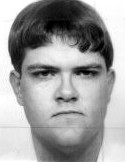
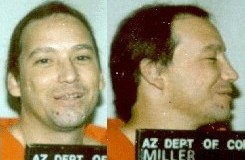
Garry Dean Miller
Murderer Brian Kevin Rosenfeld
Murderer · USA · 1985
Brian Kevin Rosenfeld Brian Kevin Rosenfeld was sentenced to three concurrent l…
23 victims
Brian Kevin Rosenfeld
Murderer · USA · 1985
Brian Kevin Rosenfeld Brian Kevin Rosenfeld was sentenced to three concurrent l…
23 victims
 Yahweh ben Yahweh
Murderer · USA · 1980
Yahweh ben Yahweh was born and legally named Hulon Mitchell Jr. (October 27, 19…
23 victims
Yahweh ben Yahweh
Murderer · USA · 1980
Yahweh ben Yahweh was born and legally named Hulon Mitchell Jr. (October 27, 19…
23 victims
 Russell Ellwood
Murderer · USA · 1991
Russell Ellwood was a former taxi driver. Authorities suspected him of killing…
20 victims
Russell Ellwood
Murderer · USA · 1991
Russell Ellwood was a former taxi driver. Authorities suspected him of killing…
20 victims
 Robert Martines Perez
Murderer · USA · 1994
Name: Robert Martines Perez · Other name used in proceedings: Robert Martinez P…
15 victims
Robert Martines Perez
Murderer · USA · 1994
Name: Robert Martines Perez · Other name used in proceedings: Robert Martinez P…
15 victims
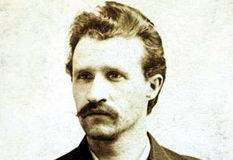 August Spies
Mass murderer? · USA · 1886
August Vincent Theodore Spies (December 10, 1855 – November 11, 1887) was an an…
7 victims
August Spies
Mass murderer? · USA · 1886
August Vincent Theodore Spies (December 10, 1855 – November 11, 1887) was an an…
7 victims
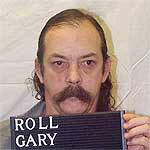 Gary Lee Roll
Murderer · USA · 1992
Gary Lee Roll — defendant; executed in Missouri on August 30, 2000. · David Rho…
3 victims
Gary Lee Roll
Murderer · USA · 1992
Gary Lee Roll — defendant; executed in Missouri on August 30, 2000. · David Rho…
3 victims
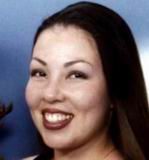 Mia Gonzales
Homicide · USA · 2007
Mia Gonzales, age 36, was charged in connection with the Oct. 27, 2007 shooting…
1 victim
Mia Gonzales
Homicide · USA · 2007
Mia Gonzales, age 36, was charged in connection with the Oct. 27, 2007 shooting…
1 victim
 Timothy Johnston
Murderer · USA · 1989
Timothy Johnston was convicted of first degree murder and sentenced to death fo…
1 victim
Timothy Johnston
Murderer · USA · 1989
Timothy Johnston was convicted of first degree murder and sentenced to death fo…
1 victim
 Geoffrey Kent Ferguson
Mass murderer · USA · 1995
Geoffrey Kent Ferguson lived with his wife and 2-year-old daughter after moving…
5 victims
Geoffrey Kent Ferguson
Mass murderer · USA · 1995
Geoffrey Kent Ferguson lived with his wife and 2-year-old daughter after moving…
5 victims
- Gender
- male
- Country
- USA
- Location
- Jones County, Texas, USA
- Date of birth
- November 2, 1967
- Age at first offence
- 21
- Characteristics
- kidnapping, rape
- Victim profile
- April Marie Wilson (female, 7)
- Method of murder
- Beating
- Date(s) of murder
- November 11, 1988
- Years active
- 1988
- Date of arrest
- Same day
- Status
-
Executed
Executed by lethal injection in Texas on December 5, 2000
Parties
- Garry Dean Miller — offender
- April Marie Wilson — victim (7-year-old)
Background
Garry Dean Miller was convicted and sentenced to death for the November 11, 1988 kidnapping, rape and murder of 7-year-old April Marie Wilson of Merkel, Texas.
April Marie Wilson was babysat the night of the offence after her mother’s cousin and the cousin’s girlfriend were asked to babysit. Miller lived with them. The following morning, when April was reported missing, Miller joined with others in searching for her.
The offence
On the morning of November 11, 1988, two men quail hunting in a pasture in a rural area of Jones County, Texas found children’s clothing, a blanket, a Raggedy Ann doll, a bottle of Jergen's lotion, and some paper towels with blood on them. The men called law enforcement and April’s body was subsequently located in the pasture.
Miller’s written confession described returning to his home in Merkel, Texas about 1:30 a.m. on November 11, 1988, knowing that April, a seven-year-old child, was spending the night there. Miller said he had been drinking alcohol and did not want to stay home, so he woke April to see if she wanted to go “riding around.”
Miller and April stopped riding around, and April hugged him because he was “depressed.” Miller said he “did not know what happened,” but he said he began abusing April. Miller placed April on the tailgate of the truck. He told her to remove her clothes even though she was scared. April was crying, and Miller told her to be quiet. Miller removed his own clothes, raped her using hand lotion as a lubricant, performed oral sex on April, and forced her to perform oral sex on him by holding her head down. Miller said he had to hold April down forcibly and did not stop even though she told him it hurt.
Miller said he panicked and started choking April and hitting her with something he had picked up from the ground. He said April stopped fighting, and that he, apparently believing she was dead, used coat hangers to drag her body into some brush. Miller said he went back to his home to get April’s belongings to dump with her body; however, he said he could not locate the body when he returned to the scene. Miller said he “passed out” after again returning home.
During the autopsy, the pathologist testified the cause of death was:
“multiple blunt force injuries of the head, neck, and trunk.”
The fractures to the head were such that the blows had to be delivered with “extreme force,” multiple times. The pathologist described contusions and abrasions inflicted on April’s face, and that her right jaw was fractured, consistent with being hit. There were bruises on and thorns in the ball of April’s foot, indicating April had put her foot down, possibly while being dragged.
The pathologist described trauma and excessive damage to body cavities caused by the sexual assault, and described the appearance of trauma to both the vaginal and anal canals. The pathologist testified in the pathologist’s opinion that the excessive injuries to both the anal and vaginal cavities were caused by an object other than a penis in excess of five inches. The punishment phase included testimony from a psychiatrist who testified that an exhibit reflected that April’s anal opening was “totally destroyed” and “almost mutilated.”
Investigation
In Miller’s confession, he described that after he returned home and April was missing, he was asked if he had seen her. Miller told others he had not and then pretended to help look for her.
Traces of April’s blood were found on the tailgate of Miller’s pickup.
Two men quail hunting in Jones County later found children’s clothing, a blanket, and a Raggedy Ann doll in the pasture area, and those items appeared to have blood on them.
Trial
Miller was tried before a jury on a plea of not guilty by reason of insanity. At the guilt-innocence phase, Miller presented an insanity defense and presented testimony from lay witnesses that the offence was out of character for him and that he “simply must not have known right from wrong at the time of the offense.” Miller also presented testimony from psychologist Kevin Karlson, who opined that Miller was suffering from a mental disorder at the time of the offense, a dissociative episode.
The jury rejected the insanity defense and found Miller guilty of capital murder.
At the guilt-innocence phase, the trial court readmitted evidence in the punishment phase.
Evidence and testimony at punishment
At the punishment phase, a State’s medical and psychiatric expert confirmed the pathologist’s opinion regarding extensive mutilation to April’s genitalia. The expert also testified that Miller represented a continuing threat to society based upon the extremely brutal murder, describing it as a murder “as brutal as he had ever seen in a child.” The expert noted the murder was totally unprovoked and that Miller was meticulous during the killing and in his actions following the killing.
Miller presented expert psychological evidence at punishment. Karlson testified that Miller was suffering from a dissociative episode at the time of the offense and could not have consciously, intentionally, or deliberately planned the rape and murder. Karlson also acknowledged that if Miller were in the same circumstances again, the same or similar crime could occur, but that the likelihood was extremely small because prior to the murder Miller was nonviolent.
The State introduced testimony from Dr. Griffith, a psychiatrist, who taught medical school anatomy for several years before teaching psychiatry. Griffith testified that the State’s exhibit 87 depicted April’s genitalia and reflected that her anal opening was “totally destroyed” and “almost mutilated,” and that the five-inch tear in her colon could not have been caused by a penis and was caused by some other foreign object. In Griffith’s opinion, Miller represented a continuing threat to society based upon the extremely brutal murder, “as brutal as [Griffith] [had] ever seen in a child,” and Griffith observed that the murder was totally unprovoked and that Miller was meticulous during the killing and in actions following the killing. Defense counsel introduced materials from psychiatric journals during cross-examination regarding future dangerousness.
During punishment, Miller also presented multiple mitigation witnesses:
- Ms. Townsend, Miller’s former school teacher, testified Miller was a “fine outstanding young man,” and in her opinion he did not commit the crimes deliberately and would not commit criminal acts of violence in the future.
- Alice Carter, an employee at Camp Butman, testified she would ask the jury to consider that Miller’s conduct was not deliberate and that he needed help; she said a life sentence would be appropriate.
- Shirley Ann Miller, Miller’s stepmother, testified Miller was not rebellious, was a very caring child who never got out of line and always “minded,” and that she believed he could not have done something like this deliberately and would not commit violent criminal acts in the future.
- Randy Davis, Miller’s best friend, testified Miller did not “con” or use him, and that Miller could not have done this deliberately; he said alcohol could have affected Miller’s behavior and that if Miller got help, it was more likely than not that Miller would not commit violent acts in the future.
- Don Russom, who used to work with Miller at a fire department, testified he had never heard of Miller committing antisocial acts and believed a life sentence would be more appropriate than death.
- Roy Smith, a friend of Miller’s family, testified Miller had been known since he was seven or eight years old, and that as a “robot,” Miller may have committed the crimes but he would not have acted deliberately and Roy Smith did not believe Miller would commit criminal acts of violence in the future.
- Patricia Edwards, Miller’s mother, testified Miller was a good son, was never violent, and would not do “something like this again.”
- Bill Miller, Miller’s father, testified Miller did not ever try to “con” people and always was more of a “giver” than a “taker.” Bill Miller testified he had “a bad drinking problem” when his son was young and that he had a violent temper when he was drinking, including that he would “slap [Miller’s mother] around” while drinking.
- Bill Miller testified that he thought Miller needed psychiatric treatment and would never repeat violence if provided treatment, and that he did not think Miller did this deliberately.
- Mickey Edwards, Miller’s stepfather, testified Miller was “absolutely trouble free” during the twelve years he had known him, and that Miller was obedient and well disciplined. Mickey Edwards testified he had never seen Miller mistreat an animal and said Miller was “real kind and considerate to animals and people,” and he did not think Miller would commit criminal acts of violence in the future.
After the punishment hearing, the jury answered affirmatively the special issues regarding deliberateness of Miller’s conduct and the probability of his future dangerousness. The court sentenced Miller to death.
Special issues described in the appeal materials
The record described:
- Special issue number one asked whether Miller’s conduct that caused death was committed deliberately and with a reasonable expectation that death would result.
- Special issue number two asked whether there was a probability that Miller would commit criminal acts of violence that would constitute a continuing threat to society.
Appeals
Federal appellate proceedings
Miller requested a Certificate of Appealability (COA) in the United States Court of Appeals for the Fifth Circuit.
The court described Miller’s request for a COA pursuant to 28 U.S.C. 2253(c)(2) and denied it, stating that Miller had not made a substantial showing of the denial of a constitutional right. The court concluded:
- The request was DENIED.
The Fifth Circuit decision contained detailed analysis of Miller’s ineffective assistance claims, sufficiency of evidence supporting special issue two, issues regarding jury instructions on “no” votes, and other claims including Penry-related arguments and informing the jury about parole eligibility. The Fifth Circuit also addressed prosecutorial misconduct claims and a procedural bar.
The Fifth Circuit summarized the ineffective assistance arguments and discussed alleged failures by trial counsel including:
- Motion to change or transfer venue: denial/withdrawal issues and whether Miller showed counsel acted unreasonably.
- Voir dire regarding probation or parole ramifications: a motion was made and ruled on; parole was not properly raised in voir dire under the court’s ruling.
- Prosecutorial statements during voir dire to juror Jay Baccus: objections were sustained; running objections were handled; the court concluded Miller had not shown deficient performance or prejudice.
- Admission of State’s exhibit 95, Officer Drumheller’s offence report: defense counsel stated “no objection, ‘subject to prior agreement,’” and cross-examination followed.
- Insanity-verdict consequences comments: defense counsel did not object to the prosecutor’s statement that a person who was insane at the time of the offence and sane at the time of trial “walk[s],” and later addressed temporary insanity and the law; the Texas Court of Criminal Appeals held the claim procedurally barred for lack of timely objection.
- Failure to object to a prosecutor remark “It’s time to get the needle” during cross-examination. The Fifth Circuit discussed sufficiency of evidence to support special issue two and described that facts of the murder and psychiatric testimony supported an affirmative finding.
State appellate and collateral proceedings
- Miller was indicted on November 30, 1988 on charges of capital murder, murder, and aggravated sexual assault of April Marie Wilson on or about November 11, 1988.
- On May 12, 1993, the Texas Court of Criminal Appeals affirmed Miller’s conviction and sentence in an unpublished opinion, and the Supreme Court denied Miller’s petition for a writ of certiorari.
- Miller filed a state application for a writ of habeas corpus, and the trial court issued findings of fact and conclusions of law recommending the denial of the habeas application. The Texas Court of Criminal Appeals denied the habeas application.
Federal habeas filing and COA denial at district court
On May 21, 1998, Miller filed a federal petition for a writ of habeas corpus. The district court denied the petition, denied a motion for a COA, and Miller then requested a COA from the Fifth Circuit.
Sentencing
Miller was sentenced to death after the jury answered affirmatively the special issues regarding deliberateness and probability of future dangerousness.
Outcome
Miller was executed by lethal injection in Texas on December 5, 2000.
In his last statement, Miller said to Maggie:
“Maggie, I am sorry. I always wanted to tell you but I just didn't know how. I have been praying for y'all. I hope that y'all find the peace that y'all have been wanting. Lord, thank you for all my family, all my friends, and all my brothers on the row. Thank you for my spiritual family. Lord, be merciful with those who are actively involved with the taking of my life, forgive them as I am forgiving them. Be merciful to me a sinner. Protect us Lord as we stay awake and watch over us as we sleep as we wake may we may keep watch with Christ and sleep rest in His peace. All right, Warden. I am ready to go home.”
Aftermath
Miller was pronounced dead after the execution.
Jones County District Attorney Gary Brown described Miller’s crime as particularly cruel.
The record also described that Miller had taken college courses in law enforcement and had worked as a bartender and laborer. The record described that Miller had no prior criminal record and had taken community college courses in law enforcement. It also stated that he worked with young people at a Methodist Church-run camp near Merkel at one time.
Spotted an error, or have more information about this case?