
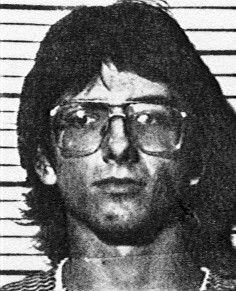
Anthony Joe LaRette
Serial killer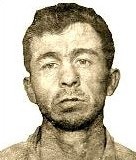 Donald Henry Gaskins
Serial killer · USA · 1969
Donald Henry Gaskins, also known as Donald “Pee Wee” Gaskins, was a serial kill…
200 victims
Donald Henry Gaskins
Serial killer · USA · 1969
Donald Henry Gaskins, also known as Donald “Pee Wee” Gaskins, was a serial kill…
200 victims
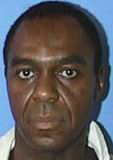 Carl Eugene Watts
Serial killer · USA · 1974
Carl Eugene Watts (born November 7, 1953; died September 21, 2007), also known…
100 victims
Carl Eugene Watts
Serial killer · USA · 1974
Carl Eugene Watts (born November 7, 1953; died September 21, 2007), also known…
100 victims
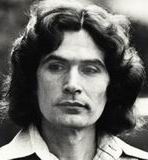 Rodney Alcala
Serial killer · USA · 1977
Rodney James Alcala (born August 23, 1943) was also known as Rodrigo Jacques Al…
100 victims
Rodney Alcala
Serial killer · USA · 1977
Rodney James Alcala (born August 23, 1943) was also known as Rodrigo Jacques Al…
100 victims
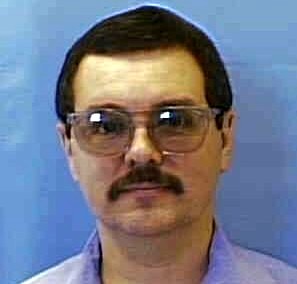 Donald Harvey
Serial killer · USA · 1970
Donald Harvey was known as an American serial killer and a self-professed “Ange…
87 victims
Donald Harvey
Serial killer · USA · 1970
Donald Harvey was known as an American serial killer and a self-professed “Ange…
87 victims
 Donald Leroy Evans
Serial killer · USA · 1975
Donald Leroy Evans (born July 5, 1957) was an American serial killer who murder…
60 victims
Donald Leroy Evans
Serial killer · USA · 1975
Donald Leroy Evans (born July 5, 1957) was an American serial killer who murder…
60 victims
 Michael Swango
Serial killer · USA · 1981
Michael Swango (Joseph Michael Swango) was a physician and American serial kill…
60 victims
Michael Swango
Serial killer · USA · 1981
Michael Swango (Joseph Michael Swango) was a physician and American serial kill…
60 victims
 Louis Hastings
Spree killer · USA · 1983
Louis Hastings was a 39-year-old unemployed computer programmer during the shoo…
6 victims
Louis Hastings
Spree killer · USA · 1983
Louis Hastings was a 39-year-old unemployed computer programmer during the shoo…
6 victims
 Michelle Theer
Murderer · USA · 2000
Michelle Theer was convicted of first-degree murder by aiding and abetting and…
1 victim
Michelle Theer
Murderer · USA · 2000
Michelle Theer was convicted of first-degree murder by aiding and abetting and…
1 victim
 Robert Baltovich
Murderer? · Canada · 1990
Robert Baltovich was a Canadian man born July 17 1965. He was educated at the U…
1 victim
Robert Baltovich
Murderer? · Canada · 1990
Robert Baltovich was a Canadian man born July 17 1965. He was educated at the U…
1 victim
- Gender
- male
- Country
- USA
- Location
- Several states, USA
- Date of birth
- October 1, 1951
- Age at first offence
- 26
- Characteristics
- rape
- Victim profile
- Young women
- Method of murder
- St abbing with knife
- Date(s) of murder
- 1977 - 1980
- Years active
- 1977–1980
- Date of arrest
- —
- Status
-
Executed
Executed by lethal injection in Missouri on November 29, 1995
Case identification
Anthony Joe LaRette was convicted of capital murder and sentenced to death for the killing of Mary Fleming.
Background
Anthony J. LaRette was arrested in Topeka, Kansas for Pocket Picking and was sentenced to serve one to four years in the Kansas Department of Corrections.
Anthony J. LaRette was arrested in Lawrence, Kansas for Rape and Burglary. He was sentenced to five to twenty years in the Kansas Department of Corrections.
Anthony J. LaRette was sentenced to serve six months on a bond default in the custody of the United States Attorney-General. The original charge of Theft of Government Property was dismissed.
Anthony J. LaRette was arrested in Topeka, Kansas and was sentenced to one to ten year in the Kansas Department of Corrections. Sentence was suspended and LaRette was placed on five years probation and one year in the county jail.
The offence
On July 25, 1980, at approximately 11:00 a.m., eighteen-year-old Mary Fleming was found bleeding profusely and collapsed on the doorstep of a neighbor in St. Charles, Missouri. She was naked except for a pulled-up bikini top. She had been stabbed several times in the chest and her neck was slashed from ear to ear.
Death was attributed to Mary Fleming having bled to death from stab wounds to the chest and a throat cut from ear to ear. One chest wound penetrated a lung and the second penetrated her heart. A tip of a metal blade was found in her lung. She had numerous other "defense" cuts to her fingers and hands, suggesting a struggle.
As Mary Fleming ran out the back door of her apartment, a witness saw a man run out the front door of the apartment to a cream-colored convertible and drive away. Police traced the car to Richard Roberson, who told them that LaRette had borrowed the car that day for a job interview.
At about the same time, Mary Fleming was seen running from her apartment. An individual later identified as Anthony Larette was seen running from the direction of the apartment toward the cream-colored convertible. LaRette got into the convertible and drove away.
Afterward, LaRette admitted killing Mary Fleming in telephone conversations. He told police he killed Ms. Fleming because she lied to him and that he told Mary Fleming not to scream and she would not be hurt. After the victim began screaming, LaRette attacked her.
An examination of the Fleming apartment revealed that it was the scene of the crime. Blood was found in the living room and kitchen areas on clothing, floors, furniture and walls.
Investigation
Police found blood scattered throughout Mary Fleming’s apartment, the obvious scene of the crime.
Police initially interviewed LaRette at a jail in Shawnee County, Kansas. LaRette stated that a hitchhiker was responsible for the murder.
Two days after the murder, LaRette left St. Charles for his home in Kansas. He later admitted killing Fleming in telephone conversations with Roberson. Roberson allowed a police officer to listen in on one of these conversations.
Prior to both interviews, LaRette signed a written waiver of his rights under Miranda v. Arizona, 384 U.S. 436, 86 S.Ct. 1602, 16 L.Ed.2d 694 (1966).
Rochelle Hord identified LaRette at trial as the man she saw run from Fleming's apartment to Roberson's car on the morning of the murder. Prior to trial, shortly after she initially described the man to police, Hord underwent hypnosis in an attempt to enhance her memory.
Arrest
LaRette was eventually taken into custody after the companion called him and he admitted involvement to the companion and to police listening to the telephone conversation.
Trial
On November 14, 1980, LaRette was charged by information in St. Charles County Circuit Court for capital murder for the death of Mary Fleming.
On January 14, 1981, venue was transferred to Warren County Circuit Court.
From August 11 to August 14, 1981, LaRette was tried in the Circuit Court of Warren County and was found guilty of capital murder.
The jury recommended a sentence of death. On October 7, a motion for a new trial was denied, and LaRette was sentenced to death for killing Mary Fleming.
On October 14, a notice of appeal was filed.
During the guilt phase, LaRette instructed his counsel to present the defense that a hitchhiker had murdered Mary Fleming. At the guilt phase of the trial, LaRette instructed counsel to present the defense that LaRette was innocent because a hitchhiker had murdered Mary Fleming.
After the jury found LaRette guilty, counsel spent the entire recess before the sentencing phase urging LaRette to testify about mitigating circumstances, including his history of mental illness beginning with a childhood head injury and his marital problems immediately prior to the murder. LaRette refused to testify.
During the sentencing phase, counsel introduced testimony by LaRette's mother as to his emotional state and marital problems at the time of the murder through a stipulation reciting his mother’s expected testimony.
Aggravating circumstance instruction
The trial court submitted to LaRette’s jury one statutory aggravating circumstance based on Mo. Rev. Stat. Sec. 565.012.2(7). The instruction provided:
[Y]ou must first unanimously determine whether the murder of Mary Fleming involved torture or depravity of mind and that as a result thereof it was outrageously or wantonly vile, horrible or inhuman.
[I]f you do not unanimously find from the evidence beyond a reasonable doubt that the foregoing circumstance exists and that it is an aggravating circumstance, you must return a verdict fixing the punishment of the defendant at imprisonment for life....
The jury returned a verdict fixing the punishment at death. The verdict form recited that it found beyond a reasonable doubt both the statutory aggravating circumstance, "Torture, Depravity of mind and that as a result it was outrageous and wantonly vile, horrible and inhuman," and a non-statutory aggravating circumstance, LaRette’s 1974 rape conviction in Douglas County, Kansas.
Sentencing
On October 7, 1981, the trial court sentenced LaRette to death for killing Mary Fleming after denial of a motion for a new trial.
Appeals
Missouri Supreme Court
On March 29, 1983, the Missouri Supreme Court affirmed LaRette’s conviction and sentence.
The United States Supreme Court denied certiorari on October 11, 1983.
Larette filed a Rule 27.26 motion for post conviction relief in the Circuit Court of Warren County on December 21, 1983.
On June 12, 1984, the motion for post conviction relief was denied.
On July 17, 1984, a notice of appeal was filed.
On November 26, 1985, the Missouri Court of Appeals, Eastern District, affirmed the denial of post conviction relief.
On April 11, 1986, LaRette filed a petition for writ of habeas corpus in the United States District Court for the Eastern District of Missouri.
On October 9, 1986, LaRette filed a second post conviction in Warren County Circuit Court.
On November 30, 1987, the Circuit Court denied relief.
On July 26, 1988, the Missouri Court of Appeals affirmed the Circuit Court’s denial of relief.
Federal habeas corpus and further proceedings
On May 10, 1993, the petition for writ of habeas corpus was denied by the federal district court.
On March 1, 1994, the district court declined to reconsider its decision.
On January 11, 1995, the United States Court of Appeals for the Eighth Circuit affirmed the District Court’s order.
On March 27, 1995, rehearing was denied by the United States Court of Appeals for the Eighth Circuit, and LaRette’s petition for writ of certiorari was denied.
On October 2, 1995, LaRette’s petition for writ of certiorari was denied by the United States Supreme Court.
Claims and procedural issues in appeal
LaRette argued that his trial counsel was ineffective for failing to investigate and present evidence concerning LaRette's history of mental illness at the guilt and sentencing phases of his trial.
Dr. Henry Bratkowski examined LaRette and reported that he was of average intelligence, was competent to stand trial, and did not suffer from any mental disorder that would excuse him from criminal responsibility.
LaRette instructed counsel not to present a mental illness defense because LaRette “would rather die than go back to a mental hospital.”
LaRette refused to testify at the sentencing phase.
In his federal appeal, LaRette raised numerous claims that were not presented to state courts on direct appeal or in post-conviction Rule 27.26 proceedings, and the claims were treated as procedurally defaulted under Missouri law. Federal habeas relief was described as procedurally barred unless cause and prejudice, or actual innocence, excused procedural defaults.
LaRette argued that the sentencing aggravating circumstance instruction was unconstitutionally vague because the term "depravity of mind" did not provide clear and objective standards. The Missouri Supreme Court was described as reviewing the evidence and specifically finding it supports the jury’s finding of torture.
LaRette argued his incriminating statements to police were improperly admitted because they were involuntary and because his mental condition prevented him from knowingly and intelligently waiving his Miranda rights. The Supreme Court of Missouri rejected involuntariness.
LaRette argued that a prospective juror was improperly excluded because she stated that she would vote against the death penalty unless the victim "was extremely close to [her]." The state courts found that the juror’s views on capital punishment would "prevent or substantially impair" the performance of her duties as a juror.
LaRette argued his trial counsel was ineffective for not objecting to Rochelle Hord’s in-court identification as hypnotically-induced, for not cross examining Hord on discrepancies in her initial description to police, and for not offering expert rebuttal testimony on hypnosis. Counsel’s pre-trial motion to suppress the evidence was denied. The Rule 27.26 court found that "no new evidence was acquired as a result of" the hypnosis.
Outcome
The judgment of the district court was affirmed in the Eighth Circuit.
Aftermath
Anthony Joe Larette was executed November 29, 1995.
The New York Times reported that he was executed by injection at the Potosi Correctional Center after the United States Supreme Court rejected a last-minute appeal. The New York Times stated:
"Tony was a serial murderer-rapist who basically traveled all over the U.S. by bus, and killed and raped women," said Investigator Richard Lee of the Cole County prosecutor's office. "He said he would cooperate in clearing up these cases so long as he remained on death row in Missouri."
Spotted an error, or have more information about this case?