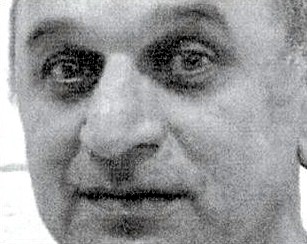
David Lee Fisher
Murderer Brian Kevin Rosenfeld
Murderer · USA · 1985
Brian Kevin Rosenfeld Brian Kevin Rosenfeld was sentenced to three concurrent l…
23 victims
Brian Kevin Rosenfeld
Murderer · USA · 1985
Brian Kevin Rosenfeld Brian Kevin Rosenfeld was sentenced to three concurrent l…
23 victims
 Marvin Gray
Murderer · USA · 1975
Marvin Gray was convicted killer who claimed responsibility for 23 slayings and…
23 victims
Marvin Gray
Murderer · USA · 1975
Marvin Gray was convicted killer who claimed responsibility for 23 slayings and…
23 victims
 Yahweh ben Yahweh
Murderer · USA · 1980
Yahweh ben Yahweh was born and legally named Hulon Mitchell Jr. (October 27, 19…
23 victims
Yahweh ben Yahweh
Murderer · USA · 1980
Yahweh ben Yahweh was born and legally named Hulon Mitchell Jr. (October 27, 19…
23 victims
 Russell Ellwood
Murderer · USA · 1991
Russell Ellwood was a former taxi driver. Authorities suspected him of killing…
20 victims
Russell Ellwood
Murderer · USA · 1991
Russell Ellwood was a former taxi driver. Authorities suspected him of killing…
20 victims
 Alec Kreider
Homicide · USA · 2007
Alec Devon Kreider (born February 4, 1991) was a Lancaster County, Pennsylvania…
3 victims
Alec Kreider
Homicide · USA · 2007
Alec Devon Kreider (born February 4, 1991) was a Lancaster County, Pennsylvania…
3 victims
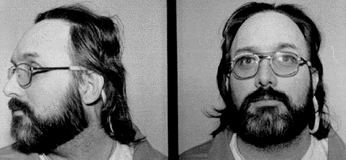 John Albert Taylor
Murderer · USA · 1988
John Albert Taylor (c. 1960) was executed by firing squad in Utah on January 26…
1 victim
John Albert Taylor
Murderer · USA · 1988
John Albert Taylor (c. 1960) was executed by firing squad in Utah on January 26…
1 victim
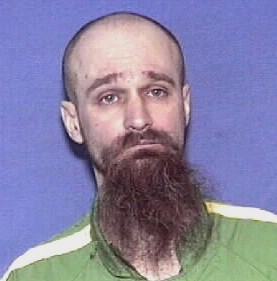 Edward Tenney
Serial killer · USA · 1992
Edward Tenney Edward Tenney was sentenced to death. That sentence had been stay…
3 victims
Edward Tenney
Serial killer · USA · 1992
Edward Tenney Edward Tenney was sentenced to death. That sentence had been stay…
3 victims
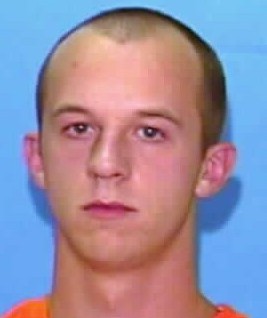 Joshua David Nelson
Murderer · USA · 1995
Joshua David Nelson was convicted in Lee County, Florida, for offenses connecte…
1 victim
Joshua David Nelson
Murderer · USA · 1995
Joshua David Nelson was convicted in Lee County, Florida, for offenses connecte…
1 victim
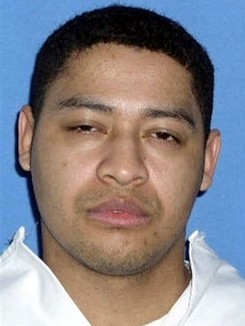 Kenneth Parr
Murderer · USA · 1998
Name: Kenneth Parr · TDCJ Number: 999312 · Date of birth: 01/16/1980 · Age at r…
1 victim
Kenneth Parr
Murderer · USA · 1998
Name: Kenneth Parr · TDCJ Number: 999312 · Date of birth: 01/16/1980 · Age at r…
1 victim
- Gender
- male
- Country
- USA
- Location
- Bedford County, Virginia, USA
- Date of birth
- 1941
- Age at first offence
- 42
- Characteristics
- murder for hire, attempt to collect insurance money
- Victim profile
- David Wilkey (male, 18)
- Method of murder
- Shooting
- Date(s) of murder
- November 21, 1983
- Years active
- 1983
- Date of arrest
- November 1986
- Status
-
Executed
Executed by lethal injection in Virginia on March 25, 1999
Case overview
David Lee Fisher was executed by lethal injection in Virginia on March 25, 1999. He was sentenced to death for the 1983 murder of David Wilkey after a capital murder trial in Bedford County, Virginia. The case involved a plan for Fisher to secure life insurance and hire another man, Bobby Mulligan, to kill Wilkey while presenting the death as accidental.
Timeline
- 1982 (late) — David Lee Fisher met David Wilkey at a motel in Charlotte, North Carolina; Fisher appeared to befriend Wilkey.
- 1982 — Fisher and Wilkey became roommates.
- September 1983 — Fisher obtained a $50,000 life insurance policy on Wilkey with Kentucky Central Life Insurance Company, including a double indemnity clause for death by accident; the application was taken by Kenneth Daren Tietsort in Charlotte.
- September 27, 1983 — The policy was issued with the beneficiary shown as Wilkey’s estate.
- October 11, 1983 — The company refused to approve a request to change the primary beneficiary, questioning the genuineness of Wilkey’s change-of-beneficiary form.
- October 24, 1983 — The company reversed its position and approved the change of beneficiary.
- November 21, 1983 — A hunting trip took place in Bedford County, Virginia, in which Bobby Mulligan shot and killed Wilkey; Fisher and Mulligan both gave statements describing an accidental discharge.
- December 19 (1983) — Fisher and Mulligan were tried in general district court and were fined for misdemeanors; both men were permitted to return to North Carolina.
- Two days after November 21, 1983 — Fisher filed a claim for the $100,000 accidental death benefit on the insurance policy on Wilkey’s life.
- May 1984 — Fisher went to John Manning’s office in Greensboro, North Carolina and demanded payment, threatening to sue the company and claim punitive damages.
- After May 1984 — Fisher accepted a check for $25,000 from the attorney in exchange for a release of his claim against the company; he then paid $7,000 to Mulligan.
- Early 1985 — Mulligan suffered a “nervous breakdown” and confessed the murder to his parents.
- November 1986 — Federal Bureau of Investigation agents arrested Mulligan and he made a full confession of the details of the crime.
- November 1986 — The Bedford County Grand Jury indicted both Mulligan and Fisher for capital murder.
- 1985 (late) — The FBI began an independent investigation of the crime and used Gerald Steadham to gather incriminating admissions from Fisher.
- Five occasions during the ensuing year — Steadham, “wired” by the FBI, met Fisher in various Charlotte coffee houses; the conversations were recorded on tape and transcribed.
- November 1987 — David Lee Fisher was sentenced to death for the 1983 murder of David Wilkey.
- March 25, 1999 — Fisher was executed by lethal injection in Virginia.
Background
David Lee Fisher was born Leeman Curtis Fortner and underwent a name change when he enrolled in the federal witness protection program after being involved in organized crime. Fisher had 25 previous convictions. Fisher met David Wilkey at a motel in Charlotte, North Carolina in late 1982. Wilkey moved into Fisher’s apartment and occasionally worked for him. Fisher was in the business of transporting bodies for a funeral home and for the coroner.
Wilkey had a ninth-grade education and was 18 years old at the time of his death. Wilkey’s parents had separated in Norfolk, Virginia when Wilkey was three months old, and Wilkey’s mother moved to Florida with him. When Wilkey was 17, he left his mother’s home and went to Norfolk in a fruitless search for his father, and then went to live in Charlotte with a cousin of his father.
Fisher devised a plan in which Wilkey would become close to a young woman named Bonnie Jones. Fisher would obtain an insurance policy on Jones’s life and Wilkey would kill Jones for a share of the insurance proceeds. Fisher bought Wilkey a car and provided money for Wilkey to date Bonnie, but Wilkey fell in love with Bonnie and backed out of Fisher’s scheme. Wilkey and Bonnie planned to return to Florida to be married in the first week of December 1983.
In Bedford County, Virginia, on the opening day of deer season in Virginia, Fisher’s plan involved a hunting party intended to make the visit appear natural and to include a 16-year-old son of Fisher’s ex-wife, Jody Ayers.
The offence
Fisher’s plan included arranging for Bobby Mulligan to shoot Wilkey during a hunting trip so that the killing would appear accidental. Fisher proposed that if Mulligan agreed to shoot Wilkey while they were on a hunting trip, Fisher would insure Wilkey’s life and divide the proceeds with Mulligan.
Fisher also approached Gerald Steadham with a proposal to push Wilkey off a ledge while on a fishing trip. Fisher accompanied Steadham to an insurance office where Fisher obtained an insurance policy on Wilkey’s life.
Fisher had no legitimate insurable interest in Wilkey, but he nevertheless obtained a policy on Wilkey’s life with Kentucky Central Life Insurance Company for $50,000 with a double indemnity clause in case of death by accident. Fisher paid an $89.50 initial premium.
The insurance policy application was submitted in September 1983 and was taken by Kenneth Daren Tietsort. It showed Fisher as owner and beneficiary of the policy. Fisher identified himself as Wilkey’s “guardian.” The company wrote to Tietsort to ascertain whether Fisher was in fact a court-appointed guardian. Tietsort telephoned the company and suggested the beneficiary be shown as Wilkey’s estate until Fisher’s status could be verified. The policy was issued on September 27, 1983 with Wilkey’s estate as the beneficiary.
In October 1983, the company received three additional documents from Tietsort: an “amendment to application” signed by Tietsort and two “requests for change of primary beneficiary,” purportedly signed by David Fisher and David Wilkey. These papers requested that the beneficiary be changed from Wilkey’s estate to “David Fisher, personal friend.” On October 11, the company refused to approve the change, questioning the genuineness of Wilkey’s change-of-beneficiary form. On October 24, the company reversed its position and approved the change of beneficiary; the evidence did not reveal what motivated this change of position.
Fisher told Mulligan that he had experienced some problem getting an insurance policy on Wilkey’s life, but that he had persuaded an insurance man to “take care of it” for a promise of one-third of the proceeds. Fisher promised Mulligan $38,000, more than one-third, because Mulligan was to do the actual killing.
The hunting trip took place in Bedford County on November 21, 1983. The party included Wilkey, Fisher, Mulligan, and Jody Ayers, a 16-year-old son of Fisher’s ex-wife, to be brought along to make the visit to Bedford County “look natural.” Fisher provided guns for the party and planned later to dispose of the murder weapon and try to have Wilkey’s body cremated.
During the hunting trip, while walking through the woods, Mulligan became reluctant, but Fisher encouraged him to persevere. About 3:30 p.m., while Jody was resting some distance away, Wilkey ran down a hill after a deer. Mulligan followed him with Fisher close by. Mulligan shot Wilkey in the back with a 12 gauge slug, mortally wounding him.
Fisher yelled to Jody to run for help, and later, according to a statement Fisher made to Steadham, Fisher ran up to Wilkey, who was lying face down on the ground, and told him: “if I had my .38 I'd blow your . . . head off.” Mulligan’s later testimony stated that Fisher attempted to insert his hand into the wound to stop Wilkey’s heart. Steadham also testified that Fisher later admitted this to him.
When Jody returned with Bedford County officers and the rescue squad, Wilkey was dead. Fisher and Mulligan both gave statements asserting that Mulligan had slipped while running downhill after Wilkey and that his shotgun had discharged accidentally.
Bedford County authorities treated the shooting as a hunting accident at the time and charged Fisher and Mulligan with misdemeanors. When these cases were tried in general district court on December 19, both men were fined and permitted to return to North Carolina. The murder weapon was returned to Fisher.
Two days later, Fisher filed a claim for the $100,000 accidental death benefit on the insurance policy he held on Wilkey’s life.
Investigation
The insurance company initiated an investigation of the circumstances surrounding Wilkey’s death and referred the matter to John Manning, an attorney in Greensboro, North Carolina.
In late 1985, the FBI began an independent investigation of the crime and used Gerald Steadham to gather incriminating admissions from Fisher. Over five occasions during the ensuing year, Steadham, “wired” by the FBI, met with Fisher in various Charlotte coffee houses and engaged him in lengthy conversations during which Fisher occasionally discussed the killing of Wilkey. These conversations were recorded on tape and transcribed. The tapes were played in full as evidence at Fisher’s trial.
Fisher apparently had sources of information within the police force and discovered that Steadham had informed against him. Fisher threatened Steadham’s life, which caused Steadham to take his story to the FBI, but Fisher and Steadham continued to meet and talk.
Arrest and confessions
In early 1985, Mulligan suffered a “nervous breakdown” and confessed the murder to his parents. Mulligan was arrested by agents of the Federal Bureau of Investigation in November 1986 and made a full confession of all the details of the crime.
During the same month, the Bedford County Grand Jury indicted both Mulligan and Fisher for capital murder.
Trial
Both Mulligan and Fisher were tried in relation to the capital murder indictment. Mulligan entered a guilty plea and was awaiting sentencing at the time of Fisher’s trial. Mulligan testified for the Commonwealth.
Both Mulligan and his attorney testified that Mulligan had received no promises in exchange for his testimony. Gerald Steadham also testified against Fisher.
After Fisher described the killing to Steadham, Fisher offered him $5,000 to kill Mulligan. Fisher said Mulligan was beginning to talk about the killing and was claiming that Fisher owed him more money. After some time, Steadham decided to tell the Charlotte police of Fisher’s statements.
At Fisher’s trial, the tapes recorded by the FBI were played in full as evidence. The court’s proceedings included discussion of transcripts: while the tapes were played in their entirety, the jury only received typed transcripts of the sections of the tapes that the Commonwealth wished to highlight.
Fisher appealed the judge’s decision to let the jury view transcripts of only certain, incriminating portions of the tapes, but the appeal was denied.
Sentencing
In November 1987, David Lee Fisher was sentenced to death for the 1983 murder of David Wilkey.
Appeals
When the case reached the Supreme Court, Justice Brennan and Justice Marshall dissented and threw out the sentence stating:
“Adhering to our views that the death penalty is in all circumstances cruel and unusual punishment prohibited by the Eighth and Fourteenth Amendments, Gregg v. Georgia, 428 U.S. 153, 227, 231, 96 S.Ct. 2909, 2950, 2973 49 L.Ed.2d 859 (1976), we would grant certiorari and vacate the death sentence in this case.”
The Supreme Court’s final decision upheld the death sentence.
Fisher also earlier appealed to the U.S. Supreme Court alleging juror misconduct. One juror had been a lone holdout to give Fisher life, but relented on the advice of her husband.
Fisher had appealed the judge’s decision to allow the Commonwealth to refute the defense’s statement without a mistrial, and the appeal was denied.
During closing arguments, Fisher’s attorney made the following remarks:
“And I would remind you that it has been brought out to you four score and underlined in red that there are probably still a dozen or so charges pending in North Carolina. Clearly, if you sentence this man to life imprisonment he will never see the sun shine again except through bars, and I think the ends of society will be met. I plead with you, I ask you to let that be your punishment.”
This statement was objected to by the prosecution. The judge permitted the Commonwealth to present a contrasting statement, and the prosecutor stated:
“ I personally state to you as the Commonwealth's Attorney for this county and as an elected official, that is not true, that is not accurate.”
Outcome
David Lee Fisher was executed on March 25, 1999.
A statement by Governor Jim Gilmore regarding the execution of David Lee Fisher on March 25, 1999 included:
“David Lee Fisher secured a life insurance policy on the life of 18 year-old David Wilkey and then arranged for Bobby Mulligan to kill David Wilkey in return for a portion of the insurance proceeds. Mulligan shot and killed David Wilkey. A jury convicted Fisher of murder for hire and sentenced him to death. After reviewing all of the evidence, the judge imposed the death sentence. The conviction and death sentence were upheld on multiple appeals.
"Upon a thorough review of the Petition for Clemency, the numerous court decisions regarding this case, and the circumstances of this matter, I decline to intervene."”
Aftermath and related details
In Jarratt, David Lee Fisher, 57, was executed by lethal injection for arranging a murder to collect on a $100,000 life insurance policy.
Fisher was executed for hiring another man to kill 18-year-old David William Wilkey while all three were on a hunting trip on Nov. 21, 1983. Wilkey and Fisher were residents of Charlotte, N.C. Wilkey was shot in the back with a 12-gauge shotgun. Fisher contended that Bobby Brice Mulligan acted on his own when he shot Wilkey.
The scheme unraveled in 1985 when a third man familiar with the plot, Gerald Steadham, went to the FBI. Mulligan confessed to shooting Wilkey and pleaded guilty. Mulligan was sentenced to life in prison.
Fisher was sentenced to death after his capital murder trial in Bedford County. He earlier appealed to the U.S. Fisher became the fourth condemned inmate to be put to death this year in Virginia, and the 63rd overall since the state resumed executions on Aug. 10, 1982. Texas exceeded Virginia in the number of condemned inmates it puts to death. Fisher was the first of seven executions set for the next seven weeks, putting the state on a pace to break its record of 17 executions in a single year established early in the century. Fisher also became the 28th condemned inmate to be put to death in the USA this year, and the 528th overall since America resumed executions on Jan. 17, 1977.
People involved
- David Lee Fisher — the defendant; he was born Leeman Curtis Fortner and later used a different name after entering the federal witness protection program; he was convicted of conspiracy to kill Wilkey after Mulligan testified that Fisher agreed to pay him money from the insurance settlement; he was sentenced to death for the 1983 murder of David Wilkey.
- David Wilkey — victim; an 18-year-old from Charlotte, North Carolina; he was shot in the back with a 12-gauge shotgun on November 21, 1983 during a hunting trip.
- Bobby Mulligan — co-defendant and shooter; he entered a guilty plea and testified for the Commonwealth; he later confessed in 1985/1986 and was sentenced to life in prison.
- Gerald Steadham — another man approached by Fisher; he testified against Fisher and later went to the FBI.
- Jody Ayers — 16-year-old son of Fisher’s ex-wife who was taken on the hunting trip.
- Bonnie Jones — young woman whom Fisher initially planned to have Wilkey approach as part of an earlier scheme; Wilkey was to kill her for a share of insurance proceeds.
- Kenneth Daren Tietsort — the insurance agent in Charlotte who took the application; he also signed an “amendment to application” and purportedly signed requests for change of primary beneficiary.
- John Manning — an attorney in Greensboro, North Carolina to whom the insurance investigation referred the matter.
- Harold Babich — not present in the facts provided.
- Justice Brennan — dissenting Supreme Court Justice who stated that certiorari should be granted and the death sentence vacated.
- Justice Marshall — dissenting Supreme Court Justice who joined Justice Brennan’s statement.
- Governor Jim Gilmore — governor whose clemency decision declined to intervene, stating the quoted remarks.
- Bobby Brice Mulligan — referenced in later account as the same individual who shot Wilkey.
- David William Wilkey — referenced in later account as the victim; the earlier account names him David Wilkey.
- Bonnie Jones — referenced as the young woman in Fisher’s earlier insurance-and-killing plan.
Spotted an error, or have more information about this case?