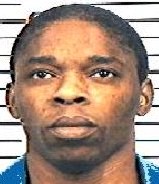
Bobby Joe Fields
Murderer Brian Kevin Rosenfeld
Murderer · USA · 1985
Brian Kevin Rosenfeld Brian Kevin Rosenfeld was sentenced to three concurrent l…
23 victims
Brian Kevin Rosenfeld
Murderer · USA · 1985
Brian Kevin Rosenfeld Brian Kevin Rosenfeld was sentenced to three concurrent l…
23 victims
 Russell Ellwood
Murderer · USA · 1991
Russell Ellwood was a former taxi driver. Authorities suspected him of killing…
20 victims
Russell Ellwood
Murderer · USA · 1991
Russell Ellwood was a former taxi driver. Authorities suspected him of killing…
20 victims
 Robert Martines Perez
Murderer · USA · 1994
Name: Robert Martines Perez · Other name used in proceedings: Robert Martinez P…
15 victims
Robert Martines Perez
Murderer · USA · 1994
Name: Robert Martines Perez · Other name used in proceedings: Robert Martinez P…
15 victims
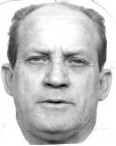 Billy Frank Vickers
Murderer · USA · 1993
Billy Frank Vickers Vickers was executed by lethal injection in Texas on Januar…
14 victims
Billy Frank Vickers
Murderer · USA · 1993
Billy Frank Vickers Vickers was executed by lethal injection in Texas on Januar…
14 victims
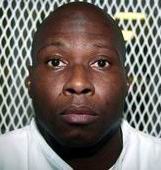 Derrick Leon Jackson
Murderer · USA · 1988
Derrick Leon Jackson was executed by lethal injection in Texas on July 20, 2010…
2 victims
Derrick Leon Jackson
Murderer · USA · 1988
Derrick Leon Jackson was executed by lethal injection in Texas on July 20, 2010…
2 victims
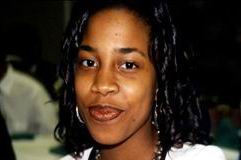 Adrienne Hickson
Murderer · USA · 2005
Adrienne Emily Hickson was a 24-year-old law student and had been a student at…
1 victim
Adrienne Hickson
Murderer · USA · 2005
Adrienne Emily Hickson was a 24-year-old law student and had been a student at…
1 victim
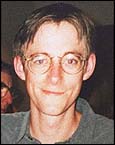 David James Gates
Homicide · New Zealand · 1999
David James Gates was charged in connection with the murder of Gavin Edward Das…
1 victim
David James Gates
Homicide · New Zealand · 1999
David James Gates was charged in connection with the murder of Gavin Edward Das…
1 victim
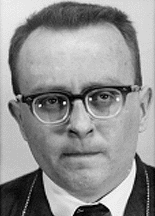 Victor Harry Feguer
Murderer · USA · 1960
Victor Harry Feguer (born in 1935) was executed by hanging in Iowa (federal exe…
1 victim
Victor Harry Feguer
Murderer · USA · 1960
Victor Harry Feguer (born in 1935) was executed by hanging in Iowa (federal exe…
1 victim
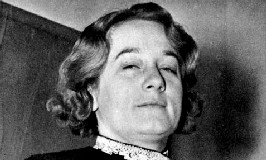 Anna Marie Hahn
Serial killer · USA · 1932
Anna Marie Hahn (née Filser; July 7, 1906 in Bavaria, Germany – December 7, 193…
5 victims
Anna Marie Hahn
Serial killer · USA · 1932
Anna Marie Hahn (née Filser; July 7, 1906 in Bavaria, Germany – December 7, 193…
5 victims
- Gender
- male
- Country
- USA
- Location
- Oklahoma City, Oklahoma, USA
- Date of birth
- November 18, 1963
- Age at first offence
- 30
- Characteristics
- robbery, drugs
- Victim profile
- Louise J. Schem (female, 77)
- Method of murder
- Shooting
- Date(s) of murder
- March 2, 1993
- Years active
- 1993
- Date of arrest
- 2 days after
- Status
-
Executed
Executed by lethal injection in Oklahoma on February 13, 2003
Case details
Bobby Joe Fields was executed by lethal injection in Oklahoma on February 13, 2003.
The offence
Fields was sentenced to die for the 1993 killing of Louise Schem, 77, at her Oklahoma City home.
Prosecutors contended that Fields stole a television set and took a .25 caliber weapon away from the woman, then shot her after she caught him stealing the television set. Defense attorneys argued that the weapon accidentally discharged during a struggle.
Investigation and arrest
Fields was arrested several hours later at his girlfriend’s house.
Fields told police that, thinking Schem was not home, he went to her house to steal her television. When she surprised him with a gun, he jumped at her in self-defense, and they wrestled over the weapon. The struggle spilled out onto the sidewalk, where he pulled the gun from her hands; Fields said the gun went off accidentally, killing her. The police detective who questioned Fields, Johnny Kuhlman, estimated that Fields told “at least five” different versions of what happened on the evening of March 2, and Fields eventually stuck with the story described above.
Background
Fields was 39 at the time of his execution. The case materials described Fields as a cocaine addict.
Fields pleaded guilty in 1994 and was sentenced to die for the 1993 killing of Louise Schem.
Trial
Fields entered a blind plea to the charge of first-degree felony murder. The blind plea was entered in the District Court of Oklahoma County before the Honorable James L. Gullett, District Judge.
The State filed a Bill of Particulars alleging three death-penalty aggravators:
- that the crime was committed to avoid or prevent lawful arrest or prosecution (“murdered to avoid arrest”)
- that Fields was previously convicted of a felony involving the use or threat of violence to the person (“prior violent felony”)
- that Fields constituted a continuing threat to society (“continuing threat to society”)
A sentencing hearing was conducted March 28-29, 1994. On April 7, 1994, the trial court formally sentenced Fields to death, finding that the State had sufficiently proven all three aggravators.
Sentencing
Judge James L. Gullett ordered capital punishment after the sentencing hearing.
The materials also record the aggravators the trial court found proven and that the trial court found these aggravators “far outweigh[ed] any mitigating circumstances.” Fields was sentenced to death by lethal injection. The court’s final pronouncement of its death sentence took place one week later, on April 7, 1994.
Appeals
Direct appeal
Fields v. State, 923 P.2d 624 (Okl.Cr. 1996)
- The Court of Criminal Appeals affirmed the judgment and sentence.
- The opinion states that the trial court’s judgment was “AFFIRMED.”
The direct appeal opinion described multiple propositions of error, including challenges to whether Fields entered his blind plea knowingly and voluntarily, claims of improper or undue influence, claims of ineffective assistance of counsel, and challenges to the sufficiency of the evidence supporting aggravators.
The direct appeal opinion includes a verbatim exchange at the plea hearing: THE COURT: You're swearing under oath the statements you've made in this affidavit are true and correct? DEFENDANT: Yes, sir. COURT: That you did on the 2nd day of March, 1993, at 1324 North Indiana in Oklahoma City, Oklahoma County, that “I, Bobby Joe Fields, went into Louise Schem's house. I thought she wasn't home. It was my intention to burglarize her house and to take her television to support my drug habit. After I went into her house, and as I was trying to unhook the TV, she came at me with a gun. We got in a fight over the gun. In the struggle, I shot her one time, causing her death.” Is that correct? DEFENDANT: Yes, sir.
The direct appeal opinion included these findings from the Court of Criminal Appeals:
- “We find no error here.”
- “The plea taken in this case met all of the requirements of King, and we find that it was knowingly and voluntarily entered.”
- “We further find no indication in the record that the sentence of death was imposed under the influence of passion, prejudice or any other arbitrary factor.”
- “we have determined that the aggravating circumstances alleged here … upon which the death penalty was based were factually substantiated, and amply supported by the evidence presented at trial.”
The direct appeal opinion describes Fields as an admitted cocaine addict and recounts the attempt to obtain money for more crack cocaine and the burglary of Louise Schem’s house.
The direct appeal opinion also included a description of the victim’s gunshot injury from medical examiner testimony: “The gunshot wound entered behind the victim's ear, with a straight line trajectory, and exited out of her mouth, severing her spinal cord in the process.” It also states testimony that “The wound was not a contact wound and the gun was at least 6 to 12 inches away from the victim when it was fired.”
The direct appeal opinion records that Fields alleged mitigation outweighed aggravators and that there was no right to jury sentencing after a guilty plea.
Post-conviction relief
Fields v. State, 946 P.2d 266 (Okl.Cr. 1997) (PCR) After Fields’s murder conviction and death sentence was affirmed on direct appeal, Fields petitioned for postconviction relief. The Court of Criminal Appeals held:
- defendant’s claim that his death sentence was invalid was waived
- defendant was not denied effective assistance of appellate counsel
- defendant’s claim regarding trial court’s alleged bias was barred by res judicata
- defendant was not entitled to evidentiary hearing or discovery Application denied.
Federal habeas corpus
277 F.3d 1203 (10th Cir. January 17, 2002) Bobby Joe Fields appealed the denial of his writ of habeas corpus brought under 28 U.S.C. 2254.
- The Tenth Circuit affirmed the district court’s decision to deny Fields’s habeas petition.
The Tenth Circuit records that a certificate of appealability was granted on four issues:
- whether trial counsels’ pressure of Fields to accept a blind guilty plea resulted in its being involuntary
- whether trial counsel rendered ineffective assistance in advising Fields to enter a blind guilty plea
- whether the same evidence may support different death penalty aggravators
- whether there was sufficient evidence to support the “prior violent felony” aggravator
The Tenth Circuit decision also states that, after walking through these issues, there was no basis for habeas relief and the district court’s decision was affirmed.
Clemency
Gov. Brad Henry rejected a clemency recommendation for Bobby Joe Fields.
After reviewing the record and information presented at Fields’ clemency hearing, Henry wrote: “I have determined that clemency should be denied in this case.”
Henry’s decision occurred after the Pardon and Parole Board recommended clemency by a vote of 3-1 on Jan. 6, with the recommendation that Fields’ sentence be commuted to life without parole. The next day, outgoing Gov. Frank Keating granted a stay to allow time for Henry to review the case and make the decision.
The materials include these additional statements:
- Press secretary Kym Koch said Henry viewed Fields’ clemency hearing on videotape and asked “a lot of questions” of attorneys.
- Koch said: “It was a difficult decision,” and that Henry looked at the history of all the appeals court decisions in the case and saw no court sentiment that the conviction should be overturned.
- Attorney General Drew Edmondson said Henry made the correct decision and that no evidence was presented to justify the parole board’s clemency recommendation. Edmondson said: “I appreciate the governor's careful consideration of this issue and see nothing that should stand in the way of this sentence being carried out,” and “I appreciate the governor's careful consideration of this issue and see nothing that should stand in the way of this sentence being carried out,” Edmondson also said: “I appreciate the governor's careful consideration of this issue and see nothing that should stand in the way of this sentence being carried out,” and further said: “Bobby Joe Fields was properly convicted and sentenced,” and “His appeals have been exhausted and the governor has rightfully denied clemency. It is time the execution is carried out.”
Parole board Chairwoman Stephanie Chappelle voted for clemency and said: “I understand how the governor has made his decision, but my initial review was that that was not his (Fields') intent, to cause bodily harm.”
Parole board member Susan Bussey voted against clemency and said: “there was nothing presented during the hearing that warranted commuting Fields' sentence.”
Execution
Fields was scheduled to be executed Thursday evening.
He died at 6:05 p.m., three minutes after receiving a lethal dose of drugs at the Oklahoma State Penitentiary in McAlester.
The materials record statements made in Fields’s final moments:
- Fields told his two attorneys witnessing the execution to “stay strong. You all keep fighting.”
- Fields said to his sister, Geraldine Banks: “Baby girl, stay strong and hold the family together. I love you all.”
- Fields said: “Cousin, if you can, try to look after my boy,” about his estranged son.
Fields smiled at his sister and his cousin, then the materials describe Banks weeping as Fields’s eyes closed and his head jerked slightly before he became still.
Other details
Fields pled guilty in 1994 and was sentenced to death for a March 2, 1993 killing of Louise Schem at her Oklahoma City home.
The materials record that a passerby heard the victim yell for help, stopped his car, heard a gunshot, and saw Schem fall, but was unable to identify Fields as the shooter. The materials also describe a witness Robert Vallejo and testimony that he saw them struggling on the sidewalk, heard “Help! Help!”, heard a gunshot, and watched Schem fall.
The materials record that after the killing, Fields took the gun from Schem and sold it to the neighbor for $40 and purchased more crack cocaine with the money.
The materials record that Fields was captured and confessed to committing the crime as charged, and that his prior conviction used for aggravator proof was robbery by force. The materials also describe an earlier 1986 purse-snatching conviction and describe it as “robbery by force,” involving a 58-year-old woman and her daughter.
The materials include references to a request to withdraw the plea and a hearing where Judge Gullett denied the motion to withdraw.
The materials include that Fields raised fifteen propositions of error on direct appeal and that the Court of Criminal Appeals considered all of the propositions and supplemental authorities.
The materials include scheduled execution alerts and references to Oklahoma’s execution schedule.
The materials include “Oklahoma Execution Alert Bobby Joe Fields (OK) - February 13, 2003” and “Man Executed in 1993 Slaying of City Woman By Clayton Bellamy - Daily Oklahoman AP February 14, 2003,” and “Oklahoma NCADP - Execution Alert Bobby Joe Fields.”
Spotted an error, or have more information about this case?