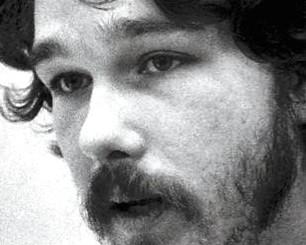
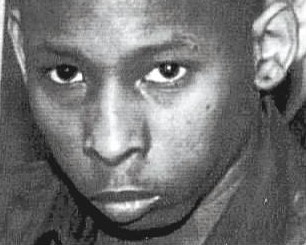
Edward Fitzgerald
Murderer Ervil LeBaron
Murderer · USA · 1972
Ervil Morrell LeBaron (1925 to August 16, 1981) was the leader of a polygamous…
35 victims
Ervil LeBaron
Murderer · USA · 1972
Ervil Morrell LeBaron (1925 to August 16, 1981) was the leader of a polygamous…
35 victims
 Brian Kevin Rosenfeld
Murderer · USA · 1985
Brian Kevin Rosenfeld Brian Kevin Rosenfeld was sentenced to three concurrent l…
23 victims
Brian Kevin Rosenfeld
Murderer · USA · 1985
Brian Kevin Rosenfeld Brian Kevin Rosenfeld was sentenced to three concurrent l…
23 victims
 Marvin Gray
Murderer · USA · 1975
Marvin Gray was convicted killer who claimed responsibility for 23 slayings and…
23 victims
Marvin Gray
Murderer · USA · 1975
Marvin Gray was convicted killer who claimed responsibility for 23 slayings and…
23 victims
 Yahweh ben Yahweh
Murderer · USA · 1980
Yahweh ben Yahweh was born and legally named Hulon Mitchell Jr. (October 27, 19…
23 victims
Yahweh ben Yahweh
Murderer · USA · 1980
Yahweh ben Yahweh was born and legally named Hulon Mitchell Jr. (October 27, 19…
23 victims
 Steven Benson
Murderer · USA · 1985
Steven Benson was a 33-year-old Florida businessman who was arrested and charge…
2 victims
Steven Benson
Murderer · USA · 1985
Steven Benson was a 33-year-old Florida businessman who was arrested and charge…
2 victims
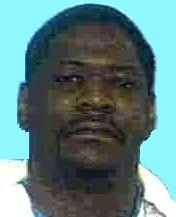 William Henry Smith
Murderer · USA · 1987
William Henry Smith was executed by lethal injection in Ohio on March 8, 2005.…
1 victim
William Henry Smith
Murderer · USA · 1987
William Henry Smith was executed by lethal injection in Ohio on March 8, 2005.…
1 victim
 James Allridge
Murderer · USA · 1985
James Vernon Allridge (also written as James Vernon Allridge III) was convicted…
1 victim
James Allridge
Murderer · USA · 1985
James Vernon Allridge (also written as James Vernon Allridge III) was convicted…
1 victim
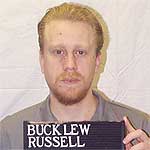 Russell Bucklew
Murderer · USA · 1996
Russell E. Bucklew was convicted in State of Missouri v. Russell E. Bucklew, 97…
1 victim
Russell Bucklew
Murderer · USA · 1996
Russell E. Bucklew was convicted in State of Missouri v. Russell E. Bucklew, 97…
1 victim
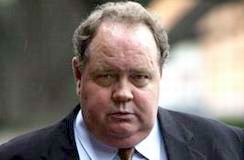 Bruce Burrell
Murderer · Australia · 1995
Bruce Allan Burrell was an Australian convicted double murderer who was sentenc…
2 victims
Bruce Burrell
Murderer · Australia · 1995
Bruce Allan Burrell was an Australian convicted double murderer who was sentenc…
2 victims
- Gender
- male
- Country
- USA
- Location
- Chesterfield County, Virginia, USA
- Date of birth
- 1957
- Age at first offence
- 23
- Characteristics
- rape, torture, drugs
- Victim profile
- Patricia D. Cubbage, 22 (drug dealer and police informer)
- Method of murder
- St abbing with knife 184 times
- Date(s) of murder
- November 13, 1980
- Years active
- 1980
- Date of arrest
- —
- Status
-
Executed
Executed by electrocution in Virginia on July 23, 1992
Overview
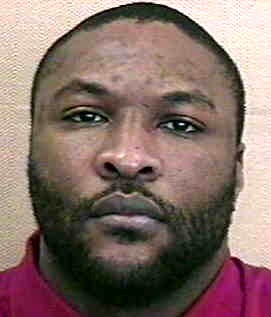
Edward B. Fitzgerald Sr. was put to death in Virginia’s electric chair for the 1980 torture-killing of Patricia D. Cubbage. Fitzgerald was convicted of capital murder, armed robbery, rape, abduction with intent to defile, and burglary, and the jury recommended death for the capital offense and life imprisonment for the other offenses. The court followed these recommendations.
Timeline
- July 23, 1992 — Fitzgerald was executed by electrocution in Virginia; he was pronounced dead at 11:12 p.m.
- July 25, 1992 — The New York Times published a report describing the execution.
- May 9, 1991 — The United States Court of Appeals, Fourth Circuit, argued a habeas appeal by Edward B. Fitzgerald.
- Aug. 26, 1991 — The United States Court of Appeals, Fourth Circuit, decided the habeas appeal and affirmed dismissal.
- November 13, 1980 — Fitzgerald and Daniel Johnson broke into a home where Patricia Cubbage was staying.
- 1980 — Cubbage was abducted from home in Chesterfield County; she was killed after being raped, tortured, and stabbed; Fitzgerald and Daniel Johnson left the house in Johnson’s car and forced Cubbage into nearby woods.
- 1981 — Fitzgerald was convicted of the gruesome torture-killing of Patricia D. Cubbage in Chesterfield County Circuit Court.
- 1982 — The Virginia Supreme Court affirmed Fitzgerald’s convictions and sentences in Fitzgerald v. Commonwealth, 223 Va. 615, 292 S.E.2d 798 (1982).
- 1987 — State collateral proceedings were unsuccessful in Fitzgerald v. Bass, 4 Va. App. 371, 358 S.E.2d 576 (1987).
- 1988 — State collateral proceedings were unsuccessful in Fitzgerald v. Bass, 6 Va. App. 38, 366 S.E.2d 615 (1988) (en banc).
- 1991 — Fitzgerald sought federal habeas corpus relief under 28 U.S.C. § 2254.
- Fall 1991 — A Virginia Correctional Department application was submitted for participation as a witness for the condemned.
The offence
On the night of November 13, 1980, Fitzgerald and Daniel Johnson broke into a home where Patricia Cubbage was staying. Earlier that night, Fitzgerald complained that Cubbage had “ripped him off.” Once in the home, Fitzgerald slashed Cubbage with his machete and raped her.
When Cubbage pleaded to be taken to a hospital, Fitzgerald denied her request by stating that he “had came there to do a job and he was going to finish it.” Fitzgerald had Johnson help Cubbage get dressed. Fitzgerald took Cubbage’s purse and the three of them left the house in Johnson’s car.
Fitzgerald instructed Johnson to turn off a main road onto a dirt road, and they forced Cubbage into some nearby woods. Fitzgerald compelled Cubbage to perform oral sodomy on him. He then repeatedly stabbed Cubbage with the machete and a knife.
Fitzgerald at one point inserted the machete into Cubbage’s vagina and rectum. Fitzgerald kicked Cubbage several times and left her in the woods where she bled to death from approximately 184 stab wounds.
During the killing, Fitzgerald hacked a tic-tac-toe pattern into Cubbage’s back while she was conscious. Cubbage ultimately died from blood loss after being tortured with a machete and knife.
Fitzgerald’s trial theory was hybrid: he attempted to shift the blame to his co-defendant and also argued he could not have formed the requisite intent because of the alcohol and drugs he had ingested during the evening of the killing. Prosecutors maintained that Fitzgerald killed Cubbage while trying to rob her of drugs.
Victims
Patricia D. Cubbage
Patricia D. Cubbage was described as a 22-year-old drug dealer and police informer, and was also described as a prostitute. She was tortured by machete wielding Fitzgerald and an accomplice after being abducted from home in Chesterfield County in 1980. Her body was found in Chesterfield County in 1980.
She was hacked 184 times by Fitzgerald’s machete, including a tic-tac-toe pattern hacked in her back while she was conscious. Her approximate 184 stab wounds caused her death by blood loss after she was left in the woods.
Investigation and evidence
Wilbur Caviness was a principal witness against Fitzgerald. Caviness testified at trial that Fitzgerald stated that he killed Cubbage because she had “snitched on him and snitched on a friend of his also.”
Fitzgerald presented a defense that included a claim of impaired intent due to alcohol and drugs. Fitzgerald admitted at trial to having consumed more than 12 beers, having smoked marijuana, and having taken LSD and a tranquilizer.
Arrest
Fitzgerald was eventually apprehended after the killing.
Trial
Fitzgerald was tried in Chesterfield County, Virginia. The principal witnesses against him were his co-defendant Daniel Johnson and Wilbur Caviness.
Fitzgerald and Daniel Johnson had broken into the home of Cubbage; Fitzgerald raped and repeatedly stabbed her with a machete and a knife, forced her into nearby woods, compelled oral sodomy, and left her to bleed to death from the approximately 184 wounds.
Charges
Fitzgerald was convicted of:
- capital murder
- armed robbery
- rape
- abduction with intent to defile
- burglary
Convictions and jury recommendation
The jury recommended that Fitzgerald be sentenced to death for the capital offense and to life imprisonment for the other offenses.
Direct appeal and state supreme court
Fitzgerald took a direct appeal to the Virginia Supreme Court, which affirmed his convictions and sentences in Fitzgerald v. Commonwealth, 223 Va. 615, 292 S.E.2d 798 (1982).
The United States Supreme Court denied Fitzgerald’s petition for certiorari.
Appellate and collateral proceedings (state)
Fitzgerald began state collateral proceedings, which proved unsuccessful. These included Fitzgerald v. Bass, 4 Va. App. 371, 358 S.E.2d 576 (1987) and Fitzgerald v. Bass, 6 Va. App. 38, 366 S.E.2d 615 (1988) (en banc).
At the end of those proceedings, the Virginia Supreme Court refused his petition for appeal. In response to a motion by the Commonwealth, the Virginia Supreme Court elaborated on its earlier ruling by stating that issues related to Caviness’s testimony and to a challenged jury instruction on intent were procedurally barred.
A petition for a writ of certiorari was denied by the United States Supreme Court.
Sentencing
The trial court imposed the jury’s recommended sentences: death for the capital offense and life imprisonment for the other offenses.
In describing sentencing, Virginia law permitted a jury to impose death based either on the vileness of a crime or the future dangerousness of a defendant or on both factors. The trial court initially refused to accept the jury’s verdict form due to confusion over whether the jury found both aggravating circumstances or only one. The confusion arose because the jury had not struck out the “and/or” provision pertaining to the aggravating circumstances on the jury form. The judge asked the foreman whether the jury intended to select “and,” and the foreman responded that “or” was the jury’s choice.
After the jury redeliberated and again chose “or” without indicating a factor, the judge reinstructed the jury, and after again deliberating it chose vileness. A poll of the jurors indicated unanimity on the vileness factor.
Virginia Code Ann. § 19.2-264.4(c) defined vileness as “torture, depravity of mind or aggravated battery to the victim.”
Appeals (federal habeas)
Fourth Circuit habeas decision
Edward B. Fitzgerald sought habeas corpus relief under 28 U.S.C. § 2254 from his conviction and sentencing for capital murder, armed robbery, rape, abduction with intent to defile, and burglary. The United States Court of Appeals, Fourth Circuit, found no error in the district court’s dismissal and affirmed the judgment.
The case citation was 943 F.2d 463, with docket number 90-4009, styled: Edward B. Fitzgerald, Petitioner-Appellant, v. Charles E. Thompson, Warden, Respondent-Appellee.
Arguments about Wilbur Caviness testimony
Fitzgerald contended that the Commonwealth’s handling of the testimony of Wilbur Caviness violated his due process rights due to a failure prior to trial to disclose relevant background information on Caviness such as his criminal history. Fitzgerald’s counsel had sought impeachment information; the Commonwealth responded that it would not turn over impeachment evidence because it was not a proper subject of discovery. The appellate court concluded it was procedurally barred from addressing the first Caviness claim because of independent and adequate state procedural default rules and lack of cause for the default.
Fitzgerald also contended that the Commonwealth failed to correct inaccurate testimony given by Caviness at trial. The appellate court proceeded to the merits after giving Fitzgerald “the benefit of the doubt.”
Fitzgerald asserted Caviness testified falsely in three ways:
- Caviness told the jury he had only one felony conviction when he had two or three prior felony convictions.
- Caviness told the jury that no charges were pending against him though two charges were pending against him in another county.
- Caviness denied that he had been offered anything for his testimony.
The appellate court described factual errors in Caviness’s testimony and noted that state habeas courts concluded Caviness did not commit perjury. It stated the errors stemmed from mistaken beliefs about the legal classification of prior convictions and the status of pending charges, and that the Virginia Court of Appeals found no reasonable likelihood that the false testimony could have affected the judgment of the jury.
The appellate court stated that for purposes of impeachment, the difference between one felony conviction and two or three convictions was not critical, and that the jury was on notice Caviness was a convicted felon. It also stated the jury was aware Caviness had been convicted of at least one misdemeanor involving moral turpitude. It addressed pending charges and reimbursements for expenses incurred in coming to court to testify, describing the payments as “minor” and “customary,” amounting to less than $100, and found no quid pro quo.
It also addressed that Caviness may have worked as an informant in other jurisdictions and concluded that did not undermine the accuracy of his denial of receiving benefits in return for his testimony. The appellate court concluded that the correction of those inaccuracies would provide only cumulative impeachment evidence.
The appellate court also stated Caviness was not the central prosecution witness because Daniel Johnson was the chief witness, and that Caviness’s testimony corroborated Johnson’s. It further noted that Caviness’s testimony revealed aspects of the crime not public knowledge, and that in context the inaccuracies did not affect the jury verdict.
Jury instruction on intent; ineffective assistance
Fitzgerald contended he received ineffective assistance of counsel because trial attorneys failed to object to a jury instruction: “Each person is presumed to intend the natural and probable consequences of his acts.”
Fitzgerald argued the instruction violated Sandstrom v. Montana by creating a conclusive or burden-shifting presumption on intent. The appellate court discussed procedural default but addressed the claim on the merits and held Fitzgerald had not demonstrated actual prejudice.
The appellate court stated Fitzgerald had overwhelming evidence demonstrating capability to form the requisite intent and described actions showing intent and physical dexterity. It referenced comments Fitzgerald made to Cubbage prior to the murder:
- Fitzgerald complained that Cubbage had “ripped him off.”
- Fitzgerald stated to Cubbage that “he had came there to do a job and he was going to finish it.”
The appellate court also cited actions including directing Johnson to drive to an isolated area, covering Cubbage’s body with leaves, laundering blood-stained clothes, carving linear slashes resembling tic-tac-toe designs on her body, and putting an intricate tattoo on Johnson’s arm.
The appellate court held Fitzgerald failed to show prejudice from counsel’s failure to object, concluding there was no doubt he possessed the ability to form the intent necessary and no doubt he intended to do precisely what he did.
Other ineffective assistance claims about jury instructions
Fitzgerald raised two additional claims of ineffective assistance of counsel related to jury instructions:
- counsel did not seek an instruction that every reasonable doubt as to the grade of an offense would be resolved in favor of the defendant.
- counsel failed to seek an instruction that every unlawful homicide is presumed to be murder in the second degree.
The appellate court concluded trial counsel made reasonable tactical decisions and that Fitzgerald failed to satisfy Strickland’s performance or prejudice prongs. It stated these omitted instructions were cumulative of other instructions given and that the decision not to seek the presumption-of-second-degree-murder instruction was reasonable because counsel felt it would detract from Fitzgerald’s frame-up defense by increasing the chances Fitzgerald would be convicted of some crime.
Penalty phase ineffective assistance; directed findings
Fitzgerald challenged two aspects of the penalty phase:
- Ineffective assistance for failing to present available mitigating evidence.
- That the trial court impermissibly directed the jury to return a finding of aggravating circumstances.
The appellate court addressed both.
Probation officer and psychological testimony
Fitzgerald argued his counsel should have called his probation officer, who would have informed the jury of Fitzgerald’s fine progress while on probation, and that the jury learned only that Fitzgerald was on probation for the shooting of his wife. He also argued counsel should have secured psychological testimony similar to that offered at a state habeas hearing.
The appellate court stated the state habeas court had found counsel investigated possible sources of mitigating evidence and presented mitigation evidence from Fitzgerald’s brother, mother, and co-worker. It also noted Fitzgerald chose not to testify at the penalty phase.
Regarding other testimony, the appellate court discussed trial counsel’s investigation of psychiatrists prior to trial, explaining that Dr. Lordi’s report was introduced at the penalty stage rather than having him testify. It also described the state habeas court’s finding that the probation officer’s testimony would not have been especially helpful because the probation officer supervised sixty other individuals and had seen Fitzgerald less frequently in the months preceding the murder.
The appellate court stated that for the vileness of his crime Fitzgerald received the capital sentence, referencing the statutory definition of vileness and concluding it seemed farfetched to lay the failure to convince the jury on counsel’s doorstep.
Jury’s aggravating factor selection
Fitzgerald contended the judge’s statement that the jury must elect between aggravating circumstances ruled out the possibility of life imprisonment if it could not reach a unanimous decision on which aggravating factor was present. The appellate court stated Fitzgerald had defaulted on this claim because the state habeas trial court dismissed it as procedurally defaulted and it was not argued to the Virginia Supreme Court. The appellate court further stated that even if not defaulted, the claim would have little merit because the jury chose death as the penalty and needed guidance expressing which factor it found to justify the penalty. It referenced a juror poll indicating unanimity on the vileness factor.
Outcome
The judgment of the district court dismissing Fitzgerald’s petition for habeas corpus was affirmed by the Fourth Circuit.
Fitzgerald’s execution followed.
Execution (Virginia)
On July 23, 1992, Fitzgerald was executed by electrocution in Virginia. He was pronounced dead at 11:12 p.m. Operations officer Wayne Brown stated there were no complications. Brown also stated Fitzgerald had no last words.
The execution story described Fitzgerald as strapped into an oak electric chair. A yellow light glowed at the control area, and a red telephone provided a direct line to the governor’s office. The executioner was described as inside a smaller hidden booth behind a one-way mirror-window, and the process was described with multiple surges and waiting periods. The procedure included placing a brown leather mask over Fitzgerald’s face and lowering a metal skullcap connected to the instrument of death, electricity. Fitzgerald was constrained by straps.
The narrative stated Fitzgerald had asked for pizza as his last meal and had no last statement. Fitzgerald remained quiet throughout the weeks leading up to the execution.
The narrative included that Fitzgerald instructed his lawyers not to pursue last-minute appeals “unless it was something that was going to work.” It stated that no further appeals were filed, and that the prison’s last chance to escape the electric chair slipped away when Gov. L. Douglas Wilder turned down a request for clemency.
In seeking clemency, Fitzgerald’s lawyers said Fitzgerald had been the abused child of an alcoholic father and that legal flaws had marred his trial.
The narrative described that Fitzgerald had spent all of the ’80s on Death Row at the Mecklenburg Correctional Facility, where condemned men were housed in single cells and locked in individual cells for 19 hours each day, with limited exercise and association time. The narrative described church group newsletters sent to the men.
The narrative also described Fitzgerald’s physical appearance at execution and that he did not glance toward the witness booth, and that he listened to words shared by a chaplain and a Catholic priest and responded with wiggles of his fingers.
Other details
Daniel Johnson
Daniel Johnson was Fitzgerald’s co-defendant. Johnson helped Cubbage get dressed after the assault and later drove them from the house in his car. Johnson received an intricate tattoo placement described in the federal appellate opinion.
Wilbur Caviness
Wilbur Caviness testified that Fitzgerald stated he killed Cubbage because she had “snitched on him and snitched on a friend of his also.” Caviness’s testimony was later the subject of due process and ineffective assistance arguments in federal habeas proceedings.
Chesterfield County
Chesterfield County, Virginia, was identified as the location connected to Cubbage’s abduction from home and the finding of her body in 1980. The trial occurred in Chesterfield County Circuit Court, and the habeas opinion described the case as tried in Chesterfield County, Virginia.
Patricia Cubbage’s characteristics at trial
Cubbage was described at trial as a drug dealer, police informer, and a prostitute. She was described as the victim of rape, torture, and hacking.
Fitzgerald’s admissions about substances
At his trial, Fitzgerald admitted to consuming more than 12 beers, smoking marijuana, taking LSD, and taking a tranquilizer.
Cleared by the clemency process
The narrative states Gov. L. It states no further appeals were filed.
Statement to Fitzgerald’s son
The narrative stated Fitzgerald asked The Richmond Times-Dispatch to publish an open letter to his son, Eddie, Jr. The letter included: "... Although it might not seem like it at [the] time. But I've always loved you and Susan [daughter] without fail. Now its time to use my love and believe that all has not ended. Love is everlasting. ... Dad."
Spotted an error, or have more information about this case?