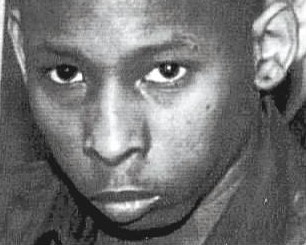
Ronald Lee Fitzgerald
Murderer Brian Kevin Rosenfeld
Murderer · USA · 1985
Brian Kevin Rosenfeld Brian Kevin Rosenfeld was sentenced to three concurrent l…
23 victims
Brian Kevin Rosenfeld
Murderer · USA · 1985
Brian Kevin Rosenfeld Brian Kevin Rosenfeld was sentenced to three concurrent l…
23 victims
 Russell Ellwood
Murderer · USA · 1991
Russell Ellwood was a former taxi driver. Authorities suspected him of killing…
20 victims
Russell Ellwood
Murderer · USA · 1991
Russell Ellwood was a former taxi driver. Authorities suspected him of killing…
20 victims
 Robert Martines Perez
Murderer · USA · 1994
Name: Robert Martines Perez · Other name used in proceedings: Robert Martinez P…
15 victims
Robert Martines Perez
Murderer · USA · 1994
Name: Robert Martines Perez · Other name used in proceedings: Robert Martinez P…
15 victims
 Billy Frank Vickers
Murderer · USA · 1993
Billy Frank Vickers Vickers was executed by lethal injection in Texas on Januar…
14 victims
Billy Frank Vickers
Murderer · USA · 1993
Billy Frank Vickers Vickers was executed by lethal injection in Texas on Januar…
14 victims
 Muzzammil Hassan
Murderer · USA · 2009
Muzzammil Syed Hassan, also known as Mo Steve Hassan, was a Pakistani-American…
1 victim
Muzzammil Hassan
Murderer · USA · 2009
Muzzammil Syed Hassan, also known as Mo Steve Hassan, was a Pakistani-American…
1 victim
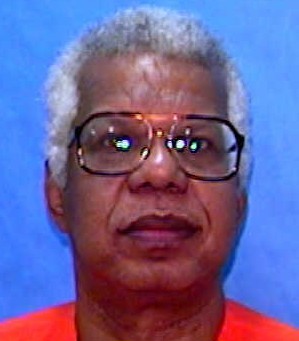 Terance Valentine
Murderer · USA · 1988
Terance Valentine was prosecuted in the Thirteenth Judicial Circuit, Hillsborou…
1 victim
Terance Valentine
Murderer · USA · 1988
Terance Valentine was prosecuted in the Thirteenth Judicial Circuit, Hillsborou…
1 victim
 David Hicks
Murderer · USA · 1988
David Hicks was executed by lethal injection in Texas on January 20, 2000. Ocol…
1 victim
David Hicks
Murderer · USA · 1988
David Hicks was executed by lethal injection in Texas on January 20, 2000. Ocol…
1 victim
 Steven Michael Woods
Murderer · USA · 2001
Steven Michael Woods was a white male. He had 10 years of education. He worked…
2 victims
Steven Michael Woods
Murderer · USA · 2001
Steven Michael Woods was a white male. He had 10 years of education. He worked…
2 victims
- Gender
- male
- Country
- USA
- Location
- Pittsylvania County, Virginia, USA
- Date of birth
- 1969
- Age at first offence
- 24
- Characteristics
- crime spree, rape, robbery
- Victim profile
- Coy M. White (friend) and Hugh E. Morrison (taxi driver)
- Method of murder
- Shooting
- Date(s) of murder
- January 29, 1993
- Years active
- 1993
- Date of arrest
- Same day (surrenders - suicide attempt)
- Status
-
Executed
Executed by lethal injection in Virginia on October 21, 1998
Case record: Ronald Lee Fitzgerald
Timeline
- January 29, 1993 — Ronald Lee Fitzgerald was convicted of capital murder in slayings and robberies of acquaintance Coy M. White and a taxi driver, Hugh E. Morrison; abducting and raping a 13-year-old girl at White's Chatham home; and abducting and raping an 18-year-old woman in an Altavista motel room's bathroom while her children watched television.
- January 29, 1994 — After a three-day trial, a Virginia jury found Ronald Lee Fitzgerald guilty of murdering Coy White during the commission of a robbery, murdering Hugh Morrison during the commission of a robbery, abducting and raping thirteen year-old Claudia White, abducting and raping Tiffany Lovelace, and breaking and entering into Coy White's residence.
- May 10, 1994 — The trial court imposed the death sentence.
- March 3, 1995 — Fitzgerald's convictions and sentence were affirmed by the Supreme Court of Virginia.
- May 13, 1996 — Fitzgerald filed a state habeas action in the Supreme Court of Virginia.
- October 16, 1996 — The Virginia Court summarily denied the petition without a hearing.
- January 16, 1997 — The Pittsylvania County Circuit Court scheduled January 16, 1997, as Fitzgerald's execution date.
- March 21, 1997 — Fitzgerald filed his federal habeas petition.
- November 20, 1997 — By order dated November 20, 1997, the district court denied Fitzgerald's motion for an evidentiary hearing and dismissed his petition.
- June 4, 1998 — The appeal was argued.
- July 13, 1998 — The United States Court of Appeals for the Fourth Circuit decided the appeal.
- October 21, 1998 — Fitzgerald was executed by lethal injection in Virginia; he was pronounced dead at 9:08 p.m.
Background
Ronald Lee Fitzgerald, 29, was put to death by injection at the Greensville Correctional Center. He declined to seek clemency from Governor Jim Gilmore.
Fitzgerald's lawyer, David J. Damico, said Fitzgerald did not petition the governor for clemency because he knew the killings were wrong. Damico also said Fitzgerald decided against seeking clemency because he knew Gilmore had not granted it in any of the 10 executions since taking office in January.
Larry Taylor, a spokesman for the Department of Corrections, said some relatives of Fitzgerald's victims were present for the execution, but he would not say how many or identify them.
Five death penalty opponents waited outside the prison with candles as the execution hour approached.
Fitzgerald claimed to have a tattoo on his chest reading "lethal injection" and "die" with a drawing of a syringe.
On Monday, the Supreme Court rejected an emergency request to postpone the execution and a new appeal.
Fitzgerald was convicted of capital murder in slayings and robberies of acquaintance Coy M. Morrison. He was also convicted of abducting and raping a 13-year-old girl on the same day at White's Chatham home and an 18-year-old woman in an Altavista motel room's bathroom while her children watched television.
Fitzgerald had been waiting outside the home of White, the uncle of Fitzgerald's girlfriend.
Fitzgerald was convicted of abducting and raping Tiffany Lovelace. Fitzgerald was also convicted of breaking and entering into Coy White's residence.
The offence
On January 29, 1993, at approximately 6:00 a.m., thirteen year-old Claudia White was awakened in her Chatham, Virginia, home by a noise. Claudia, who was in her bed, looked up and saw a man wearing a mask over his face, standing in her bedroom doorway and pointing a gun at her. The man directed Claudia to take off her clothes and be quiet. She refused, and the man removed Claudia's underpants and shirt. The man then removed the mask, and Claudia immediately recognized her assailant as Fitzgerald. She had seen Fitzgerald many times because he had dated her cousin, Amanda White.
Fitzgerald took Claudia to another room and began to rub her chest. Shortly thereafter, Fitzgerald saw Coy White, Claudia's father, drive into the driveway. When White entered the front door, he saw Fitzgerald and demanded to know what he was doing with his daughter. Fitzgerald told White to get on the floor. As White was doing so, Fitzgerald shot him in the neck, severing White's spinal cord and killing him.
Fitzgerald then pointed the gun at Claudia and ordered her to get her father's wallet and car keys. Claudia complied. Fitzgerald allowed Claudia to dress and then transported her in her father's car to a rural area where he raped her. Fitzgerald then gave Claudia his jacket and shirt and locked her in the trunk of the car. Claudia later escaped from the trunk, ran to a nearby house, and called the police.
Meanwhile, at approximately 7:45 a.m. the same morning, Fitzgerald hailed a taxicab driven by Hugh Morrison in which Kathryn Davis was a passenger. Davis testified that after she arrived at her destination, Morrison drove off with Fitzgerald.
At about 10:00 a.m. that morning, Douglas Shelton discovered Morrison's body in a nearby creek. Morrison's body was discovered in a creek, and he had been shot 3 times. Fitzgerald flagged down Morrison's taxi cab, drove the cab to the home of the 18-year-old girlfriend of a friend, took her and her children to a motel room, and raped her.
Fitzgerald next appeared at Tiffany Lovelace's home driving a taxicab. Lovelace knew Fitzgerald because he was a friend of her boyfriend, Girard Younger. Fitzgerald told Lovelace that Younger was on his way to her home and that he wished to wait for him. After a while, however, Fitzgerald told Lovelace to go into one of the bed-rooms in her home. He followed her into the bedroom and threatened her with the pistol he had concealed. He then directed her to take off her clothes. When she refused, he fired the gun into the floor by her feet.
Lovelace questioned Fitzgerald why he was doing these things. He responded that it was because Younger had raped his girlfriend, Amanda White. Lovelace eventually removed her clothes and sat on the bed. Fitzgerald, however, then told her to put her clothes back on and to get into the taxicab. Lovelace refused to leave her children and insisted on taking them with her.
Fitzgerald took Lovelace and her children to a motel in Altavista, Virginia. They arrived at approximately 9:00 a.m. When Fitzgerald, Lovelace, and the children entered the motel room Fitzgerald had rented, Fitzgerald ordered Lovelace into the bathroom where he raped her. Around 11:45 a.m., they left the hotel room.
Fitzgerald spotted Sonya and John Covington, guests of the motel, and asked them for a ride. The couple agreed and took Fitzgerald, Lovelace, and her children to Lovelace's home. Lovelace and the children got out of the car, but Fitzgerald asked the Covingtons to take him to the courthouse.
When Fitzgerald and the Covingtons arrived at the courthouse, Fitzgerald pointed a gun into his mouth and pulled the trigger. The gun malfunctioned, and failed to fire. Sonya jumped out of the car, and John took the gun from Fitzgerald. Shortly thereafter, the police apprehended Fitzgerald.
Investigation and arrest
Police apprehended Fitzgerald shortly after he pulled the trigger with a gun pointed into his mouth at the courthouse, when the gun malfunctioned and failed to fire.
Fitzgerald's gun jammed during the attempt at the courthouse, and police took him into custody. He later declined to seek clemency.
Trial
A Virginia jury found Ronald Lee Fitzgerald guilty of murdering Coy White during the commission of a robbery, murdering Hugh Morrison during the commission of a robbery, abducting and raping thirteen year-old Claudia White, abducting and raping Tiffany Lovelace, and breaking and entering into Coy White's residence.
The penalty phase of the trial followed after the guilt phase. The jury recommended that Fitzgerald be sentenced to death for the murders of Coy White and Morrison due to his future dangerousness to the community and the vileness of the crimes.
At the conclusion of the penalty phase of the trial, the jury recommended that Fitzgerald be sentenced to death for the murders of Coy White and Morrison.
The trial court imposed the death sentence.
Adopting the jury's recommendations, the trial court also sentenced Fitzgerald to life imprisonment for the two robberies and the abduction and rape of Claudia White; two forty-year sentences for the abduction and rape of Lovelace; and a thirty-year sentence for the breaking and entering conviction.
Juror issue and post-trial hearing
During voir dire, the trial court asked Bradshaw if "[he] or any member of [his] immediate family [had] been the victim of a rape, robbery, or abduction?" Bradshaw answered "no." (J.A. at 29-30.)
At the conclusion of the guilt phase, the jury voted to convict Fitzgerald of all charges, including the two capital murder charges. During sentencing deliberations, the jury unanimously agreed to recommend the death penalty for the two murder convictions and then began voting on all the other sentences.
Upon arriving at the last conviction, the abduction and rape of Tiffany Lovelace, Bradshaw disclosed to the jury that he had no sympathy for rapists because his granddaughter had been molested as a child. He made a motion that the jury impose a life sentence upon Fitzgerald for the rape of Tiffany Lovelace. The motion failed, and the jury imposed a forty-year sentence for the crime.
Some time after the jury announced its verdict and sentences but before the trial court imposed its sentence, the jury foreman reported the Bradshaw incident to the court. The trial court immediately conducted a post-trial hearing where counsel and the court questioned Bradshaw regarding his partiality.
At the conclusion of the hearing, the trial court denied Fitzgerald's motion for a mistrial after being satisfied that Fitzgerald suffered no prejudice from Bradshaw's presence on the jury.
On direct appeal, Fitzgerald argued that he was denied an impartial jury because Bradshaw misled defense counsel when he deliberately failed to disclose that his granddaughter had been "touched in the wrong way" at the age of fourteen, thereby denying counsel the opportunity to strike him for cause. See Fitzgerald v. Commonwealth, 249 Va. 299, 455 S.E.2d 506, 511 (1995).
The Virginia Supreme Court rejected Fitzgerald's claim, concluding that Bradshaw "testified truthfully during the voir dire. No one asked Bradshaw during voir dire whether his granddaughter had been molested. Rather, he was asked whether any member of his immediate family had been raped." Id. at 511-12.
Bradshaw stated during the post-trial hearing that his granddaughter's molestation had no effect on his voting to convict or sentence Fitzgerald for any of his crimes. (J.A. at 639-40.)
Sentencing
After the penalty phase, the jury recommended that Fitzgerald be sentenced to death for the murders of Coy White and Morrison due to his future dangerousness to the community and the vileness of the crimes. The trial court imposed the death sentence on May 10, 1994.
The trial court also imposed additional sentences: life imprisonment for the two robberies and the abduction and rape of Claudia White; two forty-year sentences for the abduction and rape of Lovelace; and a thirty-year sentence for the breaking and entering conviction.
Appeals
Fitzgerald petitioned the United States District Court for the Western District of Virginia for a writ of habeas corpus after exhausting his state appeals. The district court denied Fitzgerald's petition. Because Fitzgerald failed to make a substantial showing of the denial of a constitutional right, the Fourth Circuit denied his application for a certificate of appealability and dismissed his appeal.
Before the Fourth Circuit, Fitzgerald raised four claims:
- Denial of a fair and impartial jury in violation of the Sixth and Fourteenth Amendments.
- The Commonwealth failed to provide exculpatory information under Brady v. Maryland in violation of the Fourteenth Amendment.
- The trial court failed to instruct the jury that he was parole ineligible in violation of the Eighth and Fourteenth Amendments.
- Denial of effective assistance of counsel in violation of the Sixth Amendment.
The Fourth Circuit applied the standards of review under the Antiterrorism and Effective Death Penalty Act of 1996 (AEDPA).
Supreme Court of Virginia and state habeas denial
On March 3, 1995, Fitzgerald's convictions and sentence were affirmed by the Supreme Court of Virginia. Fitzgerald v. Commonwealth, 455 S.E.2d 506 (Va. 1995), cert. denied, 116 S. Ct. 1279 (1996).
On May 13, 1996, Fitzgerald filed a state habeas action in the Supreme Court of Virginia. The Virginia Court summarily denied the petition without a hearing on October 16, 1996.
The Pittsylvania County Circuit Court scheduled January 16, 1997 as Fitzgerald's execution date. The United States District Court for the Western District of Virginia granted a stay of execution and appointed counsel to assist Fitzgerald in filing his federal habeas petition.
Brady claim procedural default
Fitzgerald claimed the Commonwealth failed to disclose that Girard Younger, who testified on behalf of the Commonwealth during both the guilt and sentencing phases, was a convicted felon working as an informant for the Commonwealth in other unrelated cases. He argued the evidence could have been used to impeach Younger.
On state habeas review, the Supreme Court of Virginia concluded Fitzgerald could have raised this issue on direct appeal but did not and dismissed the claim as procedurally defaulted under Slayton v. Parrigan, 215 Va. 27, 205 S.E.2d 680, 682 (1974).
The Fourth Circuit stated it was not at liberty to question the state court's application of a state procedural rule and held that the rule set forth in Slayton constituted an adequate and independent state ground for denial of habeas relief. The Fourth Circuit therefore did not review the merits of the Brady claim because Fitzgerald did not attempt to establish cause and prejudice or a miscarriage of justice to excuse the procedural default.
Parole-ineligibility jury instruction claim
Fitzgerald challenged the trial court's denial of a requested jury instruction regarding parole ineligibility under Simmons v. South Carolina.
The requested instruction was: "The court instructs the jury that under Virginia Law any person convicted of three separate felony offenses of murder, rape or robbery by the presenting of firearms or other deadly weapon or any combination of the offenses of murder, rape or robbery when such offenses were not part of a common act, transaction or scheme shall not be eligible for parole." (J.A. at 668.)
The Virginia Supreme Court rejected the claim, concluding that parole eligibility in Virginia is a question of law to be determined by the judge, not the jury, and that as a matter of law Fitzgerald would have been eligible for parole because his crimes were part of a common act.
The Fourth Circuit held Simmons was inapplicable because, under Virginia law, Fitzgerald was not parole ineligible.
Simmons was described as holding that a state deprives a defendant in a capital case of due process if it "conceal[s] from the sentencing jury the true meaning of its noncapital sentencing alternative, namely, that life imprisonment mean[s] life without parole." 512 U.S. at 162, 114 S.Ct. 2187. The Fourth Circuit also stated that under Virginia law Fitzgerald was not parole ineligible, so a life sentence would not have meant life without parole.
Virginia law was described as: "Any person convicted of three separate felony offenses of (i) murder, (ii) rape or (iii) robbery by the presenting of firearms or other deadly weapon, or any combination of the offenses specified in subdivisions (i), (ii) or (iii) when such offenses were not part of a common act, transaction or scheme shall not be eligible for parole." Va.Code Ann. § 53.1-151(B1) (Michie 1994).
The Virginia Supreme Court held Fitzgerald's crimes were part of a common transaction, rendering the above section inapplicable.
Ineffective assistance of counsel and evidentiary hearing
Fitzgerald argued trial counsel was ineffective for failing to request a competency hearing and for failing to fully investigate and present mitigating evidence during the sentencing phase, and also claimed appellate counsel failed to raise valid issues on appeal.
The Virginia Supreme Court dismissed all ineffectiveness claims for lack of merit. The Fourth Circuit held the state court's decision was not an unreasonable application of the test articulated in Strickland v. Washington.
The Fourth Circuit set out the Strickland standard: a petitioner had to demonstrate deficient performance and prejudice, with a strong presumption that counsel's conduct fell within the wide range of reasonable professional assistance.
Competency examination claim
Fitzgerald claimed counsel was deficient for failing to request a competency examination after learning Fitzgerald was "experiencing suicidal ideation, delusional thought processes, and auditory hallucinations" before trial. (Petitioner's Br. at 24.)
The Fourth Circuit stated that on May 14, 1994, the trial court ordered Fitzgerald be evaluated for competency and sanity at the time of the offense, and the evaluation was performed by Dr. C. Robert Showalter.
The Fourth Circuit also stated that in July 1993, the court appointed Dr. Thomas V. Ryan, a clinical neuropsychologist, to evaluate Fitzgerald. Dr. Ryan reported Fitzgerald was borderline mentally retarded, that he understood the roles of the participants in the criminal trial process, and that he was not insane.
The Fourth Circuit stated nothing in either Dr. Showalter's or Dr. Ryan's reports suggested Fitzgerald was not competent to stand trial. Trial counsel stated in an affidavit that he decided requesting another competency examination would be futile in light of existing reports and counsel's and the court's own experiences with Fitzgerald.
The Fourth Circuit also stated trial counsel testified that Fitzgerald was helpful and cooperative and actively participated in his own defense, particularly during jury selection. Based upon these findings, the Fourth Circuit concluded it could not say counsel was deficient in failing to move for an independent competency evaluation.
Additionally, trial counsel had Fitzgerald examined by Dr. Della Williams, a neurosurgeon, to test for the presence of any organic brain injuries, and she found no evidence of injury.
Mitigating witnesses claim
Fitzgerald contended trial counsel was ineffective for failing to present mitigating witnesses during sentencing. He asserted there was significant mitigating evidence demonstrating his troubled mental state during pretrial incarceration.
The Fourth Circuit noted Fitzgerald failed to identify witnesses or produce affidavits, and it stated it appeared he referred to two individuals who allegedly reported him as delusional, suicidal, and hallucinatory while incarcerated.
The Fourth Circuit stated counsel's decision not to present these witnesses was reasonable, including because counsel could rely on Dr. Ryan's assessment that Fitzgerald was sane and competent to stand trial, and because counsel's strategy focused on Fitzgerald's social and educational history rather than alleged mental problems in jail.
Appellate counsel and proportionality/excessiveness claim
Fitzgerald argued appellate counsel was ineffective for failing to brief a claim that his sentence was excessive and disproportionate to the penalty imposed in similar cases, considering both the crime and the defendant.
The Fourth Circuit described counsel's position in the appellate brief, stating Fitzgerald "relies upon this Court's expertise in conducting the automatic review of the sentences of death imposed upon him which is required by Code § 17-110.1 of the Code of Virginia of 1950, as amended, and chooses to make no argument relative to this assignment of error." Appellant's Brief at 19.
The Virginia Supreme Court reviewed and affirmed the sentence under § 17-110.1(E) of the Virginia Code.
The Fourth Circuit held counsel's selective briefing did not render counsel constitutionally deficient and that Fitzgerald could not show prejudice.
The Fourth Circuit also stated it refused to credit Fitzgerald's suggestion that the Virginia Supreme Court conducted less than thorough review due to attorneys' reliance on mandatory review rather than fully briefing the issue.
It further stated failure to conduct a proportionality review, if proven, would not entitle Fitzgerald to habeas relief.
Evidentiary hearing denial
Fitzgerald argued the district court abused its discretion by denying his motion for an evidentiary hearing on ineffective assistance of counsel claims because he never received an evidentiary hearing in state court.
The Fourth Circuit held Fitzgerald was entitled to an evidentiary hearing only if the state court fact-finding process was deficient in some significant respect, and it stated evidentiary hearings had never been required on federal collateral review of state petitioners' ineffectiveness claims. It also stated the dismissal of ineffectiveness claims based on affidavits did not render the proceeding less than full and fair.
The Fourth Circuit upheld the district court's denial of an evidentiary hearing.
Outcome
The Fourth Circuit denied Fitzgerald's application for a certificate of appealability and dismissed his petition.
On October 21, 1998, Fitzgerald was executed by lethal injection in Virginia at the Greensville Correctional Center. He was pronounced dead at 9:08 p.m.
Fitzgerald delivered a lengthy final statement. He told his family he loved them, said he was sorry for the killings, and asked for forgiveness from the families of the victims. "I hope that by my dying tonight, this will ease their pain," he said.
The execution proceeded after the Supreme Court rejected an emergency request to postpone the execution and a new appeal.
Aftermath
Relatives of Fitzgerald's victims were present for the execution, but Larry Taylor did not identify them or state how many.
Death penalty opponents waited outside the prison with candles as the execution hour approached.
Spotted an error, or have more information about this case?