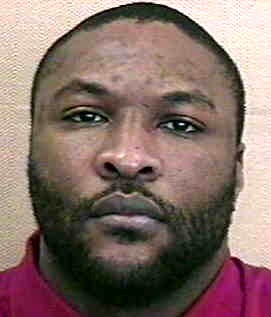
Willie Ervin Fisher
Murderer Brian Kevin Rosenfeld
Murderer · USA · 1985
Brian Kevin Rosenfeld Brian Kevin Rosenfeld was sentenced to three concurrent l…
23 victims
Brian Kevin Rosenfeld
Murderer · USA · 1985
Brian Kevin Rosenfeld Brian Kevin Rosenfeld was sentenced to three concurrent l…
23 victims
 Russell Ellwood
Murderer · USA · 1991
Russell Ellwood was a former taxi driver. Authorities suspected him of killing…
20 victims
Russell Ellwood
Murderer · USA · 1991
Russell Ellwood was a former taxi driver. Authorities suspected him of killing…
20 victims
 Robert Martines Perez
Murderer · USA · 1994
Name: Robert Martines Perez · Other name used in proceedings: Robert Martinez P…
15 victims
Robert Martines Perez
Murderer · USA · 1994
Name: Robert Martines Perez · Other name used in proceedings: Robert Martinez P…
15 victims
 Billy Frank Vickers
Murderer · USA · 1993
Billy Frank Vickers Vickers was executed by lethal injection in Texas on Januar…
14 victims
Billy Frank Vickers
Murderer · USA · 1993
Billy Frank Vickers Vickers was executed by lethal injection in Texas on Januar…
14 victims
 David Attias
Homicide · USA · 2001
David Attias was described as an 18-year-old student at the University of Calif…
4 victims
David Attias
Homicide · USA · 2001
David Attias was described as an 18-year-old student at the University of Calif…
4 victims
 Susan May
Murderer · United Kingdom · 1992
Susan May (principal carer for her aunt) was convicted of the murder of Hilda M…
1 victim
Susan May
Murderer · United Kingdom · 1992
Susan May (principal carer for her aunt) was convicted of the murder of Hilda M…
1 victim
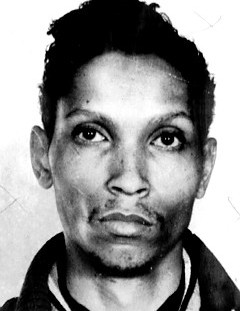 Winston Moseley
Murderer · USA · 1963
Winston Moseley was convicted in the murder of Catherine “Kitty” Genovese and w…
3 victims
Winston Moseley
Murderer · USA · 1963
Winston Moseley was convicted in the murder of Catherine “Kitty” Genovese and w…
3 victims
 Ronald Fluke
Murderer · USA · 1997
Ronald Dunaway Fluke was convicted of three counts of First Degree Murder in vi…
3 victims
Ronald Fluke
Murderer · USA · 1997
Ronald Dunaway Fluke was convicted of three counts of First Degree Murder in vi…
3 victims
- Gender
- male
- Country
- USA
- Location
- Forsyth County, North Carolina, USA
- Date of birth
- March 4, 1962
- Age at first offence
- 30
- Characteristics
- domestic violence
- Victim profile
- Angela Vernetta Johnson, 29 (his girlfriend)
- Method of murder
- St abbing with knife
- Date(s) of murder
- April 2, 1992
- Years active
- 1992
- Date of arrest
- Next day ( surrenders )
- Status
-
Executed
Executed by lethal injection in North Carolina on March 9, 2001
Case record: Willie Ervin Fisher
Background
Willie Ervin Fisher was convicted of the capital murder of Angela Johnson and received the death sentence in North Carolina. He was executed by lethal injection in North Carolina on March 9, 2001.
Fisher was 39 at the time of his execution. His clemency request was denied by Gov. Mike Easley. Fisher made a videotaped appeal for clemency that was sent to Easley earlier this week.
Fisher’s trial counsel included David Tamer, and Fisher was represented in later proceedings by Larry Moore and Cynthia Adcock. Moore and Adcock worked to save Fisher’s life.
Sally Fisher-Ervin was Fisher’s sister, and Regina Fisher was Fisher’s niece. Stephanie Moore was the social worker who had visited Fisher for six years to help with appeals. Fisher’s sisters were Sally and Anna Fisher, and his niece was Ria Fisher.
The offence
During the early morning hours of April 2, 1992, Willie Ervin Fisher broke into the home where his girlfriend, Angela Johnson, was living, broke her cheek and jaw, and stabbed her approximately thirty-two times. Angela was transported to the hospital for emergency treatment, and she died from the wounds within a matter of hours.
At the time of the attack, Angela was living in the home of her grandmother, Josephine Johnson, along with her mother, Shirley Johnson, her thirteen-year-old daughter, Shemika, and her four-year-old son by Fisher, Willie Ervin Junior. Fisher made a voluntary intoxication defense at trial, asserting that his alcohol consumption and crack cocaine use rendered him incapable of forming the specific intent necessary to be convicted of first-degree murder.
The North Carolina Supreme Court summarized the events surrounding the murder as follows:
On [April 1], [ Fisher ] came to the Johnson residence at about 9:00 p.m. Angela was not at home. He stayed for about three hours, holding Willie Jr. and watching television. Shirley Johnson worked at night and left to go to work at approximately 10:00 p.m. When Angela returned to the house after her mother had gone to work, she and[ Fisher ] began arguing. Angela ran into her grandmother's room and said that [ Fisher ] had hit her in the eye.[ Fisher ] pushed Angela onto the bed on top of her grandmother and then hit her grandmother while trying to hit Angela. Angela's grandmother called the police. Soon thereafter, a taxi which had been called earlier by either the victim or [ Fisher ] arrived at the residence. Angela ran out of the house, while trying to put on her shoes, wearing a T-shirt and jogging pants. [ Fisher ] tried to catch her but she got into the taxi and it "pulled off." Angela was crying and her hair was tousled. She had bruises all over her body and her shirt had been torn. Angela went to the Winston-Salem Journal/Sentinel where her mother was working. Officer T.C. Smoot of the Winston-Salem Police Department received a call at 12:35 a.m. to go to the residence. When he arrived, he began talking to Josephine Johnson about an alleged assault. Angela and her mother arrived later. Officer Smoot noticed that Angela's shirt was torn and her eyes were swollen. Angela and her mother went to the clerk's office where Angela obtained a warrant charging [ Fisher ] with assault. A criminal summons was issued for assault on a female and the police began searching for [ Fisher ]. Angela and her mother went home but did not go to bed until after 3:00 a.m. There were two twin beds in the bedroom. Angela and Willie Jr. were in one bed and Angela's mother and Shemika were in the other. Angela's grandmother was in a separate room. After they went to sleep, the telephone rang and Angela answered it. She gave the telephone to her mother who recognized the caller as [ Fisher ]. Angela's mother asked [ Fisher ] what had happened at the house. He told her that he had not hit Angela or her grandmother. About ten minutes after the telephone conversation ended, Shirley Johnson heard someone kicking the front door. She jumped up and saw [ Fisher ] stepping over broken glass from the door and coming into the house. He was wearing a Redskins jacket and had a knife in his hand. He came in the bedroom and told Angela to get up. Angela got up and started running towards, and then out the back door with[ Fisher ] following her. Angela ran to the front of the house and through the front door with [ Fisher ] still behind her. [ Fisher ] cornered Angela in the living room and began stabbing her in the chest and stomach. Shemika tried to pull him off Angela and she was stabbed on the arm and in the back. Angela's mother began fighting with [ Fisher ] and he struck her. [ Fisher ] dragged Angela out the front door, down the steps, and into the driveway--pulling off her nightgown. He continued to stab, beat, and kick Angela after he dragged her into the street. A next door neighbor, Lucius Simmons, heard the commotion and came to the door. He yelled to [ Fisher ] to stop. Simmons yelled again, [ Fisher ] stopped beating Angela and told Simmons to shut up. Simmons shot his gun into the air and [ Fisher ] ran down the street. The police arrived at the residence and found Angela lying in Simmons' driveway covered with blood. She had a pulse and appeared to be alive. . . . [Shemika] had a three-inch cut on her arm and had been stabbed in the back. The wound in her back was about an inch wide and an inch long. It was gaping open and bleeding. Angela and Shemika were taken by paramedics to the emergency room. Shemika's wounds were cleaned and her lacerations repaired. Angela was unresponsive to emergency medical treatment and was pronounced dead at 7:30 a.m. State v. Fisher , 445 S.E.2d 866, 869 (N.C. 1994).
After hiding out in nearby woods until the afternoon, Fisher called the Winston-Salem Police Department and told them where he could be found. He was arrested and taken to the hospital, where he was treated for wounds to his hand as well as other injuries. While at the hospital, Fisher made a voluntary statement to officers concerning the events, and four days later, he was questioned by police officers at the police station after he waived his Miranda rights.
Fisher did not dispute, in his statements or during the ensuing capital trial, that he broke into Angela’s home and stabbed her to death. The jury rejected the voluntary intoxication defense.
Witnesses said Fisher broke into the Forsyth County house where Johnson lived with her mother and attacked her, then chased her outside, ripped her clothes off and stabbed her repeatedly. When Johnson’s 12-year-old daughter hit Fisher with a broomstick, he stabbed the girl, then used the broomstick to stab Johnson again. Fisher stopped and fled after a neighbor fired a gun into the air.
Fisher’s 14-year-old daughter was also stabbed while trying to protect her mother, according to the summary of events.
Investigation
Officer T.C. Smoot of the Winston-Salem Police Department received a call at 12:35 a.m. to go to the residence. Officer Smoot began talking to Josephine Johnson about an alleged assault, and Angela and her mother arrived later.
Angela’s shirt was torn and her eyes were swollen. Angela obtained a warrant charging Fisher with assault. A criminal summons was issued for assault on a female and the police began searching for Fisher.
Fisher hid in nearby woods until the afternoon. He called the Winston-Salem Police Department and told them where he could be found. He was arrested and taken to the hospital for treatment.
Arrest
Fisher called the Winston-Salem Police Department and told them where he could be found after hiding out in nearby woods until the afternoon.
Trial
Fisher was convicted of first-degree murder, first-degree burglary, and assault with a deadly weapon inflicting serious injury for the stabbing of Angela’s daughter.
The jury convicted Fisher of first-degree murder based on malice, premeditation and deliberation and under the felony murder rule.
A capital sentencing proceeding was then held.
Sentencing
The State offered no additional evidence during the sentencing phase of trial, relying instead upon evidence previously presented.
Fisher’s counsel relied on evidence introduced during the guilt phase and also introduced additional testimony, including Lieutenant Murphy with the Forsyth County Sheriff’s Department, who testified that Fisher had not caused any disciplinary problems during his incarceration. Counsel also presented testimony from several other witnesses confirming that Fisher’s mother suffered with an alcohol problem and that Fisher enjoyed a good relationship with his son. Fisher’s counsel introduced a certified criminal record check from the Forsyth County Clerk of Superior Court showing that Fisher had no prior convictions.
At the conclusion of the sentencing phase, the court submitted two aggravating circumstances for consideration by the jury:
- The offense was committed during the commission of a burglary, see N.C. Gen. Stat. § 15A-2000(e)(5).
- The murder was “especially heinous, atrocious, or cruel,” N.C. Gen. Stat. § 15A-2000(e)(9).
The jury found both aggravating circumstances to be present.
With regard to statutory mitigating circumstances, the jury found:
- Fisher “ha[d] no significant history of prior criminal activity,” N.C. Gen. Stat. § 15A-2000(f)(1).
- “[T]he capital felony was committed while [Fisher] was under the influence of mental or emotional disturbance,” N.C. Gen. Stat. § 15A-2000(f)(2).
The jury also found six nonstatutory mitigating circumstances:
- Fisher voluntarily surrendered to law enforcement officers after first making contact with those officers concerning the offense.
- Fisher freely and voluntarily admitted to law enforcement officers his responsibility for Angela’s death immediately after his arrest.
- Fisher’s conduct while in custody at the Forsyth County Jail had been without any disciplinary problems.
- Fisher voluntarily participated in Narcotics Anonymous while confined in the Forsyth County Jail.
- Fisher expressed remorse for his actions.
- Fisher had a passive, dependent personality by reason of an abusive father and an alcoholic mother.
No juror found that “[t]he capacity of [Fisher] to appreciate the criminality of his conduct or to conform his conduct to the requirements of law was impaired” at the time of the murder, N.C. Gen. Stat. § 15A-2000(f)(6). No jurors found other unspecified mitigating circumstances, see N.C. Gen. Stat. § 15A-2000(f)(9).
The jury recommended a sentence of death, and the trial court imposed the death sentence along with prison terms of fifteen years for the burglary conviction and three years for the assault conviction.
Appeals
The North Carolina Supreme Court affirmed Fisher’s conviction and death sentence, see Fisher, 445 S.E.2d at 880.
The United States Supreme Court denied Fisher’s petition for writ of certiorari. Fisher v. North Carolina, 513 U.S. 1098 (1995).
Fisher filed a motion for appropriate relief (“MAR”), and the state court imposed a procedural bar with respect to certain claims and, following an evidentiary hearing, denied the remaining claims. The Supreme Court of North Carolina denied certiorari.
Fisher thereafter filed a petition for writ of habeas corpus pursuant to 28 U.S.C.A. § 2254. The district court, adopting the recommendation of the magistrate judge, dismissed the petition and denied a certificate of appealability.
Fisher timely filed a notice of appeal to the United States Court of Appeals for the Fourth Circuit.
The Fourth Circuit case included:
- Willie Ervin Fisher, Petitioner-appellant, v. R. C. Lee, Warden, Central Prison; North Carolina Attorney General, Respondents-appellees.
- UNITED STATES COURT OF APPEALS FOR THE FOURTH CIRCUIT.
- Argued: April 5, 2000.
- Decided: June 19, 2000.
- Appeal from the United States District Court for the Middle District of North Carolina, at Durham.
- James A. Beaty, Jr., District Judge.
- Before WIDENER and TRAXLER, Circuit Judges, and Joseph R. GOODWIN, United States District Judge for the Southern District of West Virginia, sitting by designation.
- “Affirmed by published opinion.”
The Fourth Circuit dismissed Fisher’s petition, stating:
- “Because Fisher has failed to make a substantial showing of the denial of a constitutional right, see 28 U.S.C.A. § 2253 (c)(2) (West Supp. 2000), we deny his application for a certificate of appealability and dismiss his petition for writ of habeas corpus. … DISMISSED.”
During the clemency and execution period, Easley denied Fisher’s clemency request Thursday evening, citing the “heinous nature” of Angela Johnson’s murder in 1992.
A stay of execution was originally to have occurred at 2 a.m. Friday, but was blocked by Superior Court Judge Howard Manning Jr., who said Gov. Mike Easley might have had a conflict of interest when he denied Fisher clemency Thursday evening. The state Supreme Court lifted the stay at about 4:45 a.m. and the execution was rescheduled.
The U.S. Supreme Court denied a stay of execution Friday afternoon, the second time during that week it had rebuffed Fisher’s appeals.
Moore said Fisher had been drinking and smoking crack cocaine before the April 1, 1992, attack.
Defense lawyers unsuccessfully argued to Easley that jury selection in Fisher’s trial was biased because Fisher is black and the jury was made up of 11 whites and 1 black. They also argued the murder was committed after Fisher went on a drinking binge and smoked crack cocaine, and that his trial attorney, David Tamer, didn’t present a proper defense. Those claims were rejected by the state and U.S. supreme courts.
Fisher made a videotaped clemency appeal and said: “I can't express enough how sorry I am, how I regret everything that has happened,” and he said he would work behind bars “doing God's will, not my own.”
Fisher also asked Johnson’s mother for forgiveness and told his and Johnson’s son, Willie Jr., that Johnson was “watching over you and she's watching over me as well.”
Outcome
Willie Ervin Fisher was executed by lethal injection in North Carolina on March 9, 2001.
He was pronounced dead at 9:21 p.m., according to a Corrections Department spokeswoman, Tracy Little.
The execution was scheduled for 2 a.m. but was delayed, and about 19 hours after the originally scheduled time, Fisher was put to death by injection at Central Prison. He slept most of the morning and visited with his sisters, Sally and Anna Fisher, and niece Ria Fisher in the afternoon. He also saw a social worker and his attorneys.
At 9 p.m. EST March 9, 2001, a statement was included describing “Willie Fisher, moments before the people of North Carolina injected him with lethal doses of poison, 9 p.m. EST March 9, 2001 Raleigh.”
Fisher became the 1st condemned inmate to be put to death in North Carolina this year and the 17th overall since the state resumed capital punishment in 1984. Fisher became the 18th condemned inmate to be put to death this year in the USA and the 701st overall since America resumed executions on January 17, 1977.
Sally said Fisher told her: “He's not ready to leave,” and: “but if he has to, he's in God's hands, and he'll be fine.”
Regina said: “He didn't cry at all.”
Other details
The jury found Fisher had no prior convictions through a certified criminal record check from the Forsyth County Clerk of Superior Court.
The Fourth Circuit decision stated that the jury rejected Fisher’s voluntary intoxication defense and convicted him on the basis of malice, premeditation and deliberation and under the felony murder rule.
The Fourth Circuit described Fisher’s plea as being that he “blacked-out” between the time Angela attempted to take the knife away and the time Simmons fired his gun into the air.
The Fourth Circuit described the trial evidence included testimony from Fisher, Cliff Foster, and Dr. J. Gary Hoover, a clinical psychologist retained to assist the defense. Dr. Hoover diagnosed Fisher as suffering from chronic, persistent dysthymia and a substance abuse problem with overtones of chronic depression, and he administered multiple psychological tests including the Minnesota Multiphasic Personality Inventory, the Millon Clinical Multiaxial Inventory, the Wechsler Adult Intelligence Scale, and the Schretland Index of Faking.
Dr. Hoover offered the opinion that Fisher was in an alcohol and drug-induced black-out state when he committed the murder and was incapable of forming a plan to murder Angela or carrying out such a plan.
Dr. Hoover’s testimony included:
“[T]he capital felony was committed while [Fisher] was under the influence of mental or emotional disturbance,” N.C. Gen. Stat. § 15A-2000(f)(2). and: “at the time of the murder [Fisher] was functioning inside an alcohol/crack cocaine black-out and that his emotional or his behavior was directly related to reduced impulse control, reduced his ability to think, plan, organize himself inside what is probable to be an alcoholic black-out enhanced by the use of crack cocaine.”
The Fourth Circuit also recounted testimony described in the record as including that the jury found both aggravating circumstances and found eight mitigating circumstances, with the exception that none of the jurors found the (f)(6) mitigator.
At sentencing, the jury ultimately recommended death after concluding the mitigating circumstances were insufficient to outweigh the aggravating circumstances.
A limiting instruction for the “especially heinous, atrocious, or cruel” aggravating circumstance included: “The next issue is "the capital felony was especially heinous, atrocious or cruel." Now in this context heinous means extremely wicked or shockingly evil. Atrocious means outrageously wicked and vile and cruel means designed to inflict a high degree of pain with utter indifference to or even enjoyment of the suffering of others. However, it is not enough that this murder be heinous, atrocious or cruel as these terms have just been defined. This murder must have been especially heinous, atrocious or cruel and not every murder is especially so. For this murder to have been especially heinous, atrocious or cruel, any brutality which was involved in it must have exceeded that which is normally present in any killing or this murder must have been. . . a conscienceless or pitiless crime which was unnecessarily torturous to the victim. (Transcript, Vol. IV. at 96).”
Prosecutors made arguments regarding the clemency process, including: “Ironically, if Fisher's argument is correct, under the North Carolina constitution, there is no one who could grant clemency to him, or for that matter, to any other capital defendant in this state,” and: “Gov. Easley is the only person under our constitution with the power of clemency; he must be permitted to exercise it if he so wishes.”
Defense attorney Larry Moore said: “We certainly made no allegations against Gov. Easley personally. It's a question of him wearing two hats.”
Before execution, a statement was included: “Just that, regardless of what might be seen or the thought of what might be seen, there is still love, mercy and justice. Because God said that all that He has made is good and once you realize that and believe in that everything will be just fine.”
Spotted an error, or have more information about this case?