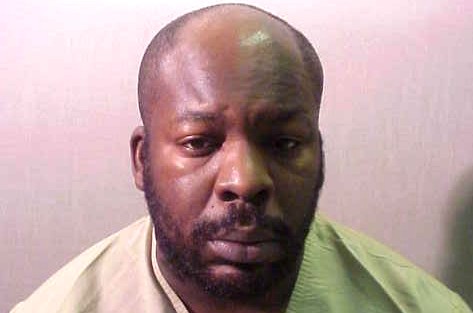
Marko Bey
Homicide Jack Kevorkian
Homicide · USA · 1990
Jack Kevorkian (born May 26, 1928) was a controversial American pathologist. He…
130 victims
Jack Kevorkian
Homicide · USA · 1990
Jack Kevorkian (born May 26, 1928) was a controversial American pathologist. He…
130 victims
 David Koresh
Homicide · USA · 1993
David Koresh (born Vernon Wayne Howell; August 17, 1959 – April 19, 1993) led t…
79 victims
David Koresh
Homicide · USA · 1993
David Koresh (born Vernon Wayne Howell; August 17, 1959 – April 19, 1993) led t…
79 victims
 Edward Charles Allaway
Homicide · USA · 1976
Edward Charles Allaway Edward Charles Allaway was found not guilty by reason of…
7 victims
Edward Charles Allaway
Homicide · USA · 1976
Edward Charles Allaway Edward Charles Allaway was found not guilty by reason of…
7 victims
 Clinton Bankston
Homicide · USA · 1987
15 August 1987 — Ann Morris (63), her sister Sally Nicholson (59), and Sally’s…
5 victims
Clinton Bankston
Homicide · USA · 1987
15 August 1987 — Ann Morris (63), her sister Sally Nicholson (59), and Sally’s…
5 victims
 Ronald True
Murderer · United Kingdom · 1922
Ronald True was sentenced to death for the murder of 25-year-old Olive Young, a…
1 victim
Ronald True
Murderer · United Kingdom · 1922
Ronald True was sentenced to death for the murder of 25-year-old Olive Young, a…
1 victim
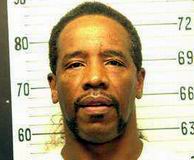 Michael Eugene Sample
Murderer · USA · 1981
Michael Eugene Sample was sentenced to death on February 7, 1983. He and his co…
2 victims
Michael Eugene Sample
Murderer · USA · 1981
Michael Eugene Sample was sentenced to death on February 7, 1983. He and his co…
2 victims
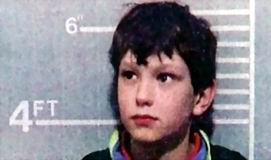 Jon Venables
Homicide · United Kingdom · 1993
Jon Venables was born 13 August 1982. He was a 10-year-old boy when he abducted…
1 victim
Jon Venables
Homicide · United Kingdom · 1993
Jon Venables was born 13 August 1982. He was a 10-year-old boy when he abducted…
1 victim
 David Maust
Serial killer · USA · 1974
David Edward Maust (April 5, 1954 - January 20, 2006) was an American serial ki…
5 victims
David Maust
Serial killer · USA · 1974
David Edward Maust (April 5, 1954 - January 20, 2006) was an American serial ki…
5 victims
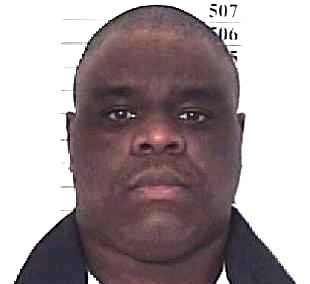 Scotty Morrow
Murderer · USA · 1994
Scotty Morrow began dating Barbara Ann Young in June 1994. Young broke up with…
2 victims
Scotty Morrow
Murderer · USA · 1994
Scotty Morrow began dating Barbara Ann Young in June 1994. Young broke up with…
2 victims
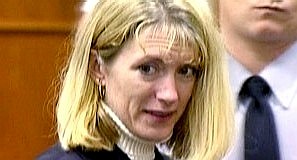 Ann Miller Kontz
Murderer · USA · 2000
Ann Miller Kontz was the widow of Eric Miller and the defendant in the arsenic…
1 victim
Ann Miller Kontz
Murderer · USA · 2000
Ann Miller Kontz was the widow of Eric Miller and the defendant in the arsenic…
1 victim
- Gender
- male
- Country
- USA
- Location
- Monmouth County, New Jersey, USA
- Date of birth
- April 12, 1965
- Age at first offence
- 18
- Characteristics
- juvenile (17), rape, domestic dispute
- Victim profile
- Cheryl Alston, 18 / Carol Peniston, 47
- Method of murder
- Strangulation
- Date(s) of murder
- April 1/26, 1983
- Years active
- 1983
- Date of arrest
- May 6, 1983
- Status
-
Life imprisonment
Resentenced to life in prison; sentenced to death on December 15, 1983; in 1984 received a second death sentence; the death sentences were later vacated and he was resentenced to life imprisonment
Case record: Marko Bey
Background
Marko Bey was formerly of Neptune. He was 17 and 18 years old when he committed the crimes. He confessed after physical evidence tied him to both crimes. He was also described as having a history that included drinking at age nine and using drugs, particularly marijuana, at age eleven, and having been hospitalized twice for overdosing.
Bey’s mother drank excessively and severely abused and neglected Bey and his siblings, and his father rejected him. Medical experts testified that Bey suffered from organic brain damage, a frontal lobe impairment caused by in utero exposure to alcohol, preadolescent consumption of drugs and alcohol, and head injuries. The experts also testified that Bey suffered from an organic personality disorder and lacked the ability to control his anger.
At the time of one period described, Bey was one of only three people on death row in New Jersey.
The offence
Murder of Cheryl Alston
On April 2, 1983, Cheryl Alston’s battered body was found by a jogger in Ocean Grove, a section of Neptune Township, New Jersey, in a vacant lot across the boardwalk from the beach. The nineteen-year-old’s naked body was found with a “two-by-four,” containing blood and hair later determined to match those of the victim. Alston was strangled with her own bra and suffered extensive trauma to her face. Her skull was fractured in several places causing cerebral hemorrhages. There were lacerations of her liver, and bleeding in her abdominal cavity.
Marko Bey was charged with, and convicted of, her murder. Bey had been paroled only two weeks before Alston’s murder.
Bey received the death sentence, but that sentence was reversed because it was discovered he had been a juvenile at the time of the murder, and under New Jersey law he was not eligible for the death penalty.
Murder of Carol Peniston
On April 26, 1983, Marko Bey accosted Carol Peniston in front of her apartment building intending to rob her. When he heard someone else approaching, he pulled Peniston into a nearby shed, sexually assaulted her, beat her, stomped on her chest, and strangled her. Bey stole eight dollars and her car keys from Peniston. He crashed and abandoned Peniston’s car in his flight from the scene.
Three weeks after the first murder, Bey assaulted and killed Carol Peniston. She was 47 years old.
In another description of the Peniston murder, Peniston was accosted by Bey in a robbery attempt and, after being interrupted by a passer-by, Bey took her to an abandoned shack and ordered her to remove her clothes. He took her money, jewelry, and car keys. He then sexually assaulted her. When he thought she was looking at him, Bey decided to eliminate her as a witness, beat her about the face fracturing the dental plate in her lower gum, broke four of her ribs causing internal bleeding, and then strangled her to death using her own scarf. He left the shack, took her car, and abandoned it in Newark.
Investigation and arrest
After his arrest, Bey confessed and was charged with murder, felony murder, kidnapping, aggravated assault, aggravated sexual assault, robbery and theft.
At trial, Bey testified that he was drunk and high on marijuana at the time of the murder. He explained that he had killed Peniston because he had become scared when he saw her looking at him as he rifled through her pocketbook. Bey acknowledged that the murder should never have happened and expressed some remorse.
For the Alston investigation, a police investigation ensued after her body was found on April 2, 1983.
Trial
Convictions for Alston murder
A Superior Court jury convicted Bey on charges that he sexually assaulted, beat and strangled Cheryl Alston, whose body was found in Ocean Grove on April 2, 1983. Bey was found guilty on Dec. 13, 1983, but the conviction was overturned in 1988 after the high court ruled that evidence had been improperly admitted.
The Supreme Court also ruled that Bey could not be sentenced to death if he were found guilty of killing Alston during a new trial because he was a minor when he killed her.
The New Jersey Supreme Court vacated Bey’s death sentence on August 2, 1988, because he had been a juvenile at the time of the offense and therefore was not eligible for the death penalty (State v. Bey I, 112 N.J. 45, 548 A.2d 846 (1988)).
In the separate prosecution, the Court also reversed the convictions, remanded the case, and ordered the suppression of Bey’s confession to the police (State v. Bey I, 112 N.J. 45, 548 A.2d 846 (1988)).
Convictions and sentencing for Peniston murder
Bey was convicted of murdering Carol Peniston in 1983. A Superior Court jury convicted him of sexually assaulting, beating and strangling Peniston and he was sentenced to death.
On the day that the New Jersey Supreme Court vacated Bey’s convictions for the Alston murder, the Court also vacated the death sentence he received for the Peniston murder, but affirmed his conviction in that case (State v. Bey II, 112 N.J. 123, 548 A.2d 887 (1988)).
During the penalty phase described for Peniston, the State alleged aggravating factors including c(4)(a) (prior murder) and c(4)(g) (felony murder). As to the prior murder factor, Bey had been sentenced to death for the rape-murder of Cheryl Alston, which occurred approximately three weeks before the Peniston murder.
Bey alleged mitigating factors including c(5)(a) (extreme mental or emotional disturbance), c(5)(c) (age), c(5)(d) (mental disease or defect or intoxication), and c(5)(h) (catch-all). Bey produced fresh evidence supporting the mitigating factors, including testimony about his mother’s drinking and severe abuse and neglect, his father’s rejection, and Bey’s own drinking and drug use, as well as medical expert testimony about organic brain damage and impaired anger control.
The jury found two aggravating factors, c(4)(a) (prior murder) and c(4)(g) (felony murder). The jury found at least one juror found two mitigating factors, c(5)(a) (extreme mental or emotional disturbance) and c(5)(h) (catch-all). The jury unanimously determined that the aggravating factors outweighed the mitigating factors and sentenced Bey to death.
In a separate portion of the case history, Pearson’s testimony and additional evidence were addressed in Bey’s second trial for Alston murder. Pearson testified only that Bey told him that “he had beat [sic] and raped a woman on the beach” and that she “died.” The prosecution supplemented Bey’s confession with testimony of investigators from the prosecutor’s offices of two other New Jersey oceanfront counties, and with evidence describing the crime scene and forensic results.
The jury convicted Bey again of murder, felony murder, aggravated assault, and aggravated sexual assault. The court sentenced him to life imprisonment with a 30-year parole disqualifier for the murder count and a consecutive term of 20 years with a 10-year parole disqualifier for the aggravated sexual assault count, and imposed a $2,000 Violent Crime Compensation Board penalty. The felony murder and aggravated assault counts were merged.
Sentencing
In December 1983, Bey was sentenced to death for the rape & murder of 19 year old Cheryl Alston. Her nude & battered body was found in a vacant lot near the boardwalk in Ocean City, New Jersey.
In 1984, Bey received a second death sentence for sexually assaulting & strangling 46 year old Carol Peniston. Bey was 17 at the time of the first murder, and he turned 18 just two weeks before the second.
For the Alston case, the Supreme Court vacated Bey’s death sentence on August 2, 1988, because he had been a juvenile at the time of the offense and was therefore not eligible for the death penalty (State v. Bey I, 112 N.J. 45, 548 A.2d 846 (1988)).
For the Peniston case, the Court reversed his death sentence after concluding that the death-penalty statute did not permit the execution of minors (State v. Bey I, 112 N.J. 45 (1988)). Bey’s death sentence was later affirmed (State v. Bey, 129 N.J. 557, 610 A.2d 814 (1992), cert. denied, 513 U.S. 1164, 115 S. Ct. 1131, 130 L. Ed. 2d 1093 (1995)) and found to be proportionate (Bey IV, supra, 137 N.J. at 339).
After Bey’s death sentence was vacated and convictions for the murder and sexual assault of one of the victims were reversed, Bey was found guilty again and received a sentence of life imprisonment.
In one account, the penalty phase jury for the Peniston case found two aggravating factors, c(4)(c) (outrageously and wantonly vile) and c(4)(g) (felony murder), and found no mitigating factors. That death sentence was reversed because the trial judge erred in charging the jury that mitigating factors must be found unanimously (State v. Bey, 112 N.J. 123 (1988) (Bey II)).
On retrial of the penalty phase, the State alleged two aggravating factors: c(4)(a) (prior murder) and c(4)(g) (felony murder).
Appeals
State appeals related to Alston
Bey’s death sentence for Alston was vacated because he had been a juvenile at the time of the offense and was therefore not eligible for the death penalty. The Court also reversed the convictions, remanded the case, and ordered suppression of Bey’s confession to the police (State v. Bey I, 112 N.J. 45, 548 A.2d 846 (1988)).
The conviction was also overturned in 1988 after the high court ruled that evidence had been improperly admitted.
State appeals related to Peniston
The New Jersey Supreme Court vacated the death sentence he received for the Peniston murder on the day that it vacated his convictions for the Alston murder, but affirmed his conviction in that case (State v. Bey II, 112 N.J. 123, 548 A.2d 887 (1988)).
Bey’s death sentence was later affirmed, and was found proportionate.
Federal appeal and habeas litigation
Marko Bey, Appellant, v. Willis E. Morton, Superintendent; Peter Verniero,* Attorney General appeared before the United States Court of Appeals, Third Circuit. The court stated: “We hold that there was no violation of Bey ’s Sixth Amendment right to counsel because there was no deliberate elicitation of incriminating information for use in connection with his prosecution.” The court also stated: “We also hold that there was sufficient evidence at Bey ’s second trial to support the jury’s findings of guilt.” The court concluded: “Thus, we will affirm the district court's judgment.”
The decision included dated procedural references: it was argued Feb. 4, 1997 and decided Aug. 28, 1997. The panel stated: “BEFORE: STAPLETON AND MANSMANN, Circuit Judges, and POLLAK, ** District Judge.”
The court described that while Bey was incarcerated on death row in New Jersey, he engaged in numerous “everyday” conversations with Corrections Officer Alexander Pearson. The court further stated that “In the course of their discourse, Bey confessed to the murders of two women.” When Bey’s death sentence was vacated and the convictions for the murder and sexual assault of one victim were reversed, the state introduced Pearson’s testimony at retrial, and Bey was again found guilty and this time received a sentence of life imprisonment. After the state court affirmed the convictions on direct appeal, Bey sought relief in the district court. The district court denied habeas relief.
Outcome
The conviction of Bey for the 1983 sexual assault and murder of Cheryl Alston was later overturned in 1988 after the high court ruled that evidence had been improperly admitted. The Supreme Court also ruled Bey could not be sentenced to death if he were found guilty of killing Alston during a new trial because he was a minor when he killed her.
The death sentence associated with the Peniston murder was vacated when the Supreme Court held minors were not eligible for execution, and the death sentence was later affirmed. Bey’s death sentence was subsequently vacated and the convictions for the murder and sexual assault of one of the victims were reversed, after which Bey was again found guilty and resentenced to life imprisonment.
A Superior Court jury convicted Bey on charges relating to the Alston murder (sexual assault, beating and strangling). The Monmouth County Prosecutor’s office could use the Tuesday’s conviction as a factor in seeking the death penalty for Peniston’s murder committed when he was 18.
Aftermath and communications
In June 1992, a letter to Marko Bey described plans “to meet and possibly photograph you” and included the statement: “I just got off the phone with Jim Stone (Bey's lawyer) to learn that you are interested in having me come down to Trenton to meet and possibly photograph you. I thought it might be a good idea to write and explain what it is that we are involved in... Basically, the idea is to give you an identity and to tell your story through a sensitive photographic portrayal. The "magic" of photography still amazes me after all these years. I have seen people form immediate bonds with pictures and I am trying to make my photographs communicate so that happens more and more often. If I am successful an entire story can be told without words.”
In July, Bey acknowledged receipt of the letter and wrote: “I'm against the D.P. but because of other reasons not only the obvious. No one has the right to knowingly take a persons life. (To plan to end life is wrong no matter what the reason) I also disagree with Anti-Abortionists. In one sense they say they are against: The taking of life (unborn child) but life is life unborn or born so why do Anti-Abortionists support the D.P. I am myself against Abortion BUT I or any man who can not get pregnant nor a woman who isn't pregnant has the right to vote on or tell a woman who is pregnant what to do with her body. Anyway Death Row is a lonely place...”
Two weeks later, the writer responded about permission to see him.
On 28 August, Lorie Savel entered death row for the first time to interview Marko Bey on tape. Outside the visiting room she panicked, unsure what she should say, and the writer advised to treat Bey “like anyone else; he probably hadn't been treated like a human being for a long time.” Bey was described as suspicious, with terse and barely audible speech and a slight stutter. Lorie persisted in trying to draw Bey out while being careful not to talk about his case. The conversation was the first audio recording, and it was feared it might be subject to subpoena.
Six months later, Bey wrote that politics was increasing the population on death row: “This wing now has 7 occupantís as of this letter. Unfortunately, this is a election year for Governor in January, so it's likely that more will be sent to this wing.”
In April 1994, Bey wrote about the book Dead Man Walking, by Sister Helen Prejean, and wrote: “My second appeal was heard 8 months ago, so I'm looking for a ruling on that appeal any day now. The main force of this appeal is on racism playing a part in my case... The court at the D.A.'s seemed to be worried that racism was a factor (cause) of the jury giving me the D.P...”
In the next month, Lorie returned his letter and it included: “The book you mentioned by Sister Helen Prejean (Dead Man Walking) is great. We've both read it and commend her ability to deal with the issues and emotions surrounding the death penalty and the human beings involved. She effectively deals with the issues in a way that would be nonthreatening to pro-death-penalty believers. Which is really the point, isn't it? The primary goal should be to change the minds of those who are pro, not to further confirm the beliefs of the anti-death-penalty believers. Certainly, it's great to accomplish both if you can find a way to get the pro thinkers to open their minds to what you're trying to communicate. If it's nonthreatening they'll see the facts, the issues and the emotions more clearly and openly and hopefully consider their position. Last year we had the opportunity of meeting her. She spoke at an awards meeting of the Massachusetts Citizens Against the Death Penalty. She spoke of her book and her ability to change the minds of many who have read the book: our goal with this project as you know. She's a great inspiration to the potential successes.”
Other details
Bey was described as being formerly of Neptune Township.
A statement attributed to the prosecution and penalties included that the jury found two aggravating factors c(4)(c) (outrageously and wantonly vile) and c(4)(g) (felony murder) and no mitigating factors in one penalty phase, and later that at the end of another penalty phase, the jury unanimously found aggravating factors outweighed mitigating factors.
In one account of the Alston investigation and trial chronology, Bey was arrested on May 6, 1983, and on Dec. 13, 1983 he was convicted for the murder, felony murder, aggravated assault, and aggravated sexual assault of Alston; two days later he was sentenced to death.
On March 19, 1983, parties stipulated that Bey “resided” outside of the state of New Jersey prior to that date to prevent the jury from hearing that he had been incarcerated and was paroled on March 19, 1983.
Corrections Officer Alexander Pearson was described as engaging in conversations with Bey and as making statements about why Bey was incarcerated and when the discussion occurred. During the suppression hearing in the later litigation, Pearson was stated to have been charged with keeping Bey in custody and safe and detecting any suicidal tendencies. Pearson acknowledged that he had not initiated conversation about Bey’s murders and only discussed them when Bey brought up the subject, and he acknowledged asking for clarification “if it was something I didn't understand.”
At the suppression hearing, Bey denied ever discussing the murders with Pearson, but Pearson reiterated the statements he had made to the investigator.
The court found that the structure of the Capital Sentencing Unit made it such that prisoners could not converse with one another and that conversations could be conducted only with guards.
The court found Pearson’s testimony “found to be extremely credible, although reluctantly given.”
In the federal appellate discussion, the court noted that Pearson’s testimony was credited in describing that Bey told him “he had beat [sic] and raped a woman on the beach” and that she “died.”
The federal court’s discussion also stated that investigators confirmed there had been no homicides of females in the vicinity of the beaches in either county between Bey’s return to New Jersey in March of 1983 and his arrest in May of that year. The court also referenced forensic evidence including semen stain enzyme markings and spermatozoa results, and the handling of sperm remaining in the body up to 48 hours after intercourse.
The federal court concluded by stating: “Taking this evidence in the light most favorable to the state, as we must, we hold that Pearson's testimony and the other evidence that corroborates and supplements it provides a satisfactory basis for the jury's beyond a reasonable doubt verdict.” The court concluded it would “affirm the judgment of the district court.”
Spotted an error, or have more information about this case?