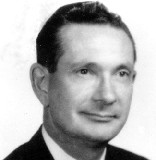
Byron de la Beckwith
Murderer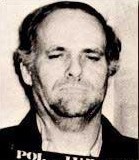 Ervil LeBaron
Murderer · USA · 1972
Ervil Morrell LeBaron (1925 to August 16, 1981) was the leader of a polygamous…
35 victims
Ervil LeBaron
Murderer · USA · 1972
Ervil Morrell LeBaron (1925 to August 16, 1981) was the leader of a polygamous…
35 victims
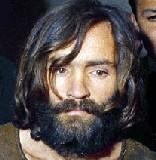 Charles Manson
Murderer · USA · 1969
Charles Milles Manson (born November 12, 1934) was an American criminal and mus…
9 victims
Charles Manson
Murderer · USA · 1969
Charles Milles Manson (born November 12, 1934) was an American criminal and mus…
9 victims
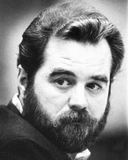 Dennis Duane Webb
Murderer · USA · 1973
Defendant: Dennis Duane Webb · Victims: John Rainwater and Lori Rainwater · Cou…
7 victims
Dennis Duane Webb
Murderer · USA · 1973
Defendant: Dennis Duane Webb · Victims: John Rainwater and Lori Rainwater · Cou…
7 victims
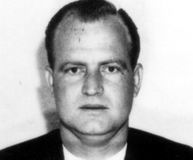 Gary Gene Tison
Murderer · USA · 1967
Gary Gene Tison was serving life sentences at the Arizona state prison. He had…
7 victims
Gary Gene Tison
Murderer · USA · 1967
Gary Gene Tison was serving life sentences at the Arizona state prison. He had…
7 victims
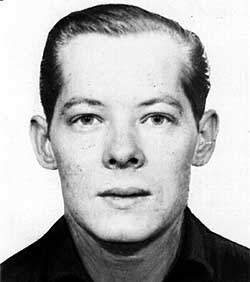 Richard Lee Tingle
Murderer · USA · 1968
Richard Lee Tingle was born out of wedlock in December 1940. He was raised by a…
6 victims
Richard Lee Tingle
Murderer · USA · 1968
Richard Lee Tingle was born out of wedlock in December 1940. He was raised by a…
6 victims
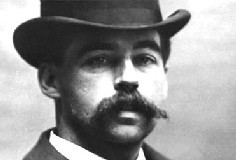 Herman Webster Mudgett
Serial killer · USA - Canada · 1886
Herman Webster Mudgett (May 16, 1861 – May 7, 1896), better known under the ali…
27 victims
Herman Webster Mudgett
Serial killer · USA - Canada · 1886
Herman Webster Mudgett (May 16, 1861 – May 7, 1896), better known under the ali…
27 victims
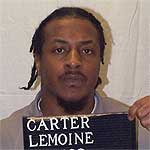 Lemoine Carter
Murderer · USA · 1994
Name: Lemoine Carter · Court / proceeding: United States Court of Appeals for t…
2 victims
Lemoine Carter
Murderer · USA · 1994
Name: Lemoine Carter · Court / proceeding: United States Court of Appeals for t…
2 victims
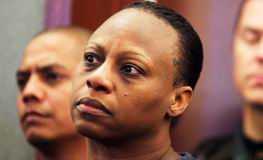 Brenda Stokes Wilson
Murderer · USA · 2012
Brenda Stokes Wilson, 50, was a former blackjack dealer. She was accused of kil…
1 victim
Brenda Stokes Wilson
Murderer · USA · 2012
Brenda Stokes Wilson, 50, was a former blackjack dealer. She was accused of kil…
1 victim
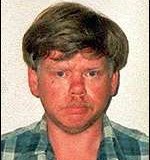 Russell Eugene Weston
Homicide · USA · 1998
Russell Eugene Weston Jr. was born December 28, 1956 and used the nickname “Rus…
2 victims
Russell Eugene Weston
Homicide · USA · 1998
Russell Eugene Weston Jr. was born December 28, 1956 and used the nickname “Rus…
2 victims
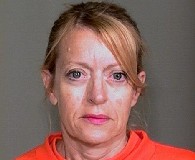 Valerie Pape
Murderer · USA · 2000
Valerie Pape was convicted after pleading guilty in 2002 to second-degree murde…
1 victim
Valerie Pape
Murderer · USA · 2000
Valerie Pape was convicted after pleading guilty in 2002 to second-degree murde…
1 victim
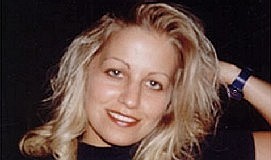 Karla Homolka
Serial killer · Canada · 1990
Karla Leanne Homolka, also known as Karla Leanne Teale and Leanne Bordelais, wa…
3 victims
Karla Homolka
Serial killer · Canada · 1990
Karla Leanne Homolka, also known as Karla Leanne Teale and Leanne Bordelais, wa…
3 victims
- Gender
- male
- Country
- USA
- Location
- Jackson, Mississippi, USA
- Date of birth
- November 9, 1920
- Age at first offence
- 43
- Characteristics
- white supremacist
- Victim profile
- Civil rights leader Medgar Evers
- Method of murder
- Shooting
- Date(s) of murder
- June 12, 1963
- Years active
- 1963
- Date of arrest
- —
- Status
-
Died in custody
Sentenced to life imprisonment; died in prison on January 21, 2001
Case details
Byron De La Beckwith (November 9, 1920 – January 21, 2001) was an American white supremacist and convicted murderer of civil rights leader Medgar Evers.
Victim
Medgar Evers (July 2, 1925 – June 12, 1963) was an African American civil rights activist from Mississippi. He was murdered by Byron De La Beckwith, a member of the Ku Klux Klan.
Timeline
- January 21, 2001 — Beckwith died in prison at the University of Mississippi Medical Center in Jackson, Mississippi.
- February 5, 1994 — Beckwith was convicted of first-degree murder for killing Medgar Evers.
- 1997 — The Mississippi Supreme Court upheld Beckwith’s conviction.
- 1994 — A third trial ended with Beckwith being convicted of first-degree murder for killing Medgar Evers; the jury included eight African-American jurors and four white jurors.
- June 23, 1964 — Byron De La Beckwith was arrested for Evers’s murder.
- 1967 — Beckwith unsuccessfully sought the Democratic Party’s nomination for Lieutenant Governor of Mississippi.
- June 12, 1963 — Evers was shot in the back and died at a local hospital.
- May 28, 1963 — A molotov cocktail was thrown into the carport of Evers’s home.
- December 17, 1990 — Beckwith was arrested.
- January 1946 — Beckwith was discharged in January 1946 (after Marine Corps service).
- January 1942 — Beckwith enlisted in the U.S. Marine Corps.
- May 19, 1977 — Beckwith served prison time from May 1977 until January 1980 (consecutive with his earlier Angola imprisonment for another conviction described in the case).
- January 1980 — Beckwith served imprisonment until January 1980 (end of Angola prison service noted).
The offence
Medgar Evers was shot in the back on June 12, 1963 in Jackson, Mississippi. He had stepped out of his car when he was shot. He was walking to his house with an armful of “Jim Crow Must Go” T-shirts. After being struck, he staggered 30 feet before collapsing and died at a local hospital 50 minutes later. The murder occurred just hours after President John F. Kennedy’s speech on national television in support of civil rights.
Investigation
The 1994 conviction was based, in part, on new evidence proving that Beckwith had boasted of the murder at a Klan rally and to others over the three decades after the crime. The physical evidence was essentially the same as that used during the first two trials.
After the case was reopened at the request of Evers’s widow, Myrlie Evers Williams, prosecutors and investigators found new evidence including negatives from the crime scene and new witnesses who testified that Beckwith had bragged to them “about beating the system.” During the reopening, it was stated that the DA’s file could not be found, there was no trial transcript to know who the witnesses were, and none of the evidence had been retained by the court.
Arrest and imprisonment events described
Byron De La Beckwith was twice tried for murder in 1964; both trials ended in mistrials with all-white, all-male juries unable to reach a verdict.
In the second 1964 trial, former Governor Ross Barnett interrupted the proceedings while Myrlie Evers was testifying to shake hands with Beckwith.
In the course of his first trial in 1964, De La Beckwith was visited by former Mississippi governor Ross Barnett and one time Army Major General Edwin A. Walker.
In later events described, Beckwith was arrested on December 17, 1990 ahead of the 1994 trial. In 1994, he was brought to trial before a jury of eight African-Americans and four whites and was convicted. At the time he stood trial in 1994, Beckwith was 74 years old.
Separately, in 1973 informants alerted the FBI of Beckwith’s plans to murder A.I. Botnick, director of the New Orleans based B’nai Brith Anti-Defamation League, for comments Botnick had made about southerners and race relations. After several days of surveillance, Beckwith’s car was stopped by New Orleans police as he crossed over the Lake Pontchartrain Causeway Bridge. Loaded firearms were found, along with a map with directions to Botnick’s house highlighted and a dynamite time bomb. On August 1, 1975 Beckwith was convicted of conspiracy to commit murder, serving three years in Angola Prison from May 1977 until January 1980.
Trial
1964 trials
Beckwith was tried twice for murder in 1964. Both trials ended in mistrials with all-white, all-male juries unable to reach verdicts.
1994 trial and verdict
The third trial took place in 1994 before a jury of eight African-American jurors and four white jurors. The trial ended with Beckwith being convicted of first-degree murder for killing Medgar Evers. The guilty verdict was based on new evidence proving that he had boasted of the murder at a Klan rally and to others over the three decades after the crime. It was noted that the physical evidence was essentially the same as that used during the first two trials.
Beckwith was convicted of murder on February 5, 1994 after having lived as a free man for the three decades following the killing.
Prosecutors in the 1994 trial were Bobby DeLaughter and Ed Peters.
Sentencing
After conviction, Beckwith was sentenced to life in prison in 1994.
The case also stated that he was sentenced to life in prison without the possibility of parole for first-degree murder.
Appeals
The conviction was appealed unsuccessfully. The Mississippi Supreme Court upheld the conviction in 1997. The court said the 31-year lapse between the murder and De La Beckwith’s conviction did not deny him a fair trial.
Outcome
Beckwith died in prison on January 21, 2001 at the University of Mississippi Medical Center in Jackson, Mississippi. He had suffered from heart disease, high blood pressure and other ailments. The hospital spokeswoman Barbara Austin said Beckwith entered University Medical Center at 2:07 p.m. CDT Sunday and could not elaborate on his ailment or the cause of death, stating: “It’s a matter for the coroner’s office to determine.”
Aftermath and related details
Disciplinary outcome for prosecutors
It was stated that the attorneys for the prosecution, Bobby DeLaughter and Ed Peters, were later disbarred for their involvement in the Dickie Scruggs bribery case.
Claims and disputed awards
Later claims that Beckwith was awarded the Silver Star were stated to be unfounded, according to official Marine Corps records.
People and quotes
Myrlie Evers Williams was described as Evers’s widow and as asking for the case to be reopened.
Hinds County District Attorney Bobby DeLaughter said:
“At the very beginning ... we didn't have anything” and: “The DA's file was nowhere to be found. We did not have the benefit of a trial transcript to know who the witnesses were. None of the evidence had been retained by the court.”
Background on Medgar Evers (non-procedural details included)
Evers was born on July 2, 1925 in Decatur, Mississippi. In 1943, at age 17, he dropped out of high school to enlist in the army with his older brother Charlie. He fought in the European Theatre of WWII and was honorably discharged in 1945 as a Sergeant.
In 1946, Evers returned to his hometown and, along with his brother and four friends, registered to vote in a local election. It was stated that local white citizens used intimidation to prevent Evers and the others from casting their votes. Evers recounted this moment in his autobiography:
“When we got to the courthouse, the clerk said he wanted to talk with us. When we got into his office, some 15 or 20 armed white men surged in behind us, men I had grown up with, had played with. We split up and went home. Around town, Negroes said we had been whipped, beaten up and run out of town. Well, in a way we were whipped, I guess, but I made up my mind then that it would not be like that again—at least not for me. I was committed, in a way, to change things.”
In 1948, Evers enrolled at Alcorn State University, majoring in business administration. He was on the debate team, played football and ran track, sang in the school choir and served as president of his junior class. He married classmate Myrlie Beasley on December 24, 1951, and completed work on his degree the following year.
The couple moved to Mound Bayou, MS, where T.R.M. Howard hired him to sell insurance for his Magnolia Mutual Life Insurance Company. Howard was also described as president of the Regional Council of Negro Leadership (RCNL), a civil rights and pro self-help organization. Evers helped to organize the RCNL’s boycott of service stations that denied blacks use of their restrooms. The boycotters distributed bumper stickers with the slogan “Don't Buy Gas Where You Can't Use the Restroom.” With his brother, Charles Evers, he attended the RCNL’s annual conferences in Mound Bayou between 1952 and 1954 which drew crowds of ten thousand or more.
Evers applied to the then-segregated University of Mississippi Law School in February 1954. When his application was rejected, Evers became the focus of an NAACP campaign to desegregate the school, a case aided by the U.S. Supreme Court ruling in Brown v. Board of Education 347 U.S. 483 that segregation was unconstitutional. He was involved in a boycott campaign against white merchants and was instrumental in eventually desegregating the University of Mississippi when that institution was forced to enroll James Meredith in 1962.
In the weeks leading up to his death, Evers was described as the target of threats. He investigated the murder of Emmett Till and vocal support of Clyde Kennard made him a prominent black leader and therefore vulnerable to attack. On May 28, 1963, a molotov cocktail was thrown into the carport of his home. Five days before his death, Evers was nearly run down by a car after he emerged from the Jackson NAACP office. Civil rights demonstrations accelerated in Jackson during the first week of June 1963. A local television station granted Evers time for a short speech, his first in Mississippi, where he outlined the goals of the Jackson movement. Following the speech, threats on Evers’s life increased.
Evers was buried on June 19 in Arlington National Cemetery, receiving full military honors in front of a crowd of more than three thousand people. The largest funeral at Arlington since the interment of John Foster Dulles in 1959 was noted. Mickey Levine, described as the past chairman of the American Veterans’ Committee, said at the services: “No soldier in this field has fought more courageously, more heroically than Medgar Evers.”
Burial and surviving family
Beckwith was described as survived by his wife and a son. Evers’s widow, Myrlie, was described as becoming chair of the NAACP.
Other persons mentioned
- Charles Evers was described as returning to Jackson in July 1963 and serving briefly in his slain brother’s place, remaining involved in Mississippi Civil Rights for years to come, and residing in Jackson.
- Delmar Dennis was identified as a key witness for the prosecution at Beckwith’s 1994 trial.
Characterization and organizational involvement of Beckwith
Beckwith was described as a member of the Ku Klux Klan and part of the “White Citizens' Council,” and as a leader in the pro-segregationist Phineas Priesthood, described as a branch of the white supremacist Christian Identity Movement, described as espousing hostility towards blacks, Jews, Catholics, and foreign-born American citizens specifically, as well as the United States Federal Government.
Beckwith worked as a tobacco and fertilizer salesman for 10 years. He attended Greenwood Episcopal Church of the Nativity and became a member of the Ku Klux Klan.
Early life and military service
Beckwith was born in Colusa, California to Susan Southworth Yerger. His father died of pneumonia when he was five years old, after which he moved to the Sacramento area. He later moved with his mother to Greenwood, Mississippi to be near relatives. His mother died of lung cancer when he was 12, and he was placed in the care of his maternal uncle, William Greene Yerger.
Beckwith enlisted in the U.S. Marine Corps in January 1942 and served as a machine gunner in the Pacific theater. He saw action at the Battle of Guadalcanal and was wounded during the Battle of Tarawa. For his service, Beckwith received the Presidential Unit Citation (twice), Asiatic-Pacific Campaign Medal with three bronze service stars, Good Conduct Medal, World War II Victory Medal, and the Purple Heart. Later claims that he was awarded the Silver Star were stated as unfounded according to official Marine Corps records. He was discharged in January 1946. After serving, Beckwith moved to Rhode Island and married Mary Louise Williams. He then settled in Greenwood with his wife.
1975 conspiracy to commit murder event details
The case described that informants alerted the FBI about Beckwith’s plans to murder A.I. Botnick of the B’nai Brith Anti-Defamation League. After surveillance, New Orleans police stopped Beckwith’s car as he crossed over the Lake Pontchartrain Causeway Bridge. The vehicle contained several loaded firearms, a map with directions to Botnick’s house highlighted, and a dynamite time bomb. On August 1, 1975, Beckwith was convicted of conspiracy to commit murder and served three years in Angola Prison from May 1977 until January 1980.
Fiction and cultural portrayals mentioned
Eudora Welty wrote the short story “Where Is the Voice Coming From?” (1963), described as written immediately after the event, before Beckwith was captured, and published in The New Yorker soon after de la Beckwith’s arrest. Welty later said:
“Whoever the murderer is, I know him: not his identity, but his coming about, in this time and place. That is, I ought to have learned by now, from here, what such a man, intent on such a deed, had going on in his mind. I wrote his story--my fiction--in the first person: about that character's point of view”
The story was described as having dramatic monologue ending with the line:
“sing a-down, down, down, down. Down.” and: “are the story's last words.”
Beckwith was described as the subject of the 1963 Bob Dylan song “Only a Pawn in Their Game”. The lyrics were described as deploring Evers’ murder and the racist element in “The South” at the time, while dismissing De La Beckwith as merely a product of his environment.
The case also mentioned Nina Simone’s song “Mississippi Goddam,” Phil Ochs’s songs “The Ballad of Medgar Evers” and “Another Country,” and Matthew Jones and the Student Nonviolent Coordinating Committee Freedom Singers’ tribute “Ballad of Medgar Evers.”
Jackson, Mississippi native Eudora Welty’s story “Where is the Voice Coming From,” with the speaker as the imagined assassin of Medgar Evers, was noted as published in The New Yorker.
In 1994, the film Ghosts of Mississippi was described as telling the story of the murder and the 1994 retrial of Beckwith, with James Woods portraying Beckwith and Alec Baldwin portraying DeLaughter. Whoopi Goldberg played Myrlie Evers in the film. The film was directed by Rob Reiner.
The prosecution lawyer Robert DeLaughter wrote a first person narrative article titled “Mississippi Justice” published in Reader’s Digest. The episode of Mr. Show, “Show Me Your Weenis,” included a fictional TV series named “Byron De La Beckwith VII: Racist in the Year 3000.” It was described as presumably a descendent of Byron De La Beckwith.
Memorials and named institutions
In 1970, Medgar Evers College was established in Brooklyn, New York as part of the City University of New York. In 1983, a made-for-television movie, For Us the Living: The Medgar Evers Story starring Howard Rollins Jr. was aired. On June 28, 1992, the city of Jackson, MS erected a statue in honor of Evers. All of Delta Drive (part of U.S. Highway 49) in Jackson was renamed in Evers’ honor. In December 2004, the Jackson City Council changed the name of the city’s airport to Jackson-Evers International Airport in honor of Evers.
Other organizations and publications referenced
The case listed multiple references and authors, including works by David T. Beito and Linda Royster Beito, Jennie Brown, John Dittmer, Evers’s authorship with Myrlie Evers and William Peters, James E. Jackson, Reed Massengill, Adam Nossiter, Charles M. Payne, John R. Salter, Scott R. W., Remembering Medgar Evers—For a New Generation, Maryanne Vollers, and others.
Spotted an error, or have more information about this case?