
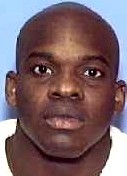
Donald Gene Franklin
Murderer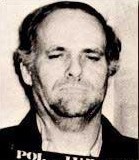 Ervil LeBaron
Murderer · USA · 1972
Ervil Morrell LeBaron (1925 to August 16, 1981) was the leader of a polygamous…
35 victims
Ervil LeBaron
Murderer · USA · 1972
Ervil Morrell LeBaron (1925 to August 16, 1981) was the leader of a polygamous…
35 victims
 Brian Kevin Rosenfeld
Murderer · USA · 1985
Brian Kevin Rosenfeld Brian Kevin Rosenfeld was sentenced to three concurrent l…
23 victims
Brian Kevin Rosenfeld
Murderer · USA · 1985
Brian Kevin Rosenfeld Brian Kevin Rosenfeld was sentenced to three concurrent l…
23 victims
 Marvin Gray
Murderer · USA · 1975
Marvin Gray was convicted killer who claimed responsibility for 23 slayings and…
23 victims
Marvin Gray
Murderer · USA · 1975
Marvin Gray was convicted killer who claimed responsibility for 23 slayings and…
23 victims
 Yahweh ben Yahweh
Murderer · USA · 1980
Yahweh ben Yahweh was born and legally named Hulon Mitchell Jr. (October 27, 19…
23 victims
Yahweh ben Yahweh
Murderer · USA · 1980
Yahweh ben Yahweh was born and legally named Hulon Mitchell Jr. (October 27, 19…
23 victims
 Fitzhugh Goldsborough
Murderer · USA · 1911
Fitzhugh Coyle Goldsborough shot American journalist and novelist David Graham…
1 victim
Fitzhugh Goldsborough
Murderer · USA · 1911
Fitzhugh Coyle Goldsborough shot American journalist and novelist David Graham…
1 victim
 Joan Vila Dilme
Serial killer · Spain · 2009
Joan Vila Dilme was a security guard and care-home worker at the La Caritat hom…
11 victims
Joan Vila Dilme
Serial killer · Spain · 2009
Joan Vila Dilme was a security guard and care-home worker at the La Caritat hom…
11 victims
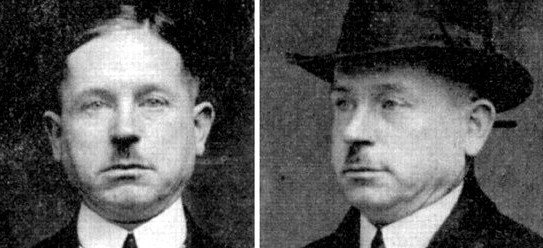 Peter Kürten
Serial killer · Germany · 1913
Peter Kürten Peter Kürten was convicted of nine murders and sentenced to death.…
9 victims
Peter Kürten
Serial killer · Germany · 1913
Peter Kürten Peter Kürten was convicted of nine murders and sentenced to death.…
9 victims
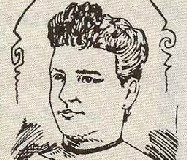 Alice Mitchell
Murderer · USA · 1892
Alice Mitchell was tried for murder and entered a plea of “present insanity,” m…
1 victim
Alice Mitchell
Murderer · USA · 1892
Alice Mitchell was tried for murder and entered a plea of “present insanity,” m…
1 victim
 Mark Edward Gardner
Murderer · USA · 1985
Mark Edward Gardner (c. 1956 – September 8, 1999) was executed at the age of 43…
3 victims
Mark Edward Gardner
Murderer · USA · 1985
Mark Edward Gardner (c. 1956 – September 8, 1999) was executed at the age of 43…
3 victims
- Gender
- male
- Country
- USA
- Location
- Nueces County, Texas, USA
- Date of birth
- September 21, 1951
- Age at first offence
- 24
- Characteristics
- kidnapping, rape, robbery
- Victim profile
- Mary Margaret Moran
- Method of murder
- St abbing with knife
- Date(s) of murder
- July 25, 1975
- Years active
- 1975
- Date of arrest
- Same day
- Status
-
Executed
Executed by lethal injection in Texas on November 3, 1988
Case details
Donald Gene Franklin was convicted of capital murder under Tex.Penal Code Ann. § 19.03 (1974) after the jury found him guilty. His principal defense at trial was mistaken identity. The jury also found that the murder was committed deliberately and with the reasonable expectation that death would result and that there was a probability that he would commit criminal acts of violence that would constitute a continuing threat to society; the trial court therefore imposed a sentence of death.
He declined to make a last statement.
Victims
Mary Margaret Moran was a nurse at a Veterans' Administration hospital in San Antonio, Texas. Around midnight on July 25, 1975, someone attacked Ms. Moran in the hospital parking lot as she left work. Five days later, Ms. Moran was found naked, lying in a field in the midday Texas sun. She had been stabbed seven times, and she was also robbed and possibly sexually assaulted. Ms. Moran was still alive when she was discovered and was taken to a local hospital, where she died the following day.
Timeline
- July 25, 1975 (around midnight) — Someone attacked Mary Margaret Moran, a nurse at a Veterans' Administration hospital in San Antonio, Texas, in the hospital parking lot as she left work.
- July 30, 1975 (five days later) — Ms. Moran was found naked, lying in a field in the midday Texas sun; she had been stabbed seven times, was robbed, and was possibly sexually assaulted.
- July 31, 1975 (the following day) — Ms. Moran died at a local hospital.
- (trial proceedings referenced in federal habeas action) — Petitioner’s principal defense was that he had been mistakenly identified, and that her death resulted from incompetent hospital treatment, and not the assault.
- (trial and direct appeal before the federal habeas proceedings) — The jury found petitioner guilty of capital murder and sentenced him to death; subsequent Texas courts affirmed his conviction and death sentence.
- 1982 (referenced as proceedings at petitioner’s third for this same offense) — Petition concerned proceedings at petitioner’s 1982 trial; his two previous convictions and death sentences were set aside for reasons unrelated to the issues before the Court.
- July 30, 1987 — Appeals from the United States District Court for the Western District of Texas were before the United States Court of Appeals for the Fifth Circuit.
- March 1, 1988 — The Supreme Court case was argued.
- June 22, 1988 — The Supreme Court decided the case.
- November 3, 1988 — Execution by lethal injection in Texas.
The offence
Around midnight on July 25, 1975, someone attacked Mary Margaret Moran, a nurse at a Veterans' Administration hospital in San Antonio, Texas, as she left work. Five days later, Ms. She had been stabbed seven times; Ms. Moran was also robbed and possibly sexually assaulted. Ms.
The jury found petitioner guilty of capital murder under Tex.Penal Code Ann. § 19.03 (1974).
At the conclusion of the penalty hearing, two “Special Issues” were submitted to the jury. The special verdict questions were:
- “Do you find from the evidence beyond a reasonable doubt that the conduct of the Defendant, Donald Gene Franklin, that caused the death of Mary Margaret Moran, was committed deliberately and with the reasonable expectation that the death of the deceased or another would result?”
- “Do you find from the evidence beyond a reasonable doubt that there is a probability that the Defendant, Donald Gene Franklin, would commit criminal acts of violence that would constitute a continuing threat to society?” The court instructed the jury that, if it answered “Yes” to both questions, petitioner would be sentenced to death.
Investigation
Suspicion had focused on petitioner within hours of Ms. Moran's abduction. He was arrested the following morning at his house, where police found a wide array of physical evidence concerning the crime. Petitioner told the officers that he had loaned his car and clothing to a friend the previous evening, and had no explanation for the physical evidence revealed by the search. Petitioner did not take the stand at his trial.
Among the items found at petitioner's home were:
- a pair of shoes with human blood on them that matched the victim's type;
- some of petitioner's clothes, soiled with blood and plant samples (matching the field where the victim was discovered);
- one of petitioner's shirts, covered with fibres that matched the victim's sweater.
In addition, in a trash can behind petitioner's house, various items of the victim's personal property were found, as well as a knife which was later determined to be the apparent murder weapon. Similar fibre, plant, and blood sample evidence was found in petitioner's car, matching samples of the victim's blood, her clothing, and the field where she was found.
Arrest
Petitioner was arrested the following morning at his house.
Trial
Petitioner’s principal defense was that he had been mistakenly identified and that, even if he was the person who stabbed the victim, her death was the result of incompetent hospital treatment, and not the assault.
§ 19.03 (1974). Subsequently, the Texas courts affirmed petitioner's conviction and death sentence, including in Franklin v. State, 693 S.W.2d 420 (Tex.Crim.App.1985).
Penalty phase
At the penalty phase, the State called four police officers who testified that petitioner had a bad reputation as a law-abiding citizen. The State also proved that petitioner had a prior conviction for rape and called a witness who testified that petitioner had raped her the year before this crime was committed.
The sole mitigating evidence petitioner presented was the stipulation that petitioner’s disciplinary record while incarcerated from 1971-1974 and 1976-1980 was without incident.
Petitioner submitted five “special requested” jury instructions. The requested instructions would have told the jury that any evidence they felt mitigated against the death penalty should be taken into account in answering the Special Issues and could alone be enough to return a negative answer to either one or both questions, even if the jury otherwise believed “Yes” answers were warranted. The trial court declined to give the requested instructions and instead gave a brief charge that remonstrated the jury to “remember all the instructions that the Court has previously given you, and be guided by them,” including the charge to arrive at the verdict based on all the evidence.
Petitioner’s requested jury instructions were, in pertinent part:
- “You are instructed that any evidence which, in your opinion, mitigates against the imposition of the Death Penalty, including any aspect of the Defendant's character or record, and any of the circumstances of the commission of the offense . . . may be sufficient to cause you to have a reasonable doubt as to whether or not the true answer to any of the Special Issues is 'Yes'; and in the event such evidence does cause you to have such a reasonable doubt, you should answer the Issue 'No.'” (Defendant's Special Requested Charge on Punishment No. One, App. 7.)
- “An answer of 'No' may be given to any of the [Special] Issues if” “ * * * *” “2) . . . at least ten (10) jurors find that mitigating factors against the imposition of the Death Penalty exist, either in regard to any aspect of the Defendant's character or record or in regard to any of the circumstances of the commission of the offense . . . or” “3) if evidence of any such mitigating factors causes at least ten (10) jurors to have a reasonable doubt as to whether the true answer to the Issues is 'Yes.'” (Id. at 8-9 (No. Two).)
- “You are instructed that you may answer any of the Special Issues 'No' if you find any aspect of the Defendant's character or record or any of the circumstances of the offense as factors which mitigate against the imposition of the death penalty.” (Id. at 10 (No. Three).)
- “You are instructed that you may answer Special Issue No. One 'No' if you find any aspect of the Defendant's character or record as factors which mitigate against the imposition of the death penalty.” (Id. at 11 (No. Four).)
- 2 'No' if you find any aspect of the Defendant's character or record or any of the circumstances of the offense as factors which mitigate against the imposition of the death penalty.” (Id. at 12 (No. Five).)
The jury returned “Yes” answers to both Special Issues, and the trial court therefore imposed a sentence of death.
Appeals
Federal habeas proceedings
Petitioner filed a federal habeas corpus action contesting his conviction and sentence. Among other claims, petitioner argued that, absent his special requested instructions, the Texas Special Issues limited the jury's consideration of mitigating evidence, contrary to Lockett v. Ohio and other decisions.
The District Court rejected this claim, finding no error in the trial court's refusal to give the requested instructions and no violation of this Court's precedents. The Court of Appeals affirmed the District Court's denial of habeas relief without commenting on the jury instruction claim, noting 823 F.2d 98, 99-100 (CA5 1987).
Fifth Circuit
In the United States Court of Appeals for the Fifth Circuit, July 30, 1987, the panel addressed several issues, including an improper reference to petitioner's post-arrest silence after he had received Miranda warnings.
The Fifth Circuit stated that comments by the prosecutor on the post-arrest silence of a defendant after the administration of Miranda warnings have been taboo under Doyle v. Ohio, 426 U.S. 610, 96 S.Ct. 2240, 49 L.Ed.2d 91 (1976). The court held that the prosecutor’s question did not require habeas relief where no use of the fact of petitioner's silence was permitted by the court, citing Greer v. Miller. It stated: “Here there was none; a sustained objection and an instruction to disregard followed hard on the improper question. It was never heard of again. Greer is on all fours; it controls.”
The Fifth Circuit also addressed a statistics-based claim that the Texas murder statute was applied in a discriminatory way against blacks who murder whites, stating that petitioner’s claims were resolved against him by McCleskey v. Kemp.
The Fifth Circuit also addressed petitioner's contention that the wording of the trial court's charge permitted the jury to convict of capital murder for a killing committed in the course of a felony when some jurors may have believed the felony was robbery while others thought it kidnapping. The court stated that, on the evidence, there was little serious dispute that whoever attacked the victim both robbed and kidnapped her; it stated that petitioner’s defense disputed these matters only pro forma, and that the major claim was mistaken identity. The court concluded that the claim lacked substance because the jury faced one real question: whether it was Franklin.
The Fifth Circuit vacated an earlier stay of execution and affirmed the trial court’s judgment denying habeas relief, stating: “The stay of execution earlier granted is VACATED, and judgment is AFFIRMED.”
Supreme Court
In Franklin v. Lynaugh, the Supreme Court stated it was called on to determine if the Eighth Amendment required a Texas trial court to give certain jury instructions relating to mitigating evidence requested in the sentencing phase of his capital trial.
The Supreme Court case details included:
- “Franklin v. Lynaugh”
- “No. 87-5546”
- “Argued March 1, 1988”
- “Decided June 22, 1988”
- “CERTIORARI TO THE UNITED STATES COURT OF APPEALS FOR THE FIFTH CIRCUIT”
The Supreme Court held that the judgment was affirmed.
The Supreme Court syllabus described:
- petitioner’s principal defense at trial was mistaken identity and that even if he stabbed the victim, her death resulted from incompetent hospital treatment rather than the assault;
- after the jury found him guilty, the sole mitigating evidence presented at the penalty phase was the stipulation that the disciplinary record while incarcerated before and after the murder was without incident;
- the trial court submitted two “Special Issues” asking whether it found beyond a reasonable doubt (1) deliberate killing with expectation of death and (2) probability of future dangerousness; if both answers were “Yes,” petitioner would be sentenced to death;
- petitioner requested five “special requested” jury instructions intended to direct the jury to consider mitigating evidence and allow it alone to return negative answers even if “Yes” otherwise warranted;
- the trial court declined to give the requested instructions and remonstrated the jury to remember prior instructions, including that the verdict should be based on all the evidence;
- the jury returned “Yes” answers to both special issues, and the court sentenced petitioner to death; state appellate court affirmed;
- the federal habeas claim argued that, absent his instructions, the special issues limited jury consideration of mitigating evidence in violation of the Eighth Amendment, and the District Court denied relief and the Court of Appeals affirmed;
- the Supreme Court concluded that refusal to give requested special instructions did not violate the Eighth Amendment right to present mitigating evidence.
The Supreme Court described the opinion by JUSTICE WHITE and concurrences and dissent, including:
- “JUSTICE WHITE, joined by THE CHIEF JUSTICE, JUSTICE SCALIA, and JUSTICE KENNEDY, concluded that the trial court's refusal to give petitioner's requested special instructions did not violate his Eighth Amendment right to present mitigating evidence.”
- “JUSTICE O'CONNOR, joined by JUSTICE BLACKMUN, concluded that the Texas capital sentencing procedure did not unconstitutionally prevent the jury from giving mitigating effect to any evidence relevant to petitioner's character or background or the circumstances of the offense.”
- “JUSTICE STEVENS, with whom BRENNAN and MARSHALL, JJ., joined, dissenting.”
Sentencing
At the conclusion of the penalty hearing, the trial court imposed a death sentence after the jury answered “Yes” to both Special Issues about deliberateness and continuing threat to society.
Outcome
The Supreme Court affirmed the judgment, and the Fifth Circuit affirmed the denial of habeas relief. The stay of execution earlier granted was vacated. The execution followed.
Aftermath
Franklin declined to make a last statement.
He was executed by lethal injection in Texas on November 3, 1988.
Spotted an error, or have more information about this case?