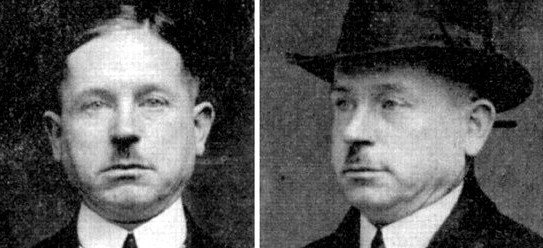
Peter Kürten
Serial killer Georg Karl Grossmann
Serial killer · Germany · 1913
Georg Karl Grossmann, who commonly called himself just Karl Grossman (also give…
50 victims
Georg Karl Grossmann
Serial killer · Germany · 1913
Georg Karl Grossmann, who commonly called himself just Karl Grossman (also give…
50 victims
 Karl Denke
Serial killer · Germany · 1909
Karl Denke (August 12, 1870 – December 20, 1924) was a serial killer from Germa…
30 victims
Karl Denke
Serial killer · Germany · 1909
Karl Denke (August 12, 1870 – December 20, 1924) was a serial killer from Germa…
30 victims
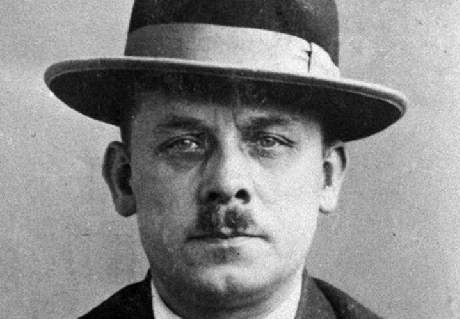 Friedrich Haarmann
Serial killer · Germany · 1918
Friedrich "Fritz" Haarmann (October 25, 1879 – April 15, 1925) was a serial kil…
27 victims
Friedrich Haarmann
Serial killer · Germany · 1918
Friedrich "Fritz" Haarmann (October 25, 1879 – April 15, 1925) was a serial kil…
27 victims
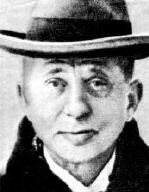 Adolf Gustav Seefeld
Serial killer · Germany · 1908
Adolf Gustav Seefeld (1871–1936) was a German tramp and religious fanatic who k…
12 victims
Adolf Gustav Seefeld
Serial killer · Germany · 1908
Adolf Gustav Seefeld (1871–1936) was a German tramp and religious fanatic who k…
12 victims
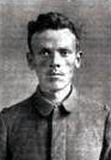 Friedrich Schumann
Serial killer · Germany · 1911
Friedrich Schumann (1 February 1893 – 27 August 1921) was a German serial kille…
6 victims
Friedrich Schumann
Serial killer · Germany · 1911
Friedrich Schumann (1 February 1893 – 27 August 1921) was a German serial kille…
6 victims
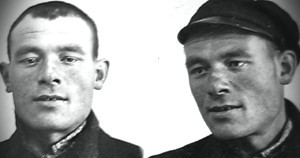 Bruno Lüdke
Serial killer · Germany · 1928
Bruno Lüdke (3 April 1908 – 26 April 1944) was an alleged German serial killer.…
84 victims
Bruno Lüdke
Serial killer · Germany · 1928
Bruno Lüdke (3 April 1908 – 26 April 1944) was an alleged German serial killer.…
84 victims
 Rita Gluzman
Murderer · USA · 1996
Rita Gluzman was convicted of murdering her husband, Yakov Gluzman, and dismemb…
1 victim
Rita Gluzman
Murderer · USA · 1996
Rita Gluzman was convicted of murdering her husband, Yakov Gluzman, and dismemb…
1 victim
 William Rousan
Murderer · USA · 1993
William Rousan was convicted in Missouri for the murders of Charles Lewis and G…
2 victims
William Rousan
Murderer · USA · 1993
William Rousan was convicted in Missouri for the murders of Charles Lewis and G…
2 victims
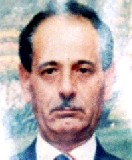 Ali Hassan Abu Kamal
Murderer · USA · 1997
Ali Hassan Abu Kamal opened fire on the observation deck of the Empire State Bu…
1 victim
Ali Hassan Abu Kamal
Murderer · USA · 1997
Ali Hassan Abu Kamal opened fire on the observation deck of the Empire State Bu…
1 victim
 Jerald Harjo
Murderer · USA · 1988
Jerald Wayne Harjo was convicted of first degree murder in Seminole County, Okl…
1 victim
Jerald Harjo
Murderer · USA · 1988
Jerald Wayne Harjo was convicted of first degree murder in Seminole County, Okl…
1 victim
 Ignacio Cuevas
Murderer · USA · 1974
Ignacio Cuevas was executed in Texas by lethal injection on May 23, 1991, for h…
3 victims
Ignacio Cuevas
Murderer · USA · 1974
Ignacio Cuevas was executed in Texas by lethal injection on May 23, 1991, for h…
3 victims
- Gender
- male
- Country
- Germany
- Location
- Prussia Rhine Province, Germany
- Date of birth
- May 26, 1883
- Age at first offence
- 30
- Characteristics
- sadist, rape
- Victim profile
- Women and girls
- Method of murder
- St abbing with knife - Hitting with a hammer - Strangulation
- Date(s) of murder
- 1913 - 1929
- Years active
- 1913–1929
- Date of arrest
- May 24, 1930
- Status
-
Executed
Executed by guillotine in Cologne on July 2, 1931
Name
Peter Kürten
Legal outcome
Peter Kürten was convicted of nine murders and sentenced to death. He was executed by guillotine in Cologne on July 2, 1931.
Background
Peter Kürten was a German serial killer dubbed “The Vampire of Düsseldorf” by the contemporary media. He was born in Cologne on 26 May 1883 and was known for sex crimes, assaults, and murders against adults and children, most notably from February to November 1929 in Düsseldorf.
Kürten was born into a poverty-stricken, abusive family in Mülheim am Rhein. One account described him as the eldest of 13 children; another described him as the third of 11 children. His father was a habitual drunkard who repeatedly beat his children and raped his wife in front of them. In later years, his father also sexually assaulted his daughters. Kürten’s mother was forced to endure her violent marriage.
Kürten formed a friendship with a dogcatcher who lived in the same building, and Kürten later became involved with sexually abusive behaviour toward animals. He also reportedly drowned two young friends while playing on the river Rhine, including holding another boy under the water until he suffocated. The death was attributed to an accident and Kürten was cleared of blame.
Kürten ran away from home at age 16. Shortly afterwards, his father was jailed for three years after being convicted of incest with Peter’s 13-year-old sister.
Kürten lived by his wits and stole food and clothing to survive. He was in and out of jail for the next 24 years and later claimed that his brutal treatment in the penal system made him hell-bent on wreaking revenge on society.
The offence
Crimes connected to the name “Vampire of Düsseldorf”
Kürten’s killings involved women and girls, and sometimes men. His motivation was sexual sadism.
Between 1925 and 1928, he attacked four women in Düsseldorf, strangling them to unconsciousness and often attacking them during sex. He also took up arson and derived sexual satisfaction from imagining someone burning alive in a barn he had just torched.
Christine Klein (1913)
In May 1913, Kürten was prowling the streets of Cologne looking for somewhere to rob. Above an inn in Wolfstrasse, he found a young girl asleep. The next morning, the body of 10-year-old Christine Klein was found and suspicion fell on her uncle, Otto, who had argued with the girl’s father the night before and had threatened to do “something he would remember all his life”. Otto was charged with murder but was acquitted by a jury due to insufficient evidence. The identity of Christine’s killer remained unclear for another 18 years.
A later account recorded Kürten’s description:
“I broke into a house in the Wolfstrasse - an inn owned by Klein - and went up to the first floor. I opened different doors and found nothing worth stealing; but in the bed I saw a sleeping girl of about 10, covered with a thick feather bed.”
“Kürten seized the girl by the neck and with both hands throttled her. The child struggled for some time before unconsciousness and Kürten then drew her head over the edge of the bed and penetrated her genitals with his fingers.”
“I had a small but sharp pocket knife with me and I held the child's head and cut her throat. I heard the blood spurt and drip on the mat beside the bed. It spurted in an arch, right over my hand. The whole thing lasted about three minutes. Then I went locked the door again and went back home to Düsseldorf.”
Christine’s father, Peter Klein, kept the tavern. Police found a handkerchief with the initials “P.K.” in the room where the child had been killed, which seemed to suggest Otto might have borrowed it. The child had been throttled unconscious and her throat cut with a sharp knife, with signs of sexual molestation but not rape.
Medical details described included severe tongue biting and throat wounds: “two wounds separated from each other; the one shallow, only 1 to 2 mm deep; the other deep, 9 cm in length”, with the upper wound suggesting a single stroke and the lower wound four movements.
Rosa Ohliger (9 February 1929)
On the night of 9 February 1929, Kürten waylaid eight-year-old girl Rosa Ohliger as she walked down a Düsseldorf street. She was stabbed three times and found under a hedge. Kürten tried to set fire to the body with petrol. He later recalled having an orgasm at the height of the attack.
Another account stated that the police were first made aware of atrocities on “the 9 th of February 1929” when the body of Rosa Ohliger was found under a hedge. She had been stabbed 13 times and there had been an attempt to burn the body with petrol. It also stated she was stabbed “in the vagina” and that seminal stains on the knickers indicated emission, and included a discussion of diagnosis and the time of death based on stabs, congestion of blood, and genital injury.
Maria Kuhn survived
Some attacks were fatal, while others involved survivors. Maria Kuhn survived; she was stabbed 24 times.
Flehe annual fair murders (23 August 1929)
On 23 August 1929, people in Flehe were celebrating an annual fair. Kürten approached two foster sisters as they left the fair and asked 14-year-old Louise Lenzen to run an errand. Kürten said:
“Would you be very kind and get some cigarettes for me? I'll look after the little girl”
After Louise left, Kürten strangled five-year-old Gertrude Hamacher and slit her throat. When Louise returned, she was dragged off and strangled, and “almost decapitated” with Kürten’s pocketknife.
Gertrude Albermann (7 November 1929)
On 7 November, after killing five-year-old Gertrude Albermann, Kürten sent a map to a local newspaper indicating where her body would be found. The body was found under a pile of builders’ debris, and she had been strangled and stabbed 35 times.
Another account stated she disappeared on 7 November and that two days later a newspaper received a letter with a map enclosed stating the body would be found near a factory wall. Her body was found among bricks and rubble.
Additional 1929 and 1930 attacks and non-fatal hammer attacks
The attacks continued throughout the summer and autumn of 1929 and into 1930. German newspapers recounted the crimes and used references to “monsters” and “vampires”.
An account described a 45-year-old mechanic named Scheer being found stabbed to death in Flingern, with twenty knife wounds including several in the head. It also described a person named Stausberg being arrested for assaulting two women with a noose, and the police accusing Stausberg of the February attacks. It further stated that Stausberg confessed to all the crimes and was removed to a lunatic asylum.
It described August 1929 stabbing incidents in Lierenfeld in which three people were stabbed while walking home, and said the victims were greeted “Good Evening” before receiving deep knife wounds.
It also described September 1929, including the rape and battering to death of a young girl named Ida Reuter, and an October 12 attack in which another servant girl named Elizabeth Dorrier was beaten to death. Hammer attacks on Frau Meurer and Frau Wanders were also described on 25 October.
It further stated that between February and May of 1930 there were continued spate of strangulation and hammer attacks, but none with fatal consequences.
Maria Budlick rape (14 May 1930 / May 1930)
On 14 May 1930, Maria Budlick, described as an unemployed domestic servant, arrived in Düsseldorf from Cologne looking for work. She met a man who offered to show her a way to a boarding house for the night. When a second man intervened, the rescue led to Budlick being offered to stay in an apartment in Mettmanner Strasse, where she was sexually assaulted.
Another detailed account described the 14 May incident this way: Budlick was accosted at Düsseldorf station by a man offering to show her the way to a girls’ hostel; they followed brightly lit streets until the man led her toward a park; she remembered newspaper stories about the murderer and refused. An argument led to a second man appearing, who left Budlick alone with her rescuer, Peter Kürten. In his account, he said:
“The girl told me that she was out of work and had nowhere to go. She agreed to come with me to my room on the Mettmanner Strasse and then she suddenly said she did not want sexual intercourse and asked me whether I could find her somewhere else to sleep.”
The narrative recorded that Kürten grabbed Budlick by the neck and asked whether he could have her. It recorded Kürten’s account:
“I thought that under the circumstances she would agree and my opinion was right. Afterwards I took her back to the tram, but I did not accompany her right to it because I was afraid she might inform the police officer who was standing there. I had no intention of killing Budlick as she had offered no resistance.”
According to the account, Budlick remembered the street name and did not go to the police initially. She wrote a letter to a friend describing the experience; the letter was misdirected and opened by a woman, who took it to the police.
Detectives traced Budlick, persuaded her to give a full account, and led officers back to 71 Mettmanner Strasse. Budlick saw Kürten on the stairs and was too terrified to point him out; by the time she did open her mouth, he had packed a bag and fled.
Kürten later moved to an apartment nearby and told his wife what happened. He stated that he would be sent to jail for many years and that she would be destitute without his earnings. He recalled his wife’s response:
“She raved that I should take my life, then she would do the same, since her future was completely without hope.”
Kürten told his wife he was the Vampire of Düsseldorf and said she could obtain the large reward being offered for information leading to his capture. He planned a final attack before capture, but his wife went immediately to the police.
On 24 May, police armed with revolvers surrounded him outside St Rochus Church. In one account, it stated officers rushed forward with loaded revolvers at 3 o’clock when he appeared, and he smiled and offered no resistance, saying:
“There is no need to be afraid”
Kürten freely confessed and described his crimes in detail to police officers and stenographers.
Investigation
German police had few clues, and surviving victims provided a basic description of a tall white man. The public turned in over 900,000 different names to police as potential suspects.
The letter misdirection connected Budlick to the police. Maria wrote of her encounter in a letter dated the 17 May to Frau Bruckner; the letter was misdirected and opened by Frau Brugmann, who called the police.
Police traced Budlick and located Kürten at 71 Mettmanner Strasse.
Arrest
On 24 May, police surrounded Kürten outside St Rochus Church and he was arrested. Another account described that he was located and arrested on 24 May 1930.
Trial
Kürten went on trial in April 1931 and initially withdrew his confession and pleaded not guilty. Later, under questioning by the examining magistrate, he changed his plea and was convicted.
He was charged with nine murders and seven attempted murders in one account, and convicted of nine murders in another.
During the trial, he initially denied his earlier confession to the examining magistrate and presented a not-guilty plea. The account described a special shoulder-high cage built inside the courtroom to prevent his escape, with grisly exhibits placed behind it including “skulls of his victims and body parts displaying the injuries inflicted by the killer”, plus knives, rope, scissors, a hammer, articles of clothing, and a spade used to bury a woman.
The jury took only one and half-hours to reach a unanimous verdict: guilty on all counts. The presiding judge was Dr. Rose, and the defence counsel was Dr. Wehner. The examining magistrate is referenced as questioning him.
A quoted passage attributed to Kürten included a reply about conscience:
“I have none. Never have I felt any misgiving in my soul; never did I think to myself that what I did was bad, even though human society condemns it. My blood and the blood of my victims will be on the heads of my torturers. There must be a Higher Being who gave in the first place the first vital spark to life. That Higher Being would deem my actions good since I revenged injustice. The punishments I have suffered have destroyed all my feelings as a human being. That was why I had no pity for my victims.”
Sentencing
Kürten was sentenced to death.
A judge sentenced him to death nine times in one account, and his sentence is described as death in the accounts that note conviction.
Appeals
No appeal is stated in the provided record.
Outcome
Peter Kürten remained awaiting execution and underwent an interview by Dr. Karl Berg; the interviews and accompanying analysis formed the basis of Berg’s book titled “The Sadist”.
Kürten stated that his primary motive was sexual pleasure. The record also stated he told legal examiners he was motivated to “strike back at oppressive society” and did not deny sexually molesting his victims but claimed during his trial that it was not his primary motive. The number of stab wounds was described as varying based on time to achieve orgasm and that the sight of blood was integral to his sexual stimulation.
Execution
On the night before execution, he ate a last meal of Wiener Schnitzel, fried potatoes, and white wine. He made a comment to his psychiatrist about hearing his blood after beheading:
“Tell me”, he asked the prison psychiatrist, “after my head has been chopped off, will I still be able to hear, at least for a moment, the sound of my own blood gushing from the stump of my neck?”
He savoured this thought for a while, then added, “that would be the pleasure to end all pleasures.”
At 6am on 2 July 1931, despite protests by the German Humanitarian League, he was led to the guillotine and beheaded.
Aftermath
Scientists examined irregularities in Kürten’s brain. His head was dissected and mummified and was described as being on display at the Ripley’s Believe It or Not! museum in Wisconsin Dells.
Other details
A description of Kürten’s case included that he confessed to 79 offenses, and that he was charged with nine murders and seven attempted murders.
In one account, Kürten was said to have previously received a number of short prison sentences for various crimes including theft and arson. The account described him being employed by a local dogcatcher and being taught to masturbate and to torture dogs.
A quote attributed to Kürten included:
“I also did not think that Budlick would be able to find her way back to my apartment in the rather obscure Mettmanner Strasse.”
Another quote attributed to Kürten stated:
“I had no intention of killing her as she offered no resistance.”
A quote attributed to Kürten about his plea:
“I had already finished with my life when I first knew the police were on my track. I wanted to fix up for my wife a carefree old age, for she is entitled to at least a part of the reward. That is why I entered a plea of guilty to all the crimes.”
Another quoted statement attributed to Kürten was:
“It is very easy to describe crimes one has not committed. One could scarcely credit it that a confession could be founded on very full newspaper reports and yet be simply an invention. To that extent, I quite understand your doubts, Professor.”
A statement included in the narrative about arson was:
“I committed my acts of arson for the same reasons - sadistic propensity. I got pleasure from the glow of the fire, the cries for help.”
The narrative included a quote in which Kürten discussed his childhood and affect on sexuality:
“If they hadn't been married, it would have been rape”, Kürten once remarked.
“The whole family suffered through his drinking, for when he was in drink, my father was terrible. I, being the eldest, had to suffer most. As you may well imagine, we suffered terrible poverty, all because the wages went on drink. We all lived in one room and you will appreciate what affect that had on me sexually.”
The record also contained a statement attributed to Kürten:
“My relations with my wife were always good. I did not love her in the sensual way, but because of my admiration for her fine character.”
Media and cultural references
Fritz Lang’s 1931 film M was said to have been “often said to have been based upon Kürten, but Lang denied that Kürten was an influence.” The film was known as “The Vampire of Duesseldorf” in some countries, and the action was suggested to take place in Berlin based on dialect and maps.
A first biopic about Kürten was described as Robert Hossein’s The Secret Killer (Le Vampire de Düsseldorf, 1965). Playwright Anthony Neilson’s 1991 work Normal: The Düsseldorf Ripper was described as a fictional account of Kürten’s life told from the point of view of his defense lawyer, later adapted for the screen as Angels Gone and also released under the title Normal. Randy Newman’s song “In Germany Before the War” from the album Little Criminals referenced Kürten.
In 1981, the British noise band Whitehouse released an album titled Dedicated to Peter Kürten. The American death metal band Macabre recorded a song called “Vampire of Düsseldorf” about Kürten.
Novels that were described to reference Kürten included:
- Stephen King’s 1975 novel Salem’s Lot, summarised by Matt Burke as part of research into factual vampirism, with Kürten referred to as “Kurtin”.
- D.M. Thomas’s The White Hotel (1981), where a protagonist, Frau Lisa Erdman, was described as haunted by Kürten’s story “as a ‘compulsive daylight nightmare’”.
- James Patterson’s novel Swimsuit (2009), where the character Henri Benoit references Peter Kürten while recounting his own crimes for an autobiography.
- In the Arianna Franklin novel City of Shadows, a police inspector who helped catch Kurten was described as a main character.
The record also stated that in the movie Copycat (1995), serial killer Daryll Lee Cullum states that Peter Kurten is the serial killer the police are looking for in current day San Francisco.


Spotted an error, or have more information about this case?