Marvin Francois
Mass murderer David Burke
Mass murderer · USA · 1987
David Augustus Burke (May 18, 1952–December 7, 1987) was an employee of USAir,…
43 victims
David Burke
Mass murderer · USA · 1987
David Augustus Burke (May 18, 1952–December 7, 1987) was an employee of USAir,…
43 victims
 James Huberty
Mass murderer · USA · 1984
James Oliver Huberty was a 41-year-old unemployed security guard. He was born i…
21 victims
James Huberty
Mass murderer · USA · 1984
James Oliver Huberty was a 41-year-old unemployed security guard. He was born i…
21 victims
 Ronald Gene Simmons
Mass murderer · USA · 1987
Ronald Gene Simmons was a retired United States Air Force sergeant. Over the Ch…
16 victims
Ronald Gene Simmons
Mass murderer · USA · 1987
Ronald Gene Simmons was a retired United States Air Force sergeant. Over the Ch…
16 victims
 Patrick Henry Sherrill
Mass murderer · USA · 1986
Patrick Henry Sherrill Patrick Henry Sherrill committed suicide by shooting him…
14 victims
Patrick Henry Sherrill
Mass murderer · USA · 1986
Patrick Henry Sherrill Patrick Henry Sherrill committed suicide by shooting him…
14 victims
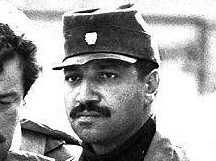 George Emil Banks
Mass murderer · USA · 1982
George Emil Banks was an American mass murderer and a former Camp Hill prison g…
13 victims
George Emil Banks
Mass murderer · USA · 1982
George Emil Banks was an American mass murderer and a former Camp Hill prison g…
13 victims
 Marc Cécillon
Murderer · France · 2004
Marc Cécillon was a former French rugby union player who captained the national…
1 victim
Marc Cécillon
Murderer · France · 2004
Marc Cécillon was a former French rugby union player who captained the national…
1 victim
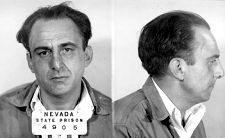 Albert Everette Sala
Murderer · USA · 1945
Albert Everette Sala was a native of Oakland, California, and he was 38 years o…
1 victim
Albert Everette Sala
Murderer · USA · 1945
Albert Everette Sala was a native of Oakland, California, and he was 38 years o…
1 victim
 William Richard Stevens
Murderer · USA · 1977
William Richard Stevens offered to pay Corey Milliken to murder Stevens’s wife,…
3 victims
William Richard Stevens
Murderer · USA · 1977
William Richard Stevens offered to pay Corey Milliken to murder Stevens’s wife,…
3 victims
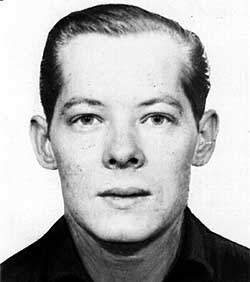 Richard Lee Tingle
Murderer · USA · 1968
Richard Lee Tingle was born out of wedlock in December 1940. He was raised by a…
6 victims
Richard Lee Tingle
Murderer · USA · 1968
Richard Lee Tingle was born out of wedlock in December 1940. He was raised by a…
6 victims
 Stephen Elliot Powers
Murderer · USA · 1998
Stephen Elliot Powers was convicted of capital murder and was sentenced to deat…
1 victim
Stephen Elliot Powers
Murderer · USA · 1998
Stephen Elliot Powers was convicted of capital murder and was sentenced to deat…
1 victim
- Gender
- male
- Country
- USA
- Location
- Miami-Dade County, Florida, USA
- Date of birth
- 1946
- Age at first offence
- 31
- Characteristics
- robbery, drug dealer, to avoid arrest, kidnapping
- Victim profile
- 6 male
- Method of murder
- Shooting
- Date(s) of murder
- July 27, 1977
- Years active
- 1977
- Date of arrest
- —
- Status
-
Executed
Executed by electrocution in Florida on May 29, 1985
Name
Marvin Francois
Status
Marvin Francois was executed by electrocution in Florida on May 29, 1985.
Background
Marvin Francois was 39 years old when he was executed on May 29, 1985. He was scheduled to die in the Florida State Prison electric chair on May 29, 1985, and he had previously been scheduled to die Tuesday morning but won a 24-hour stay from the United States Court of Appeals for the 11th Circuit.
Marvin Francois was a co-defendant with Beauford White, executed Aug. 28, 1987.
A fourth participant in these crimes, Adolphus Archie, testified on behalf of the state in return for being allowed to plead guilty to reduced charges. Archie served as the “wheelman” and never entered the house.
The offence
On July 27, 1977, at approximately 8:15 p.m., an adult black male posing as an employee of the power company requested permission from Margaret Wooden to enter her home and check the electrical system. After being allowed in and checking outlets in several rooms, the intruder drew a gun and proceeded to tie Ms. Wooden’s hands behind her back and blindfold her. The intruder identified himself to her as “Lucky” and was later identified as John Ferguson.
Ferguson asked Ms. Wooden for drugs, money and jewelry and began searching the premises. Ferguson’s coconspirators, Beauford White and Marvin Francois, soon entered the house. Both men were armed and all three donned masks covering their faces from the nose down. The three ransacked the house looking for valuables until about an hour later when the owner of the house, Livingston Stocker, and five of his friends arrived.
Upon their arrival, Stocker and his friends were forced to lie facedown on the floor while their hands were tied behind their backs. A short time later, Ms. Wooden’s boyfriend arrived at the house and he too was tied up. At gunpoint, the victims were asked for money and drugs, and one by one were searched.
At some point during the ordeal, the mask of one of the intruders fell from his face and a discussion ensued as to the need for killing the victims. Following this discussion, Ms. Wooden and her boyfriend were moved back to the bedroom while the other six victims were held captive in the living room. Ferguson then shot Ms. Wooden and her boyfriend in the back of the head while Francois systematically shot the other six victims in the head.
Marvin Francois was convicted in the Circuit Court of the Eleventh Judicial Circuit, Dade County, Florida, on six counts of first-degree murder arising from the execution-style killings of six people in a robbery of a “drug house” in the Miami suburb of Carol City. The facts also included that Francois took some firearms and jewelry during the search for valuables and that the victims were forced to lie facedown with their hands tied behind their backs, and that later still Michael Miller, Stocker’s nephew, arrived and was tied up and robbed.
Miraculously, Ms. Wooden and a Johnnie H. Hall survived and testified at the trial.
At trial, Hall was able to identify Francois as one of the intruders, but both Hall and Ms. Wooden identified the other two intruders as the persons who did the actual shooting.
Investigation
John Ferguson gained admittance to the Miami, Florida, home of Livingston Stocker by posing as a power company employee.
Trial
Marvin Francois was tried before a jury in the Circuit Court for the Eleventh Judicial Circuit, Dade County, Florida.
At trial, Johnny Hall testified and identified Francois as the man who shot him and five others with a shotgun. Another witness, Theresa Rolle, testified that Francois admitted to her his participation in the murders.
Adolphus Archie testified for the prosecution. Archie had pled guilty to second-degree murder. Archie testified that he took Francois, Ferguson, and White to Stocker’s home, met the three later, and helped dispose of evidence. Archie testified that Francois told him that the purpose of the venture was murder, not robbery, and that Francois told him that Francois and Ferguson had done the shooting. Archie testified that after the slayings he met the other three at defendant’s motel room where the proceeds of the robberies were divided among them.
Conviction and sentencing
Marvin Francois was convicted on six counts of first-degree murder, two counts of attempted first-degree murder, and three counts of robbery.
Following a jury recommendation of death, the trial court imposed six consecutive death sentences.
On April 24, 1978, the trial court imposed six death sentences, two concurrent twenty-year terms, and three concurrent life sentences.
At the sentencing hearing, one of the statutory aggravating circumstances relied on by the trial court was that he had twice previously been convicted of a violent felony. At the sentencing hearing, the trial court did not allow Francois to cross-examine the assistant state attorney who had prosecuted him on one of the prior convictions. Francois wanted to cross-examine the attorney to bring out mitigating facts that the conviction had resulted from a negotiated plea of nolo contendre, that Francois had never acknowledged guilt, and that Francois had received probation for the offense in recognition of the weakness of the state’s case against him.
At trial, defense counsel requested the following instruction be given:
The aggravating circumstances of "especially heinous, atrocious or cruel" means a murder which is accompanied by such additional acts as to set the crime apart from the norm. It is a crime which is unnecessarily tortuous to the victim. This aggravating circumstance does not apply where the victim dies instantaneously and painlessly without additional acts.
The trial court denied the written request and thereafter charged the jury as follows:
Heinous means wicked or shockingly evil. Atrocious means outrageously wicked and vile. Cruel means utter indifference to or enjoyment of the suffering of others; pitiless.
Defense counsel made no objection to the denial of the requested instruction or to the instruction given.
The trial court found that there were seven aggravating circumstances, although the Florida Supreme Court invalidated three on appeal. The district court and the Florida Supreme Court concurred that the “heinous, atrocious, and cruel” aggravating circumstance was properly applied based on the mental anguish inflicted on the victims as they waited for their executions to be carried out.
Appeals
Florida Supreme Court
Marvin Francois directly appealed to the Florida Supreme Court, which affirmed the judgment and sentences of death.
Francois v. State, 407 So.2d 885 (Fla.1981) was part of the direct appeal history, and Francois v. State, 423 So.2d 357 (Fla.1982) was part of the post-conviction relief and habeas history.
In addition to other claims, Francois raised a grand jury claim in his direct appeal, arguing that the grand jury that indicted him was selected under a procedure that systematically excluded blacks.
The Florida Supreme Court refused to consider the merits of the grand jury claim, finding that Francois waived his right to appeal the denial of the grand jury motions.
The Florida Supreme Court discussion included the following statements quoted in the federal appellate decision:
Although we find that the motion was timely filed, we hold that appellant waived his right to appeal the denial of his motions for discovery, for a hearing, and to dismiss the indictment, by failing to diligently pursue the matter and by inducing the trial court to rule against him.
...
The only other motion that I filed is the motion to dismiss the Grand Jury indictment based on the Blue Ribbon Grand Jury and requesting an evidentiary hearing on that point, but it--I am going to forego any arguments on that. In fact, I am not going to ask for a hearing on it until a later date simply because I do not think there is any way I can get this case to trial by next week. Transcript of Proceedings, vol. I, at 12-13.
...
MR. DIAMOND: Fine. Transcript of Proceedings, vol. I, at 40.
United States Supreme Court
The United States Supreme Court denied certiorari in: Francois v. Florida, 458 U.S. 1122, 102 S.Ct. 3511, 73 L.Ed.2d 1384 (1982).
The Supreme Court also cleared the way for the scheduled execution by denying the killer’s plea to postpone the execution, by a 7-to-2 vote. Justices William J. Brennan Jr. and Thurgood Marshall dissented. The decision denied the application for stay presented to Justice POWELL and referred to the Court.
Justice BRENNAN, with whom Justice MARSHALL joins, dissented, and the dissent stated:
Adhering to my view that the death penalty is in all circumstances cruel and unusual punishment prohibited by the Eighth and Fourteenth Amendments, Gregg v. Georgia, 428 U.S. 153, 227 , 2950, 49 L. Ed.2d 859 (1976) (BRENNAN, J., dissenting), I would grant Francois' application for a stay of execution. Even if I believed otherwise, however, I would grant the application.
...
The Court's decision to send Francois to his death tomorrow morning is particularly disturbing because we have granted a writ of certiorari in a case raising the identical legal claim. Cabana v. Bullock, cert. granted, 471 U.S. 1052 (1985), poses the question whether a capital sentence may be carried out despite the fact that the sentencing jury was instructed on an imputed intent felony-murder theory of the type condemned in Enmund v. Florida, 458 U.S. 782 (1982).1
...
Until we have decided Cabana v. Bullock, supra, there can be no doubt that a death sentence imposed for a conviction based on such instructions is of doubtful validity, unless facts that would justify a finding of intent to kill under Enmund are undisputed. The Eleventh Circuit denied Francois' claim on this issue only today. I dissent.
Eleventh Circuit (habeas and motions)
The federal appellate history included:
- Marvin Francois, Petitioner-appellant, v. Louie L. Wainwright, Respondent-appellee, United States Court of Appeals, Eleventh Circuit, Aug. 31, 1984.
- Louie L. WAINWRIGHT, Respondent-Appellee. No. 85-5430, United States Court of Appeals, Eleventh Circuit, May 28, 1985.
In the May 28, 1985 proceedings, the Eleventh Circuit denied the certificate of probable cause, denied the motion for oral argument, and denied the motion to stay the execution beyond the 24 hours already granted. The court concluded the Enmund issue failed because the case was controlled by Ross v. Kemp, 756 F.2d 1483 (en banc). The court stated: “The evidence clearly shows the defendant intended the victims to die.”
The May 28, 1985 proceedings also described the Hitchcock issue as deserving full discussion about Lockett-type claims and nonstatutory mitigating evidence, and the court concluded that granting a stay would serve no justiciable purpose and that it would not affect the sentencing outcome.
The Aug. 31, 1984 Eleventh Circuit decision addressed multiple issues:
- a grand jury claim involving alleged systematic exclusion of blacks,
- a claim that the trial court improperly limited the presentation of mitigating evidence at the sentencing hearing,
- ineffectiveness of trial counsel,
- ineffectiveness of appellate counsel,
- and the improper application of the aggravating circumstance, “heinous, attrocious, and cruel.”
The Aug. 31, 1984 decision affirmed the denial of habeas relief and stated:
CONCLUSION
Finding no merit in any of Francois ' contentions, we hold that the district court properly denied Francois ' petition for habeas relief.
AFFIRMED.
The decision addressed the grand jury claim and held that Francois was barred from asserting it.
Other details
Timeline of key dated events
- July 27, 1977 — Marvin Francois participated in the robbery of a “drug house” in the Miami suburb of Carol City; the killings of six people occurred during the robbery.
- April 24, 1978 — The trial court imposed six death sentences, two concurrent twenty-year terms, and three concurrent life sentences.
- 1981 — Francois v. State, 407 So.2d 885 (Fla.1981) affirmed the judgment and sentences of death.
- 1982 — The United States Supreme Court denied certiorari in Francois v. Florida, 458 U.S. 1122.
- November 5, 1982 — Florida’s governor signed a death warrant.
- December 2, 1982 — The United States District Court for the Southern District of Florida entered a stay on Francois’ motion to stay execution.
- November 2, 1983 — The district court denied Francois’ motion for rehearing.
- November 25, 1983 — The district court granted a motion for certificate of probable cause.
- May 28, 1985 — The Eleventh Circuit denied a certificate of probable cause, denied oral argument, denied a stay beyond the 24 hours already granted, and discussed Enmund and mitigating evidence claims in its proceedings.
- May 29, 1985 — The United States Supreme Court denied the application for stay of execution and Marvin Francois was executed by electrocution in Florida.
Other described participants and identifications
- The intruder identified himself to Margaret Wooden as “Lucky” and was later identified as John Ferguson.
- Livingstone Stocker arrived at the house with five friends, and Stocker’s nephew Michael Miller later arrived and was also tied up and robbed.
- Johnnie H. Hall survived and testified; Hall identified Francois.
- Margaret Wooden survived and testified.
Prior convictions and aggravating circumstances
- The trial court relied on the aggravating circumstance that Francois had twice previously been convicted of a violent felony.
- The trial court also found the multiple execution-style murders to be “heinous, atrocious, and cruel.”
- The Florida Supreme Court invalidated three aggravating circumstances, leaving four valid aggravating circumstances.
Mitigating evidence limitation
Francois argued that he was entitled to a ruling on the merits of his claim that the trial court improperly limited the presentation of mitigating evidence at the sentencing hearing. The federal appellate decision stated that exclusion of the facts that he pled nolo contendre to one of two prior violent felony convictions, did not acknowledge he committed the offense, and received probation for that offense did not, in its view, “work[ ] to his actual and substantial disadvantage.” The federal appellate decision concluded that the mitigating facts would not have persuaded the trial judge to forego reliance on the prior conviction and that would not have decreased the number of aggravating circumstances because the other prior violent felony was not contested.
Mitigation-related affidavits discussed in stay proceedings
The May 28, 1985 proceedings discussed Lockett-type claims and described affidavits submitted by counsel and family members attesting to difficult childhood and good characters, and reports of psychologists or behavioral scientists, as part of the mitigation issue. The court concluded that the proffered evidence of nonstatutory mitigating evidence would not have affected the sentencing outcome in Francois’ case.
Habeas corpus and post-conviction relief filings
- Francois filed a motion in the state trial court for post-conviction relief on November 12, 1982, alleging ineffectiveness of trial counsel.
- On November 16, 1982, Francois filed a petition for writ of habeas corpus in the Florida Supreme Court, alleging ineffectiveness of appellate counsel.
- On November 30, 1982, Francois filed his federal habeas corpus petition and a motion to stay execution in the United States District Court for the Southern District of Florida.

Spotted an error, or have more information about this case?