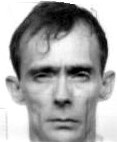
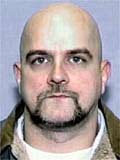
James Roy Knox
Murderer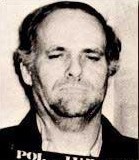 Ervil LeBaron
Murderer · USA · 1972
Ervil Morrell LeBaron (1925 to August 16, 1981) was the leader of a polygamous…
35 victims
Ervil LeBaron
Murderer · USA · 1972
Ervil Morrell LeBaron (1925 to August 16, 1981) was the leader of a polygamous…
35 victims
 Brian Kevin Rosenfeld
Murderer · USA · 1985
Brian Kevin Rosenfeld Brian Kevin Rosenfeld was sentenced to three concurrent l…
23 victims
Brian Kevin Rosenfeld
Murderer · USA · 1985
Brian Kevin Rosenfeld Brian Kevin Rosenfeld was sentenced to three concurrent l…
23 victims
 Marvin Gray
Murderer · USA · 1975
Marvin Gray was convicted killer who claimed responsibility for 23 slayings and…
23 victims
Marvin Gray
Murderer · USA · 1975
Marvin Gray was convicted killer who claimed responsibility for 23 slayings and…
23 victims
 Yahweh ben Yahweh
Murderer · USA · 1980
Yahweh ben Yahweh was born and legally named Hulon Mitchell Jr. (October 27, 19…
23 victims
Yahweh ben Yahweh
Murderer · USA · 1980
Yahweh ben Yahweh was born and legally named Hulon Mitchell Jr. (October 27, 19…
23 victims
 Russell Ellwood
Murderer · USA · 1991
Russell Ellwood was a former taxi driver. Authorities suspected him of killing…
20 victims
Russell Ellwood
Murderer · USA · 1991
Russell Ellwood was a former taxi driver. Authorities suspected him of killing…
20 victims
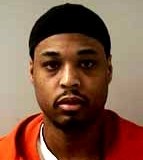 David Stevenson
Murderer · USA · 1995
David Stevenson was sentenced to death on February 3, 2006. He was convicted fo…
1 victim
David Stevenson
Murderer · USA · 1995
David Stevenson was sentenced to death on February 3, 2006. He was convicted fo…
1 victim
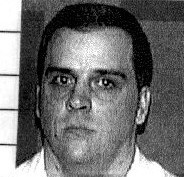 Charles Daniel Tuttle
Murderer · USA · 1995
Charles Daniel Tuttle was 35 years old. He was described as a former constructi…
1 victim
Charles Daniel Tuttle
Murderer · USA · 1995
Charles Daniel Tuttle was 35 years old. He was described as a former constructi…
1 victim
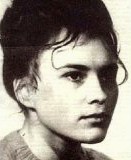 Olga Hepnarová
Mass murderer · Czechoslovakia · 1973
June 30, 1951 — Olga Hepnarová was born in Prague. · 1964 — She attempted suici…
8 victims
Olga Hepnarová
Mass murderer · Czechoslovakia · 1973
June 30, 1951 — Olga Hepnarová was born in Prague. · 1964 — She attempted suici…
8 victims
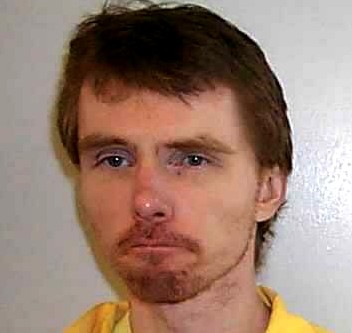 Timothy Alan Dunlap
Murderer · USA · 1991
Timothy Alan Dunlap was 35 and lived in Sellersburg, Indiana. He pleaded guilty…
2 victims
Timothy Alan Dunlap
Murderer · USA · 1991
Timothy Alan Dunlap was 35 and lived in Sellersburg, Indiana. He pleaded guilty…
2 victims
 Frederick Williams
Mass murderer · USA · 2000
Frederick Williams was an off-duty firefighter who killed his wife and set fire…
4 victims
Frederick Williams
Mass murderer · USA · 2000
Frederick Williams was an off-duty firefighter who killed his wife and set fire…
4 victims
- Gender
- male
- Country
- USA
- Location
- Galveston County, Texas, USA
- Date of birth
- July 12, 1951
- Age at first offence
- 31
- Characteristics
- robbery, drugs
- Victim profile
- Joseph Sanchez, 39 (pharmacy owner)
- Method of murder
- Shooting
- Date(s) of murder
- November 10, 1982
- Years active
- 1982
- Date of arrest
- 1985
- Status
-
Executed
Executed by lethal injection in Texas on September 18, 2001
Case record: James Roy Knox
Background
James Roy Knox murdered pharmacist Joseph Sanchez during a robbery at Joe’s Pharmacy Center in Galveston, Texas, and also stole drugs.
Knox was 31 at the time of the November 10, 1982 robbery and murder. James Roy Knox was 50 when he was executed by lethal injection.
Knox had a prior criminal history in Alabama. On December 10, 1973, Knox pled guilty to the felony offense of robbery in state court in Alabama and was sentenced to imprisonment for twelve years. The robbery involved a pharmacy, where Knox and an accomplice sought "strong drugs," and used handguns. During the robbery, Knox seized a customer who was deaf, hit her when she did not understand what he said, and knocked her down. Knox dragged the customer to the back of the pharmacy. The pharmacy proprietor and his assistant were subdued with adhesive tape before Knox and his partner fled with drugs and money.
The State presented several witnesses who testified that Knox had bragged to them about having committed other robberies, having shot a couple of people, and having lynched a man in Vidor, Texas.
In 1978, Knox was convicted of armed robbery of a pharmacy in Alabama and received a 12-year sentence. Knox was paroled in 1980.
The offence
On November 10, 1982, at approximately 5:30 p.m., a man entered Joe’s Pharmacy Center in Galveston, Texas. Joseph Sanchez, the pharmacist, and his assistant, Ronald Dale Dyda, were preparing to close.
The robber brandished a dark semiautomatic pistol, pointed it at Sanchez and Dyda, and demanded money and drugs. The robber ordered Sanchez and Dyda to "get down on the floor." Dyda complied, but Sanchez remained standing. Sanchez told the robber that he had no drugs and that he would not get away with the crime.
The robber instructed Dyda to tape Sanchez’s hands together with medical tape. Sanchez struggled so that Dyda could not bind his hands. The robber became angry and again told Dyda to tie Sanchez’s hands, but Sanchez resisted again and successfully pulled his hands apart. The robber then got angrier, told them to get behind the counter, and threatened to kill them both.
When Dyda turned to go behind the counter, he heard a gunshot. Dyda turned and saw that Sanchez had fallen. Dyda testified that Sanchez never acted aggressively or resisted the man physically.
The robber pointed the gun at Dyda and demanded money and "class A" drugs. Dyda gave the robber four small, brown bottles of Demerol and money from the cash register. Dyda testified that the robber asked if there were more drugs. Dyda said yes, but by the time he had gotten them, the robber had fled.
Sanchez died later from a gunshot wound that severed his spine; he was described as having a ruptured heart and severed spine. Authorities recovered the bullet and determined that it came from either a .38-caliber or 9mm gun.
After the robbery, three nearby witnesses described events around the catering shop next door to the pharmacy. Kathleen Austin, Gene Austin, and Robert Clarac heard the gunshot and went outside. They initially believed the noise may have resulted from a car being hit in the parking lot behind the stores.
Kathleen Austin and Clarac walked outside and down the alley between the pharmacy and the catering shop toward the parking lot. Kathleen noticed a car with its motor running. The car was described as old, dark brown, and having a light-colored top. Kathleen began to walk back after seeing no damage to her car. A man came running around the corner from the direction of Joe’s Pharmacy Center. Kathleen described the man as about six feet tall with a thin build, unshaven and scraggly-looking with medium brown hair. After almost running into Kathleen, the man said "Have a nice day." and continued on. Kathleen testified that the man was holding perhaps three brown bottles in his right hand. She then checked on the pharmacist and found he had been shot.
Clarac testified that he observed the same events. Gene Austin went out the back door of the catering shop, described the man and the car similarly, stated that he saw a driver behind the wheel, and said the man entered the passenger seat as the car drove off in a westerly direction. Gene attempted to follow the car but was unable to keep up.
George Holland, described as the driver of the getaway car, testified about a discussion in October 1982 and about the robbery. Holland testified that in October 1982, Knox discussed with him and two others, Gary Morgan and Robert Clark, the possibility of robbing employees of a drug store in Galveston, where Knox had lived in 1981. Holland testified that Knox said the robbery would be a "piece of cake" because there were no cameras in the store, and that they could obtain drugs and money.
Holland also testified that he had seen Knox with a small, dark gray semiautomatic .38-caliber pistol.
Knox and Holland later traveled to Galveston. Holland testified that he drove a 1972 dark brown Chevrolet with a cream-colored top. Knox waited out in the back parking lot while Knox went inside. Holland testified that Knox shot Sanchez and stole cash and drugs. Holland stated Knox took longer than expected, and when they left, he saw people coming around the side of the building. Holland testified that Knox got on the floorboard of the car and directed him on how to get out of Galveston. Holland noticed Knox had possession of about three brown pill bottles. As they were leaving Galveston, Knox told Holland, "The man got ignorant with me. I had to shoot him." When asked "how bad," Knox replied, "I killed the (expletive)." Shortly thereafter, Holland left for Alabama.
Walter Robert Clark testified that about a week later in Alabama, Knox told him that Knox had robbed a pharmacist in Galveston for some Demerol and had to shoot a man, and that the Demerol was in little brown bottles. Clark also said Knox told him that Holland drove the car during the robbery and said Knox buried the gun.
At trial, Ronald Dyda identified Knox as the killer. Three other witnesses identified Knox as the man who ran from the store with the brown bottles in his hand.
Knox was convicted of capital murder in the course of a robbery, under Section 19.03(a)(2) of the Texas Penal Code.
Investigation
In the evidence presented at trial, authorities determined the bullet came from either a .38-caliber or 9mm gun.
The trial record included testimony from multiple witnesses who heard the gunshot and observed a getaway car and the man running with brown pill bottles. Ronald Dyda testified to the robbery sequence inside the pharmacy.
George Holland testified about prior discussions in October 1982 regarding robbing a Galveston drug store, and that Knox explained how they would carry out the robbery due to the lack of cameras.
Carroll Bernard Smith testified about Knox’s admissions while Knox was in the Galveston County jail. Smith testified that Knox admitted to him that he robbed a drug store in Galveston, attempted to tie-up the pharmacist, and shot him when he resisted. Smith also testified that Knox told him that he buried the gun halfway between Galveston and Houston and that after the robbery he headed to Houston where he "did another job." Smith further testified that Smith helped Knox shave his head in order to stymie Knox’s impending police line-up.
Arrest
Authorities apprehended James Roy Knox in 1984 and charged him with the Joe’s Pharmacy robbery and murder.
Trial
Knox was first convicted of capital murder on December 5, 1985. The Texas Court of Criminal Appeals affirmed the conviction on September 30, 1987.
The Supreme Court denied Knox’s petition for writ of certiorari on June 13, 1988.
Knox then filed a state habeas petition, which the Court of Criminal Appeals denied on October 25, 1988.
Knox filed a federal habeas petition. The district court denied the petition. On March 28, 1991, the Fifth Circuit reversed the district court and remanded with directions to grant the writ, which the district court subsequently did.
Knox was retried and convicted on June 22, 1994, and again assessed the death penalty pursuant to the jury’s answers to the special issues.
The Court of Criminal Appeals affirmed the conviction on November 20, 1996.
At the June 22, 1994 retrial and death penalty sentencing, the jury sentenced Knox to death based on the special issues.
Sentencing
Knox’s capital murder convictions resulted in death sentences.
Knox was first sentenced to death following the December 5, 1985 capital murder conviction, but that conviction was reversed on appeal. After retrial, Knox was convicted again on June 22, 1994 and sentenced to death again.
Appeals
After the initial conviction and sentencing:
- The Texas Court of Criminal Appeals affirmed on September 30, 1987.
- The Supreme Court denied the petition for writ of certiorari on June 13, 1988.
- The Court of Criminal Appeals denied Knox’s state habeas petition on October 25, 1988.
After federal habeas proceedings:
- On March 28, 1991, the Fifth Circuit reversed the district court and remanded with directions to grant the writ.
- Knox was retried and convicted on June 22, 1994.
After the retrial conviction:
- The Court of Criminal Appeals affirmed on November 20, 1996.
- Knox filed a state habeas application in the trial court; the trial court conducted an evidentiary hearing, entered findings of fact and conclusions of law, and recommended that relief be denied.
- On October 14, 1998, the Court of Criminal Appeals denied the writ based on the state habeas court’s findings and conclusions.
Federal habeas and later appeals:
- On February 8, 1999, Knox filed a habeas petition in federal district court.
- On August 23, 1999, the court entered judgment denying the writ, and Knox appealed.
- On August 21, 2000, the Fifth Circuit affirmed.
- On April 16, 2001, the Supreme Court denied Knox’s petition for writ of certiorari.
Subsequent state proceedings:
- On June 25, Knox filed another state writ application in the trial court; on July 11, the Court of Criminal Appeals dismissed it for abuse of the writ.
- Knox filed two motions for leave to file a mandamus petition on July 13 and August 20; these motions were denied without written order on August 1 and August 22, respectively.
- On September 13, Knox, represented by new counsel, filed another state habeas petition and a motion for a stay of execution.
- On September 17, the Court of Criminal Appeals dismissed the petition for abuse of the writ and denied the motion for a stay of execution.
- On September 17, 2001, the Texas Court of Criminal Appeals denied the motion for stay pending in their court and dismissed the petition for abuse of the writ.
Other details
Knox’s co-defendants and individuals associated with planned participation in the robbery were described during the prosecution timeline. George Holland and Gary Morgan faced capital murder charges for allegedly helping Knox set up the robbery and elude police, and no further information was available about their cases.
A Texas Attorney General media advisory stated that Knox was scheduled to be executed after 6 p.m. on Tuesday, September 18, 2001.
A final statement was attributed to Knox at the execution. When asked if he had a final statement, Knox replied, "No, I'm ready". He was pronounced dead at 6:28 p.m.
At the time of the execution, Knox nodded and smiled to five friends he selected as witnesses. Knox declined media interviews throughout his stay on death row and did not seek clemency from the Texas Board of Pardons and Paroles.
Knox was described as having been convicted previously of armed robbery of a pharmacy in Alabama and being paroled in 1980, and later being convicted and sentenced to death after the reversal of the original death sentence. A summary of the evidence presented at trial was provided in the media advisory, and the procedural history described the multiple stages of state and federal habeas proceedings.
Additional witness testimony described Knox as having discussed planning and as having armed himself with a .38-caliber pistol.
Knox was executed on September 18, 2001 in Texas by lethal injection.
Spotted an error, or have more information about this case?