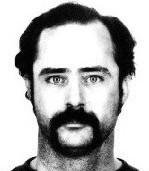
Robert Alton Harris
Murderer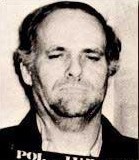 Ervil LeBaron
Murderer · USA · 1972
Ervil Morrell LeBaron (1925 to August 16, 1981) was the leader of a polygamous…
35 victims
Ervil LeBaron
Murderer · USA · 1972
Ervil Morrell LeBaron (1925 to August 16, 1981) was the leader of a polygamous…
35 victims
 Brian Kevin Rosenfeld
Murderer · USA · 1985
Brian Kevin Rosenfeld Brian Kevin Rosenfeld was sentenced to three concurrent l…
23 victims
Brian Kevin Rosenfeld
Murderer · USA · 1985
Brian Kevin Rosenfeld Brian Kevin Rosenfeld was sentenced to three concurrent l…
23 victims
 Marvin Gray
Murderer · USA · 1975
Marvin Gray was convicted killer who claimed responsibility for 23 slayings and…
23 victims
Marvin Gray
Murderer · USA · 1975
Marvin Gray was convicted killer who claimed responsibility for 23 slayings and…
23 victims
 Yahweh ben Yahweh
Murderer · USA · 1980
Yahweh ben Yahweh was born and legally named Hulon Mitchell Jr. (October 27, 19…
23 victims
Yahweh ben Yahweh
Murderer · USA · 1980
Yahweh ben Yahweh was born and legally named Hulon Mitchell Jr. (October 27, 19…
23 victims
 Cecil Emile Davis
Murderer · USA · 1997
Cecil Emile Davis was the appellant in State of Washington v. Cecil Emile Davis…
1 victim
Cecil Emile Davis
Murderer · USA · 1997
Cecil Emile Davis was the appellant in State of Washington v. Cecil Emile Davis…
1 victim
 Luka Magnotta
Murderer · Canada · 2012
Luka Rocco Magnotta was born as Eric Clinton Kirk Newman in July 24, 1982 in Sc…
1 victim
Luka Magnotta
Murderer · Canada · 2012
Luka Rocco Magnotta was born as Eric Clinton Kirk Newman in July 24, 1982 in Sc…
1 victim
 David Dobson
Homicide · Canada · 1982
David James Dobson was born in 1965 and was from Mississauga, Ontario. He was 1…
1 victim
David Dobson
Homicide · Canada · 1982
David James Dobson was born in 1965 and was from Mississauga, Ontario. He was 1…
1 victim
 LaFonda Fay Foster
Mass murderer · USA · 1986
LaFonda Fay Foster and Tina Hickey Powell were convicted by a Fayette County ju…
5 victims
LaFonda Fay Foster
Mass murderer · USA · 1986
LaFonda Fay Foster and Tina Hickey Powell were convicted by a Fayette County ju…
5 victims
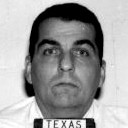 Richard Wayne Smith
Murderer · USA · 1992
Richard Wayne Smith was executed by lethal injection in Texas on September 21,…
1 victim
Richard Wayne Smith
Murderer · USA · 1992
Richard Wayne Smith was executed by lethal injection in Texas on September 21,…
1 victim
- Gender
- male
- Country
- USA
- Location
- San Diego County, California, USA
- Date of birth
- January 15, 1953
- Age at first offence
- 25
- Characteristics
- kidnapping, robbery, abuse, torture, drug addict
- Victim profile
- John Mayeski (male, 16) and Michael Naker (male, 16)
- Method of murder
- Shooting (9mm Luger pistol)
- Date(s) of murder
- July 5, 1978
- Years active
- 1978
- Date of arrest
- Same day
- Status
-
Executed
Executed by asphyxiation-gas in California on April 21, 1992
Case details
Robert Alton Harris was an American career criminal and murderer who was executed on April 21, 1992 in the gas chamber at San Quentin State Prison in California.
Timeline
- 07/05/1978 — Robert Alton Harris and his brother, co-defendant Daniel Marcus Harris, left their residence, drove to a fast food restaurant, abducted two 16-year-old boys, held them at gunpoint with a 9mm Luger pistol, forced them to drive until reaching an isolated area, and shot and killed both victims in the presence of Daniel Harris.
- 07/05/1978 (after the killings) — Following the killings, the Harris brothers drove both automobiles to their residence; later that day they drove the stolen vehicle to a local bank, donned colored ski masks, and robbed the bank, netting cash.
- 07/05/1978 (12:30 p.m.) — The Harrises fled the bank and drove back to the residence; Robert Harris parked the stolen vehicle in the garage.
- 07/05/1978 (1:05 p.m.) — San Diego police officers apprehended the Harrises at the residence after a witness tip; police recovered 20 unfired rounds of 9mm ammunition from Robert Harris.
- 07/05/1978 (6:20 p.m.) — Police questioned Daniel Harris, who gave a voluntary statement describing in detail the abduction and the killing of the victims by Robert Harris; officers went to the murder scene and discovered the two murdered victims.
- 03/06/1979 — Robert Alton Harris was convicted in San Diego County, Superior Court of two counts murder in the first degree with special circumstances, and kidnapping.
- 1983 — Co-defendant Daniel Marcus Harris was discharged.
- 04/21/1992 — Robert Alton Harris was escorted into the gas chamber; the execution order was given; he was pronounced dead; his body was removed from the chamber and left the grounds later the same morning.
- 23 January 1984 — The U.S. Supreme Court decided Pulley v. Harris.
Background
Robert Alton Harris was born three months premature after his mother was brutally assaulted by his father, who kicked her in the stomach. Both parents inflicted frequent beatings on young Robert, who suffered a broken jaw at the age of two after a punch from his father. For sport, his father would load a gun and tell the children they had 30 minutes to hide outside the house, after which he would shoot them down like animals.
Robert’s senior parent was jailed for sexually molesting his daughters, while the mother smoked and drank herself to death.
Before the 1978 capital case, Robert Harris had initial police involvement for killing neighborhood cats.
He served three years as a juvenile in Florida for petty larceny, auto theft and escape. In 1975 he pleaded guilty to voluntary manslaughter of James Wheeler. Wheeler and his wife lived with defendant’s brother Ken and his wife; defendant and his wife lived next door. At the scene, Robert admitted beating Wheeler to death but claimed he had done so to protect the victim’s wife when her husband threatened her with a knife. Later, he repudiated his confession and sought to shift the blame to his brother, claiming Ken had killed Wheeler and that he had confessed to protect Ken. At sentencing for the 1975 matter, the jury convicted him of voluntary manslaughter.
Robert Harris was paroled in January 1978.
The offence
Abduction and killings of John Mayeski and Michael Baker
On July 5, 1978, Robert Alton Harris and co-defendant Daniel Marcus Harris abducted two teenage boys, John Mayeski and Michael Baker. Both were 16-year-old male victims.
The brothers left their residence, drove to a fast food restaurant, and then abducted the two boys. The defendant held the victims at gunpoint with a 9mm Luger pistol and forced them to drive until they reached an isolated area.
Daniel Harris followed in his brother’s 1963 Ford.
At about 11:45 a.m., Robert Harris shot and killed both victims in the presence of Daniel Harris. The victims were later discovered at the murder scene.
Bank robbery
Later that day, after the killings, the Harris brothers drove the stolen vehicle to a local bank. Donning colored ski masks, the two robbed the bank, netting $2,000 in cash.
The Harrises fled the bank at 12:30 p.m. and drove back to the residence, and Robert Harris parked the stolen vehicle in the garage at about 1:05 p.m.
Investigation and arrest
San Diego police officers apprehended the Harrises at about 1:05 p.m. on July 5, 1978 after acting on a tip by a witness who had followed the suspects’ vehicle to the residence.
Police recovered 20 unfired rounds of 9mm ammunition from Robert Harris. Clothing and other effects linked to the robbery were found smoldering in the fireplace.
At about 6:20 p.m. that evening, police questioned Daniel Harris, who gave a voluntary statement describing in detail the abduction and the killing of the victims by Robert Harris. Officers went to the scene of the murder and discovered the two murdered victims.
When initially interviewed by authorities, Robert Harris admitted robbing the bank but denied kidnapping the youths or being responsible for their murders. He later indicated that his brother, Daniel, had furnished the stolen automobile.
Robert Harris continued to deny any involvement in the murders, indicating that his brother had suggested the robbery while they were in Porterville, California.
Trial
Charges
The San Diego District Attorney’s Office filed felony charges of auto theft, kidnapping, murder and burglary against Robert Harris. The U.S. Attorney’s Office filed bank robbery charges against him.
Guilt phase and confessions
In the guilt phase, it was described that in May or June of 1978 defendant first asked his brother Daniel for help in a planned bank robbery.
On 2 July 1978, Daniel stole a .22 rifle and a .9 millimeter pistol from the home of Jim Corbin, a neighbor. While Daniel and defendant were in the house, apparently in Corbin’s absence, defendant stated they needed weapons for the bank robbery and asked whether there were any in the house. Daniel showed defendant the guns and took them from the house.
The brothers left Visalia for San Diego that evening. On the next morning, 3 July 1978, they purchased ammunition and went to a rural area to practice firing while running and rolling a drill.
On 4 July 1978, they purchased more ammunition and knit caps with burned eye holes to serve as masks for the bank robbery. That afternoon they went to the Miramar Lake area near Mira Mesa for shooting practice.
On 5 July 1978, the brothers decided to steal an automobile for use as a getaway car and spotted a green Ford in a grocery store parking lot directly across Mira Mesa Boulevard from the bank. John Mayeski (15) and Michael Baker (16) were in the car eating hamburgers.
The court described that defendant assured Daniel “nobody is going to get hurt,” walked over to the Ford, pulled the pistol from his waistband, and got in the back seat. Daniel followed in defendant’s car. The Ford was driven toward Miramar Lake and the fire trail where the brothers had been the day before.
The brothers parked the cars and forced the two boys to walk up the trail at gunpoint. Defendant carried the pistol and Daniel carried the rifle. Defendant told the boys their car was going to be used in a bank robbery but that no one would be hurt. Defendant asked whether there was any rope in the car. The boys replied there was not but said they would walk to the top of the hill, wait until the brothers drove back to Mira Mesa, and then report the Ford as stolen with a misleading description. Defendant voiced approval.
The court described that suddenly Daniel heard a shot and saw John Mayeski fall to the ground. Defendant shot the boy in the back with the pistol. Defendant fired another shot into the boy’s head, then ran after Michael Baker. Finding Baker crouching and screaming in the brush, defendant shot him four times. Defendant then returned to the fallen Mayeski boy and fired a shot point-blank into his head. The brothers left the scene afterward and drove back to the house defendant shared in Mira Mesa. There defendant ate the remainder of the dead boys’ food and laughed at Daniel for not having the stomach to join him. It was described that, while preparing for the bank robbery, defendant laughed and giggled about shooting the boys, saying he had blown Michael Baker’s arm off. Defendant also amused himself by imagining what it would be like to be a police officer and to report the boys’ deaths to their families. The account described fragments of flesh on the defendant’s pistol and described that defendant flicked the bits of flesh into the street.
Later the same day, the brothers robbed the bank. They were quickly arrested when a witness followed them from the bank to defendant’s house and called the police.
The brothers were arrested at 1:05 p.m. on 5 July 1978. The court described that Daniel first informed officers of the murders at 4 p.m., and that at 6:30 p.m. Daniel confessed in a tape-recorded statement placing the blame primarily on defendant. At 7 p.m., after listening to portions of Daniel’s statement, defendant confessed to Officer Fred Dreis. At midnight, the brothers were interviewed by Dr. Wait Griswold, a psychiatrist. On 7 July 1978, at 11:20 a.m., defendant repeated his confession in detail to Johnny Bolden, a criminal investigator for the San Diego County District Attorney’s office. Finally, at 1 p.m. on 7 July 1978, an hour before he was arraigned, defendant confessed to Officer Ronald Newman.
When one of defendant’s sisters visited him in jail on 15 July 1978, he told her:
“Now, I guess because I killed those two boys, they were only 16 years old, then robbed the bank and kidnaped them was because I really wanted to die.”
Defendant’s last extrajudicial confession was made to a fellow inmate. Asked why he had killed the boys, defendant answered:
“I couldn't have no punks running around that could do that (identify him), so I wasted them.”
At the guilt phase, defendant testified in his own behalf and admitted the bank robbery but denied kidnapping, robbing and murdering the two boys. He explained his pretrial confessions as attempts to protect his brother. Daniel testified for the People in return for being permitted to plead guilty to one count of kidnapping; his testimony was corroborated by a series of extrajudicial statements made by defendant.
Penalty phase and prior manslaughter conviction
In 1975 defendant pleaded guilty to voluntary manslaughter of James Wheeler. The account described that defendant admitted beating Wheeler to death but claimed he had done so to protect the victim’s wife when her husband threatened her with a knife. Later, in the 1978 case proceedings, it was described that defendant repudiated his confession and sought to shift blame to his brother, claiming Ken had killed Wheeler and that he had confessed to protect Ken.
The court described that defendant’s former wife and his niece testified defendant had, without provocation, beat Wheeler to death while mockingly claiming to teach his victim self defense. It was further described that defendant cut off Wheeler’s hair and threw matches at him after squirting him with lighter fluid.
Defendant’s former wife admitted she lied to the grand jury investigating Wheeler’s death, explaining defendant had threatened to kill her too if she did not support his story.
Sentencing
The San Diego District Attorney’s Office filed felony charges of auto theft, kidnapping, murder and burglary. The U.S. Attorney’s Office filed bank robbery charges.
On March 6, 1979, Robert Alton Harris was convicted in San Diego County, Superior Court of two counts of murder in the first degree with special circumstances, and kidnapping.
Co-defendant Daniel Marcus Harris was convicted of kidnapping and sentenced to six years in state prison. He was discharged in 1983.
Harris was sentenced to death.
Appeals
Robert Alton Harris appealed from a judgment imposing the death penalty following his conviction of kidnaping, robbery and first degree murder of John Mayeski and Michael Baker. Defendant was also convicted of receiving stolen property and of possession of a concealable firearm by an ex-felon. The court affirmed the judgment.
He filed habeas corpus petitions seeking to avert his sentence; his sentence was stayed four times.
During the Pulley v. Harris proceedings, the petitioner's claim was that “The failure of the state to provide for a judicial review of the proportionality of his death sentence was unconstitutional and required reversal of the sentence.”
In Pulley v. Harris, Chief Lawyer for Petitioner Michael D. Wellington and Chief Lawyer for Respondent Anthony G. Amsterdam argued the case. Justices for the Court included Harry A. Blackmun, Warren E. Burger, Sandra Day O’Connor, Lewis F. Powell, Jr., William H. Rehnquist, John Paul Stevens, Byron R. White (writing for the Court). Justices dissenting were William J. Brennan, Jr., and Thurgood Marshall.
The decision stated:
“The Constitution does not require that a court review a sentence of death to confirm that it has been imposed in similar cases.”
The decision date was 23 January 1984.
Outcome
Robert Alton Harris was executed on April 21, 1992 in the gas chamber at San Quentin State Prison in California.
The execution was described as delayed by a series of four stays issued by individual federal judges until just after 6 a.m. In its order vacating the fourth stay, the U.S. Supreme Court stated:
“No further stays of Robert Alton Harris' execution shall be entered by the federal courts except upon order of this court.”
The U.S. Supreme Court also vacated the decision that had ordered a hearing to determine whether the use of cyanide gas might constitute cruel and unusual punishment, and Harris died in the gas chamber on April 21, 1992.
The execution order was given at 6:07 a.m. Harris was escorted into the gas chamber at 6:01 a.m., and he was pronounced dead at 6:21 a.m. The body was removed from the chamber at 7 a.m. and left the grounds at 8:15 a.m.
Harris requested and was given a last meal. One account stated he received two large pizzas, a bucket of fried chicken, and ice cream. Another account stated he received a 21-piece bucket of Kentucky Fried Chicken, two large Domino’s pizzas, a bag of jelly beans, a six-pack of Pepsi, and a pack of Camel cigarettes.
Warden Daniel Vasquez was identified in connection with Harris’s last words. Harris’s last words were:
“You can be a king or a street sweeper, but everyone dances with the grim reaper.”
Christina Crystal, who witnessed the execution for UPI, said afterward:
“It wasn't as hard to watch as I thought it would be the second time around. Harris seemed to lose consciousness after about one-and-half minutes.”
After the execution, an exhaust fan was switched on to remove hydrocyanic gas, and the dead body was sprayed with liquid ammonia to neutralize any remaining gas. Staff wearing gas masks and rubber gloves removed the body in “Procedure 769,” ruffling the hair to ensure that no gas was trapped.
Other details
Co-defendant
Co-defendant Daniel Marcus Harris was convicted of kidnapping and sentenced to six years in state prison; he was discharged in 1983.
Prior conviction details in the 1975 matter
It was described that Robert Harris in 1975 pleaded guilty to voluntary manslaughter of James Wheeler. It was also described that Wheeler and his wife lived with Harris’s brother Ken and his wife, while Harris and his wife lived next door.
Clemency
An appeal for clemency to California governor Pete Wilson was rejected in a live television news conference. Wilson read a statement acknowledging Harris’ abusive childhood and ended by rejecting the clemency request, saying:
“As great as is my compassion for Robert Harris the child, I cannot excuse or forgive the choice made by Robert Harris the man.”
Wilson then left without waiting for reporters’ questions.
Cassette and psychiatrist interviews
The account described Daniel confessed in a tape-recorded statement at 6:30 p.m. on 5 July 1978; defendant confessed to Officer Fred Dreis at 7 p.m. and was later interviewed by Dr. Wait Griswold at midnight. Defendant repeated his confession to Johnny Bolden at 11:20 a.m. on 7 July 1978 and confessed to Officer Ronald Newman at 1 p.m. on 7 July 1978.
Case identifiers and locations
The case was associated with San Diego County, with offense in San Diego. The case number was CR44135. The court date recorded was 02/11/1981, and “Court Action: Affirmed.”
Dates and age at execution
Robert Alton Harris was dated as January 15, 1953 to April 21, 1992, and was described as 39 years old at the time of execution in one account.
Appellate confirmation of death sentence
The court described that defendant appealed from a judgment imposing the death penalty following conviction of kidnaping, robbery and first degree murder of John Mayeski and Michael Baker, and the judgment was affirmed.

Spotted an error, or have more information about this case?