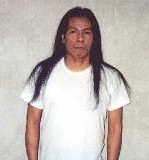
Jerald Harjo
Murderer Brian Kevin Rosenfeld
Murderer · USA · 1985
Brian Kevin Rosenfeld Brian Kevin Rosenfeld was sentenced to three concurrent l…
23 victims
Brian Kevin Rosenfeld
Murderer · USA · 1985
Brian Kevin Rosenfeld Brian Kevin Rosenfeld was sentenced to three concurrent l…
23 victims
 Yahweh ben Yahweh
Murderer · USA · 1980
Yahweh ben Yahweh was born and legally named Hulon Mitchell Jr. (October 27, 19…
23 victims
Yahweh ben Yahweh
Murderer · USA · 1980
Yahweh ben Yahweh was born and legally named Hulon Mitchell Jr. (October 27, 19…
23 victims
 Russell Ellwood
Murderer · USA · 1991
Russell Ellwood was a former taxi driver. Authorities suspected him of killing…
20 victims
Russell Ellwood
Murderer · USA · 1991
Russell Ellwood was a former taxi driver. Authorities suspected him of killing…
20 victims
 Robert Martines Perez
Murderer · USA · 1994
Name: Robert Martines Perez · Other name used in proceedings: Robert Martinez P…
15 victims
Robert Martines Perez
Murderer · USA · 1994
Name: Robert Martines Perez · Other name used in proceedings: Robert Martinez P…
15 victims
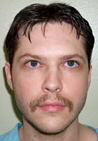 Bobby Wayne Swisher
Murderer · USA · 1997
Bobby Wayne Swisher was executed by lethal injection in Virginia on July 23, 20…
1 victim
Bobby Wayne Swisher
Murderer · USA · 1997
Bobby Wayne Swisher was executed by lethal injection in Virginia on July 23, 20…
1 victim
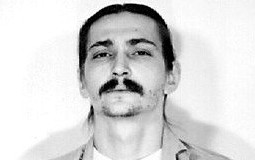 Larry C. Williams
Murderer · USA · 1979
Larry C. Williams and the other men drank beer, smoked pot, and watched TV for…
2 victims
Larry C. Williams
Murderer · USA · 1979
Larry C. Williams and the other men drank beer, smoked pot, and watched TV for…
2 victims
 Zhang Yunliang
Mass murderer · China · 2009
Zhang Yunliang Zhang Yunliang died in the fire on 5 June 2009. The Chengdu bus…
26 victims
Zhang Yunliang
Mass murderer · China · 2009
Zhang Yunliang Zhang Yunliang died in the fire on 5 June 2009. The Chengdu bus…
26 victims
 Lee Ho-seong
Mass murderer · South Korea · 2008
Lee Ho-seong (July 17, 1967 – March 10, 2008) was a South Korean baseball playe…
4 victims
Lee Ho-seong
Mass murderer · South Korea · 2008
Lee Ho-seong (July 17, 1967 – March 10, 2008) was a South Korean baseball playe…
4 victims
 Ronald DeFeo
Mass murderer · USA · 1974
Ronald Joseph “Butch” DeFeo, Jr. (born September 26, 1951) was an American murd…
6 victims
Ronald DeFeo
Mass murderer · USA · 1974
Ronald Joseph “Butch” DeFeo, Jr. (born September 26, 1951) was an American murd…
6 victims
- Gender
- male
- Country
- USA
- Location
- Seminole County, Oklahoma, USA
- Date of birth
- March 20, 1961
- Age at first offence
- 27
- Characteristics
- rape, robbery
- Victim profile
- Ruth Marie Porter (female, 64)
- Method of murder
- S mothering with a pillow
- Date(s) of murder
- January 16, 1988
- Years active
- 1988
- Date of arrest
- —
- Status
-
Executed
Executed by lethal injection in Oklahoma on July 17, 2001
Case record: Jerald Harjo
Background
Jerald Wayne Harjo was convicted of first degree murder in Seminole County, Oklahoma. He was 40 years old at the time of his execution and was scheduled to die by lethal injection. He was Native American.
Ruth Marie Porter was a secretary at Sasakwa Elementary School. She was 64 years old when she was murdered in her Seminole County home.
The offence
On January 16, 1988, Harjo broke into the home of 64-year-old grandmother Ruth Porter in rural Seminole County. Harjo broke into Ruth's home to try to find the keys to her van.
Harjo strangled Porter in her bed. Investigators believed he also raped her.
During the attack, Porter awakened and started struggling. Harjo got scared and put a pillowcase over her face and strangled her with his hands. Police also found evidence including scratches and injuries to Porter’s face, chest, arms, and vaginal area, with her pubic hair singed.
Harjo entered the home by breaking through a back bedroom window after stacking two cinder blocks and using a screwdriver to remove the screen. He tore eyeholes in a pillowcase and placed it over his head before entering Porter's bedroom. When Porter awakened, he put a pillow over her face.
After killing Porter, Harjo took the keys to the Mustang and drove it to his brother’s home. Porter's Ford Mustang was missing when her body was discovered, and police found the Mustang at the home of Harjo’s brother. A bicycle Harjo had been riding to the scene was found nearby in a ditch.
Harjo was convicted of first degree murder. The jury found him not guilty of first degree rape.
Investigation
Porter’s daughter found the body of the elementary school secretary the next morning. She was found with a pillow over her face, with her windpipe crushed. Porter's face was scratched and bruised, and her pubic hair was singed with a lighter.
Investigators found Harjo’s muddy tennis shoe prints on Porter's floor. Investigators believe Harjo had been bicycling to his brother’s house when it began to rain, and Harjo decided to ditch the bicycle and steal Porter's van.
Authorities said Harjo tried to hot-wire Porter's van but could not. A Wewoka police officer who knew Harjo was on a suspended sentence for stealing a car drove by Harjo’s brother’s home on a hunch and found Porter's van.
In a confession to police, Harjo said that when Ruth Porter awoke, he put a pillowcase over her face and strangled her with his hands. Harjo eventually confessed to the crimes after over two hours of questioning and after changing his story.
Arrest
A Wewoka police officer saw the Mustang parked at Harjo’s brother’s home and questioned Harjo after giving him Miranda warnings. Harjo denied taking the car and provided another officer with the names of two others who allegedly took the car. A roadblock was set up, but the two were never located.
Sheriff Charles Sisco took Harjo to the sheriff's office for questioning. Sisco read Harjo Miranda warnings, and Harjo signed a waiver of rights.
Trial
Harjo was convicted of first degree murder in Seminole County, Oklahoma. The jury found two aggravating circumstances: (1) the murder was heinous, atrocious, or cruel; and (2) the murder was committed to avoid arrest or prosecution. The jury fixed punishment at death.
The Oklahoma Court of Criminal Appeals affirmed the conviction and sentence. The Oklahoma appellate court also affirmed denial of post-conviction relief.
During the trial, Harjo wrote a letter of remorse to the jury. The court did not allow the statement under the State's hearsay objection, since Harjo asked his counsel to read the letter.
Sentencing
Harjo was sentenced to death under Oklahoma's “heinous, atrocious, and cruel” aggravator.
In later federal proceedings, the jury recommendation and sentencing were described as including the two aggravating circumstances and a death sentence.
Appeals
Harjo’s most recent appeal was denied May 14 by the U.S. Supreme Court.
In the United States Court of Appeals for the Tenth Circuit proceedings, the case was listed as: “JERALD WAYNE HARJO, Petitioner-Appellant, v. GARY GIBSON, Warden, Oklahoma State Penitentiary; DREW EDMONDSON, Attorney General of the State of Oklahoma, Respondents-Appellees.” Filed June 21, 2000.
The Tenth Circuit stated:
Petitioner was convicted of first degree murder.
It described the procedural history:
- The jury found two aggravating circumstances and fixed punishment at death.
- The Oklahoma Court of Criminal Appeals affirmed the conviction and sentence and denied post-conviction relief.
- The federal district court denied habeas corpus relief, and the appellate court affirmed.
In the Tenth Circuit’s discussion, Harjo argued and the court addressed multiple issues:
- Heinous, atrocious, or cruel aggravator: the Oklahoma Court of Criminal Appeals determined sufficient evidence existed, quoting:
“[petitioner] strangled and suffocated Mrs. Porter with his bare hands. She sustained scratches and bruises on her face, chest, arms and vaginal area. Her lower denture was displaced; her windpipe crushed. Her pubic hair was singed. Mrs. Porter struggled prior to her death.”
- Mitigating evidence of remorse: Harjo had composed a letter and asked counsel to read it; the trial court denied permission based upon the State's hearsay objection.
- Murder to avoid lawful arrest or prosecution aggravator: Harjo argued it was unconstitutional as applied and that the evidence was insufficient.
- Ineffective assistance of trial counsel: Harjo alleged five instances, and the court addressed each.
- Ake-related expert payment claim: Harjo argued Oklahoma’s $750 maximum payment for experts violated Ake and challenged the federal district court’s mental-capacity/sanity threshold finding.
- Anti-sympathy instruction: Harjo argued the jury was prohibited from considering mitigating evidence when instructed not to consider sympathy at the second stage; the court rejected the argument.
- Unanimous finding of mitigating circumstances: Harjo argued the jury was required to find mitigating circumstances unanimously; the court stated this was foreclosed by Duvall.
- Confession: Harjo argued his Miranda waiver was not knowing, intelligent, or voluntary due to alcohol consumption, low intelligence, lack of sleep or food, coercive interview nature, and illegal seizure of tennis shoes without being informed of right to withhold consent.
- Seizure of tennis shoes: Harjo argued Fourth Amendment rights were violated by seizure of tennis shoes prior to confession; the court reviewed that claim and affirmed denial of relief.
The Tenth Circuit concluded:
The judgment of the United States District Court for the Eastern District of Oklahoma is AFFIRMED.
Outcome
Harjo was executed by lethal injection in Oklahoma on July 17, 2001.
He was pronounced dead at 9:10 p.m. Harjo died in Oklahoma's death chamber at Oklahoma State Penitentiary in McAlester after lethal drugs began to flow. The article noted that he was the 14th person executed by Oklahoma that year and the 44th since the state resumed the death penalty in 1976.
Aftermath
Porter's daughter Mary Branscum sent a statement remembered in later accounts and wrote about Porter’s impact on children. In the letter, Branscum wrote:
“provided many children with a Band-Aid, a pat on the head, a kind word or just a little extra attention when they were needy. Suddenly she was no longer there to do those things. ”
Porter's sister Mary K. Smith recalled:
“She was that good of a person.”
Porter's daughter Mary Branscum described finding her mother:
“It was so unreal we didn't know what to do or even feel at that time,”
Branscum also wrote:
“My father did not have the same light in his eyes and joy in his heart after his wife was murdered.”
The court proceedings included a quote from Harjo’s family statement opposing revenge:
“As Christians, we are not here for revenge but to see justice served for Ruth Harris Porter,” a statement from Porter's family read. “We know that this execution does not make up for what happened to our mother, aunt and grandmother. But Jerald Harjo made his choice and this is the price he must pay.”
During execution, Harjo responded “Uh, no” when asked if he had any last words. The account described him as visiting with his attorney and a friend and eating his last meal: a cheeseburger, two hamburgers, two orders of fries, a 16-ounce Dr. Pepper and a large vanilla malt.
Vigils and protests were held at numerous locations around the state, including a vigil outside the gates of Oklahoma State Penitentiary in McAlester.
Other details
At the time of the murder, Harjo was on a suspended sentence for stealing a car. He had a prior prison commitment for burglary. He had been bicycling to his brother’s house when it began to rain, ditched the bicycle, and stole Porter’s van.
Former Seminole County Sheriff Charles Sisco said Harjo had been smoking marijuana and drinking alcohol the night he decided to ride his bicycle to his brother’s house in Wewoka.
Harjo’s jury recommendation and sentencing were discussed in the context of alleged aggravators including “heinous, atrocious, or cruel” and “to avoid arrest or prosecution,” and related constitutional and evidentiary arguments were addressed in the Tenth Circuit’s opinion.

Spotted an error, or have more information about this case?