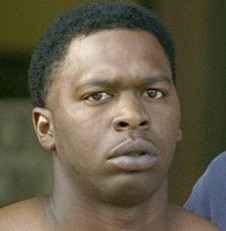
Anthony Bell
Spree killer Martin Bryant
Spree killer · Australia · 1996
Martin Bryant was born May 7, 1967, and was the elder of two children of Mauric…
35 victims
Martin Bryant
Spree killer · Australia · 1996
Martin Bryant was born May 7, 1967, and was the elder of two children of Mauric…
35 victims
 Robert Bales
Spree killer · Afghanistan · 2012
Robert Bales (born June 30, 1973) was a United States Army soldier. He murdered…
16 victims
Robert Bales
Spree killer · Afghanistan · 2012
Robert Bales (born June 30, 1973) was a United States Army soldier. He murdered…
16 victims
 Genildo Ferreira do Franca
Spree killer · Brazil · 1997
Genildo Ferreira de Franca died in a shootout after he released two hostages un…
15 victims
Genildo Ferreira do Franca
Spree killer · Brazil · 1997
Genildo Ferreira de Franca died in a shootout after he released two hostages un…
15 victims
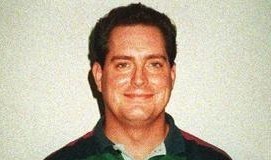 Mark Barton
Spree killer · USA · 1999
Mark Orrin Barton (1955 – July 29, 1999) committed a spree killing in Stockbrid…
12 victims
Mark Barton
Spree killer · USA · 1999
Mark Orrin Barton (1955 – July 29, 1999) committed a spree killing in Stockbrid…
12 victims
 Lindsey Lowe
Murderer · USA · 2011
Lindsey Lowe was convicted of felony murder, premeditated murder, and aggravate…
2 victims
Lindsey Lowe
Murderer · USA · 2011
Lindsey Lowe was convicted of felony murder, premeditated murder, and aggravate…
2 victims
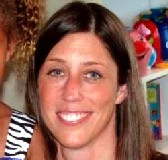 Christine Adewunmi
Murderer · USA · 2012
Christine Adewunmi killed herself by shooting herself the same day. Christine A…
3 victims
Christine Adewunmi
Murderer · USA · 2012
Christine Adewunmi killed herself by shooting herself the same day. Christine A…
3 victims
 Barbara Stager
Murderer · USA · 1988
Barbara Stager (born October 30, 1948) was an American woman convicted in 1989…
2 victims
Barbara Stager
Murderer · USA · 1988
Barbara Stager (born October 30, 1948) was an American woman convicted in 1989…
2 victims
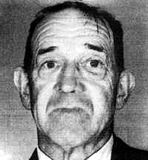 Walter James Bolton
Murderer · New Zealand · 1956
Walter James Bolton (13 August 1888 - 18 February 1957) was a New Zealand farme…
1 victim
Walter James Bolton
Murderer · New Zealand · 1956
Walter James Bolton (13 August 1888 - 18 February 1957) was a New Zealand farme…
1 victim
 Larry Allen Stout
Murderer · USA · 1987
Larry Allen Stout, aged 33, pleaded guilty in a Virginia court to the robbery a…
1 victim
Larry Allen Stout
Murderer · USA · 1987
Larry Allen Stout, aged 33, pleaded guilty in a Virginia court to the robbery a…
1 victim
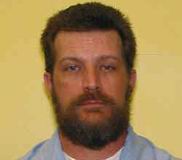 Robert Cordell
Murderer · USA · 2002
Robert Cordell was an Ohio man who pleaded guilty and was sentenced to 81 years…
3 victims
Robert Cordell
Murderer · USA · 2002
Robert Cordell was an Ohio man who pleaded guilty and was sentenced to 81 years…
3 victims
- Gender
- male
- Country
- —
- Location
- —
- Date of birth
- October 13, 1980
- Age at first offence
- 26
- Characteristics
- kidnapping, rape?, shooting spree
- Victim profile
- His wife, Erica Bell, 24 / Leonard Howard, 78, Gloria Howard, 72, Darlene Selvage, 47, and Doloris McGrew, 68 (in-laws)
- Method of murder
- Shooting Loca tion : Baton Rouge, L o uisiana, USA
- Date(s) of murder
- May 21, 2006
- Years active
- 2006
- Date of arrest
- Same day
- Status
-
Sentenced to death
Sentenced to death on September 12, 2008
Overview
Anthony Bell was convicted of killing his wife and four in-laws in a May 2006 shooting spree that began at the Ministry of Jesus Christ Church. He was also convicted of attempted first-degree murder for shooting and injuring Pastor Claudia Brown inside the church. After the shooting spree, Bell kidnapped his wife, Erica Bell, and later shot and killed her at an apartment complex. Bell received five death sentences and an additional 50-year prison term.
Timeline
- May 21, 2006 — Anthony Bell shot and killed four in-laws at the Ministry of Jesus Christ Church; Pastor Claudia Brown was shot and injured; Bell shot and killed his wife, Erica Bell, at an apartment complex after kidnapping her.
- June 2006 — Public defenders Greg Rome and Margaret Lagattuta were first assigned to defend Anthony Bell.
- February (year not stated) — Anthony Bell fired public defenders Greg Rome and Margaret Lagattuta.
- April 11, 2008 — A jury convicted Anthony Bell of five counts of first-degree murder and one count of attempted first-degree murder.
- April 17, 2008 — A jury recommended that Bell be executed.
- April 18, 2008 — The jury’s verdict and sentencing recommendation were reported.
- April 11, 2008 (trial reporting date not stated beyond “late Friday night”) — Jurors deliberated for about two hours and returned unanimous verdicts.
- September 12, 2008 — District Judge Todd Hernandez sentenced Anthony Bell to die by lethal injection; the judge also denied a motion to fire Bell’s court-appointed attorneys again and denied a motion for a new trial.
The offence
Anthony Bell opened fire at the Ministry of Jesus Christ Church. He fatally shot four in-laws inside the church, and he shot and injured Pastor Claudia Brown. After the church shootings, Bell kidnapped his wife, Erica Bell. He later shot and killed Erica Bell at an apartment complex.
The victims killed at the church were husband and wife Leonard Howard, 78, and Gloria Howard, 72, along with Darlene Selvage, 47, and Doloris McGrew, 68. Claudia Brown, the church pastor and Bell’s mother-in-law, was shot and injured. Bell’s 24-year-old wife, Erica Bell, was fatally shot in the parking lot of a nearby apartment complex later that day.
Bell was also convicted on one count of attempted first-degree murder for the shooting of Claudia Brown inside the church.
Investigation and arrest
About 90 minutes after the killings, police received a report of a shooting at an apartment complex in Baton Rouge. Chief Jeff LeDuff said the body of Erica Bell was found in a parked car at the Ardenwood Park Apartments, a few miles from the church. Police said three children abducted with Bell’s wife were found unharmed, while Bell was discovered nearby, crying and holding his infant son. Bell was arrested without incident.
Investigators did not know the motive for the shooting at the Ministry of Jesus Christ Church.
Trial
A jury convicted Anthony Bell a week prior to the April 17 sentencing recommendation and convicted him on April 11, 2008.
Charges and verdicts
Bell was found guilty on:
- Five counts of 1st-degree murder.
- One count of attempted 1st-degree murder for wounding Claudia Brown inside the church.
Jurors deliberated for just under two hours before returning the verdict. There were no outbursts in the courtroom during the reading of the verdict.
Victim-impact and testimony
Jurors were moved by victim-impact statements by family members of the murder victims. Irwin Howard, son of murder victims Gloria Howard, 72, and Leonard Howard, 78, described the impact of the killing of Erica Bell on Erica Bell’s three children, stating: “My heart goes out to those kids. At night, they cry in bed for their mother,”
Jeffery Howard, younger brother of Irwin Howard, testified he was not as strong as his older brother. He testified: “When I was at the morgue, I saw my father’s head blown up this way,” and he motioned to the back of his head, and continued: “It affected me so bad it made me want to blow my own brains out,”
Sonya Mills Laurence, sister of 47-year-old murder victim Darlene Selvage, asked Bell how to soothe Selvage’s 7-year-old daughter, Destiny Mills, who was nearby when her mother was shot inside the Ministry of Jesus Christ Church. Laurence asked: “Mr. Bell, if you only knew. I need you to tell me what to tell Destiny. She had her mother’s blood all over her dress. How could you,”
Destiny Mills was questioned by prosecutor Mark Dumaine, who asked: “Destiny, who shot you mommy?”
Destiny Mills pointed at Anthony Bell without saying a word, clutching a teddy bear. A video tape of Destiny Mills from a few months earlier was also shown, in which she described what happened and said Anthony Bell was the person who shot her mommy.
Bell’s defence, mental-retardation issue, and legal representation
Anthony Bell represented himself in the guilt phase of his trial. He fired public defenders Greg Rome and Margaret Lagattuta in February, and he represented himself in the guilt phase. During the penalty phase, he asked Judge Hernandez to reinstate the lawyers; the judge allowed the lawyers to act as standby counsel during the guilt phase.
Before leaving court Thursday (September 12, 2008 sentencing hearing day), Bell thanked Rome and Lagattuta for their assistance.
Competing explanations in testimony and defence theory
During the trial, Bell told jurors his ex-wife, Erica Bell, killed four people inside the church before taking her own life. Bell also told jurors he said she did the shooting because he was having an affair with Pastor Claudia Brown. On the stand, Brown denied any physical relationship with Bell.
The alleged affair between Bell and his mother-in-law was a cornerstone of Bell’s defence.
Closing arguments and interview remarks
In closing arguments, prosecutor Mark Dumaine told the jury Bell “is controlling and manipulative and what he did was inhuman and obscene.”
Prosecutor Aaron Brooks said Bell and his family—some of whom took the witness stand to plead with the jury to spare Bell’s life—were in denial because they had no other options. Brooks said: “The defendant called this a monstrous act and (that) is probably the only thing he said in this trial that was true,”
Defense attorney Margaret Lagattuta and Greg Rome declined to comment on the verdict following the trial.
In his closing argument, Rome said all he could do was ask the jury to consider recommending a sentence of life in prison.
Mental-retardation testimony
Bell asserted that he was mentally retarded, and psychologists testified that he was not.
Defense witness Dr. Mark Zimmerman said he did not have enough data to determine if Bell was mentally retarded. State witness Dr. Donald Hoppe testified: “He (Bell) is absolutely not mentally retarded,” and Hoppe explained that Bell scored in the low 50s on an IQ test. Hoppe also testified that after comparing his data with Zimmerman’s data and studying more of Bell’s academic records before he dropped out of the ninth grade, Hoppe suspected Bell purposely did poorly on his IQ test. Hoppe also testified that after watching Bell ask questions during jury selection, Hoppe concluded Bell was not mentally retarded. Hoppe stated: “If that man (Bell) is mentally retarded, everyone in this courtroom is mentally retarded,”
The legal benchmark IQ for mental retardation was stated as 70, and jurors could consider other factors.
Testimony by a former employer
The trial included testimony from Bell’s former employer about a knowledge of an affair between Bell and his mother-in-law.
A former girlfriend of Anthony Bell, Lekeria Coleman, was quoted describing Bell as younger and suggesting that if his mother would have gotten him help, Erica would be present to raise her son. Coleman said: “I feel much better to let the jury know that... how he was when he was younger and if his mother would have got him help, maybe Erica would be here to raise her son,”
Sentencing
Jury recommendation
The same jurors who convicted Bell recommended a sentence of death. The jury had a choice of whether to recommend death or life in prison.
Death sentences and prison term
District Judge Todd Hernandez sentenced Anthony Bell to die by lethal injection for killing his wife and four in-laws. Hernandez followed the jury’s April 17 recommendation.
Hernandez imposed five death sentences for the five first-degree murder convictions. Hernandez also imposed a 50-year prison term on the other conviction (the attempted first-degree murder conviction).
Bell did not react when Hernandez sentenced him.
As deputies led Bell from the courtroom, Bell looked at family members and said: “I love you. Never stop fighting.”
Motions regarding counsel and new trial
Before sentencing, Hernandez denied a motion filed by Bell to once again fire his court-appointed attorneys. The judge also denied a motion for a new trial filed by those attorneys.
Hernandez appointed the Louisiana Indigent Defender Assistance Board to handle Bell’s capital appeal.
Appeals
Outcome
Anthony Bell was sentenced to death on September 12, 2008, following a jury’s recommendation for execution.
Bell had been convicted of five counts of first-degree murder and one count of attempted first-degree murder, and he had received five death sentences from Hernandez and a 50-year prison term on the other conviction.
Aftermath
Family members of the victims responded to the verdict in the courtroom. Jeffery Howard said: “My father taught me to believe in the system, and the system worked. Mr. Bell is going to burn now.”
Prosecutor Mark Dumaine said: “There was only one just verdict in this case and the jury had the courage to render it,” and further stated: “And we had a family patient enough to wait for it,”
Prosecutor Aaron Brooks said: “This family can finally get a sense of closure,”
Police Chief Jeff Leduff had commented after the capture and wife’s body was found: “This is going to be one of the worst days in the history of our city,”
Leduff also said after the killings: “when you start stacking up human life like this, it's sad. It's a sad day for the whole city.”
Investigators described the event as senseless and noted they were still investigating why and how the killings were carried out.
The church share space in an old warehouse with a guitar shop in a nonresidential area of Baton Rouge.
Spotted an error, or have more information about this case?