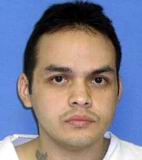
Miguel Angel Paredes
Murderer Russell Ellwood
Murderer · USA · 1991
Russell Ellwood was a former taxi driver. Authorities suspected him of killing…
20 victims
Russell Ellwood
Murderer · USA · 1991
Russell Ellwood was a former taxi driver. Authorities suspected him of killing…
20 victims
 Robert Martines Perez
Murderer · USA · 1994
Name: Robert Martines Perez · Other name used in proceedings: Robert Martinez P…
15 victims
Robert Martines Perez
Murderer · USA · 1994
Name: Robert Martines Perez · Other name used in proceedings: Robert Martinez P…
15 victims
 Billy Frank Vickers
Murderer · USA · 1993
Billy Frank Vickers Vickers was executed by lethal injection in Texas on Januar…
14 victims
Billy Frank Vickers
Murderer · USA · 1993
Billy Frank Vickers Vickers was executed by lethal injection in Texas on Januar…
14 victims
 Robert Brian Waterhouse
Murderer · USA · 1966
Robert Brian Waterhouse was convicted of the first-degree murder of Deborah Kam…
2 victims
Robert Brian Waterhouse
Murderer · USA · 1966
Robert Brian Waterhouse was convicted of the first-degree murder of Deborah Kam…
2 victims
 Ramadan Mansour
Serial killer · Egypt · 2004
Ramadan Abdel Rehim Mansour (born circa 1980, in Tanta, Gharbia, Egypt), also k…
20 victims
Ramadan Mansour
Serial killer · Egypt · 2004
Ramadan Abdel Rehim Mansour (born circa 1980, in Tanta, Gharbia, Egypt), also k…
20 victims
 Horacio Reyes-Camarena
Murderer · USA · 1995
Sentenced to death on January 21, 1997 Horacio Alberto Reyes-Camarena was 47 wh…
1 victim
Horacio Reyes-Camarena
Murderer · USA · 1995
Sentenced to death on January 21, 1997 Horacio Alberto Reyes-Camarena was 47 wh…
1 victim
 James Kraig Kahler
Mass murderer · USA · 2009
James Kraig Kahler resided in Columbia, Mo., after moving back to Kansas shortl…
4 victims
James Kraig Kahler
Mass murderer · USA · 2009
James Kraig Kahler resided in Columbia, Mo., after moving back to Kansas shortl…
4 victims
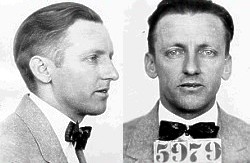 Paul Hadley
Murderer · USA · 1916
Paul V. Hadley was executed by hanging in Arizona on April 13, 1923. On Friday,…
2 victims
Paul Hadley
Murderer · USA · 1916
Paul V. Hadley was executed by hanging in Arizona on April 13, 1923. On Friday,…
2 victims
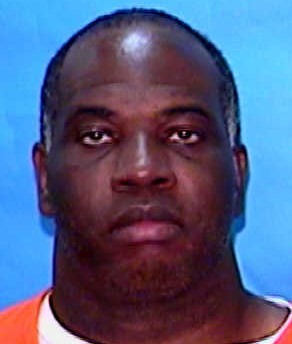 Fred Anderson
Murderer · USA · 1999
Fred Anderson, Jr., was the appellant in Fred Anderson, Jr., Appellant, vs. Sta…
1 victim
Fred Anderson
Murderer · USA · 1999
Fred Anderson, Jr., was the appellant in Fred Anderson, Jr., Appellant, vs. Sta…
1 victim
- Gender
- male
- Country
- USA
- Location
- Bexar County, Texas, USA
- Date of birth
- August 8, 1982
- Age at first offence
- 18
- Characteristics
- drugs
- Victim profile
- Adrian Torres, 27; Nelly Bravo, 23; and Shawn Michael Cain, 23
- Method of murder
- Shooting
- Date(s) of murder
- September 17, 2000
- Years active
- 2000
- Date of arrest
- —
- Status
-
Sentenced to death
Sentenced to death on November 9, 2001
Case details
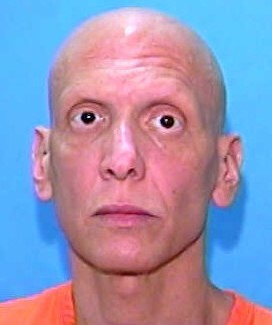
Miguel Angel Paredes was a Hispanic male who was 19 years old when received on 11/09/2001 and 18 years old at the time of the offense. He was a laborer and had prior prison record: None. He had black hair, brown eyes, and was 5' 6" and 254 lb. His native county was Cook County, Illinois, and the county of offense was Bexar.
Timeline
- 09/17/2000 — In San Antonio, Paredes and two co-defendants shot and killed three victims with a handgun and a shotgun.
- Dec. 13, 2000 — A Bexar County grand jury indicted Paredes for murdering Adrian Torres, Nelly Bravo, and Shawn Cain in the same criminal transaction.
- Oct. 19, 2001 — A Bexar County jury convicted Paredes of capital murder.
- Oct. 25, 2001 — After a separate punishment proceeding, the same jury sentenced Paredes to death.
- 11/09/2001 — Paredes was received.
- Jan. 14, 2004 — Paredes’s conviction and sentence were affirmed by the Texas Court of Criminal Appeals on direct appeal.
- Aug. 31, 2005 — Paredes’s application for habeas corpus relief was denied by the Court of Criminal Appeals.
- July 10, 2006 — Paredes filed a petition for a writ of habeas corpus in a San Antonio U.S. district court.
- March 8, 2007 — The federal court denied Paredes’s petition.
- Aug. 24, 2010 — The United States Court of Appeals for the Fifth Circuit rejected Paredes’s appeal and affirmed the district court’s denial of habeas corpus relief.
- Nov. 19, 2010 — Paredes filed a petition for a writ of certiorari in the U.S. Supreme Court.
- Jan. 24, 2011 — The U.S. Supreme Court denied certiorari review.
- May 12, 2014 — The 399th state district court issued an order setting Paredes’s execution date for Oct. 28, 2014.
- Oct. 28, 2014 — Paredes was put to death for the gang-related slayings of three people in Bexar County 14 years earlier.
The offence
On 09/17/2000, in San Antonio, Paredes and two co-defendants shot and killed three victims with a handgun and a shotgun. The victims were: an adult Hispanic male (Adrian Torres), an adult Hispanic female (Nelly Bravo), and an adult white male (Shawn Cain).
Prosecutors said the killings were gang-related and that Paredes was the most aggressive shooter when Nelly Bravo and Shawn Michael Cain, both 23, and Adrian Torres, 27, showed up to collect drug money at the home of John Anthony Saenz, a leader in Paredes’ gang.
The U.S. Court of Appeals for the Fifth Circuit described the events as follows:
- In 2000, Paredes, John Saenz, and Greg Alvarado—members of the gang—fatally shot rival gang members Adrian Torres, Nelly Bravo, and Shawn Cain inside Saenz’s house.
- Paredes and several gang members then disposed of the bodies and removed other physical evidence.
- Paredes and several gang members then disposed of the bodies by taking the bodies to Frio County, where they dumped the bodies and set them on fire.
- The victims’ bodies were rolled up in a carpet, driven about 50 miles southwest, dumped and set on fire.
Defense counsel argued that Paredes grew up in a gang-infested neighborhood and that the only way to survive was to join a gang. Paredes also maintained that the meeting was to discuss a disagreement over threats Torres had been making, while prosecutors alleged the meeting was to settle a drug debt.
Victims and their ties
Paredes’s execution occurred for the fatal shootings of Nelly Bravo, Adrian Torres, and Shawn Michael Cain in September 2000, and the victims reportedly had ties to the Mexican Mafia.
Investigation
A farmer investigating a grass fire found the remains. Police got a break in the case when paperwork carrying Saenz’s name was found in the debris with the three burning bodies.
Investigators used a Western Union credit card application bearing Saenz’s name found in the folds of the burning carpet to identify all three suspects before dental records were analyzed to confirm the identities of the three victims.
Arrest
No arrest is described in the provided material.
Trial
Charges
Paredes was indicted on three counts of capital murder. Under Texas law, the indictment included murdering more than one person during the same criminal transaction.
Co-defendants
- John Anthony Saenz
- Greg Alvarado
Witness testimony and disputed evidence
Two prosecution witnesses, Eric Saenz and Tomas Ayala, testified concerning phone calls and a face-to-face conversation involving John Saenz’s statements implicating Paredes.
Eric Saenz’s testimony included:
- On the morning of the killings, John Saenz telephoned and asked Eric to come over with a gun because John was expecting trouble from Torres, and John indicated he would seek help from Paredes.
- Later in the day, John called again, saying Paredes and Alvarado had arrived with weapons.
- A third call included that John, Paredes, and Alvarado were at the house and that John had “taken care of the problem” with Torres; Eric understood that to mean that they had killed Torres, Bravo, and Cain.
- Around midnight, Paredes, John, and John’s acquaintance, Tomas Ayala, drove to Eric’s house.
- In Paredes’s presence, John gave Eric a detailed account of the day’s events, including that Paredes had shot Bravo and Cain and that Paredes had taken part in the killings and cleanup.
- Paredes did not dispute John’s details of the murders and cleanup and said that Eric “should have been there” and that he “would have had some fun.”
- Eric also testified on re-direct that after John described the events, appellant told Eric that they were going to start “going hard with the Mexican Mafia,” and that “[t]hey were going to start taking them out.”
Ayala testified that John related the details of the murders to Eric, including that Paredes had shot Cain and Bravo, and that Paredes never interrupted to dispute the story.
Paul Alden, a neighbor of John Saenz, testified that he saw the victims arrive at the Saenz house, heard a barrage of gunshots a few minutes after the victims entered, and shortly thereafter saw John Saenz exit the house without a shirt and look nervous. Alden then observed vehicles arrive and leave. In the days after the gunfire, he saw people cleaning the house, hosing down the bed of a pickup truck, and laying new tile.
The jury also learned during the guilt-innocence phase that Paredes and others attempted to dispose of the victims’ bodies by setting the bodies on fire in a remote area.
Prior criminal history presented in the penalty phase
During the penalty phase, jurors learned that Paredes:
- committed a previous murder and was a participant in another murder;
- was previously involved in a drive-by shooting and another shooting in which two victims were shot with an assault rifle;
- had been arrested for driving while intoxicated and aggravated kidnapping; and
- had been convicted of criminal trespass and unlawfully carrying a firearm. Jurors also learned that Paredes had previously attempted to dispose of the body of a drug overdose victim by burning the victim’s body.
Accomplice witness issues and court holdings on appeal
Paredes challenged admission of certain testimony and sought accomplice-witness instructions. The Texas Court of Criminal Appeals overruled his points of error and affirmed.
In the direct appeal opinion:
- The court held Eric’s testimony about the face-to-face conversation with John in Paredes’s presence was admissible as an adoptive admission, based on Paredes’s conduct and statements, including that Eric “should have been there” and that he “would have had some fun.”
- The court held Paredes failed to preserve Confrontation Clause objections to Eric’s and Ayala’s testimony at trial.
- The court denied requests for jury instructions that Ayala, Priscilla Saenz, and Julio Gonzalez were accomplices as a matter of law or fact, and denied an instruction that John was an accomplice.
The court’s reasoning included that:
- Ayala arrived after the multiple murders had been committed and there was no evidence he was involved in the planning of the murders; he was not susceptible to prosecution for capital murder or a lesser included offense.
- Priscilla arrived after the murders had been committed and there was no evidence she was involved in planning the murders.
- Julio Gonzalez was summoned to help with work and discovered the bloody bodies when John instructed him; the trial court denied accomplice instruction requests, and the appellate court held there was nothing to support a theory that evidence was conflicting on his complicity.
Photographs
During the trial, the medical examiner Dr. Jan Garavaglia testified and the State offered multiple photographs and autopsy identification photos. The court overruled objections and admitted the photos including:
- State’s Exhibit 143, a color photo depicting the wounds on Torres;
- State’s Exhibit 37A, a photograph of the burned face of Torres;
- State’s Exhibit 144, a photo of Cain’s gunshot wound;
- State’s Exhibit 36A, an identifying autopsy photo of Cain’s face with his assigned case number;
- State’s Exhibit 145, a photo depicting a gunshot wound to the head of Bravo;
- State’s Exhibit 146, a photo depicting a gunshot wound to the chest of Bravo; and
- State’s Exhibit 38A, the identification picture reflecting the assigned autopsy number.
The appellate court held the admissibility of photographs was within the trial judge’s discretion and found the photos relevant and not so prejudicial as to outweigh their probative value.
Jury instructions and verdict
The trial judge instructed the jury that it could convict Paredes of capital murder if it found:
- he killed Torres and either Bravo or Cain;
- he killed Bravo and either Torres or Cain; or
- he killed Cain and either Torres or Bravo. The jury was also permitted to find that Paredes had committed capital murder under the law of parties. The jury returned a general verdict finding “Paredes guilty of Capital Murder as charged in the indictment,” and Paredes was subsequently sentenced to death at the conclusion of the penalty phase.
Sentencing
After a separate punishment proceeding, the same Bexar County jury sentenced Paredes to death on Oct. 25, 2001. The Texas Court of Criminal Appeals affirmed on Jan. 14, 2004.
Appeals
Direct appeal (Texas Court of Criminal Appeals)
Paredes was convicted in October 2001 of capital murder under Tex. Penal Code Ann. 19.03(a). Pursuant to jury answers to special issues under Texas Code of Criminal Procedure Article 37.071, 2(b) and 2(e), the trial judge sentenced appellant to death under Art. 37.071 2(g). The appellate court affirmed the judgment and overruled twenty-nine points of error, including challenges to evidentiary rulings, accomplice witness instructions, admission of photographs, constitutionality of the death-penalty statute, and other punishment-phase issues.
Federal habeas corpus and related proceedings
After affirmation on direct appeal and death sentence, Paredes filed a habeas petition. The United States District Court for the Western District of Texas, Samuel Fred Biery, Jr., J., denied the petition. Paredes appealed and sought certificate of appealability (COA). The Court of Appeals affirmed denial of habeas relief on the Confrontation Clause issue, denied COAs on four issues, and granted a COA on the question of whether jury instructions violated Paredes’s constitutional rights.
In the federal appellate decision, the court addressed:
- whether jury instructions violated constitutional rights by not requiring unanimity on which two of three victims Paredes killed; and
- whether Paredes was denied effective assistance of counsel because his attorney failed to object to jury instructions in this regard. The federal appellate court affirmed the denial of habeas relief, holding that Texas courts did not unreasonably apply clearly established federal law; any error was not prejudicial; and defense counsel was not ineffective.
Outcome
Paredes was put to death by lethal injection on Oct. 28, 2014, after the U.S. Supreme Court denied his final appeal Tuesday afternoon. He was pronounced dead at 6:54 p.m. CDT, 22 minutes after the lethal dose began.
Aftermath
The Texas Department of Criminal Justice spokesman Jason Clark said the execution was delayed slightly to ensure both IVs were functioning properly. The procedure called for two working lines, and for Paredes, prison officials inserted IV lines into his hands.
In his final statement, Paredes hoped the victims’ family would "let go of all of the hate because of all my actions. I came in as a lion and I come as peaceful as a lamb. I'm at peace. I hope society sees who else they are hurting with this."
In remarks at the execution, Paredes also said he "came in as a lion," but now he was "at peace," and he told his family goodbye and said that he was "sorry" and was "always going to be with" them.
The statement from Cain’s family after the execution said Cain was "no longer with us for no other reason than being in the wrong place at the wrong time." The statement also said, “Our family has waited 14 years for justice to finally be served,” and that carrying out the punishment was “the final step for closure in his sensenseless murder.”
Saenz avoided the death penalty after jurors sentenced him to life following his trial, and Greg Alvarado pleaded guilty and was serving life in prison.
Spotted an error, or have more information about this case?