Elbert Blancett
Murderer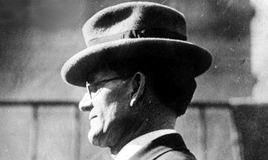 William Hale
Murderer · USA · 1921
Name: William Hale · Known as: the so-called "King of the Osage Hills" · Occupa…
24 victims
William Hale
Murderer · USA · 1921
Name: William Hale · Known as: the so-called "King of the Osage Hills" · Occupa…
24 victims
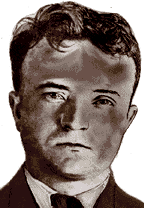 Paul Jaworski
Murderer · USA · 1926
Paul Jaworski was born in Poland as Paul Poluszynski in 1900. He later immigrat…
20 victims
Paul Jaworski
Murderer · USA · 1926
Paul Jaworski was born in Poland as Paul Poluszynski in 1900. He later immigrat…
20 victims
 John S. Williams
Murderer · USA · 1910
John S. Williams was convicted of murder and sentenced to life imprisonment on…
18 victims
John S. Williams
Murderer · USA · 1910
John S. Williams was convicted of murder and sentenced to life imprisonment on…
18 victims
 Edward Adams
Murderer · USA · 1920
Edward J. "Eddie" Adams was born in 1887 on a farm in Hutchinson, Kansas as W.J…
7 victims
Edward Adams
Murderer · USA · 1920
Edward J. "Eddie" Adams was born in 1887 on a farm in Hutchinson, Kansas as W.J…
7 victims
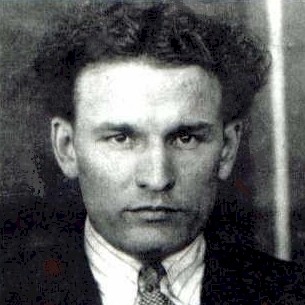 William Kenneth Wagner
Murderer · USA · 1924
William Kenneth (Kinnie) Wagner (born February 18, 1903 in Scott County, VA) wa…
6 victims
William Kenneth Wagner
Murderer · USA · 1924
William Kenneth (Kinnie) Wagner (born February 18, 1903 in Scott County, VA) wa…
6 victims
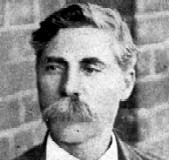 Floyd Allen
Murderer · USA · 1912
Floyd Allen (July 5, 1856 – March 28, 1913) was an American landowner and patri…
5 victims
Floyd Allen
Murderer · USA · 1912
Floyd Allen (July 5, 1856 – March 28, 1913) was an American landowner and patri…
5 victims
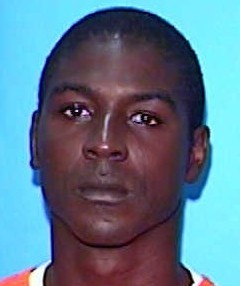 Kenneth Dessaure
Murderer · USA · 1999
Name: Kenneth Dessaure · Date of birth: 01/28/78 · Supreme Court of Florida opi…
1 victim
Kenneth Dessaure
Murderer · USA · 1999
Name: Kenneth Dessaure · Date of birth: 01/28/78 · Supreme Court of Florida opi…
1 victim
 Frederick Williams
Mass murderer · USA · 2000
Frederick Williams was an off-duty firefighter who killed his wife and set fire…
4 victims
Frederick Williams
Mass murderer · USA · 2000
Frederick Williams was an off-duty firefighter who killed his wife and set fire…
4 victims
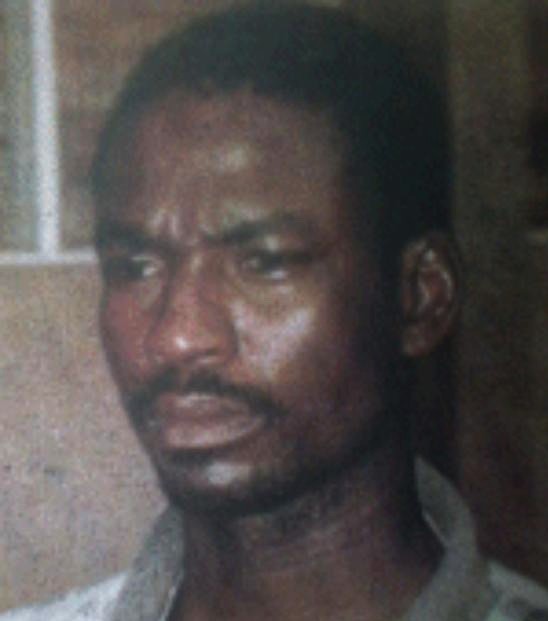 Charles Ebo Quansah
Serial killer · Ghana · 1993
Charles Ebo Quansah, also known as Charles Papa Kwabena Ebo Quansah, was born i…
34 victims
Charles Ebo Quansah
Serial killer · Ghana · 1993
Charles Ebo Quansah, also known as Charles Papa Kwabena Ebo Quansah, was born i…
34 victims
 Theresa Riggi
Murderer · United Kingdom · 2010
Theresa Riggi was a mother who killed her three young children at their home in…
3 victims
Theresa Riggi
Murderer · United Kingdom · 2010
Theresa Riggi was a mother who killed her three young children at their home in…
3 victims
 Matthew Wrinkles
Murderer · USA · 1994
Defendant: Matthew Eric Wrinkles · Legal status: Executed by lethal injection i…
3 victims
Matthew Wrinkles
Murderer · USA · 1994
Defendant: Matthew Eric Wrinkles · Legal status: Executed by lethal injection i…
3 victims
- Gender
- male
- Country
- USA
- Location
- New Mexico, USA
- Date of birth
- ???
- Characteristics
- —
- Victim profile
- Clyde D. Amour
- Method of murder
- Shooting
- Date(s) of murder
- October 23, 1916
- Years active
- 1916
- Date of arrest
- December 31, 1916
- Status
-
Executed
Executed by hanging at Santa Fe on July 9, 1920
Timeline
- July 9, 1920 — Elbert Blancett went to his death on the scaffold at 5:22 AM in Santa Fe; he was pronounced dead ten minutes later.
- January 14, 1917 — Clyde D. Amour’s partially coyote-eaten body was found until January 14, 1917 in an arroyo near Glorieta.
- December 31, 1916 — Blancett was arrested in Friday Harbor, California.
- October 23, 1916 — Amour was killed.
Background
Elbert Blancett was executed by hanging at Santa Fe on July 9, 1920.
The offence
Blancett was hanged for the murder of Clyde D. Amour. Amour’s partially coyote-eaten body was not found until January 14, 1917, in an arroyo near Glorieta.
An examination showed that Amour had been killed by a shotgun blast from behind.
Investigation
Detective work revealed that Blancett had evidently impersonated his victim for a time after Amour’s death on October 23, 1916.
Arrest
Blancett, who was traveling from Sioux City, Iowa to Fresno, California, spent Amour’s money gambling and upon other activities purportedly in an attempt to forget the incident.
Blancett made telegrams to various parties including Amour’s own mother seeking additional funds.
Blancett was arrested in Friday Harbor, California on December 31, 1916.
After his arrest, Blancett requested permission to go inside his mother’s house to "say goodbye." Once inside, he unsuccessfully attempted to end his life with a shotgun by shooting himself in the neck, which rendered his left arm practically unusable.
Trial
Before his trial, Blancett maintained complete silence regarding Amour’s death, stating to Amour’s brother that he had never seen Clyde Armour.
At trial, which was described as a local sensation, Blancett maintained that the shooting was accidental.
He claimed that he had been drinking shortly before the shooting, and that he feared that as a stranger to the locale he would be accused of murder, and therefore did not report the incident.
Blancett was found guilty and incarcerated.
Sentencing
Blancett was executed by hanging at Santa Fe on July 9, 1920.
Outcome
With the words "I have nothing to say," Blancett went to his death on the scaffold at 5:22 AM in Santa Fe shortly after sunrise on July 9, 1920. Only his right hand was handcuffed, while his left hand was left free because it had been rendered useless in the previous suicide attempt.
He was unconscious throughout the proceeding, evidently from the snapping of the knot of the noose against his head. Ten minutes later he was pronounced dead.
Blancett read and wrote letters the whole of the night before his execution.
At the scaffold, he nudged the noose and quipped, "When I am at the end of this it will all be over."
At the beginning of the reading of the warrant for the execution, he suggested, "We might dispense with that. It will only delay the game."
Blancett continued to maintain that the incident had been an accident until his execution.
Aftermath
Before his execution, the governor refused to set aside the court's verdict and denied a reprieve to Blancett's execution in order to make a sanity inquiry.
After Blancett was found guilty and incarcerated, he was subsequently baptized a Catholic.
The issue of 'degeneracy' was described as framing the entire trial and execution; both Blancett's attorney and priest maintained that he was not a degenerate.
Toward the end of Blancett's life, his mother, who had traveled from California to be with her son, visited every day. His fellow prisoners raised the money for Blancett's funeral expenses.
Spotted an error, or have more information about this case?