Robert Wirth
Serial killer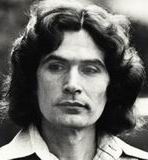 Rodney Alcala
Serial killer · USA · 1977
Rodney James Alcala (born August 23, 1943) was also known as Rodrigo Jacques Al…
100 victims
Rodney Alcala
Serial killer · USA · 1977
Rodney James Alcala (born August 23, 1943) was also known as Rodrigo Jacques Al…
100 victims
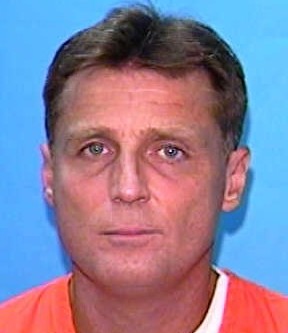 Glen Edward Rogers
Serial killer · USA · 1993
Glen Edward Rogers was a spree killer whose cross-country rampage in 1994-95 le…
70 victims
Glen Edward Rogers
Serial killer · USA · 1993
Glen Edward Rogers was a spree killer whose cross-country rampage in 1994-95 le…
70 victims
 Michael Swango
Serial killer · USA · 1981
Michael Swango (Joseph Michael Swango) was a physician and American serial kill…
60 victims
Michael Swango
Serial killer · USA · 1981
Michael Swango (Joseph Michael Swango) was a physician and American serial kill…
60 victims
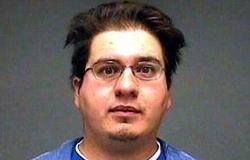 Efren Saldivar
Serial killer · USA · 1989
Efren Saldivar (born 30 September 1969) was an American serial killer who murde…
50 victims
Efren Saldivar
Serial killer · USA · 1989
Efren Saldivar (born 30 September 1969) was an American serial killer who murde…
50 victims
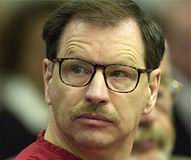 Gary Ridgway
Serial killer · USA · 1982
Gary Leon Ridgway Ridgway was born 18-February-1949 in Salt Lake City, UT. He w…
49 victims
Gary Ridgway
Serial killer · USA · 1982
Gary Leon Ridgway Ridgway was born 18-February-1949 in Salt Lake City, UT. He w…
49 victims
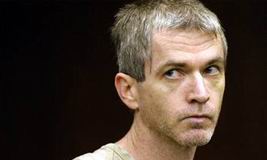 Charles Cullen
Serial killer · USA · 1984
Charles Cullen (born February 22, 1960) was a former nurse and the most prolifi…
45 victims
Charles Cullen
Serial killer · USA · 1984
Charles Cullen (born February 22, 1960) was a former nurse and the most prolifi…
45 victims
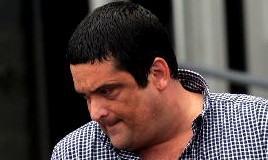 Pierre Parent
Murderer · Canada · 2010
Pierre Parent pleaded guilty to manslaughter in the 2010 death of Catharine Oli…
1 victim
Pierre Parent
Murderer · Canada · 2010
Pierre Parent pleaded guilty to manslaughter in the 2010 death of Catharine Oli…
1 victim
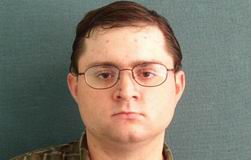 Andrew Lackey
Murderer · USA · 2005
Andrew Lackey · October 31, 2005 — Athens Police Department received and record…
1 victim
Andrew Lackey
Murderer · USA · 2005
Andrew Lackey · October 31, 2005 — Athens Police Department received and record…
1 victim
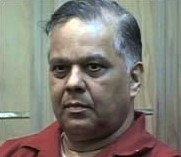 Krishna Maharaj
Murderer · USA · 1986
Krishna Maharaj (born January 26, 1939) was a Trinidad and Tobago-born British…
2 victims
Krishna Maharaj
Murderer · USA · 1986
Krishna Maharaj (born January 26, 1939) was a Trinidad and Tobago-born British…
2 victims
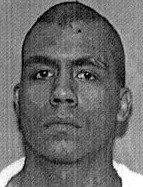 Gabriel Gonzales
Murderer · USA · 1994
Defendant: Gabriel Gonzales (DoB 03/22/1974) Date of crime: 07/20/1994 Gang aff…
1 victim
Gabriel Gonzales
Murderer · USA · 1994
Defendant: Gabriel Gonzales (DoB 03/22/1974) Date of crime: 07/20/1994 Gang aff…
1 victim
 Ronald Watkins
Murderer · USA · 1988
Ronald Watkins was convicted of capital murder and robbery for the killing of W…
1 victim
Ronald Watkins
Murderer · USA · 1988
Ronald Watkins was convicted of capital murder and robbery for the killing of W…
1 victim
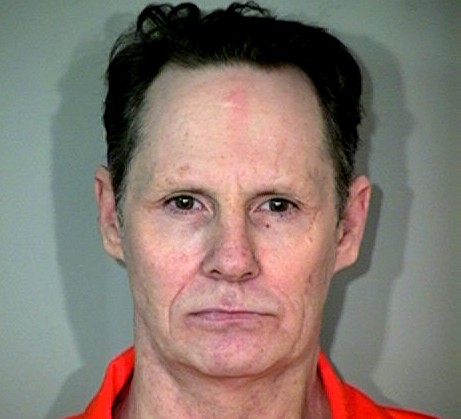 Robert Douglas Smith
Murderer · USA · 1980
Robert Douglas Smith was convicted in Tucson following a joint trial in which h…
1 victim
Robert Douglas Smith
Murderer · USA · 1980
Robert Douglas Smith was convicted in Tucson following a joint trial in which h…
1 victim
- Gender
- male
- Country
- USA
- Location
- Milwaukee, Wisconsin, USA
- Date of birth
- 1960
- Age at first offence
- 27
- Characteristics
- rapist, robbery
- Victim profile
- Elderly victims in their homes
- Method of murder
- Beating - St abbing with knife
- Date(s) of murder
- 1987 - 1988
- Years active
- 1987–1988
- Date of arrest
- —
- Status
-
Life imprisonment
Sentenced to four consecutive life terms + 20 years in prison in 1991
Case record: Robert Wirth
Background
Robert Wirth murdered elderly women in their homes. The killings were occurring about every week and involved burglaries in the areas of the homicides. The burglaries had an almost exactly similar type of entry and similar disheveling of the home.
The offence
The case involved three women who were murdered in their homes. The victims had neck injuries, including external neck injuries in one of the victims. The victims died of asphyxiation. One victim sustained a complete avulsion of the voice box, and the medical examiners described the injuries in all three victims as unique, with internal and external injuries that were consistent.
Investigation
Powerful medical examiner testimony was presented. Three medical examiners examined the autopsy protocols and opined that one person was responsible for all three homicides based on the injuries and their extent.
At one of the homicide scenes, a detective observed a toy donkey sitting on the couch. A family member stated that the toy donkey did not belong there. The toy donkey actually belonged on a chair right where the body of one of the victims was found. When the detective picked up the toy donkey and turned it over, the detective observed very fresh blood smears on the toy donkey.
The toy donkey was taken immediately to the Wisconsin State Crime Laboratory to check whether the blood on the donkey was foreign to the victim. The blood on the toy donkey was foreign blood. The investigators were excited about the fact that they had foreign blood and, since it was fresh, they believed it was likely the assailant. They concluded that if they could find the assailant and perform enough genetic workup for one of the victims, they could obtain a conviction for all of the homicides by combining the medical examiner testimony with genetic evidence.
Arrest
Robert Wirth was caught after he robbed a taxicab driver. The taxicab driver got into a fight with him, and Robert Wirth had a gun. The taxicab driver fought and got the gun away from him. When police ran a check on the gun, they found that the gun was stolen from a residence next door to one of the victims.
After a John Doe proceeding, the authorities obtained permission to get Robert Wirth’s blood, and they took it immediately to the crime laboratory. Robert Wirth’s blood matched the blood on the toy donkey.
Trial
The case went to trial. It was a lengthy trial and involved a six-week sequestered jury trial. The jury convicted Robert Wirth largely because of the DNA evidence.
The presentation included genetic workup using markers and probability figures. Before the advent of DNA, the investigators used ABO enzyme markers, with probabilities described as “1 in 500” and “1 in 600.” The investigators described that if they had “1 in 1,000,” they considered it a terrific case and believed it was wonderful evidence. They also referenced that the case involved one marker, four RFLP markers, one PCR marker, and the most conservative number was “1 in 800,000.” The investigators described additional testing as including Ed Blake in California and work conducted at Sonar Diagnostics, along with testing at the Memorial Blood Center in Minneapolis, using gamma markers and cappa markers.
Robert Wirth matched the blood on the toy donkey with the PCR marker available at the time, and investigators described additional testing and combinations of genetic markers. They described that they felt that with a probability of “1 in 800,000” they could find the combination of all genetic markers.
Sentencing
Robert Wirth received four consecutive life terms plus 20 years in prison in 1991.
Outcome
Robert Wirth was convicted and sentenced to four consecutive life terms plus 20 years in prison in 1991.
Spotted an error, or have more information about this case?