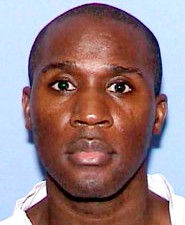
Curtis Moore
Murderer Brian Kevin Rosenfeld
Murderer · USA · 1985
Brian Kevin Rosenfeld Brian Kevin Rosenfeld was sentenced to three concurrent l…
23 victims
Brian Kevin Rosenfeld
Murderer · USA · 1985
Brian Kevin Rosenfeld Brian Kevin Rosenfeld was sentenced to three concurrent l…
23 victims
 Russell Ellwood
Murderer · USA · 1991
Russell Ellwood was a former taxi driver. Authorities suspected him of killing…
20 victims
Russell Ellwood
Murderer · USA · 1991
Russell Ellwood was a former taxi driver. Authorities suspected him of killing…
20 victims
 Robert Martines Perez
Murderer · USA · 1994
Name: Robert Martines Perez · Other name used in proceedings: Robert Martinez P…
15 victims
Robert Martines Perez
Murderer · USA · 1994
Name: Robert Martines Perez · Other name used in proceedings: Robert Martinez P…
15 victims
 Billy Frank Vickers
Murderer · USA · 1993
Billy Frank Vickers Vickers was executed by lethal injection in Texas on Januar…
14 victims
Billy Frank Vickers
Murderer · USA · 1993
Billy Frank Vickers Vickers was executed by lethal injection in Texas on Januar…
14 victims
 William Freund
Homicide · USA · 2005
October 15, 2005 — Freund wrote that he had tried suicide before. · October 29,…
2 victims
William Freund
Homicide · USA · 2005
October 15, 2005 — Freund wrote that he had tried suicide before. · October 29,…
2 victims
 Ivon Ray Stanley
Murderer · USA · 1976
Ivon Ray Stanley was convicted in the Decatur County, Georgia Superior Court of…
1 victim
Ivon Ray Stanley
Murderer · USA · 1976
Ivon Ray Stanley was convicted in the Decatur County, Georgia Superior Court of…
1 victim
 Lawrence Scott Dame
Mass murderer · USA · 2000
Lawrence Scott Dame was convicted in connection with the deaths of his sister,…
5 victims
Lawrence Scott Dame
Mass murderer · USA · 2000
Lawrence Scott Dame was convicted in connection with the deaths of his sister,…
5 victims
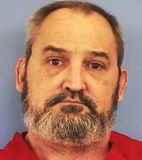 Bennie Joe Stevens
Mass murderer · USA · 1998
Defendant: Bennie Joe Stevens Name used in proceedings: Benny Joe Stevens (“Ste…
4 victims
Bennie Joe Stevens
Mass murderer · USA · 1998
Defendant: Bennie Joe Stevens Name used in proceedings: Benny Joe Stevens (“Ste…
4 victims
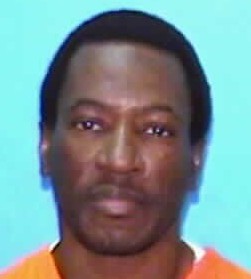 Ian Lightbourne
Murderer · USA · 1981
Ian Deco Lightbourne was convicted and sentenced to death for the first-degree…
1 victim
Ian Lightbourne
Murderer · USA · 1981
Ian Deco Lightbourne was convicted and sentenced to death for the first-degree…
1 victim
- Gender
- male
- Country
- USA
- Location
- Tarrant County, Texas, USA
- Date of birth
- March 26, 1968
- Age at first offence
- 27
- Characteristics
- kidnappings, robbery
- Victim profile
- Roderick Moore, 24, and LaTanya Boone, 21 / Henry Truevillian Jr., 20
- Method of murder
- Shooting
- Date(s) of murder
- November 30, 1995
- Years active
- 1995
- Date of arrest
- —
- Status
-
Executed
Executed by lethal injection in Texas on January 15, 2009
Case Overview
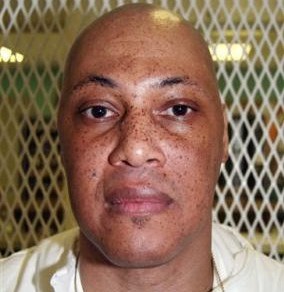
Curtis Moore was convicted of capital murder in Texas and was sentenced to death. He was executed by lethal injection in Texas on January 15, 2009.
Timeline
- November 1995 — Roderick Moore and LaTanya Boone were found shot to death in a roadside ditch across from a Fort Worth elementary school; during the same night firefighters found Darrel Hoyle and Henry Truevillian Jr. after a car fire.
- December 12 (year not stated) — Police arrested Curtis Moore and Anthony Moore after Darrel Hoyle’s statement and Anthony Moore’s role in leading police to a 9 mm gun.
- 2002 — Curtis Moore made a trip to the Huntsville death house, but was returned less than three hours before he could have received lethal injection.
- August 6, 2003 — Curtis Moore had a prior execution date.
- (Before January 15, 2009) — The United States Supreme Court agreed that Curtis Moore’s mental retardation claims could be reviewed; the high court later refused his appeal in October 2008, clearing the way for the January 15, 2009 execution.
- January 15, 2009 — Curtis Moore was put to death; he was pronounced dead at 6:21 p.m., eight minutes after lethal drugs began flowing.
- (Date not stated) — The Texas Board of Pardons and Paroles refused a clemency petition earlier in the week of the execution.
The offence
Curtis Moore’s murder convictions involved the fatal shootings and a car fire connected to a night of robberies in Fort Worth.
Victims and deaths
Roderick Moore, 24, and LaTanya Boone, 21, were killed by gunshots in November 1995. The bodies were found shot to death in a roadside ditch across from a Fort Worth elementary school.
Henry Truevillian Jr., 20, was shot and burned after firefighters were summoned to put out a car fire; he died, and authorities said he died later of multiple gunshot wounds in the chest and abdomen, burns and smoke inhalation.
Darrel Hoyle, 21, was shot and burned but survived. Testimony and narrative described that Hoyle regained consciousness six days after he was attacked and gave information that led to the arrest of Curtis Moore and his nephew.
Abductions and meeting arrangements
The five men agreed to meet Curtis Moore and his nephew, Anthony Moore, at a stable where Roderick Moore boarded and trained horses. Boone was abducted from the apartment she shared with Roderick Moore, her boyfriend.
After the meeting and discussion of making a cocaine deal, the night’s events culminated in robberies and the killings.
Robberies and abduction after the meeting
After the group met at the location tied to a plan to meet and make a cocaine deal, Curtis Moore came out of the bathroom shouting, “This is a jack,” which was described as street language meaning a robbery. He took $150 from Darrel Hoyle and $5 from Henry Truevillian.
While Curtis Moore held a gun on Darrel, Henry and Roderick, he told Anthony Moore to tie up the three men. Anthony tied the victims’ hands and feet. Curtis Moore put Darrel and Henry in the trunk of Darrel’s car; testimony described that Curtis drove, Anthony rode in the front passenger seat, and Roderick rode in the back seat.
The car stopped multiple times; Curtis got gasoline and instructed Anthony to keep the gun pointed at Roderick. After additional stops, the car stopped again and the trunk was opened. Curtis fired a gun at Darrel and Henry, and then poured gasoline on them; a lighter was described as being used and the victims’ clothes caught on fire. Darrel kicked until the trunk opened, pulled Henry and himself out, and ran. When Curtis caught up to Darrel, Curtis stepped on Darrel’s neck and threatened his life.
The narrative described that Curtis then attempted to escape and went back toward the cars.
Investigation
Firefighters and police were summoned after a car fire and a shooting-related incident in November 1995.
Darrel Hoyle regained consciousness six days after he was shot and burned and gave information that led authorities to the arrest of Moore and his nephew. Hoyle told police the street name “Kojak” for Anthony Moore and that Anthony attended O.D. Wyatt High School. Hoyle told police he did not know Curtis Moore’s name but knew Curtis drove a pink truck.
Later that morning police were called to a crime scene on David Strickland Street, not far from the Wilbarger site, where the bodies of LaTanya and Roderick were found shot with a 9 mm gun.
After Anthony Moore was arrested, he led police to the 9 mm gun that a ballistics expert testified had been used to kill LaTanya and Roderick.
Arrest
Curtis Moore and Anthony Moore were arrested about two weeks after the events described. One version of the narrative stated police arrested them on December 12.
Trial
Conviction and sentencing
Curtis Moore was convicted of capital murder in Texas and sentenced to death.
The two people condemned in connection with fatal shootings were Roderick Moore, 24, and LaTanya Boone, 21, both of Fort Worth. The trial account also described the fatal shootings and the arson/burning of the car involving Henry Truevillian Jr. and the survival of Darrel Hoyle.
Admission and dispute at trial
Curtis Moore blamed his nephew. Anthony Moore pleaded guilty to two counts of murder in exchange for two life prison terms. Moore contended he tried to rescue the victims from the burning car.
Curtis Moore acknowledged holding the victims at gunpoint and ordering them hogtied and stuffed into the trunk of the car.
Prosecutor and defense statements (verbatim)
Joetta Keene, who prosecuted Moore, recalled:
“He kept giving us more evidence”
George Gallagher, Moore’s trial lawyer, said:
“When he was found guilty, he said if they want to kill me, let them kill me,” Gallagher, now a state district judge, said.
Gallagher also stated:
“He told us: Don’t put on any mitigating stuff.”
Gallagher stated:
“Do you disregard the client’s instructions?”
Keene described Moore as a mean cold-blooded killer and said:
“when citizens say there’s absolutely nothing redeeming about a person to save his life.”
Sentencing and clemency
Punishment phase evidence
During the punishment phase, prosecutors showed jurors Moore’s violent past, including prison time for theft, robbery and weapon and drug possession. Testimony showed Moore was responsible for a stabbing while in jail awaiting trial.
Clemency petition
Earlier this week the Texas Board of Pardons and Paroles refused a clemency petition that said Curtis Moore could be mentally retarded and ineligible for the death penalty. Courts earlier rejected similar mental retardation claims.
Appeals
Curtis Moore exhausted his appeals in the courts.
Federal appellate proceedings (Certificate of Appealability)
Curtis Moore unsuccessfully sought state and federal habeas relief. After state habeas relief on a mental retardation claim was rejected on the merits, Moore sought authorization to file a successive habeas application based on an Atkins claim; that was granted. The United States District Court for the Northern District of Texas, John H. McBryde, J., denied relief and denied Moore’s application for a Certificate of Appealability (COA).
The Court of Appeals denied Moore’s application for a COA. The Court of Appeals stated:
“Moore’s application for a Certificate of Appealability is DENIED.”
The Court of Appeals included discussion that, in Atkins v. Virginia, the Constitution prohibited executing the mentally retarded, and described the state test for mental retardation under Texas law. The Court of Appeals discussed evidence and stated the district court concluded Moore was not mentally retarded and that the state court’s findings were not unreasonable under the applicable standard.
The appellate discussion also described testing scores reported by Moore, including WISC-R and WAIS results and disputed expert evidence on adaptive functioning and onset prior to age 18. The discussion included the statement that the evidence of onset before age 18 was conflicted, and that reasonable jurists could not disagree with the district court’s determination that the Atkins claim was beyond the reach of AEDPA relief.
Outcome
Curtis Moore was executed by lethal injection in Texas on January 15, 2009. He was pronounced dead at 6:21 p.m., eight minutes after the lethal drugs began flowing.
Aftermath
A woman who administered to the spiritual needs of death row inmates, Irene Wilcox, was described as watching through a window a few feet from Moore. Moore’s final statement thanked Wilcox:
“I want to thank you for all the beautiful years of friendship and ministry,”
Moore did not acknowledge a man who survived his attacks or five relatives of the three who died. The narrative described that Moore had previously been scheduled for execution in 2002, but was returned less than three hours before receiving lethal injection when the United States Supreme Court agreed his mental retardation claims could be reviewed; it also described that the high court refused his appeal in October 2008, clearing the way for Wednesday’s punishment date.
The narrative also described that Darrel Hoyle later became a rap artist and producer while living with scars from the fire.
Spotted an error, or have more information about this case?