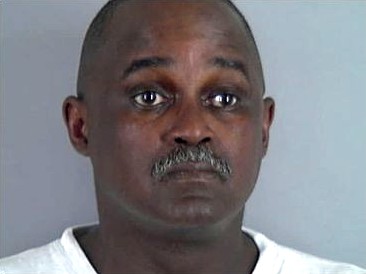
Lorenzo Gilyard
Serial killer Donald Henry Gaskins
Serial killer · USA · 1969
Donald Henry Gaskins, also known as Donald “Pee Wee” Gaskins, was a serial kill…
200 victims
Donald Henry Gaskins
Serial killer · USA · 1969
Donald Henry Gaskins, also known as Donald “Pee Wee” Gaskins, was a serial kill…
200 victims
 Carl Eugene Watts
Serial killer · USA · 1974
Carl Eugene Watts (born November 7, 1953; died September 21, 2007), also known…
100 victims
Carl Eugene Watts
Serial killer · USA · 1974
Carl Eugene Watts (born November 7, 1953; died September 21, 2007), also known…
100 victims
 Rodney Alcala
Serial killer · USA · 1977
Rodney James Alcala (born August 23, 1943) was also known as Rodrigo Jacques Al…
100 victims
Rodney Alcala
Serial killer · USA · 1977
Rodney James Alcala (born August 23, 1943) was also known as Rodrigo Jacques Al…
100 victims
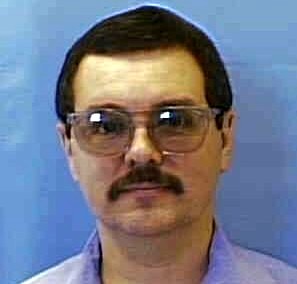 Donald Harvey
Serial killer · USA · 1970
Donald Harvey was known as an American serial killer and a self-professed “Ange…
87 victims
Donald Harvey
Serial killer · USA · 1970
Donald Harvey was known as an American serial killer and a self-professed “Ange…
87 victims
 Donald Leroy Evans
Serial killer · USA · 1975
Donald Leroy Evans (born July 5, 1957) was an American serial killer who murder…
60 victims
Donald Leroy Evans
Serial killer · USA · 1975
Donald Leroy Evans (born July 5, 1957) was an American serial killer who murder…
60 victims
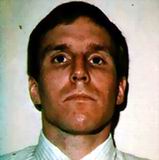 Michael Swango
Serial killer · USA · 1981
Michael Swango (Joseph Michael Swango) was a physician and American serial kill…
60 victims
Michael Swango
Serial killer · USA · 1981
Michael Swango (Joseph Michael Swango) was a physician and American serial kill…
60 victims
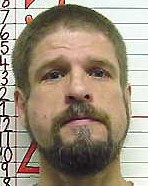 Jeffrey Tokar
Murderer · USA · 1992
March 11, 1992 — Jeffrey Tokar picked up his girlfriend, Sandra Stickley, share…
1 victim
Jeffrey Tokar
Murderer · USA · 1992
March 11, 1992 — Jeffrey Tokar picked up his girlfriend, Sandra Stickley, share…
1 victim
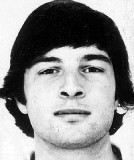 Paul Steven Haigh
Serial killer · Australia · 1978
Paul Steven Haigh was an Australian serial killer. · 1978 — After being paroled…
7 victims
Paul Steven Haigh
Serial killer · Australia · 1978
Paul Steven Haigh was an Australian serial killer. · 1978 — After being paroled…
7 victims
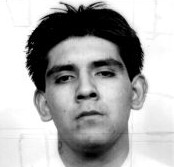 Domingo Cantu
Murderer · USA · 1988
Domingo Cantu was identified as the offender in a capital case involving the ra…
1 victim
Domingo Cantu
Murderer · USA · 1988
Domingo Cantu was identified as the offender in a capital case involving the ra…
1 victim
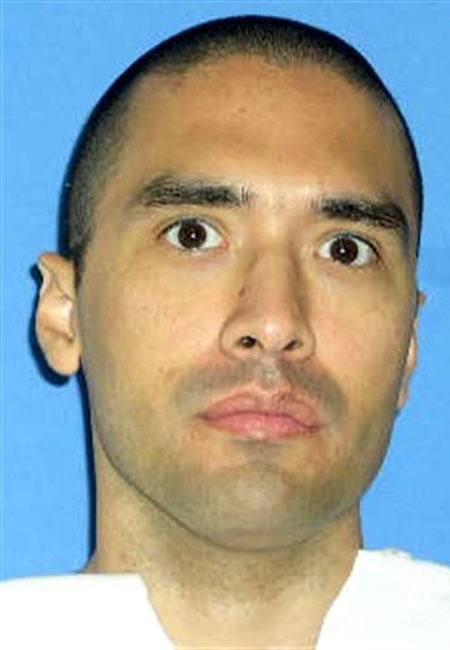 Rolando Ruiz
Murderer · USA · 1992
Rolando Ruiz was convicted of capital murder and was sentenced to death in Bexa…
1 victim
Rolando Ruiz
Murderer · USA · 1992
Rolando Ruiz was convicted of capital murder and was sentenced to death in Bexa…
1 victim
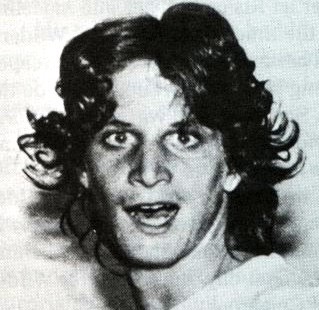 Ricky Kasso
Homicide · USA · 1984
Ricky Kasso (March 1967 - July 7, 1984) was a juvenile. Ricky Kasso was the son…
1 victim
Ricky Kasso
Homicide · USA · 1984
Ricky Kasso (March 1967 - July 7, 1984) was a juvenile. Ricky Kasso was the son…
1 victim
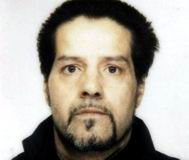 Bartolomeo Gagliano
Serial killer · Italy · 1981
Bartolomeo Gagliano was mentally ill and was serving time for multiple murders…
3 victims
Bartolomeo Gagliano
Serial killer · Italy · 1981
Bartolomeo Gagliano was mentally ill and was serving time for multiple murders…
3 victims
- Gender
- male
- Country
- USA
- Location
- Kansas City, Missouri, USA
- Date of birth
- May 24, 1950
- Age at first offence
- 27
- Characteristics
- rape
- Victim profile
- Women aged between 15 and 36 years
- Method of murder
- Strangulation
- Date(s) of murder
- 1977 - 1993
- Years active
- 1977–1993
- Date of arrest
- April 19, 2004
- Status
-
Life imprisonment
Sentenced to life in prison without parole on April 14, 2007 victims
Case record: Lorenzo Gilyard
Background
Lorenzo Gilyard (born c.1951) was an American serial killer. A former trash company supervisor, Gilyard was considered to have raped and murdered 13 women and girls in a period spanning 1977 to 1993.
Gilyard was convicted of 6 counts of murder on 2007 - 03-16. He was sentenced to life in prison without parole.
The offence
Gilyard was convicted in the murders of:
- Catherine M. Barry, 34
- Naomi Kelly, 23
- Ann Barnes, 36
- Kellie A. Ford, 20
- Sheila Ingold, 36
- Carmeline Hibbs, 30
Gilyard was acquitted of the murder of Angela Mayhew, 19, due to insufficient evidence.
Other victims not brought to trial were identified as:
- Stacie L. Swofford, 17
- Gwendolyn Kizine, 15
- Margaret J. Miller, 17
- Debbie Blevins, 32
- Helga Kruger, 26
- Connie Luther, 29
The crimes involved victims who were mostly prostitutes. The victims were found shoeless and dumped in secluded spots around Kansas City. Most victims had cloth or paper towels stuffed into their mouths and ligature marks around their necks.
All were found dead during the same one and a half year period, all were left in secluded or obstructed locations, all were strangled, all showed signs that they were involved in a struggle, all were missing their shoes and all but one showed distinct signs of sexual intercourse.
The prosecution focused mainly on DNA evidence, with criminal forensics experts showing that Gilyard had sex with the victims around the time they were killed.
Prosecution Attorney Jim Kanatzar said in opening statements to the court:
"All the victims have several things in common: All were found dead during the same one and a half year period, all were left in secluded or obstructed locations, all were strangled, all showed signs that they were involved in a struggle, all were missing their shoes and all but one showed distinct signs of sexual intercourse," Prosecution Attorney Jim Kanatzar said in opening statements to the court.
Prosecutors charged Gilyard with 10 counts of first-degree murder and two counts of capital murder in connection with the deaths of 11 prostitutes and one mentally ill woman. All were strangled, and eleven were sexually assaulted. Nine were found nude, many of the bodies were posed, and several appeared to have been bound at the wrists. Six victims had items tied around their necks, including a shoe string, an electrical cord and the victims' clothing. The killer apparently used whatever was handy. Five other victims showed signs of being strangled, but no objects were found on their necks.
Gilyard was not charged with a series of prostitute murders in which the victims were found in the Missouri River; those cases from the 1980s and 1990s remained unsolved. Gilyard was not connected to the recently publicized "BTK" murders in Wichita, police said; those victims were bound, tortured and killed.
Investigation
Early 2004, Kansas City police knew that a serial killer had strangled at least a dozen women from 1977 to 1993. The key clue was a blood sample stored on a freezer shelf for more than 15 years, which enabled police to arrest the man they said was responsible for strangling at least 12 women.
Police began following Lorenzo J. Gilyard, Jr. on April 12, 2004, when DNA linked him to the 12 murders. Police said Gilyard did not do anything unusual during the five days they tracked him. He went to work early, came home early and spent most of his time inside his house in the 8300 block of Kenwood Ave. The plan was to watch Gilyard to ensure public safety while detectives tied up loose ends and then arrest him on Monday 19 april. Officers tailed Gilyard Friday night (16 april) and became concerned that he knew he was being followed.
Kansas City Police Detective Mike Luster said the latest re-investigation into the unsolved killings began in 2001, when he looked at the deaths of two women linked to the same unknown suspect through DNA. Over the years, he looked for cases with similar victims to see if they were linked. He worked closely with the crime lab, where experts tested about 75 DNA samples from potential suspects and victims, and eventually linked the 12 victims. Then in april 2004, the crime lab found a suspect whose DNA matched the evidence from all 12 crime scenes.
Gilyard was one of several men who gave blood samples during investigations into women's murders. Police said Gilyard's name had come up in the investigation and that he provided blood voluntarily in 1987 in the investigation of the death of Shelia Ingold, one of the 12 women he had been charged with killing.
Jackson County Prosecutor Mike Sanders said:
"This is a victory for DNA testing," Jackson County Prosecutor Mike Sanders said. "It's another example of what DNA can do for us in law enforcement."
Kansas City Police Detective Mike Luster was "ecstatic" when he heard a suspect was matched to the victims. He said:
"We had put months and years into these investigations," he said, adding that since the murders occurred, dozens of other detectives had put in a lot of work on the cases.
Arrest and searches
Police officers walked into the Denny's restaurant at 1400 Burlington St. in North Kansas City Friday night and quietly asked him to come with them. Gilyard did. He had gone there with a female co-worker from Deffenbaugh Disposal Service. She was briefly questioned and then had to find her own way home. Police said information received later made them believe Gilyard was unaware he was being followed.
In Friday's [16 april 2004] search, officers reported that they seized audio tapes, videocassette tapes and a minicassette recorder.
Returning on Saturday with a new warrant, police seized a gray floor safe, a key, a combination lock, a computer, shoes, bras and a pair of women's panties. Police also searched Gilyard's 2002 Land Rover and a white Ford Ranger pickup truck but apparently found little of interest. Investigators did not find some items they had sought, including a white scarf, jewelry and other items from the victims.
Police went to Gilyard's home in the 8300 block of Kenwood Avenue hoping to find "souvenirs or trophies" from the victims, items the offender would take out from time to time to enhance his fantasy when reliving the murders. In the April 16, 2004 search, police also seized those items listed above.
Charging and pre-trial status
Prosecutors on 17 april charged Gilyard with 10 counts of first-degree murder and two counts of capital murder in connection with the deaths of 11 prostitutes and one mentally ill woman. He was held without bail. He pleaded not guilty to the 12 murder charges.
Trial
Gilyard was tried on first-degree murder charges. He faced 13 counts of murder, but six of those counts, including one stemming from the death of an Austrian national, were dropped. O'Malley acquitted Gilyard of one count of murder. The judge said prosecutors had provided him with only suspicions that Gilyard killed Angela Mayhew, not convincing proof.
Mayhew, 19, was found dead on Sept. 12, 1987. Hers was the only body that didn't contain semen, though one of Gilyard's hairs was found on her sweater.
Gilyard's defense contended the evidence proved only that Gilyard had sex with the women, not that he killed them.
Gilyard's attorney, Tom Jacquinot, said:
"Mr. Gilyard to this day still maintains his innocence, though he certainly does empathize with the family," Jacquinot said.
Relatives of the victims watched as Gilyard was led away. The trial provided a "small measure of justice," said Timothy Barry, whose wife, Catherine, was the only victim not a prostitute. Timothy Barry said:
"They let us put a face on this animal."
Catherine Barry's sister, Tricia Mitchell, said:
"I was afraid of everything and she wasn't afraid of anything," Mitchell said. "I would remember how, after some of the beatings, I felt the world would be better off without me," she said, crying. "Catherine would always tell me that was not true and that she needed me. Together we would make it."
Bessie Kelly recalled identifying the body of her sister, Naomi Kelly, in August 1986. She said:
"The one thing I hate the most is that Naomi never got to raise her children," Kelly said.
Sentencing
A judge sentenced Gilyard to life in prison without parole on April 14, 2007. It was the only sentence possible for Lorenzo Gilyard, 56, who had been convicted of murder.
Prosecutors had agreed in January not to seek the death penalty if Gilyard's attorneys agreed to a trial before a judge without a jury. Judge John O'Malley said:
"He's forfeited any right to live here among the rest of us," Judge John O'Malley said. "That's the comfort we can derive."
O'Malley said there was a chance the women, most of whom were prostitutes, would have turned their lives around, "except he stole it from them."
Prosecutor Jim Kanatzar said:
"I'd like to think that the citizens of Jackson County can sleep a little safer tonight knowing the person who is responsible for these deaths and murders is behind bars, and will be for the rest of his life," prosecutor Jim Kanatzar said.
He said his office was reviewing the six dismissed cases to determine whether to refile them.
Appeals
Tom Jacquinot said he planned to appeal:
Other details
Gilyard had previously served time for child molestation. Probation records showed that from 1969 to 1974 he was suspected of five rapes, but was never convicted.
Gilyard became a suspect in 1987 in the murder of Sheila Ingold. A crime lab later linked all 13 victims to one killer using DNA testing. A blood sample Gilyard provided in the 1987 investigation led to the murder charges.
Gilyard lived in a modest, single-story home at the end of a dead-end street. Neighbors described him as friendly and helpful, and as proud of his job. A company spokesman Tom Coffman described him as reliable and even-tempered and friendly, and said he would bring gifts to people regularly, like on their birthdays.
Neighbors described Gilyard as reliable, friendly, helpful, hard working and "quick to make a joke." One neighbor said Gilyard knocked on her door because she had forgotten to put out his trash. Neighbors said he babied and drove two Mercedes automobiles on weekends and sometimes hit golf balls in his backyard. On Gilyard's front door hung a wood sign engraved with "Gilyard" and below the names "Lorenzo" and "Jackie." Neighbor Lee Weldon said:
"I'm shocked, he's a real nice guy, a nice neighbor."
In March 1989, Gilyard helped a neighbor load a bicycle into her car and later invited her to an omelet dinner in his home. After three or four glasses of wine, he began pulling at the woman's top, saying he wanted to see her breasts. The woman said later in a deposition:
"I kept telling him that all I wanted to do was go home," the woman said later in a deposition. "Let me go home. Let me go home." And the woman recalled that Gilyard said: "he was going to kill himself," Gilyard took a kitchen knife and placed it at his own throat and then at the woman's. Afterward, he let the woman leave, and she immediately called police.
Authorities charged Gilyard with forcible sodomy, sexual abuse and assault. The case appeared headed for trial, but Gilyard pleaded guilty to everything except the sodomy charge on Oct. 30, 1989. The victim agreed to the plea bargain because she did not want her mental health history debated before a jury, according to a transcript of the hearing, and because she did not want to admit in court that she had been drinking before the incident.
The deal included that he was placed on probation for three years and was required to seek counseling for sexual abuse and anger control. The victim supported the plea agreement.
In September 1995, another neighbor reported troubles. Gilyard approached the woman and began describing intimate details about her. She suspected he was stalking her. For months, Gilyard made unwanted advances that included lewd gestures. The neighbor wrote in court records:
"I have pointed out to him that he is married, to which he simply shrugs and indicates that what his wife doesn't know won't hurt her," The neighbor said she answered her doorbell one early morning and found Gilyard standing there with a newspaper. She said: "He eyed me in his robe, and made an obscene sexual gesture " She said: "I yelled, ‘I'm not interested.'" She said she saw him looking in her window and twice saw him lurking outside her rented home at night. She said: "As a deaf single woman living alone," the woman said, "I fear for my safety and security in my house." In July 1996, she filed for an order of protection and moved out of town.
Penny Bradley described an incident in the fall of 2001 when her husband backed a truck into Gilyard's driveway. Bradley said he confronted them about being on his property marked with trespassing signs. Bradley said that while her husband talked inside, Gilyard displayed two guns. The Bradleys filed a police report.
Bradley said she seldom saw Gilyard or his wife, except when he was washing his Mercedes and a Land Rover, but other neighbors confirmed that they had trouble with Gilyard.
Karen Drake said that when news broke about Gilyard being charged with 12 murders, she was shocked. Drake described him as friendly and good. She said:
"He was just really a nice guy," Drake said. "He bought three boxes."
Rhena Hill described Gilyard's marriage. She said:
"five years of torture." Hill said: "He's destroyed my life, Now it's crept back up. It's horrible." She said: "He beat me and raped me, He threatened me and said he'd kill me." Hill said he would not let her use all the rooms, and that he made her live in one room, the bedroom, for five years. She said: "He loves nice things, pretty things, But you can't use them. He made me live in one room, the bedroom, for five years."
Hill received psychiatric help for the abuse and said her nerves had been bothering her since Gilyard's arrest.
In 1970, Gilyard's father, Lorenzo S. Gilyard, was convicted of assault with rape and sentenced to six months.
Gilyard's brother Daryle Gilyard was serving life without parole in the murder of a friend in a drug deal. A woman with the same mother as Gilyard was serving a life sentence for murder.
The case discussed an additional family detail: while working as a prostitute in 1983, Patricia D. Dixon, now 45, fatally stabbed a Johnson County customer 11 times in a dispute over $35. A clerk at an adult bookstore at 34th and Main streets saw the attack. The clerk told police that the victim had yelled, "Stop!" and the woman with the knife replied, "Go to hell!" That year, Dixon was sentenced to 11 years in prison for assault and theft for an incident at a Denny's Restaurant at 1600 Broadway. She was also charged in the January 1983 death of another Kansas City prostitute, but those charges were dropped.
Gilyard was arrested in April 2004 after DNA testing of evidence in city’s cold case files. Prosecutors plan to seek the death penalty in the 2006 proceedings, but the later outcome was life in prison without parole.
No charges have been filed in the latest case mentioned in the narrative.
Timeline
- May 24, 1950 — Lorenzo J. Gilyard Jr. is born in Kansas City.
- 1968 — Gilyard married Rhena Hill.
- January 1969 — Gilyard was accused of going to an acquaintance's home, striking her head with a flashlight and raping her.
- 1970 — Gilyard's father, Lorenzo S.
- Feb, 1974 — Gilyard was accused of raping a 25-year-old exotic dancer.
- July 1974 — Gilyard was charged with raping a 13-year-old girl.
- April 17, 1977 — Body of Stacie L. Swofford, 17, found.
- January 1980 — Body of Gwendolyn Kizine, 15, found.
- May 9, 1982 — Body of Margaret J. Miller, 17, found.
- March 14, 1986 — Body of Catherine M. Barry, 34, found.
- Aug. 16, 1986 — Body of Naomi Kelly, 23, found.
- Nov. 27, 1986 — Body of Debbie Blevins, 32, found.
- April 17, 1987 — Body of Ann Barnes, 36, found.
- June 9, 1987 — Body of Kellie A. Ford, 20, found.
- Sept. 12, 1987 — Body of Angela M. Mayhew, 19, found.
- Nov. 3, 1987 — Body of Shelia Ingold found.
- Dec. 19, 1987 — Body of Carmeline R. Hibbs, 30, found.
- Jan. 11, 1993 — Body of Connie Luther, 29, found.
- Sept 1995 — Gilyard began to stalk one of his female neighbors.
- July 1996 — The stalked neighbor filed for an order of protection and then moved out of town.
- April 12, 2004 — Police began following Lorenzo J. Gilyard, Jr. when DNA linked him to the 12 murders.
- April 16, 2004 — Gilyard is arrested at a Northland restaurant named, Denny's.
- April 16, 2004 — Police went to Gilyard's home in the 8300 block of Kenwood Avenue hoping to find "souvenirs or trophies".
- April 17, 2004 — Prosecutors charged Gilyard with 10 counts of first-degree murder and two counts of capital murder.
- May 10, 2004 — Gilyard pleaded innocent before a courtroom filled with victims' families.
- April 14, 2007 — A judge sentenced Gilyard to life in prison without parole.
- May 13, 2006 — Kansas City police said the crime lab linked a 13th victim to a man prosecutors had called the state's most prolific serial killer.
- June 22, 2006 — Jackson County prosecutors filed a new murder charge against accused serial killer Lorenzo Gilyard.
- June 29, 2006 — A former trash company supervisor pleaded not guilty to a 13th slaying.
- July 17 — Judge K. Preston Dean set Gilyard’s next court appearance date.

Spotted an error, or have more information about this case?