
Warren Glowatski
Homicide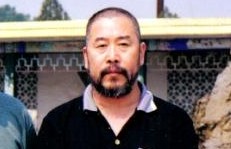 Hu Wanlin
Homicide · China · 1997
Hu Wanlin (胡万林), born 1949, was from Mianyang, Sichuan Province. · 1993 — While…
146 victims
Hu Wanlin
Homicide · China · 1997
Hu Wanlin (胡万林), born 1949, was from Mianyang, Sichuan Province. · 1993 — While…
146 victims
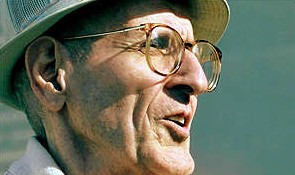 Jack Kevorkian
Homicide · USA · 1990
Jack Kevorkian (born May 26, 1928) was a controversial American pathologist. He…
130 victims
Jack Kevorkian
Homicide · USA · 1990
Jack Kevorkian (born May 26, 1928) was a controversial American pathologist. He…
130 victims
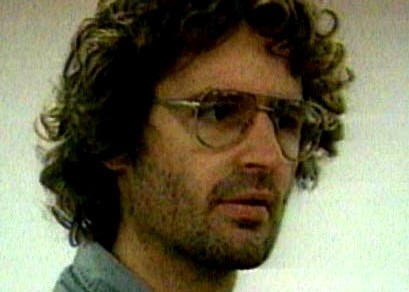 David Koresh
Homicide · USA · 1993
David Koresh (born Vernon Wayne Howell; August 17, 1959 – April 19, 1993) led t…
79 victims
David Koresh
Homicide · USA · 1993
David Koresh (born Vernon Wayne Howell; August 17, 1959 – April 19, 1993) led t…
79 victims
 Todd Hall
Homicide · USA · 1996
Todd Hall was described by neighbors as "mentally slow" and was said to have su…
9 victims
Todd Hall
Homicide · USA · 1996
Todd Hall was described by neighbors as "mentally slow" and was said to have su…
9 victims
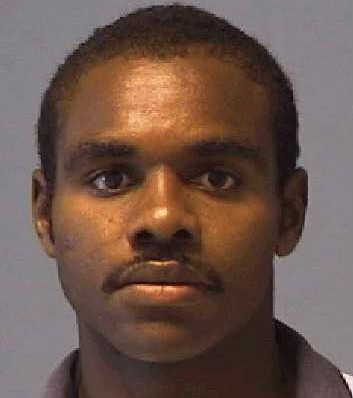 Clinton Bankston
Homicide · USA · 1987
15 August 1987 — Ann Morris (63), her sister Sally Nicholson (59), and Sally’s…
5 victims
Clinton Bankston
Homicide · USA · 1987
15 August 1987 — Ann Morris (63), her sister Sally Nicholson (59), and Sally’s…
5 victims
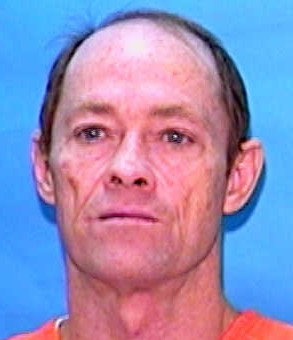 James Ernest Hitchcock
Murderer · USA · 1976
Name: James Ernest Hitchcock Date of birth: 04/05/56 Court: Ninth Judicial Circ…
1 victim
James Ernest Hitchcock
Murderer · USA · 1976
Name: James Ernest Hitchcock Date of birth: 04/05/56 Court: Ninth Judicial Circ…
1 victim
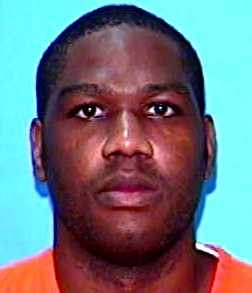 Lenard Philmore
Murderer · USA · 1997
Lenard Philmore · 11/14/1997 — Offence: Lenard Philmore was convicted in the mu…
1 victim
Lenard Philmore
Murderer · USA · 1997
Lenard Philmore · 11/14/1997 — Offence: Lenard Philmore was convicted in the mu…
1 victim
 Joseph Whitfield
Murderer · USA · 1988
State of Missouri v. Joseph Whitfield, 939 S.W.2d 361 (Mo. banc 1997) · January…
1 victim
Joseph Whitfield
Murderer · USA · 1988
State of Missouri v. Joseph Whitfield, 939 S.W.2d 361 (Mo. banc 1997) · January…
1 victim
 Omar Thornton
Mass murderer · USA · 2010
Omar S. Thornton was 34 years old at the time of the Hartford Distributors shoo…
8 victims
Omar Thornton
Mass murderer · USA · 2010
Omar S. Thornton was 34 years old at the time of the Hartford Distributors shoo…
8 victims
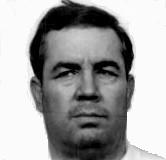 James Otto Earhart
Murderer · USA · 1987
James Otto Earhart · May 4, 1987 — Earhart visited the Kirtland home in respons…
1 victim
James Otto Earhart
Murderer · USA · 1987
James Otto Earhart · May 4, 1987 — Earhart visited the Kirtland home in respons…
1 victim
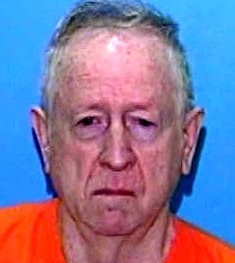 William Bryan Cruse
Spree killer · USA · 1987
William Bryan Cruse William Bryan Cruse was a retired librarian and lived in Pa…
6 victims
William Bryan Cruse
Spree killer · USA · 1987
William Bryan Cruse William Bryan Cruse was a retired librarian and lived in Pa…
6 victims
- Gender
- male
- Country
- Canad a
- Location
- Saanich, British Columbia, Canad a
- Date of birth
- April 26, 1981
- Age at first offence
- 16
- Characteristics
- juvenile, mentally ill, mentally retarded, gang, drug addict
- Victim profile
- Reena Virk (female, 14)
- Method of murder
- Drowning
- Date(s) of murder
- November 14, 1997
- Years active
- 1997
- Date of arrest
- 1 week after
- Status
-
Released
Sentenced to life in prison with no chance of parole for seven years on June 18, 1999; released on parole June 23, 2010
Case details
Warren Glowatski (born April 26, 1981 in Medicine Hat, Alberta) was a Canadian man convicted in the murder case of Reena Virk.
Glowatski’s parents were never married, but stayed together to raise him. His mother was an alcoholic, which caused his father to leave her in 1996. After moving frequently while his parents stayed together, Glowatski lived in Estevan and Regina, Saskatchewan, and Castlegar, British Columbia. In 1996, with his father only, Glowatski moved to Nanaimo, British Columbia on Vancouver Island. In 1997, they settled in a trailer home near the southern tip of the Island in Saanich, British Columbia.
At 15, Glowatski fell in love with his classmate Syreeta Hartely. In the summer of 1997, his father married a woman he met in Las Vegas, Nevada. She had a home in southern California and his father was going to move into it. His father invited Glowatski to move with him, but Glowatski did not want to leave his girlfriend behind. His father left for California, and Glowatski lived alone in the trailer. His father sent cheques several times a month for Glowatski to live on. Syreeta’s mother cooked meals for him and washed his clothes.
Glowatski was into gangster rap and affiliated himself with the local Crips. He was initiated into the group in 1996 by enduring a beating the gang members gave him. Around school, he was known for wearing the gang’s trademark colors. Glowatski later admitted that his gang affiliation and love for violent music most likely fueled his partnership with Kelly Ellard.
Syreeta Hartely was also under the bridge that night but felt sick and left before the first fight took place. Glowatski offered to take her home, but she declined. She regretted not telling him yes.
The offence
On the evening of Friday November 14, 1997, Reena Virk was invited to a “party” at a location used for gatherings of teenagers near the Craigflower Bridge, west of the city of Victoria. Virk accepted the invitation despite having difficulty fitting in with her schoolmates.
While at the bridge, teenagers talked among themselves, drank, and smoked marijuana. Virk was swarmed by eight adolescents—seven girls and one boy. Witnesses said that one of the girls stubbed out a cigarette on Virk’s forehead. While seven or eight others stood by and watched, Virk was repeatedly hit, punched and kicked. Virk was found with several cigarette burns on her skin, and attempts were made to set her hair on fire. The fight ended when one of the girls told the others to stop.
Virk managed to walk away, but was followed by two members of the original group: Ellard and Glowatski. The pair dragged Virk back under the bridge, made her remove her shoes and jacket, and beat her a second time. It was believed that Ellard forced Virk’s head under the water and held it there with her foot until Virk stopped struggling.
After the beating, rumors of the alleged murder spread throughout Shoreline Secondary School by the following Monday, but no one came forward to report it to police. The rumors were confirmed eight days later, when police divers found Virk’s partially clothed body washed ashore at the Gorge Inlet.
Reena Virk was 14 years old at the time of her death.
Victim
Reena Virk (March 10, 1983 – November 14, 1997) resided in Saanich, British Columbia, Canada. Her bullying and murder attracted substantial media attention in Canada.
Virk came from a large extended family that emigrated from India to Canada. An article in Saturday Night described her immediate family as “a minority within a minority,” as they were Jehovah’s Witnesses in a local East Indian community of 3,000 that was predominantly Sikh.
Virk had been estranged from her family earlier in adolescence and began to rebel against her immediate family and their strict religious beliefs. She began to smoke, disobey family rules, and spent a few days at a group foster home, where she first came into contact with local youth gang culture and became attracted to it.
There were also allegations that she may have been sexually abused by her father, though charges filed in January 1996 were stayed in court. After leaving home for six weeks, Virk returned home.
Virk was described as “a girl who was desperate for acceptance amongst her peers,” but was teased and/or ostracized by girls whose subculture was influenced by Los Angeles street gangs.
Possible motives
Under the Bridge details possible motives that may have led to Virk’s death.
Two girls convicted in the initial beating alleged that Virk stole one of the girls’ phone book and started calling her friends to spread vicious rumors about her. One of the girls stubbed her cigarette on Virk’s forehead. The other girl was angry with Virk for stealing her boyfriend. The book also stated that Virk, who once lived with the two girls in a youth group home, may have done those things to assert herself as a “tough girl.”
The book also stated that Virk was initially considered a runaway when her mother first reported her missing to the Royal Canadian Mounted Police. Two Russian sisters living in the youth group home were prompted to call police after hearing that Virk was most likely dead.
Investigation
Police divers found the body of Reena Virk in a shallow tidal pool about one kilometre from where she was last beaten.
The coroner ruled the death was by drowning. An autopsy later revealed Virk sustained several fractures and that head injuries were severe enough to have killed her if she had not been drowned.
Witnesses later testified that one accused bragged that she had one foot on Virk’s head and smoked a cigarette as Virk lay in the water.
Arrest
Warren Paul Glowatski was arrested and charged with the murder of Reena Virk. Seven teenaged girls also faced charges ranging from assault to murder. Glowatski and the seven girls were arrested one week after the beating and murder.
Trial
Glowatski was charged with second-degree murder in the death of Reena Virk and stood trial.
The judge ruled against a publication ban on details of the case. Glowatski admitted he took part in the beating of Reena Virk but insisted he did not kill her.
Glowatski testified as the crown’s key witness in Kelly Ellard’s third trial, describing how he and Ellard followed Virk as she staggered away from a group of teens and beat Virk and left her for dead in a waterway.
In 2000 for Kelly Ellard’s first trial, Glowatski refused to testify against her, citing that doing so would endanger his life in prison. The judge charged him with one count of contempt of court, and Glowatski received an extra five years for the charge. He later testified in her second and third trials.
Sentencing
Warren Glowatski was convicted of second degree murder and received a life sentence.
On June 18, 1999, he was sentenced to life in prison with no chance of parole for seven years. Justice Malcolm MacAuley said Glowatski would have a better chance at participating in programs and receiving an education at the federal institution of Matsqui than he would at a youth facility.
Because Glowatski was 16 at the time, he came up for parole every seven years. In November 2004, he was denied his first chance at parole.
Appeals
Warren Glowatski lost his appeal in 2001. The B.C. Court of Appeal ruled he actively took part in Virk’s killing.
Outcome
Warren Glowatski was released on parole June 23, 2010.
Aftermath
In 2000, Reena Virk’s parents, Manjit and Suman Virk, sued the teenagers who took part in the beating, the B.C. government and several other people. The lawsuit occurred after Reena Virk’s parents had filed suit.
In relation to parole, the Virk family supported the decision when Glowatski was granted unescorted temporary passes by the National Parole Board.
Timeline
- November 14, 1997 — Reena Virk, 14, was swarmed and beaten under a bridge in Saanich on Vancouver Island by a group of teenagers, mainly girls.
- November 21, 1997 — Warren Paul Glowatski was arrested and charged with the murder of Reena Virk; seven teenaged girls also faced charges ranging from assault to murder.
- November 22, 1997 — Police divers found Virk’s partially clothed body washed ashore at the Gorge Inlet.
- February 9, 1998 — The first of the trials in the beating and drowning of Reena Virk opened in Vancouver; three teenaged girls pleaded guilty to assault causing bodily harm and three other teenaged girls went to trial on aggravated assault.
- February 13, 1998 — Three teenaged girls were convicted of lesser charges of assault causing bodily harm.
- April to May 1998 — Six girls aged 14 to 16 received sentences ranging from 60 days conditional to one year in jail for their parts in the initial beating of Reena Virk.
- May 3, 1999 — Warren Glowatski admitted he took part in the beating of Reena Virk but insisted he did not kill her.
- June 2, 1999 — Warren Glowatski was convicted of second degree murder in the death of Reena Virk.
- June 18, 1999 — Warren Glowatski was sentenced to life in prison with no chance of parole for seven years for second-degree murder in the death of Reena Virk.
- May 13, 1999 — The Supreme Court of Canada refused to hear an appeal by Kelly Ellard’s lawyers to have her case tried in youth court; she would be tried as an adult.
- November 15, 2000 — Reena Virk’s parents, Manjit and Suman Virk, sued the teens arrested in connection with the attack, the B.C. government and several others.
- June 14, 2004 — A second murder trial began in the Virk case.
- June 16-22, 2004 — Witnesses including Glowatski testified that Kelly Ellard had admitted to killing Virk.
- July 6, 2004 — Kelly Ellard admitted to taking part in the initial beating but said it was self-defense.
- July 18, 2004 — A mistrial was declared in Ellard’s second-degree murder trial after the jury declared it was deadlocked 11-1.
- July 20, 2006 — Warren Glowatski was granted unescorted temporary passes by the National Parole Board.
- August 9, 2006 — Kelly Ellard appealed her conviction, asking for a fourth trial or an acquittal.
- November 19, 2004 — Warren Glowatski was denied day parole.
- March 31, 2000 — Kelly Marie Ellard was convicted of second-degree murder in the death of Virk.
- July 14, 2004 — Jury began its deliberations in the murder trial of Kelly Ellard.
- July 9, 2004 — Ellard defense rested its case after her last witness testified.
- July 8, 2004 — Ellard finished her third day of testimony.
- June 30, 2004 — A pathologist testified that Virk’s death was due to drowning.
- June 29, 2004 — Glowatski denied killing her but said he watched Ellard drown her.
- June 14, 2004 — The second murder trial began.
- February 21, 2005 — Kelly Ellard’s third trial re-opened.
- April 12, 2005 — Ellard was found guilty of second degree murder and given an automatic life sentence.
- April 7, 2005 — A third jury began deliberating the fate of Kelly Ellard.
- April 6, 2005 — Final arguments wrapped up in Ellard’s third trial.
- April 12, 2005 — Ellard was found guilty of second degree murder.
- April 13, 2005 — A timeline report was published.
- July 7, 2005 — Justice Robert Bauman sentenced Kelly Ellard to life in prison.
- June 23, 2010 — Glowatski was released on parole.
Other details
Virk was first swarmed by seven females and one male. Moments later, the single male and one female administered an additional beating and murdered her.
Six of the girls involved in Virk’s first beating had their names concealed due to their ages when the crime was perpetrated.
The murder case had been the subject of an award-winning and bestselling book, Under the Bridge (2005) by Rebecca Godfrey, and partly inspired a monologue play, The Shape of a Girl (2001), by Joan MacLeod, and The Beckoners by Carrie Mac. Film rights for Under the Bridge had been purchased by Type A Productions for adaptation into a movie.
In the initial case reporting, the Globe and Mail commented that her case had been “elevated into a national tragedy.”
Canadian sociologists described the case as a watershed moment for a “moral panic” over girl violence by the Canadian public in the late 1990s.
Ellard was described as “the most aggressive in the group of girls who attacked Virk” in the sentencing context; the defence portrayed Ellard as the victim of a conspiracy by a group of young girls who were out to protect themselves.
Glowatski was described as the second teen to be convicted of second-degree murder in Virk’s death; he lost his appeal in 2001 and the Court of Appeal ruled he actively took part.
Warren and Kelly were both described as having to be part of dragging Virk, and it could not have been possible without the help of both.
Spotted an error, or have more information about this case?