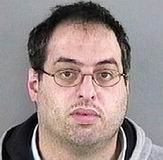
Danilo Restivo
Murderer John Cooper
Murderer · United Kingdom · 1985
John Cooper was a serial killer from Milford Haven, Pembrokeshire. Cooper was c…
4 victims
John Cooper
Murderer · United Kingdom · 1985
John Cooper was a serial killer from Milford Haven, Pembrokeshire. Cooper was c…
4 victims
 Andrew Walker
Murderer · United Kingdom · 1985
Royal Scots corporal Andrew Walker killed three Army colleagues in a payroll ro…
3 victims
Andrew Walker
Murderer · United Kingdom · 1985
Royal Scots corporal Andrew Walker killed three Army colleagues in a payroll ro…
3 victims
 Anthony Smith
Murderer · United Kingdom · 2001
Anthony Smith was a former sergeant in the Coldstream Guards. He had left the C…
3 victims
Anthony Smith
Murderer · United Kingdom · 2001
Anthony Smith was a former sergeant in the Coldstream Guards. He had left the C…
3 victims
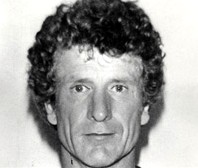 Arthur Hutchinson
Murderer · United Kingdom · 1983
Arthur Hutchinson was an English murderer and rapist who committed three murder…
3 victims
Arthur Hutchinson
Murderer · United Kingdom · 1983
Arthur Hutchinson was an English murderer and rapist who committed three murder…
3 victims
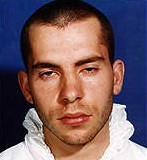 David John Copeland
Murderer · United Kingdom · 1999
David John Copeland was born in Isleworth, in the London Borough of Hounslow, a…
3 victims
David John Copeland
Murderer · United Kingdom · 1999
David John Copeland was born in Isleworth, in the London Borough of Hounslow, a…
3 victims
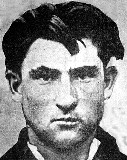 Jules-Alexandre Ughetto
Mass murderer · France · 1928
Paris, 17th September. A woodcutter made a plea at the trial of two lads. He sa…
5 victims
Jules-Alexandre Ughetto
Mass murderer · France · 1928
Paris, 17th September. A woodcutter made a plea at the trial of two lads. He sa…
5 victims
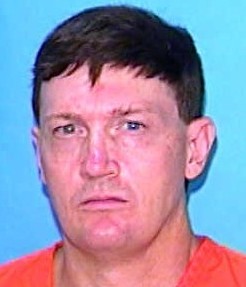 Harold Lee Harvey
Murderer · USA · 1985
Harold Lee Harvey was born on 12/30/62. He was tried in the Nineteenth Judicial…
2 victims
Harold Lee Harvey
Murderer · USA · 1985
Harold Lee Harvey was born on 12/30/62. He was tried in the Nineteenth Judicial…
2 victims
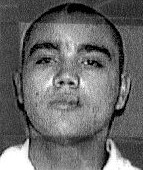 Johnnie Bernal
Homicide · USA · 1994
Aug. 19, 1994 — Johnnie Bernal spent the evening cruising Northwest Houston wit…
1 victim
Johnnie Bernal
Homicide · USA · 1994
Aug. 19, 1994 — Johnnie Bernal spent the evening cruising Northwest Houston wit…
1 victim
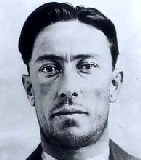 Colin Campbell Ross
Murderer ? · Australia · 1921
5 March 1920 — Ross asked Lily Mae Brown to marry him and produced a revolver a…
1 victim
Colin Campbell Ross
Murderer ? · Australia · 1921
5 March 1920 — Ross asked Lily Mae Brown to marry him and produced a revolver a…
1 victim
 Rebecca Bryan
Murderer · USA · 2011
Rebecca Bryan was convicted of first-degree murder for fatally shooting her hus…
1 victim
Rebecca Bryan
Murderer · USA · 2011
Rebecca Bryan was convicted of first-degree murder for fatally shooting her hus…
1 victim
- Gender
- male
- Country
- United Kingdom
- Location
- Potenza, Italy / Bournemouth, England, United Kingdom
- Date of birth
- April 1972
- Age at first offence
- 21
- Characteristics
- mutilation
- Victim profile
- Elisa Claps, 16 / Heather Barnett, 48
- Method of murder
- Stabbing with knife
- Date(s) of murder
- September 12, 1993 / November 12, 2001
- Years active
- 1993–2001
- Date of arrest
- May 2010
- Status
-
Imprisoned
Sentenced to life in prison (minimum 40 years) in England on June 29, 2011; sentenced to 30 years in prison in Italy on November 11, 2011
Case record: Danilo Restivo
Background
Danilo Restivo was born in Sicily in April 1972. He later lived in Potenza, Italy, and was described as being involved in incidents in which women had their hair clandestinely cut.
In 1993, Restivo lived with his parents in the Italian city of Potenza. He attempted to arrange dates with girls by claiming to have a present for them. He harassed those who rejected him with phone calls in which he played the soundtrack to Profondo Rosso, a Giallo film about a serial killer. Elisa Claps, the 16-year-old daughter of a tobacconist, felt sorry for him. Despite misgivings, she agreed to see Restivo at the 15th-century Church of the Most Holy Trinity in the centre of the city.
Restivo was also known to police as a suspect in nine incidents in which women had their hair clandestinely cut. He was also thought to have tied up two children before cutting one with a knife.
An Italian policeman who questioned Restivo described him as "cunning" and "precise in his answers".
The offence
Elisa Claps disappearance and murder
On Sunday 12 September 1993, Elisa Claps, accompanied by a female friend, went to meet Restivo at the Church of the Most Holy Trinity in Potenza, arriving at approximately 11:30 AM just as mass finished. When she did not return home, Claps’s elder brother, Gildo, telephoned Restivo’s family residence and was told that Restivo was out of town and they had no knowledge of Claps’s whereabouts.
When Gildo went to the church, he found the priest in charge, Domenico Sabia, had left, taking the only key giving access to the upper story of the church building with him. Gildo reported the disappearance of his sister to police, but he was at first told the matter had "no urgency".
When a policeman questioned him, Restivo said Claps had left the church while he had stayed to pray. He explained a cut on his hand as the result of an accident. Later that day, he said he had gone to Napoli. The Restivo family declined the policeman’s request for clothes Restivo had been wearing on 12 September to be handed over, and the officer was denied authorisation to search the Restivo family home by his superiors. Sabia opposed a search of the church.
Claps’s friend suspected Restivo. A close friend of Claps, who had accompanied her on the day of her disappearance, told investigators that she had last seen Claps outside the church at 11:30 AM when Claps had left to meet Restivo in the church. The friend said Claps told her she would be back in half an hour. Prosecutors accused the friend of lying and suspected her of involvement in the disappearance; they asserted that she had been seen with Claps later in the day.
Remains of Elisa Claps were found later in a brick alcove beside the bell tower in the church in March 2010, and forensic DNA analysis initially suggested the body was not that of Claps but later re-testing found it to be her. Strands of Claps’s own hair had been cut from her head shortly after her death and placed near her hands. Italian investigation found DNA and other evidence indicating Restivo was the murderer of Claps.
Restivo was tried in Italy in connection with Claps. At one point, he was convicted in absentia of the murder of Claps by an Italian court.
Heather Barnett murder and mutilation
In May 2002, Restivo arrived in England and moved in with a Bournemouth woman. He lived across the street from Heather Barnett, a mother of two who worked from home as a seamstress.
Restivo visited Barnett’s flat on 6 November 2002, ostensibly to discuss having curtains made.
On 12 November 2002, Barnett was found by her children, aged 11 and 14, when they came home from school. They waited for police to arrive at the home of Restivo. Barnett was bludgeoned to death with a hammer and her breasts, which had been severed, were beside her head. A lock of hair, which was not Barnett’s, had been placed in her right hand and some of her own hair was under her left hand. The time of death was estimated to be shortly after Barnett had returned home after taking her children to school that morning.
In one account, Barnett was battered around the head with a hammer-like object and dragged into her bathroom. Her throat was cut, she was partially stripped and her breasts were sliced off. The killer left a clump of another woman’s hair in Barnett’s right hand and some of her own beneath her left. Barnett’s children, Terry and Caitlin, found her body when they returned from school. Terry told how his sister "went absolutely ballistic" as she opened the bathroom door. When he peered in he was horrified, saying: "I saw her lying on her back with blood. I saw blood absolutely everywhere and I thought 'Oh no.'"
Investigation
Early interest in Restivo
Restivo was immediately a person of interest for detectives because he had been first on the scene, returning home with his female companion when the alarm was raised by Barnett’s children. Police took him in for questioning, three days later he was released without charge.
At an early stage, Restivo produced a bus ticket timed stamped 8.44am to support his alibi of having been on his way to a computer course at the time of the murder. A detective heading the inquiry later said that Restivo gave the impression of being "bumbling".
Forensic investigation showed the killer had left few traces at the crime scene. Luminol tests showed a trail of bloody shoe-prints that ended suddenly, thought to indicate the killer had changed shoes before leaving Barnett’s house.
Barnett’s son told police the day after the murder that his mother’s keys went missing after Restivo’s visit on 6 November, and he was found to have soaked the trainers he had worn on 12 November in bleach. In the light of Restivo’s connection to Claps’s disappearance and suspicious behaviour, detectives regarded him as a chief suspect, but there was not sufficient evidence for a prosecution.
Surveillance and arrest-related evidence
In March 2004, Restivo was put under close surveillance using electronic tracking and listening devices. Police overheard Restivo being spoken to by his parents and female companion as if he were a child. He was observed on repeated visits to a beauty spot where he was covertly filmed as he apparently stalked lone women.
On 12 May 2004, the surveillance team became alarmed and a uniformed patrol was ordered to stop and search Restivo on a pretext. Although it was a warm day, he was wearing waterproof over-trousers. In his car police found an identical change of clothing, a filleting knife, scissors, a balaclava and gloves.
In June 2004, a schoolgirl identified Restivo as the man who had cut her hair on a bus. In November 2006, he was rearrested and his home was searched. Police found a lock of hair. Trainers he had worn on the day of the murder had traces of blood but could not be identified.
In 2008, new techniques revealed a bloodstained towel left at the murder scene had a DNA match for Restivo, but he claimed to have left it on the visit to Barnett’s home on 6 November. The evidence was still judged insufficient for a prosecution.
Connection to Elisa Claps and charging
After the body of Elisa Claps was discovered, it became clear that her friend had been telling the truth. She testified via a video link at Restivo’s trial for murdering Barnett.
Sabia died in 2008. He had denied ever being acquainted with Restivo, but a photograph of Restivo’s 18th birthday party emerged showing Sabia had been one of the guests.
In March 2010, a body was found in the church in a brick alcove beside the bell tower, and DNA re-testing identified it as Claps. Strands of her hair were cut from her head shortly after death and placed near her hands, and Italian investigation found DNA and other evidence indicating Restivo was the murderer of Claps.
A move unrelated to the Italian investigation led to charging Restivo: two months after the remains of Claps were found, Restivo was charged with the murder of Barnett.
The English court was ruled able to hear evidence that Restivo had murdered Elisa Claps in Italy and about similarities between the murders. Italian investigators testified to the English court that DNA recovered from the clothes on Claps’s body matched Restivo and was consistent with blood.
Arrest
Italian custody related to Claps matter
A magistrate refused to issue an arrest warrant for Restivo in June 1994, but four months later he was taken into custody.
During that period, an Italian policeman who questioned Restivo described him as "cunning" and "precise in his answers".
England stop and search, and later arrest
On 12 May 2004, police stopped and searched Restivo on a pretext. They found items including a filleting knife, scissors, a balaclava, and gloves in his car, alongside a change of clothing.
In November 2006, Restivo was rearrested and his home was searched.
Trial
Italian proceedings involving Claps
In 1996, Restivo was tried for giving false information. He testified that he had met Claps in a curtained area behind the altar before she left minutes later. He admitted he had previously taken girls to a room on the first floor of the church.
Restivo was tried along with an Albanian man and Claps’s close friend. Restivo alone was convicted, and he was sentenced to 20 months imprisonment and lost an appeal. Because short sentences were suspended in Italy, Restivo remained free and without restriction on his movements.
The prosecution appealed against the acquittal of Claps’s friend. At a second trial, the friend was found guilty on a charge of perjury and sentenced to 14 months imprisonment. The Italian supreme court later overturned the conviction.
English trial for the murder of Heather Barnett
Restivo was tried for the murder of Heather Barnett, with evidence including similarities in ritualistic placing of hair on the bodies of Claps and Barnett being heard by the English court.
In May 2011, Restivo was found guilty of murdering Heather Barnett. The judge sentenced him to spend the rest of his life in prison.
At trial, Restivo showed no emotion as the verdict was delivered, and Barnett’s daughter Caitlin sobbed.
Sentencing
England sentencing and minimum term changes
In May 2011, a judge sentenced Restivo to spend the rest of his life in prison.
In November 2012, the Court of Appeal altered his minimum sentence to 40 years. It stated it was "highly improbable" he would ever be released.
In one account of sentencing, Mr Justice Burnett told Restivo that no minimum term would be appropriate and that he would never be released from prison. The sentencing remarks included:
"The seriousness of this offence is exceptionally high... the depravity of the killing, the careful planning and preparation, its sexual content and the previous killing of Elisa Claps drive me to the conclusion that the alternative starting point (for a minimum prison term) of 30 years would not be appropriate. " "I can find no mitigation in this case, none have been advanced on your behalf. There is, in my judgment, no minimum period which could be properly set – you will never be released from prison."
The judge also said:
"You knew an 11-year-old girl and a 14-year-old boy would find their mother butchered on the bathroom floor. This feature of the case will haunt those who sat through it. " "Why you picked Heather Barnett as your victim I do not know but it's clear that you did so to satisfy a sadistic, sexual appetite. The evidence in this case shows you are a cold, depraved, calculated killer."
Italy sentencing for Claps murder
Restivo later received a conviction in absentia of the murder of Claps by an Italian court. He was sentenced to 30 years in prison in Italy on November 11, 2011.
Appeals
Restivo appealed against the whole life term. His lawyers argued the judge was wrong to take the Claps murder into account when sentencing Restivo for the murder of Barnett because Restivo had not been convicted of it at that time.
In November 2012, the Court of Appeal ruled in favour of Restivo and altered his minimum sentence to 40 years, saying it was "highly improbable" he would ever be released.
Outcome
Restivo was convicted of murdering Heather Barnett and sentenced to life imprisonment in England with a 40-year minimum term.
Restivo was also convicted in absentia of the murder of Elisa Claps by an Italian court and later received a prison sentence in Italy.
Related legal review involved the Criminal Cases Review Commission examining the conviction of Omar Benguit to determine if it should be referred to the Court of Appeal. After juries at two previous trials had failed to agree on a sentence, Benguit was found guilty in January 2005 on a charge of murdering Jong-Ok Shin, a 26-year-old Korean woman who had come to England to study. She was attacked yards from her home, three blocks from where Restivo lived, in the early hours of 12 July 2002.
A criminologist who had researched the case expressed an opinion that the likelihood of different killers with similar long bladed knives committing murders three streets apart within four months is "very,very small". According to Benguit’s lawyers, security video of the street in the time-frame of the murder showed that the testimony of the main prosecution witness in the case is unreliable; while several lines of circumstantial evidence point to Restivo.
In December 2012, the Criminal Cases Review Commission announced Benguit’s case is to be submitted to the Court of Appeal.
Timeline
- April 1972 — Danilo Restivo was born in Sicily.
- 1992 — Angela Campochiaro, then 23, had a 10cm lock of hair cut from her head in a cinema in Potenza.
- 12 September 1993 — Elisa Claps, 16, went missing after meeting Restivo at the Church of the Most Holy Trinity in Potenza.
- March 1995 — Restivo was convicted in Italy of giving false information about an injury to his hand on the day Claps disappeared.
- May 2002 — Restivo arrived in Bournemouth to live with a woman he met on the internet and moved into a house opposite Barnett’s home.
- 12 November 2002 — Heather Barnett was murdered.
- 17 November 2002 — Police seized the trainers Restivo was wearing on the day Barnett was murdered; he had cleaned them with bleach.
- Early 2003 — Restivo became chief suspect, but police could not find the evidence to prove his guilt.
- March 2004 — Police put Restivo under surveillance.
- May 2004 — Restivo was stopped while wearing waterproof clothing; police found large fillet knife, tissues, balaclava, gloves and two pairs of scissors.
- June 2004 — Restivo was interviewed by police on a number of matters, including trainers.
- November 2006 — Restivo was interviewed again and his home was searched; a lock of hair tied with green cotton was found in bag.
- 2008 — Police re-examined original forensic tapings of a green towel found at the Heather Barnett murder scene; a DNA sample linked to Restivo was found but judged not strong enough to charge him.
- March 2010 — Elisa Claps’s body was found beneath a pile of tiles in a loft in the Most Holy Trinity church in Potenza.
- May 2010 — Restivo was charged with Heather Barnett’s murder.
- June 2011 — Restivo was convicted of Heather Barnett’s murder and faced extradition to Italy to face trial for the murder of Elisa Claps.
- June 29, 2011 — Sentenced to life in prison (minimum 40 years) in England.
- November 11, 2011 — Sentenced to 30 years in prison in Italy.
Aftermath
After Restivo’s conviction and sentencing in England, he faced extradition to Italy to stand trial for the murder of Elisa Claps. If he was sent back, he would be returned to the UK at the end of those proceedings to serve his sentence in Britain.
Outside court after sentencing, Heather Barnett’s relatives expressed relief at his imprisonment and also criticised the Italian police investigation into Claps’s disappearance.
Barnett’s brother, IT teacher Ben Barnett, spoke of his relief at seeing Restivo jailed for life and said the killer attended Heather’s funeral. Undercover police observed mourners at the funeral and wake, where Restivo may even have consoled Heather’s children Terry and Caitlin. Ben Barnett said Restivo and his wife, Fiamma, came to Heather’s funeral and the wake, and that Restivo had been a neighbour and at that stage he was one suspect of about 10 or so. Ben Barnett said: "Restivo and his wife, Fiamma, came to Heather's funeral and the wake. They were neighbours and at that stage he was one suspect of about 10 or so. " The police approached Ben Barnett before the funeral and asked if they could attend to see who else turned up. Ben Barnett said detectives thought the murderer might come and get some gratification from it.
Ben Barnett further said:
"He would have spoken to the children, because they knew him as a neighbour. He is a callous and calculating person. " "He left Heather for her children to find and made sure he was the person who tried to comfort them. I will never understand that."
Ben Barnett also said:
"I feel relieved; relieved that we don't have to go through this anymore and that the police suspicions were right all along. " "Our biggest fear was always that this might happen to somebody else and the evidence shows that it quite realistically could have done. I think he would have killed again. " "Restivo has already had eight years of freedom that my sister never had. I've thought about the death penalty, but I think it's too good for him. It seems like the easy way out. I think he's going to have a miserable rest of his life in prison."
Ben Barnett criticised the Italian police investigation and said that if Claps’s body had been found earlier, Heather would still be alive. He said:
"The thing I find most confusing is that they should have found Elisa's body in the place where she was suspected to have been murdered. All the evidence points to the fact she had been there from that day and I don't know how the police could have missed it. Somebody has a lot of questions to answer. " "If the investigation had been carried out properly and they proved Restivo murdered Elisa, then my sister would still be alive today."
Barnett’s sister, Denise Le Voir, said the family feared Restivo, who continued to live in the same flat in Bournemouth after the killing, would return to murder Caitlin. She criticised the Italian inquiry saying:
"Elisa was found in the church where she had last been seen and I cannot understand why that church wasn't thoroughly searched top to bottom sooner. It would appear someone was covering up."
Other details
Media and investigation commentary during Claps’s disappearance
Claps’s disappearance became the subject of intense media interest and speculation. Tobias Jones wrote: "The case gradually became, for many, an obsession, one of the iconic Italian mysteries that enabled people to engage in dietrologia, literally 'behindery' or conspiracy-theorising. Claps' face – her long, dark hair, thick glasses and carefree smile – haunted the nation."
Claps’s elder brother, Gildo, alleged the investigation into his sister’s disappearance had been hindered by deference to prominent community figures. He said the investigation was taken away from the Potenza authorities and moved 120 km away to Salerno.
Claps’s diary had a page missing, and tests suggested there were words written in Albanian. A connection to Albania was thought by some to be the most promising line of inquiry.
When the body of Claps was discovered, it became clear that the friend had been telling the truth when she testified via a video link at Restivo’s trial for murdering Barnett.
Trial-of-second-grade and procedural context in Italy
It was stated that the accused was presumed innocent, but that the prosecution can appeal against sentences. If found guilty the accused was absolutely guaranteed an appeal to a trial of the second grade, similar to a trial de novo where all evidence and witnesses can be re-examined. With conviction at a trial of the second grade an appeal to the Supreme Court (Corte di Cassazione) could only be made on procedural grounds or on issues of the interpretation of law.
Trial statements and identification
At an identity parade in 2004, a young woman called Holly Stroud picked out Restivo as the man who had cut her hair while she travelled to school the year before.
A detective superintendent Mark Cooper stated:
"He was in the inquiry right from the start. From day one he was on our list"
Cooper also said:
"He was an immediate and real danger to women"
and:
"They were instantly suspicious of Restivo"
and:
In one account, Cooper said:
"He was one of the first people on the scene and he comforted the children."
Defence contention about hair-cutting
Restivo claimed that he started cutting hair at around age 15 for a bet. He said: "I started liking it and I kept doing it. The problem was that I liked touching the hair and also smelling it. It was not a sexual attraction," he claimed.
Other case notes included in the record
The record included that Restivo was expected to be extradited to Italy to stand trial for the murder of Claps. It also included that he was subject to a European arrest warrant and was expected to be extradited.
The record also included references to other works and further reading, including Tobias Jones, Blood on the Altar: In Search of a Serial Killer; Michael Litchfield, The Cutter; Federica Sciarelli, Gildo Claps, Per Elisa: Il caso Claps. 18 anni di depistaggi, silenzi e omissioni; Pierangelo Maurizio, L'uomo che amava uccidendo. La storia di Danilo Restivo; and a website item listing "Wikipedia.org Danilo Restivo to spend life in prison for murder of 'inhuman depravity' Judge tells killer with a fetish for cutting hair from women that he will never be released".
Spotted an error, or have more information about this case?