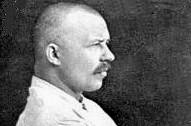
Billy Gohl
Serial killer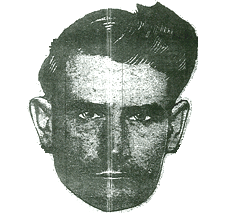 Henry Lee Moore
Serial killer · USA · 1911
Henry Lee Moore was sentenced to life in prison in Missouri in 1913. He was rel…
26 victims
Henry Lee Moore
Serial killer · USA · 1911
Henry Lee Moore was sentenced to life in prison in Missouri in 1913. He was rel…
26 victims
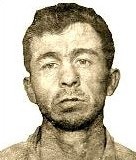 Donald Henry Gaskins
Serial killer · USA · 1969
Donald Henry Gaskins, also known as Donald “Pee Wee” Gaskins, was a serial kill…
200 victims
Donald Henry Gaskins
Serial killer · USA · 1969
Donald Henry Gaskins, also known as Donald “Pee Wee” Gaskins, was a serial kill…
200 victims
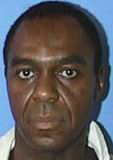 Carl Eugene Watts
Serial killer · USA · 1974
Carl Eugene Watts (born November 7, 1953; died September 21, 2007), also known…
100 victims
Carl Eugene Watts
Serial killer · USA · 1974
Carl Eugene Watts (born November 7, 1953; died September 21, 2007), also known…
100 victims
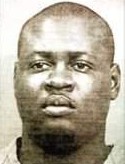 Shon Miller
Spree killer · USA · 1999
Shon Miller Sr. was a 22-year-old homeless man who was described as having a st…
4 victims
Shon Miller
Spree killer · USA · 1999
Shon Miller Sr. was a 22-year-old homeless man who was described as having a st…
4 victims
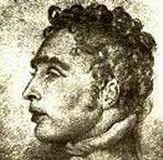 John Williams
Mass murderer · United Kingdom · 1811
John Williams (also known as Murphy) was a 27-year-old Scottish or Irish seaman…
7 victims
John Williams
Mass murderer · United Kingdom · 1811
John Williams (also known as Murphy) was a 27-year-old Scottish or Irish seaman…
7 victims
 Justin Robinson
Homicide · USA · 2012
Justin Robinson was a 15-year-old from Clayton when he killed 12-year-old Autum…
1 victim
Justin Robinson
Homicide · USA · 2012
Justin Robinson was a 15-year-old from Clayton when he killed 12-year-old Autum…
1 victim
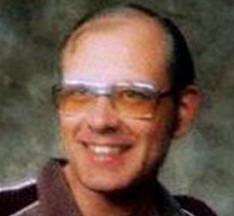 James Huberty
Mass murderer · USA · 1984
James Oliver Huberty was a 41-year-old unemployed security guard. He was born i…
21 victims
James Huberty
Mass murderer · USA · 1984
James Oliver Huberty was a 41-year-old unemployed security guard. He was born i…
21 victims
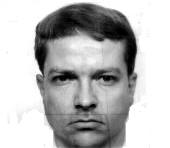 Daniel Lee Corwin
Serial killer · USA · 1987
Daniel Lee Corwin was a Texas death row inmate. Corwin was executed at lethal i…
3 victims
Daniel Lee Corwin
Serial killer · USA · 1987
Daniel Lee Corwin was a Texas death row inmate. Corwin was executed at lethal i…
3 victims
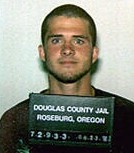 Jesse Fanus
Murderer · USA · 1998
The Supreme Court of the State of Oregon conducted automatic and direct review…
1 victim
Jesse Fanus
Murderer · USA · 1998
The Supreme Court of the State of Oregon conducted automatic and direct review…
1 victim
- Gender
- male
- Country
- USA
- Location
- Aberdeen, Washington, USA
- Date of birth
- 1860
- Age at first offence
- 43
- Characteristics
- robbery
- Victim profile
- Men (sailors)
- Method of murder
- Shooting
- Date(s) of murder
- 1903 - 1913
- Years active
- 1903–1913
- Date of arrest
- —
- Status
-
Died in custody
Sentenced to life imprisonment; later transferred to an asylum for the criminally insane, where he died in 1928
Case record: Billy Gohl
Background
Billy Gohl (? - 1928) was an American serial killer who, while working as a union official, murdered sailors passing through Aberdeen, Washington. He murdered for an unknown period of time and was a suspect in 41 murders until his capture in 1913.
Billy Gohl worked as a union official for the Sailors' Union of the Pacific in Aberdeen. Before this, he had been employed as a bartender after returning broke from the Yukon. Already an accomplished criminal, he was suspected of being responsible for many of the large numbers of deceased migrant workers that would be found washed up on shore during his tenure as a bartender, as well as a number of other crimes.
The union office functioned as a combination mail drop, bank, and general employment office for its members. Sailors arriving in port might check for letters, scan the list of vessels needing crewmen, or deposit valuables before wandering around town. Sailors back from months at sea had large amounts of cash on hand, and an honest union delegate would hold the money in a safe until it was reclaimed. In Aberdeen, the spoils belonged to Billy Gohl.
By his own reckoning, Gohl was born around 1860, spending most of the next four decades as a laborer, sailor, or both. In 1903, he surfaced in Aberdeen, Washington, as a delegate for the Sailors' Union of the Pacific. In 1903 he became a delegate for the Sailor's Union of the Pacific in Aberdeen.
Gohl was described as short, rounded, and heavy-shouldered in his forties, with brown hair parted in the middle, big blue eyes, and a clean-shaven scalp.
The offence
As a union official, Gohl used his reputation and intimidating size to discourage strikes and to “recruit” new union members. He would use the Union building as a location ideal for his crimes, providing victims and concealing evidence of murders.
Sailors arriving in the port of Aberdeen would usually visit the Sailor's Union building soon after disembarking. There they could collect their mail and, if they wished, set some money aside in savings. Gohl was usually on duty alone. He typically asked if sailors had any family or friends in the area, then turned the conversation to money and valuables. If a sailor was just passing through, would not be missed by anyone in the area, and had more than a trivial amount of cash or valuables on hand, Gohl chose him as his next victim.
Gohl killed most victims in the union building by shooting them. After relieving them of their money and valuables, he disposed of them in the Wishkah river, which ran behind the building and into the harbor. According to some reports, there was a chute descending from a trap door in the building directly into the river. Other reports stated that Gohl used a small launch to murder victims and dump bodies directly in the harbor.
Gohl’s method could be described as killing sailors who turned up individually when it was clear there were no witnesses. He drew a pistol from his drawer and shot his victim in the head. After the shooting he paused to clean the weapon, stripped his prey of extra cash and all identifying documents.
Within a few years after Gohl’s arrival, Aberdeen acquired a reputation as a “port of missing men.” Authorities pulled 41 “floaters” out of the water between 1909 and 1912, suggesting a prodigious body-count. Most nameless dead were presumed to be merchant seamen.
Some accounts described that when sailors came into the office to deposit their cash, Gohl locked the front door so they would not be disturbed, and then shot, stabbed, beat, or strangled the man, took valuables, and dropped the body into the ocean through a trap door installed in the floor. Another account described him shooting through the head after getting a lookout positioned and running a rifle from the building.
Gohl was credited with launching most of the “Floater Fleet.” Over an eight-month period while he was active, 43 bodies were found floating in Grays Harbor; these included bodies shot, slugged, and some showing evidence of poison, while the majority appeared to have drowned after falling or being pushed into the water while drunk. Over a ten year period the fleet numbered 124.
Investigation
Authorities did not stop him until an accomplice was brought back to Aberdeen after trying to jump ship in Mexico to escape prosecution, or possibly to escape Gohl.
A key turning point involved a timepiece and Gohl’s attempt at cleverness. While rifling the pockets of a victim, Gohl found a pocket watch bearing the engraved name of August Schleuter from Hamburg, Germany. He replaced the watch and dumped the corpse as always. When the “floater” came ashore, Gohl identified Schleuter. It was later determined that the victim was a Danish sailor named Fred Nielssen, who had bought the watch in Hamburg from a craftsman who identified each piece with an engraving of the maker’s name. Gohl’s effort to identify the corpse as August Schleuter suggested guilty knowledge, and detectives built a case that brought him into court in 1913 on a double charge of murder.
Prior to this, a report described how Gohl had been a vocal critic of Aberdeen law enforcement, demanding apprehension of killers and more protection for sailors.
Arrest and capture
Gohl’s capture occurred in 1913. Charles Hatberg’s body was found weighed down by a twenty-five pound anchor near Indian Creek. Gohl was arrested after the discovery of Hatberg’s body.
Gohl had already been arrested for the Hatberg murder. The arrest followed prior statements and actions attributed to Gohl, including a promise to the barkeep and threats described as intended to address whether Charley would be seen again.
The arrest also relied on John Klingenberg. Klingenberg testified to seeing Gohl alone with a sailor, Charles Hatberg, soon before Hatberg’s body had recently been found in the harbor and soon before his disappearance. Klingenberg had been seen with Gohl the night Hatberg disappeared, and he had tried to jump ship in Mexico, but the captain kept him aboard after receiving a telegram from the sheriff. On the return run, the schooner was held up at the Grays Harbor bar by adverse winds, leaving Klingenberg “in a highly nervous state,” and he later spoke to the sheriff.
Trial
Gohl was convicted of two counts of murder in 1913 and was sentenced to life imprisonment. The second count was for the murder of John Hoffman, a witness to the Hatberg murder. Hoffman was shot and injured by Gohl on the night of the murder and was killed the next day by Klingenberg, for which Klingenberg was sentenced to 20 years.
During the Hatberg investigation, Gohl maintained that Hatberg and Hoffman were somewhere in Alaska, tending lighthouse, and he said he did not know exactly where. He also said he had no idea whose body the sheriff had found off Indian Creek.
In court, the state brought Hatberg’s arm, which had been pickled, into court so the jurors could examine identifying tattoo marks.
At sentencing, Gohl was sentenced to life.
Sentencing
Washington State had abolished the death penalty the year before his conviction. Gohl was rescued from the gallows by Washington’s repeal of the death penalty in 1912. After being convicted of two slayings, he was sentenced to life imprisonment.
Even though there were efforts to compile a comprehensive list of victims, he rebuffed all efforts to compile a comprehensive list of victims. Publicity surrounding his case was adequate to win restoration of the death penalty in 1914. He counted years until his death of natural causes in 1928 while in prison.
Klingenberg was sentenced to 20 years in prison.
Appeals
No appeal information was included.
Outcome
Gohl was later transferred from the state penitentiary to a hospital for the criminally insane, where he died in 1928.
Aftermath
Supporters of reinstatement of capital punishment cited him as an example of a prisoner who deserved to die for his crimes.
Other details
Union activity, intimidation, and recruitment
Gohl used his position and intimidating size to discourage strikes and “recruit” new union members. His headquarters were in the union hall, described as a gaunt, narrow room with flaking yellow wallpaper, bare light bulbs, rung-sprung chairs, and sturdy splintered benches.
During a strike, when rumors arose of a citizens' committee in neighboring Hoquiam planning to intervene, he strapped on a pair of forty-fives and cradled a shotgun in his elbow, boarded streetcars coming from Hoquiam, and searched passengers. He explained that he was “to make sure there ain't nobody going around town illegally armed.”
In 1905, the lumber schooner Fearless, tied up in port by a strike, left without union crew. A runner reported the escape. Gohl recruited a boarding party, commandeered a launch, and chased the schooner after it escaped. A gun battle lasted half an hour before Fearless escaped over the bar. Gohl was later arrested. The papers said he was charged with piracy, but another account stated it was “aggravated assault.” He was fined twelve hundred dollars. After leaving court he was quoted saying, “It'll be worth every penny of it, for advertising.”
Alleged earlier crimes and statements
A bartender could be useful when shanghaiing was necessary to round out a crew, though the account stated that this story might be libel and Gohl may not have boasted of shanghaiing.
A friend told police that rumors claimed Gohl sometimes killed sailors who left money with him for safekeeping and then dropped bodies through a trap door into the Wishkah. Gohl denied there was a trap door and said that if there were it would open into the saloon. He then described shooting a Swede from there “right through the head,” after bringing him to put on a logger’s outfit and keep lookout.
Gohl was arrested in 1909 for stealing a car robe. He was acquitted after a friend who rustled cattle on the Chehalis River said he had bought the robe at a pawnshop and given it to Gohl. After this, Gohl brooded about his arrest and had a statement attributed to him about the possibility of killing the cattle rustler; he later was said to have told the barkeep, “You won't. He's sleeping off Indian Creek with an anchor for a pillow.”
A quote attributed to Gohl about missing Charley was: “I've got to kill Charley. As long as that scissor bill is walking around, I'm looking right into the penitentiary.” Charley was “never seen again.”
A jury witness described hearing Gohl’s instruction, with the quoted statement: “Billy looked at me and said, 'You take him,' and I knew I had to. There wasn't anything else to do. He had a great deal of animal magnetism.”
Cigar-store operator and hotel fire
A cigar-store operator, whose competition had driven Gohl into temporary bankruptcy, told police that Billy approached him and remarked: “You ain't going to be in business so long yourself.” The next night the hotel housing the cigar store burned to the wet ground, and two guests died, including an elderly Swede who had annoyed Gohl some years earlier. Gohl was in excellent spirits afterward and said: “Ain't it funny how things work out?” and “I never dreamed there'd be a bonus in it.”
Gohl was quoted explaining how he rigged a bomb: “I used electricity to set it off,” and “I had the damnedest time. I fastened the cord to his light circuit, but the son-of-a-bitch hadn't paid his light bill, and it was turned off. I had to run a wire in from clear across the street to make it go.”
Additional credited allegations (unadjudicated in the record)
Some tales attributed to him included bombing a cigar store, shooting up boats staffed with non-union sailors, and shanghaiing sailors into lumber boat crews. The record also included accounts that he shot, stabbed, beat, or strangled men and disposed bodies in the harbor or river.
People involved by name
- Charles Hatberg (victim; his body was found near Indian Creek)
- John Klingenberg (accomplice/witness; testified to seeing Gohl alone with Hatberg; killed John Hoffman next day and was sentenced to 20 years)
- John Hoffman (witness to the Hatberg murder; shot and injured by Gohl; killed next day by Klingenberg)
- Fred Nielssen (identified as Danish sailor; victim whose body was first attempted to be identified as August Schleuter)
- August Schleuter (engraved name on the watch; Gohl identified the body as Schleuter)
- August Schleuter’s watch maker/craftsman (identified each piece he made with an engraving of his name; mentioned as selling the watch)
- August Schleuter’s Hamburg, Germany (referenced in relation to the watch)
- Mack DeLane (proprietor of the Pioneer Liquor Store)
- Sig Jacobson (former associate who complained about Billy not paying him for an infernal machine used to start a fire)
- Sig Jacobson (name appears in the account)
- Michael Newton (author name attached to “An Encyclopedia of Modern Serial Killers - Hunting Humans”)
- Charles Hatberg’s arm (pickled and brought into court so jurors could examine identifying tattoo marks)
- The sheriff (identified as receiving a telegram and arresting Klingenberg at the dock)

Spotted an error, or have more information about this case?