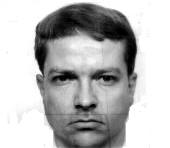
Daniel Lee Corwin
Serial killer Rodney Alcala
Serial killer · USA · 1977
Rodney James Alcala (born August 23, 1943) was also known as Rodrigo Jacques Al…
100 victims
Rodney Alcala
Serial killer · USA · 1977
Rodney James Alcala (born August 23, 1943) was also known as Rodrigo Jacques Al…
100 victims
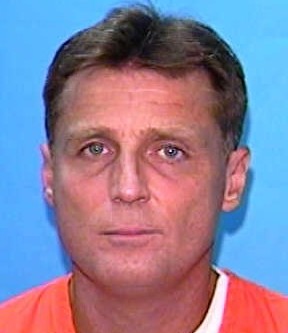 Glen Edward Rogers
Serial killer · USA · 1993
Glen Edward Rogers was a spree killer whose cross-country rampage in 1994-95 le…
70 victims
Glen Edward Rogers
Serial killer · USA · 1993
Glen Edward Rogers was a spree killer whose cross-country rampage in 1994-95 le…
70 victims
 Michael Swango
Serial killer · USA · 1981
Michael Swango (Joseph Michael Swango) was a physician and American serial kill…
60 victims
Michael Swango
Serial killer · USA · 1981
Michael Swango (Joseph Michael Swango) was a physician and American serial kill…
60 victims
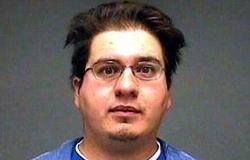 Efren Saldivar
Serial killer · USA · 1989
Efren Saldivar (born 30 September 1969) was an American serial killer who murde…
50 victims
Efren Saldivar
Serial killer · USA · 1989
Efren Saldivar (born 30 September 1969) was an American serial killer who murde…
50 victims
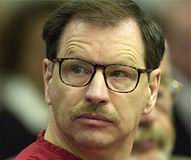 Gary Ridgway
Serial killer · USA · 1982
Gary Leon Ridgway Ridgway was born 18-February-1949 in Salt Lake City, UT. He w…
49 victims
Gary Ridgway
Serial killer · USA · 1982
Gary Leon Ridgway Ridgway was born 18-February-1949 in Salt Lake City, UT. He w…
49 victims
 Charles Cullen
Serial killer · USA · 1984
Charles Cullen (born February 22, 1960) was a former nurse and the most prolifi…
45 victims
Charles Cullen
Serial killer · USA · 1984
Charles Cullen (born February 22, 1960) was a former nurse and the most prolifi…
45 victims
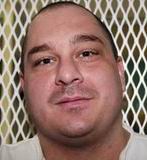 Lee Andrew Taylor
Murderer · USA · 1999
Name: Lee Andrew Taylor · Prison number: #765153 · Other identifiers mentioned:…
1 victim
Lee Andrew Taylor
Murderer · USA · 1999
Name: Lee Andrew Taylor · Prison number: #765153 · Other identifiers mentioned:…
1 victim
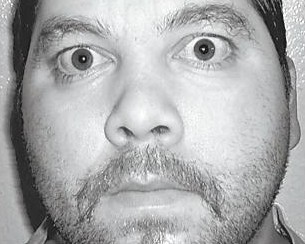 Daniel Lee Zirkle
Murderer · USA · 1999
Daniel Lee Zirkle had an ongoing relationship with Barbara Schifflett, who was…
2 victims
Daniel Lee Zirkle
Murderer · USA · 1999
Daniel Lee Zirkle had an ongoing relationship with Barbara Schifflett, who was…
2 victims
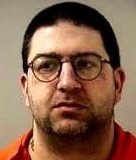 Adam Norcross
Murderer · USA · 1996
Adam W. Norcross (born 07/25/1970) was convicted of Murder 1st and was sentence…
1 victim
Adam Norcross
Murderer · USA · 1996
Adam W. Norcross (born 07/25/1970) was convicted of Murder 1st and was sentence…
1 victim
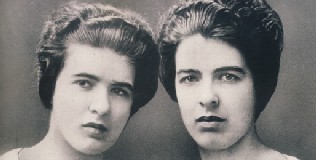 Christine & Léa Papin
Murderers · France · 1933
Christine Papin was born 8 March 1905 and died 18 May 1937. Léa Papin was born…
2 victims
Christine & Léa Papin
Murderers · France · 1933
Christine Papin was born 8 March 1905 and died 18 May 1937. Léa Papin was born…
2 victims
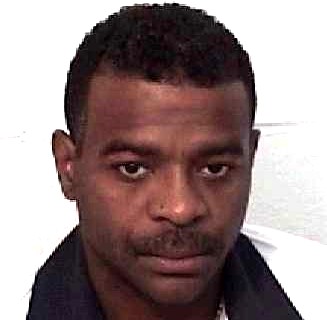 Frederick Whatley
Murderer · USA · 1995
Frederick Whatley (Frederick Ramone Whatley) was sentenced to death on January…
1 victim
Frederick Whatley
Murderer · USA · 1995
Frederick Whatley (Frederick Ramone Whatley) was sentenced to death on January…
1 victim
- Gender
- male
- Country
- USA
- Location
- Texas, USA
- Date of birth
- September 13, 1958
- Age at first offence
- 29
- Characteristics
- rape, serial rapist
- Victim profile
- Alice Martin, 72; Debra Lynn Ewing, 26; and Mary Carrell Risinger, 36
- Method of murder
- St abbing with knife
- Date(s) of murder
- February 13/July 10/October 31, 1987
- Years active
- 1987
- Date of arrest
- —
- Status
-
Executed
Executed by lethal injection in Texas on December 7, 1998
Case record: Daniel Lee Corwin
Background
Daniel Lee Corwin was a Texas death row inmate. Corwin was executed at lethal injection in Texas on December 7, 1998.
Corwin was born in Temple and was pronounced dead at 6:33 p.m., 7 minutes after a lethal flow of drugs was started into his arms. He was 40 years old.
Corwin worked as a cabinet maker and had 3 years of college.
Corwin had a history of sexual assaults beginning as a teen-ager. Psychologists who had interviewed him suggested he could have suffered brain damage that was not easily detectable. His parents testified at his murder trial that he suffered 2 accidental but severe cuts to his head when he was a child. Corwin told detectives that the pressure in his head led to what he called “tunnel vision” that after a few days led to his need to commit violence.
The offence
Corwin was sentenced to death following his state court conviction for murdering more than one person pursuant to the same scheme or course of conduct under TEX. PENAL CODE ANN. § 19.03(a)(7)(B) (West 1994) (noted as codified at § 19.03(a)(6)(B) when Corwin was convicted).
In 1987, over the course of nine months, Corwin abducted, sexually assaulted, and killed two women, and then attempted to abduct and, when he could not, killed a third.
The Texas Court of Criminal Appeals summarized the facts supporting Corwin’s conviction and sentence, and Corwin acknowledged that summary as accurate.
Alice Martin
Alice Martin was 72 years old and was from Normangee. She was taking her daily walk along a farm to market road in Madison County. She was abducted while walking near her home in February 1987. She was apparently driven to a more remote area in Robertson County, where she was raped in the front seat of Corwin’s truck. She was strangled with a ligature and stabbed four times in the back. She was found in a Robertson County field.
Debra Lynn Ewing
Debra Lynn Ewing was 26 years old and was from Conroe. She worked at the Huntsville Vision Center. Corwin abducted her in July 1987 from the Huntsville Vision Center. He apparently drove her to a remote area of Montgomery County, where she was raped in the front seat of his truck. She was strangled with a ligature of some sort and stabbed twice in the chest. She was found 2 days later in Montgomery County.
Mary Carrell Risinger
Mary Carrell Risinger was 36 years old and was from Huntsville. Corwin tried to force her into his truck at a car wash in Huntsville on Halloween evening of 1987. When she put up a struggle, he stabbed her in the throat, severing every major blood vessel in her neck. She was fatally stabbed during an attempted abduction while washing her car at a Huntsville car wash in October 1987. Her then 3-year-old daughter, who was inside the vehicle, watched the attack.
Investigation and prosecution background
Corwin was assessed a forty year prison sentence for a prior offense involving a high school classmate. In 1975, Corwin abducted a high school classmate and drove her in her own car to a gravel pit, where he raped her. He then forced her out of the car, slashed her throat, stabbed her in the heart, and left her for dead. The woman lived.
In October 1988, Corwin abducted a Texas A&M co-ed in her own vehicle and drove her to a park. There he sexually assaulted her, then tied her arms around a tree and slashed and stabbed her throat. She survived.
At the punishment phase it was shown that Corwin had committed similar offenses both before and after the three offenses in 1987.
Corwin was serving time for the October 1988 offense during the instant prosecution.
Trial
Corwin was condemned under the state’s serial killer statute for the murders of Alice Martin, Debra Lynn Ewing, and Mary Carrell Risinger.
A Montgomery County jury in 1990, after hearing testimony from 3 rape victims who survived his attacks, took only 25 minutes to decide he should be put to death.
The Texas Court of Criminal Appeals also addressed issues relating to jury selection, jury excusal, the constitutionality of the capital sentencing statute, the admission of a painting, and prosecutorial statements in the course of Corwin’s federal habeas appeal.
Witness statements during execution coverage
Wanda Simmons, 29, of Odessa, Debra Lynn Ewing’s sister, said after watching Corwin die: “I get satisfaction he's dead and not going to get out.” “I expected him to lay there and die. And he did.”
William Carrell, 44, of Alvin, Mary Carrell Risinger’s brother, said: “He was just an animal.” “I think it was too easy.”
Jury selection and juror excusal
Corwin argued that his Sixth Amendment right to the effective assistance of counsel and his Fourteenth Amendment right to a fair trial were violated because he was not physically present in the courtroom during the preliminary qualification of jurors. Corwin was absent from the initial day of jury selection, during which exemptions and excuses were considered and the venirepersons were asked to answer a questionnaire.
The state trial court concluded Corwin had waived any error regarding his absence because after he appeared for voir dire, he failed to object to the disqualification of any juror while he was absent from the courtroom. The state trial court alternately determined that Corwin’s absence from the preliminary jury qualification proceeding constituted harmless error and that Corwin had no right to be at the proceeding because his presence would not have contributed to the fundamental fairness of the proceeding. The Texas Court of Criminal Appeals summarily adopted these conclusions.
Corwin also challenged the excusal of a potential juror. The trial court excused Gloria Dawn Northam because she expressed a reluctance to impose the death penalty. In considering exclusion, the “decisive question” was stated as whether the juror’s views would prevent or substantially impair the performance of duties as a juror in accordance with instructions and oath.
The trial court found Northam would “require a higher burden of proof to answer the special issues than the law required, and would be unable to faithfully and impartially apply the law.” Ex parte Daniel Lee Corwin, No. 89-05-00404-CR-(1), at 6 (Tex. D. Ct. Montgomery Cty. Mar. 10, 1997).
The decision also included voir dire testimony from Northam, including the following exchange:
Q. And, then later, in response to Mr. Speers' questions about whether you personally could render a decision that might result in the death penalty, if I'm not mistaken, you began to say that that would be very difficult for you; is that true?
A. Yes.
Q. Then, I think I heard you say also, that in your own mind, you would probably change the burden of proof, in other words, rather than making Mr. Speers or the State prove its case beyond a reasonable doubt, that you, in your own mind, would require a heavier burden than that before you could answer yes to those questions?
A. Yes. More than reasonable.
Q. Okay. Now, what is your feeling about that? I'm just clarifying for you that that's the law as I anticipate it would be submitted to you. Do you still have those same feelings, that you are--notwithstanding those instructions and that law, that you would apply some other standard? Of course, I'm referring to what you said about having to be absolutely convinced, or words to that effect, and that you would not follow the reasonable doubt standard.
A. That's what gives me a problem. Well, I would really have to be very convinced.
Q. Does that mean you would be, would have to be convinced beyond all doubt, or what does it mean?
A. Beyond all doubt to myself, yes.
Q. Well, I just want to make sure I understand whether you're willing--now, bear in mind it's, I would not, and the law does not require persons who could not follow the law to be made part of the jury. So, that if you tell me now you couldn't follow the law, then I wouldn't put you in the position where you had to violate your conscience or to cause a terrible problem for the lawyers or the county.
A. The law as defined, I would have to follow my own conscience, which might be in contradiction to that.
Q. You say it might be in contradiction, but if I understand you correctly, your conscience would be in contradiction because you told us, I believe, that beyond a reasonable doubt is not enough. It would have to be stronger than that?
A. Right, yes.
Q. That's what you're telling me?
Q. Okay. Q. All right, and what this all stems from, this entire discussion, is the fact that when you were asked yesterday if you personally could participate in decisions that might cause the death penalty to be imposed, as I understand you, you told us that you felt that you could not at one point?
A. Right.
Q. You felt that, whereas you didn't have a huge objection against the Capital Murder law, when it came down to you personally--
Q. --as a matter of conscience, if I'm not mistaken--
A. Uh-huh.
Q. --that you did not think you personally could do it?
Q. Is that how you still feel today?
A. I still feel that that's a big question with me and I cannot answer it absolutely for you, that I could indeed do that.
Q. All right.
A. And that's after a lot of thought that I realized that I don't know that I could.
Sentencing
PENAL CODE ANN. § 19.03(a)(7)(B) (West 1994).
A Montgomery County jury in 1990 took only 25 minutes to decide he should be put to death.
Appeals
State appellate proceedings
Corwin’s conviction and sentence were affirmed by the Texas Court of Criminal Appeals in an en banc decision. Corwin v. State, 870 S.W.2d 23 (Tex.Crim.App.1993) (en banc).
State habeas proceedings
Corwin filed an application for writ of habeas corpus in the state trial court. The trial court addressed claims, made findings of fact and conclusions of law, and recommended that Corwin be denied habeas relief. Ex parte Daniel Lee Corwin, No. 89-05-00404-CR-(1) (Tex. D. Ct. Montgomery Cty. Mar. 10, 1997).
The Texas Court of Criminal Appeals issued an opinion in April 1997 and summarily adopted the trial court’s findings and conclusions. Ex parte Daniel L. Corwin, No. 33570-01 (Tex.Crim.App. Apr. 23, 1997) (en banc).
The Texas Court of Criminal Appeals stated: “[t]he trial court's findings of fact and conclusions of law are supported by the record and upon such basis the relief sought is denied.” Ex parte Daniel L. Corwin, No. 33570-01 (Tex.Crim.App. Apr. 23, 1997) (en banc).
Federal habeas and certificate of appealability
Corwin filed an application for federal habeas corpus relief pursuant to 28 U.S.C.A. § 2254 in August 1997. The respondent answered and moved for summary judgment. The district court issued a memorandum and order in September 1997, granting the respondent’s motion for summary judgment and denying both Corwin’s § 2254 application and his application for a COA. Corwin v. Johnson, No. H-97-2667 (S.D.Tex. Sept. 18, 1997).
Corwin appealed to the United States Court of Appeals for the Fifth Circuit. The Fifth Circuit included Daniel Lee Corwin, Petitioner-Appellant, v. Gary L. Johnson, Director, Texas Department of Criminal Justice, Institutional Division, Respondent-Appellee. No. 97-20890.
On August 7, 1998, the Fifth Circuit considered the effect of the Antiterrorism and Effective Death Penalty Act (“AEDPA”) of 1996 and concluded the AEDPA was applicable. It denied Corwin’s application for a certificate of appealability and denied federal habeas relief on the issues raised.
The Fifth Circuit’s analysis addressed:
- Corwin’s absence from the first day of jury selection and related procedural default issues.
- The excusal of Gloria Dawn Northam under Witherspoon v. Illinois.
- The constitutionality of TEX. PENAL CODE ANN. § 19.03(a)(7)(B) against a vagueness challenge.
- The admission of a painting and prosecutorial statements referring to it.
- The prosecutor’s statement about the potential of additional undiscovered victims.
- Whether the combined effect of alleged errors warranted relief.
Prosecutor’s statement during painting evidence
The prosecution introduced a painting as evidence of Corwin’s future dangerousness. The painting was described as: a “vivid tempera-on-butcher paper” painting, six feet tall, requested by a vocational instructor as a Halloween decoration, displayed on the instructor’s door. The painting depicted a serpentine body with a human torso, a grotesque face with fangs, and ears composed of snake-like fangs and fish fins. One hand held a bloody axe and the other held a detached scalp. Near the serpent figure was a severed bloody arm.
The prosecution argued:
... Presented the, what I call the self portrait. A real indication ... I submit to you this shows what [Corwin] comes up when he's asked to create something on his own devices. Not following or copying some model. He comes up with a monster. That creature lives within [Corwin]. We don't have any way available to us to exorcise [sic] that demon from within [Corwin]. But we certainly have a way, and you have a way, by answering yes and yes to those special issues of exorcising [sic] [Corwin] from our society. I submit that's what you should do.
The Fifth Circuit stated it did not decide whether admission of the painting was error and agreed any error would be harmless.
Prosecutor’s comment about additional victims
The prosecutor stated in closing argument: “I think you can reasonably assume from the evidence that there are more dead women out there that we just haven't found out about.”
At Corwin’s objection, the trial court ordered the jury to disregard the comment. The Fifth Circuit noted the presumption that jurors follow instructions and found federal habeas relief was not appropriate on this issue.
Outcome
The Fifth Circuit denied Corwin’s application for a COA and vacated the stay of execution granted by the court.
Corwin was executed by lethal injection in Texas on December 7, 1998.
Aftermath and execution statement
Corwin delivered a final statement during the execution. He addressed 6 family members of victims who watched from a few feet away.
Corwin said:
I guess the first thing I want to do is thank some very special people, Sara and Sabrina. And for affording me the opportunity that ya’ll did. It made a real big difference in my life. I thank you. Thank you again from the deepest part of my heart. I’m sorry. The biggest thing I wanted to say was to you and family and I know I haven’t had a chance to talk with ya’ll in any form or fashion or way or manner. And I regret what happened and I want you to know that I’m sorry. I just ask and hope that sometime down the line that you can forgive me. I think in a lot of ways that without that it becomes very empty and hollow and the only thing we have is hatred and anger. I guess the only thing I have to say about the Death Penalty is that a lot of times people think of it as one sided, but it’s not. It’s two sided. There pain on both sides and it’s not an issue that people just sit there and voice off and say, well, this is a good thing, or this is a bad thing. But it’s something that’s, you know, needs to be looked at and desired in each heart. I just hope that all of you can understand that and someday forgive me. I want to thank ya’ll for affording me the opportunity to talk and meet with ya’ll. It meant so much. Thank you so much for being with me and my family. Thank you. I love you.
The Fifth Circuit described Corwin’s statement as including the suggestion that the state reconsider the death penalty, which he called “2-sided,” and that “There pain on both sides.”
Other details
Peter Speers, the former Montgomery County district attorney who prosecuted Corwin, said: “I think they invented the death penalty for people like him,” “He's a bona fide serial killer. And I think the events surrounding him point out how lousy the parole system here was in the 1980s. He's just bad, bad, bad.”
Spotted an error, or have more information about this case?