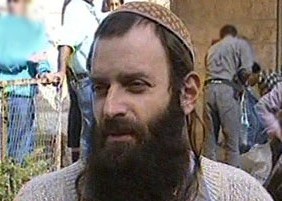
Baruch Goldstein
Mass murderer Joseph Kibweteere
Mass murderer · Uganda · 2000
Joseph Kibweteere led a breakaway sect known as the Movement for the Restoratio…
1000 victims
Joseph Kibweteere
Mass murderer · Uganda · 2000
Joseph Kibweteere led a breakaway sect known as the Movement for the Restoratio…
1000 victims
 Gameel Al-Batouti
Mass murderer · USA · 1999
Gameel Al-Batouti (also rendered “Gamil ElBatouty” or “El Batouty” in U.S. offi…
216 victims
Gameel Al-Batouti
Mass murderer · USA · 1999
Gameel Al-Batouti (also rendered “Gamil ElBatouty” or “El Batouty” in U.S. offi…
216 victims
 Kim Dae-Han
Mass murderer · South Korea · 2003
Name: Kim Dae-Han · Age: 56 · Occupation/background: He was an unemployed forme…
198 victims
Kim Dae-Han
Mass murderer · South Korea · 2003
Name: Kim Dae-Han · Age: 56 · Occupation/background: He was an unemployed forme…
198 victims
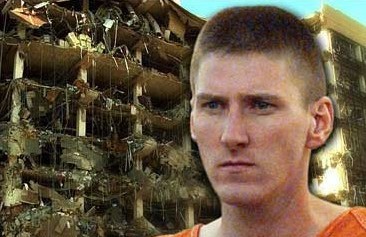 Timothy McVeigh
Mass murderer · USA · 1995
Timothy James McVeigh (April 23, 1968 – June 11, 2001) was a United States Army…
168 victims
Timothy McVeigh
Mass murderer · USA · 1995
Timothy James McVeigh (April 23, 1968 – June 11, 2001) was a United States Army…
168 victims
 Zhang Pilin
Mass murderer · China · 2002
Zhang Pilin (张丕林) died in the plane crash of China Northern Airlines Flight 613…
111 victims
Zhang Pilin
Mass murderer · China · 2002
Zhang Pilin (张丕林) died in the plane crash of China Northern Airlines Flight 613…
111 victims
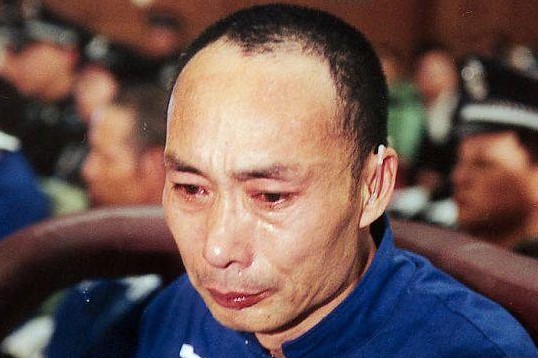 Jin Ruchao
Mass murderer · China · 2001
Jin Ruchao was blamed and arrested for planning and carrying out the Shijiazhua…
108 victims
Jin Ruchao
Mass murderer · China · 2001
Jin Ruchao was blamed and arrested for planning and carrying out the Shijiazhua…
108 victims
 Roger James Berget
Murderer · USA · 1985
Roger James Berget was executed by lethal injection in Oklahoma on June 8, 2000…
2 victims
Roger James Berget
Murderer · USA · 1985
Roger James Berget was executed by lethal injection in Oklahoma on June 8, 2000…
2 victims
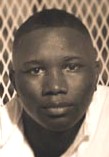 Dominique Green
Murderer · USA · 1992
Dominique Green was sentenced to death in Texas for the capital murder of Andre…
1 victim
Dominique Green
Murderer · USA · 1992
Dominique Green was sentenced to death in Texas for the capital murder of Andre…
1 victim
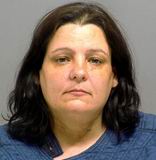 Christine Coffman
Murderer · USA · 2005
Christine Coffman was a 45-year-old woman from Milwaukie. She pleaded guilty to…
1 victim
Christine Coffman
Murderer · USA · 2005
Christine Coffman was a 45-year-old woman from Milwaukie. She pleaded guilty to…
1 victim
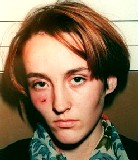 Florence Rey
Murderer · France · 1994
Florence Rey was born August 25, 1975. She was 19 years old at the time of the…
4 victims
Florence Rey
Murderer · France · 1994
Florence Rey was born August 25, 1975. She was 19 years old at the time of the…
4 victims
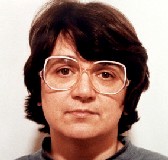 Rosemary West
Serial killer · United Kingdom · 1971
Rosemary Pauline “Rose” West (née Letts) Rosemary Letts was born in Barnstaple,…
10 victims
Rosemary West
Serial killer · United Kingdom · 1971
Rosemary Pauline “Rose” West (née Letts) Rosemary Letts was born in Barnstaple,…
10 victims
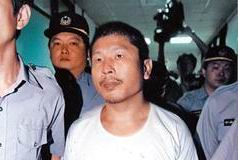 Chen Chin-hsing
Murderer · Taiwan · 1997
Chen Chin-hsing was executed by firing squad on October 6, 1999. Pai Hsiao-yen…
4 victims
Chen Chin-hsing
Murderer · Taiwan · 1997
Chen Chin-hsing was executed by firing squad on October 6, 1999. Pai Hsiao-yen…
4 victims
- Gender
- male
- Country
- Palestine
- Location
- Hebron, Palestine
- Date of birth
- December 9, 1956
- Age at first offence
- 38
- Characteristics
- white supremacist, hate crime
- Victim profile
- Muslims at prayer in the Ibrahimi Mosque
- Method of murder
- Shooting (IMI Galil assault rifle)
- Date(s) of murder
- February 25, 1994
- Years active
- 1994
- Date of arrest
- —
- Status
-
After being subdued with a fire extinguisher and disarmed, Goldstein was beaten to death
Baruch Goldstein
Overview
Baruch Kappel Goldstein (Hebrew: ברוך גולדשטיין ; December 9, 1956 – February 25, 1994) was an American-born Israeli physician who perpetrated the 1994 Cave of the Patriarchs massacre in the city of Hebron. The attack occurred in the Ibrahimi Mosque (within the Cave of the Patriarchs), where Goldstein killed 29 Muslims at prayer and wounded another 150. An additional account reported Israeli officials counted 39 killed and Palestinians reported 52 killed. The attack ended when Goldstein was subdued and beaten to death by the survivors after being disarmed.
Background
Goldstein was born in Brooklyn, New York to an Orthodox Jewish family. He attended the Yeshivah of Flatbush religious day school and Yeshiva University. He received his medical training at Albert Einstein College of Medicine.
Goldstein belonged to the Jewish Defense League (JDL), a militant Jewish organization founded by Rabbi Meir Kahane. After emigrating to Israel, he served as a physician in the Israeli Defense Force, first as a conscript and then in the reserve forces. After the end of his active duty, Goldstein worked as a physician and lived in the Kiryat Arba settlement near Hebron, where he served as an emergency doctor.
In the autumn of 1993, Goldstein received two citations from the Israeli Army in recognition of his medical work. In January 1994, Major Dr Yitzchak Ashkenazi, the local medical officer of the district of Judea and Samaria, recommended Goldstein for promotion to the rank of Major in the Israeli Army.
Goldstein had a strong personal relationship with Meir Kahane, a militant Jewish nationalist whose views were regarded by the Israeli government as racist. Kahane’s party had been banned from the Knesset in 1988. Kahane was assassinated in 1990 by Arab militant El Sayyid Nosair, and Goldstein reportedly swore to take revenge for the killing.
Israel feared that Shuhada Street—Martyrs’ Street—would be the scene of Palestinian retribution. Palestinian traffic was prohibited from the part of Shuhada Street directly in front of the settler enclaves.
In 1981, Goldstein wrote in a letter to the editor published in the New York Times. The letter stated that the disparity of birth rates, associated with a declining Aliyah, would assure Israel of an Arab majority in Israel “(70 years?) unless steps are taken to prevent this from occurring.” The letter further stated: “Ceding the ‘West Bank’ to the ‘Palestinians’ would, therefore, not solve the problem... it would serve only to further jeopardize Israel's security and betray a Biblical trust. The harsh reality is: if Israel is to avert facing the kinds of problems found in Northern Ireland today, it must act decisively to remove the Arab minority from within its borders.”
The offence
On February 25, 1994, Purim day, Goldstein entered a room in the Cave of the Patriarchs serving as a mosque. He was wearing “his army uniform with the insignia of rank, creating the image of a reserve officer on active duty” (Shamgar report). He then opened fire, killing 29 people and wounding 150.
A TIME magazine account reported that Israeli officials counted 39 killed and Palestinians reported 52 killed.
The Israeli government divided the Cave of the Patriarchs into two sections, one for Jewish worshippers and the other for Muslim worshippers. At 05:00 a.m. on 25 February, 800 Palestinian Muslims passed through the east gate of the cave to participate in Fajr, the first of the five daily Islamic prayers. The cave was under Israeli Army guard, but of the nine soldiers supposed to have been on duty, four were late turning up, and only one officer was there.
Goldstein, a Jewish resident of the Kiryat Arba settlement and member of the Kahanist movement, entered the Isaac Hall of the cave. He was dressed in his army uniform and carried an IMI Galil assault rifle and four magazines of ammunition, holding 35 rounds each. He was not stopped by the guards, who assumed he was an officer entering the tomb to pray in an adjacent chamber reserved for Jews.
Goldstein positioned himself to the rear of the Muslim worshippers, standing in front of the only exit from the cave. He opened fire with the weapon, killing 29 people and injuring another 125. Reports after the massacre were contradictory or ambiguous.
There was initial uncertainty about whether Goldstein had acted alone. It was reported that eyewitnesses had seen “another man, also dressed as a soldier, handing him ammunition.” There were also reports that Goldstein had thrown grenades into the worshippers. Yasser Arafat suggested that the attack was the work of up to 12 men, including Israeli troops.
There were questions about whether Israeli guards outside the cave had opened fire. Israeli military officials claimed no Israeli troops fired on the Palestinian worshippers. A New York Times account stated that over 40 different Palestinian eyewitnesses, many of them confined to hospital beds with gunshot wounds and thus “unable to compare notes”, corroborated that three Israeli guards opened fire in confusion as the Muslims fled the shrine, with one firing into the crowd. Testimony of Israeli military officials was often contradictory. A Major General asserted that the guards had fired only in the air, but the guards themselves later testified to firing some shots “chest high.” The guards’ testimony also conflicted with the testimony of their ranking officer, who claimed they had seen another Jewish settler enter the cave bearing arms.
Immediate aftermath
Palestinian protests immediately followed the shooting. In the following week, the deaths of 25 Palestinians and five Israelis were recorded.
Ariti Bhaduri, writing in The Hindu, stated that after the massacre Israel imposed a two-week curfew on the 120,000 Palestinian residents of the city, while the 400 Jewish settlers remained free to move around.
Israeli Prime Minister Yitzhak Rabin telephoned PLO leader Yasser Arafat and described the attack as a “loathsome, criminal act of murder.” The Israeli government condemned the massacre and responded by arresting followers of Meir Kahane, forbidding certain settlers from entering Arab towns, and demanding that those settlers turn in their army-issued rifles.
Israeli press reports stated that Goldstein refused to treat non-Jews, including those serving in the IDF, as reflected in comments by his acquaintances.
Investigation and inquiry
The Israeli government appointed a commission of inquiry headed by then president of the Supreme Court, Judge Meir Shamgar.
The commission’s epilogue to its report called the massacre “a base and murderous act, in which innocent people bending in prayer to their maker were killed”.
Among specific conclusions were that Goldstein acted alone in planning the massacre and that coordination between the IDF, the police, and the Civil Administration was problematic. The political leadership and security forces could not have been expected to predict the massacre.
The commission found that testimony from survivors referring to IDF assistance and grenade explosions in the massacre was contradictory and inconsistent; investigators did not find any grenade fragments.
The commission stated that there were “substantial warnings of a coming Hamas terror attack against Jews.” It included: 8.2a “… warnings were issued regarding an expected attack by Hamas following the distribution of its leaflets in Hebron.” 8.7a “Following an incident in Abu-Dis, which ended in the deaths of a number of members of Az-A-Din Al-Qassam [of Hamas], emotions ran high among the Moslem worshipers (about two hundred), who shouted hostile slogans (“Qassam”, “kill the Jews”), [at the Jewish worshipers], making it necessary to call in army and Border Police forces. According to one of the Moslem witnesses, the Jews also shouted hostile slogans.” (This referred to persons present on the previous evening.) 8.8a “Those in charge of security at the Tomb were given no intelligence reports that an attack by a Jew against Moslem worshipers could be expected, particularly since intelligence reports warned of the opposite: an attack by Hamas. Therefore, there was concern about an attack by Arabs against Jews.”
Critics of the commission suggested Shamgar’s judicial record “consistently displayed his leniency toward the settlers, including those convicted of crimes against the Palestinians, but especially toward the soldiers who had fired at the Palestinians.”
Political and public response
Goldstein’s actions were immediately condemned by the Israeli government, the mainstream Israeli parties, and the Israeli populace in general. The Kach movement, with which he was affiliated, was outlawed as a terrorist organization.
The cabinet agreed to take away the weapons of some right-wing extremists and put them in administrative detention.
In an address to the Knesset, Prime Minister Yitzhak Rabin denounced the US-born Goldstein. In words described as “stunningly harsh, almost Old Testament in their damnation,” Rabin said: “You are not part of the community of Israel... You are not part of the national democratic camp which we all belong to in this house, and many of the people despise you. You are not partners in the Zionist enterprise. You are a foreign implant. You are an errant weed. Sensible Judaism spits you out. You placed yourself outside the wall of Jewish law... We say to this horrible man and those like him: you are a shame on Zionism and an embarrassment to Judaism.”
Binyamin Netanyahu, head of the right of centre Likud party, declared: “This was a despicable crime. I express my unequivocal condemnation.”
A poll of 500 Israeli adults for the International Centre for Peace in the Middle East found that 78.8 percent condemned the Hebron massacre while 3.6 percent praised Goldstein.
Some of Goldstein’s friends claimed that Goldstein experienced an emotional crisis in the previous December when two of his friends were ambushed by Arab attackers near Kiryat Arba. Mordechai Lapid and his 19-year-old son died in his arms after Goldstein, as head of the local emergency medical team, was called.
At Goldstein’s eulogy, Rabbi Dov Lior of Kiryat Arba stated: “Goldstein could not continue to bear all the cases he was seeing as a doctor; he might have gone insane from all he went through.” Rabbi Lior added that “since Goldstein did what he did in God's name, he is to be regarded as a Righteous Man” and asserted that Goldstein was “a martyr of God”; “His hands are innocent, and his heart is pure.”
Immediately after the attack, Mike Guzofsky, spokesman for Kahane Chai in New York and described as a close friend of Goldstein, said: “He wanted to stop the peace process dead. He couldn't have picked a better day – Purim, when Jews fight back.”
Many Hebron Jews claimed that Goldstein, in his capacity as head medical officer in Kiryat Arba, was aware of inside information warning of an upcoming Arab pogrom and acted to prevent it. They also alleged the failure of the army to provide proper security under said threat of attack.
A pamphlet named Baruch Hagever was published in 1994, and a book called Baruch Hagever: Sefer Zikaron la-Kadosh Baruch Goldstein was published in 1995. The work reportedly praised Goldstein’s action as a pre-emptive strike in response to Hamas threats of a pogrom, and wrote that it was possible to view his act as following five Halachic principles.
Rabbi Yitzhak Ginzburgh was detained by Israeli authorities several times in conjunction with his praising the massacre. It was described that this was “supposedly” according to his interpretation of the writings of the Lubavitcher rebbe, Rabbi Menachem Mendel Schneerson. According to Ginzburgh, given the political status of the West Bank, the killing of Arab noncombatants was “fully legitimate”.
Veneration and memorials
In the weeks following the massacre, hundreds of Israelis traveled to Goldstein’s grave to celebrate his actions. Some Hasidim danced and sang around his grave. Although the government said those who celebrated represented only a tiny minority of Israelis, a New York Times report stated that Israeli government claims may understate the phenomenon.
A visitor to the gravesite said: “If [Goldstein] stopped these so-called peace talks, then he is truly holy because this is not real peace.”
Some visitors kissed and hugged the gravestone, or even kissed the earth under which Goldstein was buried, declaring him a “saint” and “hero of Israel.” The adoration persisted for years, despite Israeli government efforts to crack down on those making pilgrimage to Goldstein’s grave site. The grave’s epitaph said that Goldstein “gave his life for the people of Israel, its Torah and land”.
In 1999, after passage of Israeli legislation outlawing monuments to “terrorists,” the Israeli Army bulldozed the shrine and prayer area set up near Goldstein’s grave. In the years after the dismantling, radical Jewish settlers continued to celebrate the anniversary of the massacre in the West Bank, sometimes dressing up themselves or their children to look like Goldstein.
Goldstein was buried across from the Meir Kahane Memorial Park in Kiryat Arba. The park was named in memory of Rabbi Meir Kahane, founder of the far-right political party Kach, which was classified by the United States and Israeli governments as a terrorist organization. Goldstein was described as a long-time devotee of Kahane.
A plaque near the grave read: “To the holy Baruch Goldstein, who gave his life for the Jewish people, the Torah and the nation of Israel.”
In 1996, members of the Labor Party called for the shrine-like landscaped prayer area near the grave to be removed, and Israeli security officials expressed concern that the grave would encourage extremists.
International reaction and other related events
In the United Kingdom, Chief Rabbi Dr. Jonathan Sacks stated: “Such an act is an obscenity and a travesty of Jewish values. That it should have been perpetrated against worshippers in a house of prayer at a holy time makes it a blasphemy as well... Violence is evil. Violence committed in the name of God is doubly evil. Violence against those engaged in worshipping God is unspeakably evil.”
An editorial in The Jewish Chronicle written by Chaim Bermant denounced the Kach organisation to which Goldstein belonged as “Neo-Nazis” and a U.S. creation, funded by American money and a product of American gun culture. The same edition reported that some liberal synagogues in the UK had begun fund-raising for Goldstein’s victims.
Angry mobs rioted in the aftermath of the massacre, leading to the deaths of 26 more Palestinians and 9 Israelis. The Palestinian Child Arts Center (PCAC), a non-governmental, non-profit organization, was founded as a reaction to trauma induced in children in Hebron. The first suicide bombing carried out by Palestinian militants was launched by Hamas’ Izzedine al-Qassam Brigades in 1994 in retaliation for the massacre. Eight people were killed and 34 wounded in the attack in Afula on April 6, 1994, at the end of the forty day mourning period for Goldstein’s victims.
In Amman, Jordan, 77-year-old British tourist Howard Long was stabbed by Arab protesters. The attacker, Khalid Husni Al-Korashi, was arrested, and the Jordanian Interior Ministry called for citizens to show calm and restraint.
In March 1994, a Jewish American was shot to death by a Lebanese immigrant in New York City, in what prosecutors attributed to retaliation for the massacre.
Reports of the killing and death
Multiple contemporaneous reports described the attack and Goldstein’s death.
A Phoenix Gazette report said: “An American immigrant armed with an automatic rifle mowed down dozens of Muslim worshipers as they knelt in prayer at a mosque today and then took his own life.”
A Boston Globe report said: “With Palestinian worshipers kneeled in early morning prayer, a Jewish settler yesterday entered a packed mosque and opened fire with a rapid-firing assault rifle, killing at least 40 and wounding scores in one of the worst massacres of the century-long Arab-Jewish conflict.”
An Arizona Republic report stated: “It was 5:45 a.m. in the Ibrahim Mosque and 800 Muslim worshipers, their heads bowed in silent dawn prayer, knelt in neat rows on red carpets. Then shots rang out. The gunman was Baruch Goldstein, 38, a Brooklyn, N.Y.-born physician from Kiryat Arba, a nearby settlement. Wearing the olive-green uniform of an Israeli army major, he burst into the Ibrahim Mosque in the Cave of the Patriarchs, a shrine holy to both Jews and Muslims.”
It stated that Goldstein was eventually cracked over the head by a fire extinguisher hurled by someone in the crowd and then beaten lifeless.
The Boston Globe report on March 5, 1994 described Miriam Goldstein, Goldstein’s mother, saying: “I always thought to myself, 'When would someone get up and do such a thing?' And in the end, my son did it,” Miriam Goldstein told the weekly Shishi newspaper.
The Boston Globe report on March 6, 1994 stated that an Associated Press check had revised the figure: “Thirty Palestinians were shot to death by Jewish settler Baruch Goldstein in the Hebron mosque massacre, rather than 39 as reported earlier.”
A Boston Globe report on March 18, 1994 stated that two Israeli army guards testified about the possibility of an accomplice, describing that a second settler entered on Feb. 25 shortly after Goldstein and that when Goldstein went in he was armed with a different gun from the Galil assault rifle found by his body.
A Boston Globe report on March 26, 1994 stated that a Palestinian inquiry commission chairman said the commission would conclude that Israeli soldiers joined a Jewish settler in firing at Arab worshipers. It also stated that Dr. Abdul Hafeez Ash-hab said the commission had no forensic or other physical evidence but that several eyewitnesses said they saw at least two soldiers in addition to Dr. Baruch Goldstein firing.
A Boston Globe report on March 27, 1994 stated that an Israeli commission of inquiry said Goldstein acted alone in killing 29 Palestinian worshipers. It also stated that the report did not call for criminal indictments or a reexamination of military procedures and standing orders.
Other details
Goldstein sent goodbye notes to the town council of Kiryat Arba and to a colleague who had worked with him at the clinic. The note to the colleague stated: “I enjoyed working as a doctor. Wishing for full redemption.”
Reports also included that Goldstein was described as a zealot who hated Arabs, and that a militant settler had spoken of slaying Palestinians.
One earlier quote attributed to Goldstein stated: “We are fed up, and with God's help we will establish the State of Judea,” he told a radio interviewer. “And then we will deal with the Palestinians ourselves.”
Another quoted prophecy attributed to Goldstein stated: “there will come a day when a Jew will get up and kill many Arabs for killing Meir Kahane”.
A report said Goldstein had been heard to prophesy in a synagogue about killing Arabs for killing Meir Kahane.
Some accounts described his conduct as involving firing and noted whether some worshippers were shot by Israeli soldiers amid chaos. It was described that Israeli officials counted 39 people killed at the mosque and Palestinians figured 52, plus 70 wounded, with the account noting the figures omitted one more death: Goldstein.
Spotted an error, or have more information about this case?