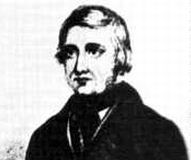
Frederick Manning
Murderer John Tawell
Murderer · United Kingdom · 1845
John Tawell was a British murderer. In 1845, he became the first person to be a…
1 victim
John Tawell
Murderer · United Kingdom · 1845
John Tawell was a British murderer. In 1845, he became the first person to be a…
1 victim
 Catherine Wilson
Murderer · United Kingdom · 1854
Catherine Wilson was a British nurse who poisoned victims after befriending the…
7 victims
Catherine Wilson
Murderer · United Kingdom · 1854
Catherine Wilson was a British nurse who poisoned victims after befriending the…
7 victims
 Albert Burrows
Murderer · United Kingdom · 1920
Albert Burrows (also named Albert Edward Burrows): married farm labourer who to…
4 victims
Albert Burrows
Murderer · United Kingdom · 1920
Albert Burrows (also named Albert Edward Burrows): married farm labourer who to…
4 victims
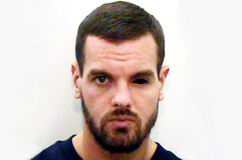 Dale Cregan
Murderer · United Kingdom · 2012
Dale Christopher Cregan (born 6 June 1983) was convicted in the United Kingdom…
4 victims
Dale Cregan
Murderer · United Kingdom · 2012
Dale Christopher Cregan (born 6 June 1983) was convicted in the United Kingdom…
4 victims
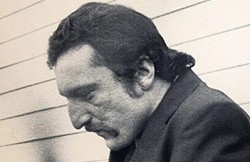 David Shearing
Mass murderer · Canada · 1982
David Shearing was arrested after police received a caller tip about him in a c…
6 victims
David Shearing
Mass murderer · Canada · 1982
David Shearing was arrested after police received a caller tip about him in a c…
6 victims
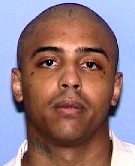 Nelson Gongora
Murderer · USA · 2001
Nelson Gongora Nelson Gongora was sentenced to death on June 4, 2003. · April 7…
1 victim
Nelson Gongora
Murderer · USA · 2001
Nelson Gongora Nelson Gongora was sentenced to death on June 4, 2003. · April 7…
1 victim
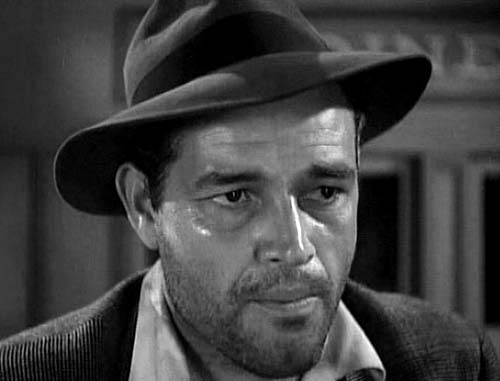 Thomas Neal
Murderer · USA · 1965
Thomas Neal (January 28, 1914 – August 7, 1972) was an American actor and convi…
1 victim
Thomas Neal
Murderer · USA · 1965
Thomas Neal (January 28, 1914 – August 7, 1972) was an American actor and convi…
1 victim
 Jason Getsy
Murderer · USA · 1995
Name: Jason Getsy · Gender: Male · Race: White · DOB: October 3, 1975 · Inmate…
1 victim
Jason Getsy
Murderer · USA · 1995
Name: Jason Getsy · Gender: Male · Race: White · DOB: October 3, 1975 · Inmate…
1 victim
 Amber Hill
Homicide · USA · 2007
Amber Hill was a 23-year-old Cleveland woman who drowned her two young daughter…
2 victims
Amber Hill
Homicide · USA · 2007
Amber Hill was a 23-year-old Cleveland woman who drowned her two young daughter…
2 victims
 John Wayne Conner
Homicide · USA · 1982
John Wayne Conner John Wayne Conner was sentenced to death in July 1982. · Janu…
1 victim
John Wayne Conner
Homicide · USA · 1982
John Wayne Conner John Wayne Conner was sentenced to death in July 1982. · Janu…
1 victim
- Gender
- male
- Country
- United Kingdom
- Location
- London, England, United Kingdom
- Date of birth
- 1820
- Age at first offence
- 29
- Characteristics
- robbery
- Victim profile
- Patrick O'Connor, 50
- Method of murder
- Shooting
- Date(s) of murder
- August 9, 1849
- Years active
- 1849
- Date of arrest
- August 21, 1849
- Status
-
Executed
Executed by hanging at Horsemonger Lane Gaol on November 13, 1849
Case details
Frederick Manning was executed by hanging at Horsemonger Lane Gaol on November 13, 1849, after he and Maria Manning were convicted of the murder of Patrick O'Connor.
Background
Maria Manning was born in Switzerland in 1821, her maiden name being de Roux. She emigrated to Britain and worked in London as a lady's maid to the wealthy Lady Blantyre, who was the daughter of the Duchess of Sutherland. Maria developed a taste for a luxurious life style amid the elegance of her employer's homes and general finery, and she feared poverty.
In 1846 Maria went across the Channel on the boat to Boulogne with her employer and met Patrick O'Connor, a 50-year-old Irishman, who worked as a customhouse (customs) officer in London's docks. Maria became attracted to him, and O'Connor’s wealth attracted her.
Maria was also involved with Frederick George Manning, who worked as a guard on the Great Western Railway. Both men proposed to Maria. Frederick and Maria were the same age. Maria faced a choice between the two men: which would make the better husband and which had more money. Frederick was described as the weaker character, while O'Connor was much older and a heavy drinker. Frederick promised Maria that he was soon to come into money via an inheritance, whereas O'Connor seemed already to be well off and had told Maria that he had a large amount of money invested in foreign railway stocks.
Frederick “won the day,” and Maria and Frederick married in St James' Church, Piccadilly, in May 1847. They were able to afford a fairly stylish home in Miniver Place, in the Bermondsey area.
Maria realized by then that Frederick was not going to get the promised inheritance. She kept in contact with O'Connor and was probably having an affair with him, with Frederick’s apparent acquiescence. O'Connor even joined them for dinner at Miniver House from time to time.
Frederick had a chequered background. He had worked on the railways but had been discharged on suspicion of being involved in several robberies. Maria had previously made the acquaintance of Patrick O'Connor, a gauger in the London Docks, and this friendship continued after her marriage. O'Connor was also described as a money lender who charged extraordinary interest, and he was extremely wealthy and invested his money wisely.
The offence
Maria felt she had married the wrong man but determined that she would have O'Connor's money if not his person and hatched a plan to kill him. She purchased some quicklime and a shovel.
On the 8th of August 1849 Maria invited O'Connor to dinner. He arrived but had brought a friend with him, which scuppered her plan. Maria invited him again for the following evening, telling him to come alone so that they could be more intimate.
When he arrived on the next evening, Maria suggested that he may wish to wash his hands before dinner. As he stood at the sink to do so, she shot him in the head with a pistol. The bullet wound did not kill him.
Frederick finished O'Connor off, battering his head with a ripping chisel (crow bar). The couple then buried O'Connor’s body in a pre-dug grave below the kitchen flagstones and covered it with plenty of quicklime, which was thought to speed decay.
On the following day Maria went to O'Connor's lodgings and entered his rooms. She systematically went through his belongings and took everything of value, including his share certificates. She paid a further visit the following day to see if there was anything she had missed.
Investigation
After O'Connor did not appear as expected, O'Connor’s colleagues came to the Mannings’ house seeking him. Maria admitted that he had eaten with them on the 8th but denied having seen him since.
The police later decided to visit Miniver Place and conducted a thorough search of the premises. They noticed that the mortar between two of the flagstones in the kitchen was still damp. The flagstones were lifted, revealing the battered and bloody body of O'Connor.
A man hunt began to find the Mannings.
Superintendent Haynes of Scotland Yard was in charge of the investigation. A cabman who had taken Maria to the station came forward and described how he had taken her to one station where she deposited two trunks before taking her on to King's Cross. Superintendent Haynes found out Maria had bought a ticket for Edinburgh and telegraphed the information to Scottish counterparts.
Maria had already been arrested in Edinburgh for trying to sell some of O'Connor's railway stock to a firm of Edinburgh stock brokers. The brokers knew that some railway stock had been stolen in London and were suspicious of Maria’s French accent and of a fraud attempt. Maria was duly brought back to London, charged with O'Connor's murder, and remanded in custody to Horsemonger Lane Gaol.
Frederick was arrested a week later in Jersey. He had been spotted by a man who had known him in London and had read about the murder in the papers. On his return to London, that man went to the police, and Scotland Yard detective Sergeant Langley was sent to make the arrest because he happened to know Manning.
Frederick was traced to a rented room in St Laurence and was found asleep in his bed on August 21. Once in custody, he told police that it was Maria who had shot O'Connor. He also told the police, “I never liked him (O'Connor) so I battered his head with a ripping chisel”.
Frederick was brought back to London, charged with the murder, and remanded to Horsemonger Lane Gaol.
Trial
Frederick and Maria were moved from Horsemonger Lane to Newgate prison for the trial. The trial opened at the Old Bailey on Thursday, the 25th of October, before Chief Justice Cresswell, and lasted two days. Both Frederick and Maria were represented by counsel.
During the trial, the lawyers tried to shift responsibility for the killing from their client to the other client. At the end of the trial, the jury took 45 minutes to find them both guilty.
Maria lost the composure she had shown during the trial and screamed at the jury, “You have treated me like a wild beast of the forest.” She continued to rave at the judge as he tried to pass sentence of death upon her.
After the trial, they were taken back to Newgate and then across London to Horsemonger Lane Gaol to await execution.
Sentencing
After the jury found them guilty, the judge tried to pass sentence of death upon Maria. Frederick and Maria remained awaiting execution at Horsemonger Lane Gaol.
Appeals
No appeals were described in the case record.
Outcome
Frederick Manning and Maria Manning were executed by hanging. Their execution was set for the morning of Tuesday, the 13th of November 1849.
Charles Dickens attended the execution and wrote a letter to The Times expressing revulsion at the proceedings. Dickens said:
“I was a witness of the execution at Horsemonger Lane this morning”
Dickens also said:
“I believe that the a sight so inconceivably awful as the wickedness and levity of the crowd collected at that execution this morning.”
Dickens further wrote:
“When the two miserable creatures who attracted all this ghastly sight about them were turned quivering into the air there was no more emotion, no more pity, no more thought that two immortal souls had gone to judgement, than if the name of Christ had never been heard in this world.”
Execution
The executions were to take place at “the prison where they were last confined,” namely Horsemonger Lane Gaol. They were to attract the largest crowd ever to attend a public hanging. Between 30 and 50,000 people were estimated to have come to see it, and between 500 and 1000 police were on hand to marshal the crowd.
The gallows was erected on the flat roof above the main gate. It was described as “a huge, gaunt and ominous looking structure.” The record included a reference to a broadside picture.
William Calcraft officiated. Maria became the twentieth woman that he would put to death.
The execution was reported in the Times newspaper:
“At a quarter past eight Manning and his wife entered the (prison) chapel. The Sacrament was administered to them when the governor appeared and said that time pressed. Calcraft also came forward and the wretched pair were conducted to different parts of the chapel to be pinioned. The operation was performed on the male prisoner first and he submitted to it with perfect resignation. In the pinioning of Mrs. Manning a longer time was occupied. When the cords were applied to bind her arms her great natural strength forsook her for a moment, and she was nearly fainting, but a little brandy brought her round again, and she was pinioned without any resistance. She drew from her pocket a black silk handkerchief and requested that she might be blindfolded with it, a request that was acceded to. Having had a black lace veil fastened over her head, so as to completely conceal her features from the public gaze, she was conducted to the extremity of the chapel, where the fatal procession was at once formed and in a slow and solemn manner moved forwards towards the drop, the prison bell tolling.”
“The procession passed along a succession of narrow passages, fenced in with ponderous gates, side rails and chevaux de frise of iron. In its course a singular coincidence happened. The Mannings walked over their own graves, as they had made their victim do over his. Mrs. Manning walked to her doom with a firm, unfaltering step. Being blindfolded she was led along by Mr. Harris, the surgeon. She wore a handsome black satin gown.”
“At last nine o'clock struck and shortly after the dreadful procession emerged from a small door in the inner side of a square piece of brickwork which rests on the east end of the prison roof. To reach this height a long and steep flight of stairs had to be climbed, and it only wonderful that Manning, in his weak and tottering state, was able to ascend so far. As he ascended to the steps leading to the drop his limbs tottered under him and he was scarcely able to move. When his wife approached the scaffold he turned round with his face towards the people, while Calcraft proceeded to draw over his head the white nightcap and adjust the fatal rope. The executioner then drew the nightcap over the female prisoner's head and all the necessary preparations now being completed the scaffold was cleared of all it occupants except the two wretched beings doomed to die. In an instant Calcraft withdrew the bolt, the drop fell, and the sentence of the law was fulfilled. Frederick died almost without a struggle while Maria writhed for some seconds. Their bodies were left to hang for the customary hour before they were taken down and in the evening buried in the precincts of gaol.”
“Scarcely a hat or cap was raised when the drop fell and the bodies of the murderers had hardly ceased to oscillate with the momentum of their fall before the spectators were hurrying from the spot.”
Their bodies were left to hang for the customary hour before they were taken down and, in the evening, buried in the precincts of gaol.
Horsemonger Lane Gaol and condemned cell
Horsemonger Lane Gaol was built between 1791 and 1799 in Southwark as the county prison for Surrey. It was renamed the Surrey County Gaol in 1859. It closed in 1878 and was demolished in 1880.
Between 1800 and 1877, 131 men and 4 women were executed there. Wandsworth prison took over its functions, with Kate Webster being the first and only woman to be hanged there in 1879.
By the time of the Mannings’ case, executions normally took place three clear Sundays after sentence had been passed. The Mannings spent just over two weeks in the condemned cells.
Maria was guarded round the clock after Mary Ann Milner had hanged herself at Lincoln Castle two years earlier. The record said Maria attempted suicide. She was considered a suicide risk by authorities and was guarded by three warderesses who slept in the cell with her, much to her disgust. She lulled them into a false sense of security and grew her fingernails long. While they were asleep, she tried to strangle herself and puncture her windpipe with her own hands, and it took the combined efforts of all three of the women to stop her.
Maria wrote a letter from her cell to Queen Victoria asking for a reprieve. The reprieve was denied. It was said the Queen studied Maria’s letter, took an interest in the case, and concluded that her guilt was proven.
The record also said Maria wrote to Frederick while awaiting execution, exhorting him to take the sole blame for O'Connor’s death. Frederick refused to do so. He did make a confession that Maria had shot O'Connor and that he had finished him off with the ripping chisel.
Motive
The record stated that Maria’s motive appeared to be greed. It described Maria as willing to grant O'Connor sexual favours while being interested in his money and in making a “quick buck.”
The record stated it was unclear whether Frederick conspired with her to boost his financial situation. It also stated the case gave two possibilities: Frederick finished off O'Connor out of dislike for him as a rival for Maria’s attentions, or out of fear that if O'Connor survived he would betray them to the police.
The record stated that at that time attempted murder was still a capital crime, and it described that it was probable that Maria, at least, and possibly both of them would have been hanged for trying to kill O'Connor. It also stated that Frederick and Maria therefore considered it better to kill him and dispose of the body quickly to hope to escape detection.
Other details
The case was described as receiving enormous public interest, including due to “sexual intrigue and scandal element,” which was described as rarer at the time.
The record described Maria as perceived as the dominant partner in the marriage and as the prime mover in the murder. It also described attempts at escape and the brutal nature of the crime as adding to interest. The case was said to have made the headlines because newspapers existed by 1849.
The record stated that it was convenient to some that Maria was Swiss-born and therefore described her as a foreigner. A spectator’s letter to The Times was cited:
“Thank God she wasn't an English woman”
The record described the view that Dickens’s indignation was more due to the attitude of the crowd towards the hanging than any concern for the Mannings’ sufferings.
The record stated that public hangings were legal and described as a form of entertainment and that some spectators had paid money for vantage points and used opera glasses to get a better view. It also stated it was probable many in the crowd were disappointed that both died easily.
The record compared the case to the execution of Dr. William Palmer in 1856, describing Palmer’s death without a struggle.
The record described that Maria’s black satin dress on the scaffold led to black satin going out of fashion for nearly 30 years. It stated that Maria was included in Madame Tussaud’s Chamber of Horrors, and it suggested that Calcraft sold them the dress she had worn for her hanging.
The record included a note that Frederick’s clothing was not recorded but that it was likely his best suit. It also stated that Maria was allowed to wear the fashionable black satin dress and veil to present a good appearance at the end.
It stated that Dickens attended the execution and later based a character, Mademoiselle Hortense, Lady Dedlock’s maid in Bleak House, on Manning’s life.
The record mentioned “Bermondsey Horror” as the name of the case, and described it as the first time a husband and wife had been executed together in England since 1700. It also described that the novel The Woman In White (1860) included a comment by a heroine referring to “Mr. and Mrs. Murderess Manning” and described both as pretty fat too.
The record also stated Maria Manning (1821–1849) was a Swiss domestic servant hanged outside Horsemonger Lane Gaol, England, on 13 November 1849, after she and her husband were convicted of the murder of her lover Patrick O'Connor.
Spotted an error, or have more information about this case?