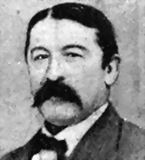
John Gordon
Murderer? Richard Allen Williams
Murderer? · USA · 1992
Boone County Prosecutor Kevin Crane dismissed the charges in August 2003 after…
10 victims
Richard Allen Williams
Murderer? · USA · 1992
Boone County Prosecutor Kevin Crane dismissed the charges in August 2003 after…
10 victims
 James DeBardeleben
Murderer? · USA · 1965
James DeBardeleben (James Mitchell “Mike” DeBardeleben), born March 20, 1940, w…
8 victims
James DeBardeleben
Murderer? · USA · 1965
James DeBardeleben (James Mitchell “Mike” DeBardeleben), born March 20, 1940, w…
8 victims
 Thomas McCormick
Murderer? · USA · 1975
Thomas McCormick recruited homeless men from a Denver church mission to work on…
8 victims
Thomas McCormick
Murderer? · USA · 1975
Thomas McCormick recruited homeless men from a Denver church mission to work on…
8 victims
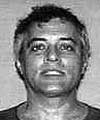 Todd Warzecha
Murderer? · USA · 1972
Todd Warzecha was a prime suspect in two unsolved Mid-Michigan murders. Michiga…
6 victims
Todd Warzecha
Murderer? · USA · 1972
Todd Warzecha was a prime suspect in two unsolved Mid-Michigan murders. Michiga…
6 victims
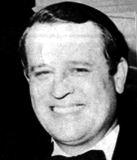 Dr. John Robert Hill
Murderer? · USA · 1950
Dr. John Robert Hill was a prominent Houston surgeon. His wife was Joan Robinso…
5 victims
Dr. John Robert Hill
Murderer? · USA · 1950
Dr. John Robert Hill was a prominent Houston surgeon. His wife was Joan Robinso…
5 victims
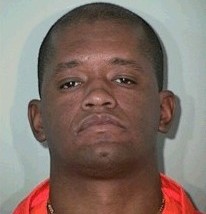 Andre Minnitt
Murderer? · USA · 1992
Andre Minnitt was convicted of crimes connected to the El Grande Market slaying…
3 victims
Andre Minnitt
Murderer? · USA · 1992
Andre Minnitt was convicted of crimes connected to the El Grande Market slaying…
3 victims
 Dominic Culpepper
Homicide · USA · 2001
Dominic Culpepper was 14 years old when he fatally beat 16-year-old Frank Wesle…
1 victim
Dominic Culpepper
Homicide · USA · 2001
Dominic Culpepper was 14 years old when he fatally beat 16-year-old Frank Wesle…
1 victim
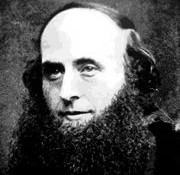 Edward Pritchard
Murderer · United Kingdom · 1865
Edward Pritchard was a Scottish doctor who was convicted of poisoning his wife…
2 victims
Edward Pritchard
Murderer · United Kingdom · 1865
Edward Pritchard was a Scottish doctor who was convicted of poisoning his wife…
2 victims
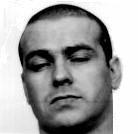 Richard Lee Beavers
Murderer · USA · 1986
Richard Lee Beavers (age 38 (31)) — defendant; executed by lethal injection in…
1 victim
Richard Lee Beavers
Murderer · USA · 1986
Richard Lee Beavers (age 38 (31)) — defendant; executed by lethal injection in…
1 victim
 Michael Pennington
Murderer · USA · 1991
Michael L. Pennington was an in-prison convert to Islam at the Oklahoma State P…
1 victim
Michael Pennington
Murderer · USA · 1991
Michael L. Pennington was an in-prison convert to Islam at the Oklahoma State P…
1 victim
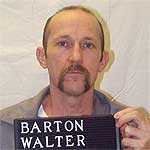 Walter Barton
Murderer · USA · 1991
State of Missouri, Respondent, v. Walter Barton, Appellant. The case was styled…
1 victim
Walter Barton
Murderer · USA · 1991
State of Missouri, Respondent, v. Walter Barton, Appellant. The case was styled…
1 victim
- Gender
- male
- Country
- USA
- Location
- Knightsville, Rhode Island , USA
- Date of birth
- 1816
- Age at first offence
- 27
- Characteristics
- —
- Victim profile
- Amasa Sprague (Yankee factory owner)
- Method of murder
- Beating
- Date(s) of murder
- December 31, 1843
- Years active
- 1843
- Date of arrest
- —
- Status
-
Executed
Executed by hanging on February 14, 1845; Rhode Island Governor Lincoln Chafee pardoned Gordon on June 29, 2011
Case record: John Gordon
John Gordon (died February 14, 1845) was executed by hanging on February 14, 1845. He was the last person executed by Rhode Island. Rhode Island Governor Lincoln Chafee pardoned Gordon on June 29, 2011.
Background
In 1844, Gordon was tried and convicted for the December 31, 1843 beating murder of Amasa Sprague, a Cranston textile factory owner. The murder occurred within the village of Knightsville, Rhode Island. Sprague was a member of a prominent Rhode Island family, and his brother William was a United States senator.
Six months before his murder, Amasa Sprague used his family's political influence to have Cranston resident Nicholas Gordon's liquor license removed by the city council. Sprague's employees were habitually getting drunk at Gordon's premises.
Nicholas Gordon and his brother John were Roman Catholic immigrants from Ireland. Nicholas, John, and William Gordon (another brother) were all tried for murder, but only John was convicted. William was found not guilty. In Nicholas's case, held after John's execution, the jury was hung.
The trial came at a time of anti-immigrant hysteria against Irish Roman Catholics.
The offence
Amasa Sprague was beaten to death on New Year’s Eve in 1843. His body was discovered in the snow, and he had been bludgeoned so brutally that his face was barely recognizable. Police and prosecutors later focused suspicion on Nicholas Gordon and his brothers.
Investigation
Police immediately arrested Gordon and anyone else in his family they could find, and they arrested his elderly mother and the family dog.
Trial
The trial lasted nine days and the jury took 75 minutes to come up with a verdict.
Because the crime was a capital crime, it was heard by the entire Supreme Court of Rhode Island at the time-statehouse on Benefit Street.
The justices involved in all three trials acted as both trial judges and the court of final appeal. Justice Job Durfee was included among the court justices involved across all three trials.
During jury instructions, Durfee told the jurors to give greater weight to Yankee witnesses than Irish witnesses.
The jury found William not guilty but pronounced John guilty after testimony based on contradictory circumstantial evidence. The conviction was based on contradictory circumstantial evidence.
One Gordon prosecutor raised the specter of Gaelic solidarity to explain the murder, saying: “the tie of kindred to an Irishman is an almost indissoluble bond.”
The Gordon trials were held in an atmosphere of bias against immigrants and Catholics. Durfee upheld almost all of the objections raised by the prosecution while overruling most defense challenges.
The proceedings included multiple pieces of alleged evidence and contested details. A coat was found at the scene of the crime, with some saying it was Gordon's and some saying it wasn't. A broken rifle was found near the body, and there were claims that a rifle was missing from the Gordon home. There was a footprint in the snow near the crime scene, with prosecuting lawyers claiming it was Gordon's boot print and size.
There were no eyewitnesses to the murder. The main witness against the Gordons was Susan Field, a prostitute living in a brothel at 20 Benefit Street. She made accusations without solid proof. When asked to point out the brothers, she pointed them out wrong saying John was William, and vice versa.
The owner of that brothel was a man named Samuel Staples, whose brother was an associate judge on the Supreme Court.
Gordon had no real alibi while William claimed he had been out with friends.
The prosecuting attorney told the jury that Irish men are known to stick by their family, especially brothers. The judge also told the jury that if they came across any contradiction in the stories, they should think of “the better half” of who testified.
Nicholas Gordon’s subsequent trial
Nicholas had his first trial in October 1844. In that trial there were about 100 witnesses to the same crime that earlier had had almost no witnesses. Gordon brought an attorney from Boston down to represent him.
In addition to murder, Gordon was held and tried on conspiracy charges. He had valid answers for all questions asked. When asked why his rifle was missing, he explained that it was hidden because in Ireland it is illegal to own a weapon.
The jury came back split, and a second trial was set for April. John Gordon’s hanging occurred in the meantime.
A proposal was sent to postpone the hanging until after Nicholas’s trial, but there was a 36/27 vote not to postpone.
Nicholas’s second trial was held that April, and the jury could not agree on a verdict. The vote was 9 for acquittal, and 3 for guilty. Nicholas was released on $10,000 bail. He was never convicted for conspiracy, yet his brother was executed for murder.
Sentencing
John Gordon was executed by hanging in the state jail in Providence. John Gordon walked to the gallows from his cell at the state prison, which in those days was located in Providence, where the Providence Place mall now stands.
Outcome
John Gordon was hanged on February 14, 1845. About 60 community notables attended the hanging, along with another 1,000 or so people who stood on the outskirts of the prison but were too far away to see the gallows, which were in the jail courtyard. The hanging was described as not public, with invited elites attending.
The Rev. John Brady, a Catholic priest, said to Gordon before the hanging: “Have courage, John. You are going to appear before a just and merciful judge. You are going to join myriads of your countrymen, who, like you, were sacrificed to the shrine of bigotry and prejudice.”
John Gordon died in 20 minutes.
Aftermath
Seven years after Gordon’s death, Rhode Island abolished the death penalty.
Although it was reintroduced in 1872, no executions took place before capital punishment was abolished again by the state in 1984. In the 1990s, when the Rhode Island General Assembly considered reinstating the death penalty, Gordon’s case was used by those against reinstatement to demonstrate the dangers of capital punishment.
Rhode Island Governor Lincoln Chafee pardoned Gordon on June 29, 2011, following passage of legislation by the state's General Assembly urging such action. Chafee signed the proclamation of pardon at the Old State House, where Gordon's trial took place more than 150 years prior.
The Durfee documents were to be given to the Rhode Island Historical Society.
Other details
Christine King, a University of Rhode Island employee, and Scott Molloy, a URI professor and student of Rhode Island history, identified original papers belonging to Job Durfee presiding over the Gordon case. King had moved the papers over her adult life and eventually consulted Molloy.
King’s grandfather, a dairy farmer named George Morgan, had been proud that he got the home of such a respected man, a judge, a rich man, and King took the Durfee papers in 1975 when her grandfather died.
Molloy said, “there ‘is no smoking gun there’ that would provide more clues about Gordon’s guilt or innocence.” Molloy also said: “But this is an unbelievable find,” and “To be able to see the handwriting of a judge who was involved in some of the most important cases of the 19th century is unusual. It is especially unbelievable to have this kind of original source material surface after so long.”
Molloy said Durfee told the jurors to give greater weight to Yankee witnesses than Irish witnesses.
Molloy also said: “The proceedings were riddled with prejudice against newly arrived Irish Catholics,” and “Durfee upheld almost all of the objections raised by the prosecution while overruling most defense challenges.”
After the conviction and execution, Gordon’s coffin was carried past the Sprague mansion and the state house on Benefit Street. He was allegedly buried at St. Mary's Cemetery in Pawtucket.
Years later, after the Sprague textile empire collapsed, the Sprague mansion was sold and used variously as a boarding house or foreman's residence. In 1967, a threat of demolition activated the Cranston Historical Society, which acquired the property; it was then open to the public and housed furniture from the Carrington Collection of the Rhode Island Historical Society.
By the 1850s, the Know-Nothing Party, an anti-Catholic and anti-immigrant political party, controlled state government.
Spotted an error, or have more information about this case?