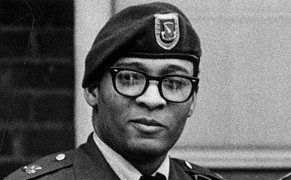
Ronald Adrin Gray
Serial killer Rodney Alcala
Serial killer · USA · 1977
Rodney James Alcala (born August 23, 1943) was also known as Rodrigo Jacques Al…
100 victims
Rodney Alcala
Serial killer · USA · 1977
Rodney James Alcala (born August 23, 1943) was also known as Rodrigo Jacques Al…
100 victims
 Glen Edward Rogers
Serial killer · USA · 1993
Glen Edward Rogers was a spree killer whose cross-country rampage in 1994-95 le…
70 victims
Glen Edward Rogers
Serial killer · USA · 1993
Glen Edward Rogers was a spree killer whose cross-country rampage in 1994-95 le…
70 victims
 Michael Swango
Serial killer · USA · 1981
Michael Swango (Joseph Michael Swango) was a physician and American serial kill…
60 victims
Michael Swango
Serial killer · USA · 1981
Michael Swango (Joseph Michael Swango) was a physician and American serial kill…
60 victims
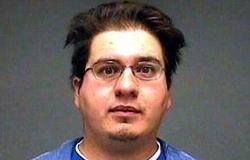 Efren Saldivar
Serial killer · USA · 1989
Efren Saldivar (born 30 September 1969) was an American serial killer who murde…
50 victims
Efren Saldivar
Serial killer · USA · 1989
Efren Saldivar (born 30 September 1969) was an American serial killer who murde…
50 victims
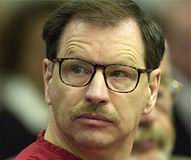 Gary Ridgway
Serial killer · USA · 1982
Gary Leon Ridgway Ridgway was born 18-February-1949 in Salt Lake City, UT. He w…
49 victims
Gary Ridgway
Serial killer · USA · 1982
Gary Leon Ridgway Ridgway was born 18-February-1949 in Salt Lake City, UT. He w…
49 victims
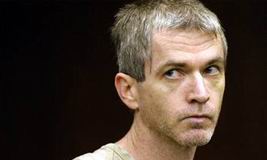 Charles Cullen
Serial killer · USA · 1984
Charles Cullen (born February 22, 1960) was a former nurse and the most prolifi…
45 victims
Charles Cullen
Serial killer · USA · 1984
Charles Cullen (born February 22, 1960) was a former nurse and the most prolifi…
45 victims
 Robert William Fisher
Murderer · USA · 2001
Robert William Fisher remained at large. Robert William Fisher was born April 1…
3 victims
Robert William Fisher
Murderer · USA · 2001
Robert William Fisher remained at large. Robert William Fisher was born April 1…
3 victims
 Adam Ezerski
Murderer · USA · 2001
August 11, 2001 — Kevin Begoon met Ezerski at a Polk Street cafe and let Ezersk…
1 victim
Adam Ezerski
Murderer · USA · 2001
August 11, 2001 — Kevin Begoon met Ezerski at a Polk Street cafe and let Ezersk…
1 victim
 Terance Valentine
Murderer · USA · 1988
Terance Valentine was prosecuted in the Thirteenth Judicial Circuit, Hillsborou…
1 victim
Terance Valentine
Murderer · USA · 1988
Terance Valentine was prosecuted in the Thirteenth Judicial Circuit, Hillsborou…
1 victim
 Emmett Nave
Murderer · USA · 1983
Emmett Clifton Nave was executed by lethal injection in Missouri on July 31, 19…
1 victim
Emmett Nave
Murderer · USA · 1983
Emmett Clifton Nave was executed by lethal injection in Missouri on July 31, 19…
1 victim
 David Herold
Assassin · USA · 1865
David Edgar Herold (16 June 1842 – 7 July 1865) conspired with John Wilkes Boot…
1 victim
David Herold
Assassin · USA · 1865
David Edgar Herold (16 June 1842 – 7 July 1865) conspired with John Wilkes Boot…
1 victim
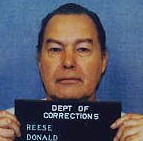 Donald Reese
Murderer · USA · 1986
Donald E. Reese was executed on August 13, 1997. · September 9, 1986 — Reese mu…
4 victims
Donald Reese
Murderer · USA · 1986
Donald E. Reese was executed on August 13, 1997. · September 9, 1986 — Reese mu…
4 victims
- Gender
- male
- Country
- USA
- Location
- Fayetteville, North Carolina, USA
- Date of birth
- 1966
- Age at first offence
- 20
- Characteristics
- serial rapist, rape, attempted rape, torture, abuse
- Victim profile
- Linda Coats, 24 / Tammy Wilson, 18 / Laura Lee Vickery-Clay, 18 / Kimberly Ann Ruggles, 23
- Method of murder
- Shooting / St abbing with knife
- Date(s) of murder
- 1986 - 1987
- Years active
- 1986–1987
- Date of arrest
- —
- Status
-
Sentenced to death
Sentenced to death on April 12, 1988
NAME
Ronald Adrin Gray
Background
Ronald Adrin Gray was born in 1966 and was a native of Miami. He joined the U.S. Army at age 18 and was trained as a cook. In 1986, he was posted to Fort Bragg, outside Fayetteville, North Carolina, and his arrival on the base unleashed a sudden reign of terror.
Gray grew up in Liberty City, a public housing project in Miami, Florida. He enlisted at age 18 in 1984 and was assigned to the Target Acquisition Battery, 1-39 Field Artillery Battalion. At the time of his arrest, he was stationed at Fort Bragg, near Fayetteville, North Carolina, where he was a cook assigned to 3rd Battalion, 504th Parachute Infantry Regiment, 82nd Airborne Division. He held the rank of specialist (E-4).
During his court-martial, his mother Lizzie Hurd and sister testified that he had been abused by his stepfather as a child. Colonel David Armitage, a military forensic psychiatrist, testified that in Gray's early life he had experienced fairly substantial socioeconomic deprivation, multiple male figures in the home, multiple physical moves, living in substandard poverty conditions, and circumstances where the electric lights were turned out by the electric company because bills were not paid. Armitage also testified that Gray had a step-parent [stepfather] at one time who was extremely abusive to his mother and abusive to himself [Gray], using belts on him to the point of inflicting injury and drawing blood.
The offence
In the period after Gray was posted to Fort Bragg, he was involved in multiple abductions, rapes, and murders.
On April 29, 1986, 24-year-old Linda Coats was found dead in her trailer at Fayetteville. She was killed by a shot to the head after suffering sexual abuse. A university student enrolled in the army's ROTC program, Coats was scheduled to receive her commission the week she was murdered.
A few days later, soldiers on the Ft. Bragg military reservation found the naked, battered corpse of Teresa Utley, a Fayetteville prostitute. Utley had been abducted from the streets where she plied her trade. She had been stripped and beaten, raped and knifed to death.
On November 16, 1986, two Fayetteville women were abducted at gunpoint by a black man who raped them both while threatening their lives. Neither victim reported the attack to police, but one staked out the neighborhood with her boyfriend and later identified Ronald Gray as her attacker on November 26. She remained terrified and kept the knowledge to herself.
Fayetteville's resident stalker struck again by abducting a young woman on November 22, raping her and slashing her about the face and body, leaving her for dead in suburban Bonnie Doone.
A female soldier was attacked the same night at Fort Bragg, but both victims survived and their assailant remained at large. He raped and stabbed another soldier on the base a few days later, but MPs had nothing that would bring them closer to a suspect.
On December 12, Tammy Wilson, 18 years old, was abducted from her home in Bonnie Doone. Her naked body was discovered hours later by her husband in nearby woods. She had been raped and shot at point-blank range.
Three days later, Sgt. Michael Clay was called home from maneuvers to inspect the smoking ruins of his mobile home in Fayetteville. His wife, Pvt. Laura Clay, was missing from the scene, and five more weeks would pass before her body was recovered from the nearby forest.
On January 3, a female soldier was attacked but survived.
Kimberly Ruggles, a 23-year-old Fayetteville cab driver, died on January 7. Officers were examining her taxi, found abandoned on a city street, when searchers on the Ft. Bragg reservation found her body. She had been raped and beaten and died when her assailant drew a knife across her throat.
After the latest slaying, two surviving victims reported their own attacks, and one identified a suspect for police on January 8.
During his court-martial proceedings, the record included specific incidents:
- On December 15, 1986, Gray abducted, raped, sodomized, and murdered Private Laura Lee Vickery-Clay, age 18.
- On January 3, 1987, Gray raped and attempted to murder Private Mary Ann Lang Nameth, age 20.
- On January 6, he raped, sodomized, robbed, and murdered Kimberly Ann Ruggles, age 23.
The first victim, Vickery-Clay, disappeared from Fort Bragg on December 15, 1986. Two witnesses saw her at a local K-Mart with a man later identified as Gray. Vickery-Clay's car, found the next morning a block from her home, appeared to have been driven through the woods, and the driver's seat was set back farther than necessary for Vickery-Clay to drive. Three of Gray's fingerprints were found on the hood of the car. On January 17, 1987, a soldier discovered Vickery-Clay's half-naked, decomposed body in the woods in Fort Bragg. She had been raped, sodomized, and shot in the neck, forehead, chest, and back of the head. She had also suffered blunt force trauma to various parts of her body. The murder weapon, a .22 caliber pistol that Gray had stolen in November 1986, was found 60 feet from the victim's body.
On January 3, 1987, Gray entered the barracks room of Private Mary Ann Lang Nameth under the pretense of needing to use the bathroom. Once inside, Gray grabbed Nameth, held a knife to her throat, and asked for her military field gear. Gray tied Nameth's hands behind her back, removed her underclothing, and raped her. Gray then stabbed her repeatedly in the neck and on the side of her body, and threatened to return and kill her if she screamed. Nameth suffered a lacerated trachea and a collapsed lung and survived. When Gray's photograph appeared in the news following his arrest for another crime, Nameth identified him as her assailant.
On the evening of January 6, 1987, Kimberly Ann Ruggles was dispatched to pick up a passenger named "Ron" at Gray's address. In the early morning hours of January 7, military police officers on routine patrol discovered Ruggles' empty cab parked at the edge of the woods. Her nude body was discovered a short distance away. She had been raped, sodomized, beaten, and stabbed seven times. Ruggles' mouth was gagged with a cloth belt that matched a pair of black karate pants other police officers had found in Gray's possession hours earlier. Gray's fingerprints were on the interior door handle of Ruggles' taxi, and Ruggles' fingerprints were found on money in Gray's possession. Gray's footprints were also found at the scene of the crime.
Investigation and arrest
Over six months of investigation, Ronald Gray was formally indicted by civilian authorities on 23 felony charges. The charges included two counts of first-degree murder (Coats and Wilson), five counts of first-degree rape and first-degree sex offense, four counts of first-degree kidnapping, two counts each of first-degree burglary and armed robbery, plus one count each of second-degree arson, attempted first-degree rape, and assault with a deadly weapon with intent to kill.
Held in lieu of $420,000 bond, Gray was subsequently charged, on August 7, with two counts of murder (Clay and Ruggles) and two counts of attempted murder on a military reservation.
Trial
On August 7, 1987, Gray was charged with two counts of murder (Ruggles and Vickery-Clay) and two counts of attempted murder on a military reservation.
On November 5, 1987, Gray pleaded guilty in Cumberland County Superior Court to 22 felonies: two counts of second degree murder, two counts of first degree burglary, five counts of first degree rape, five counts of first degree sexual offense, attempted first degree rape, three counts of second degree kidnapping, two counts of robbery with a dangerous weapon, assault with a deadly weapon with intent to kill, and inflicting serious injury. He was sentenced to three consecutive and five concurrent terms of life imprisonment for those crimes.
Gray was also tried by a military court. The general court-martial lasted from December 1987 until April 1988 and was composed of commissioned and enlisted soldiers at Fort Bragg. Gray was convicted of 14 charges, including the premeditated murders of Ruggles and Vickery-Clay, the attempted premeditated murder of Lang Nameth, three rapes, two robberies, and two counts of forcible sodomy.
The record also reflected that Gray pleaded guilty to all charges in Fayetteville on November 5, 1987.
Sentencing
On April 12, 1988, Gray was unanimously sentenced to death. He was additionally sentenced to a dishonorable discharge, total forfeiture of all pay and allowances, and reduction in rank to Private E-1. Gray was 22 at the time of his sentencing.
On July 29, 1988, the Commanding General of the 82nd Airborne Division approved the sentence.
Gray remained on death row at the U.S. Disciplinary Barracks at Fort Leavenworth, Kansas, while he was a member of the United States Armed Forces and could not be executed until the president approved the death sentence.
On July 28, 2008, President George W. Bush approved Gray's execution, making Gray the first service member sentenced to death since 1957.
One month later, Army Secretary Pete Geren set the execution date as December 10, 2008, and ordered that Gray be put to death by lethal injection at the Federal Correctional Complex in Terre Haute, Indiana. The military released the news of Gray's execution date on November 20, 2008.
Appeals
Immediately following Gray's court-martial, the records of the trial were forwarded to Defense Appellate Division and received by them on August 8, 1988. Counsel filed initial pleadings with the Court of Military Review on September 15, 1989.
On February 13, 1990, the court ordered a sanity board, which on June 30, 1990, found that Gray was responsible at the time of the offenses and that he was competent to understand his trial and the present appellate proceedings.
On July 20, 1990, the Government Appellate Division answered Gray’s assignment of errors.
On December 27, 1990, Gray filed a motion with the Court of Military Review requesting that court to order the Government to provide $15,000 for an expert psychiatrist, a death-penalty-qualified attorney, and an investigator. Oral arguments were heard on the motion in January 1991. On March 12, 1991, the Court of Military Review denied the motion.
Gray renewed his request for a psychiatrist and an investigator on August 7, 1991, but the Court of Military Review denied it on August 23, 1991.
On September 12, 1991, Gray filed a writ-appeal petition requesting that this Court order the Government to provide $10,000 and an emergency stay of the proceedings before the Court of Military Review. On October 18, 1991, this Court denied the writ-appeal petition and the stay application.
On December 16, 1991, Gray filed a motion with the Court of Military Review requesting that court to order additional medical and neuropsychological tests be performed by military authorities. On December 31, 1991, that court granted Gray’s request and ordered a Magnetic Resonance Imaging (MRI) scan of the brain; a 20-channel scalp electrode, sleep-deprived EEG; and a SPECT scan of his brain, as well as intellectual, neuropsychological, academic, psychological, and personality tests.
On February 18, 1992, a report based on these tests was completed by Captain Fred H. Brown, Jr., Ph.D., a clinical neuropsychologist from Womack Army Medical Center at Fort Bragg. Brown stated in an affidavit filed with the appellate court that Gray was sane at the time of the offenses and during the proceedings.
On March 9, 1992, counsel filed a petition for new trial based on newly-discovered evidence of lack of mental responsibility. On February 26, 1992, Gray filed a supplementary assignment of errors, to which the Government responded on March 27, 1992. On April 8, 1992, the Court of Military Review heard oral arguments, and on December 15, 1992, denied the petition for a new trial and affirmed the findings and sentence.
On December 30, 1992, Gray filed a motion renewing his request for funds for an expert investigator and a behavioral neurologist. Gray filed a petition for reconsideration of this decision on January 4, 1993. The Court of Military Review heard oral arguments on the motion for funding on January 21, 1993, and denied the motion for funding and the petition for reconsideration on January 22, 1993.
On February 11, 1993, Gray filed a motion and suggestion for reconsideration by the court sitting en banc of the denial of funding and a motion and suggestion for reconsideration by the court sitting en banc of the decision of December 15, 1992. On March 11, 1993, the court denied both motions and the suggestions for reconsideration en banc, but granted a motion allowing Gray to file a supplemental assignment of errors (XXVIII-LVI). The Government answered this assignment of errors on April 12, 1993.
On June 9, 1993, the Court of Military Review again affirmed the findings and sentence. Gray filed a motion for reconsideration on June 28, 1993, which the court denied on June 30, 1993.
With Gray's execution scheduled for December 10, 2008, Army spokesman Lt. Col. George Wright said on November 20 that Gray had two legal options remaining: filing a petition with a federal appellate court to stay the execution, or requesting that the president reconsider approval of the execution.
On November 26, 2008, a federal judge granted Gray a stay of execution to allow time for further appeals.
Outcome
Gray was sentenced to death on April 12, 1988.
Bush approved Gray's execution. Army Secretary Pete Geren set the execution date as December 10, 2008, and ordered that Gray be put to death by lethal injection at the Federal Correctional Complex in Terre Haute, Indiana. Army personnel would be responsible for conducting the execution based on an agreement with the Federal Bureau of Prisons.
On November 26, 2008, a federal judge granted Gray a stay of execution.
Aftermath
One month after President George W. Bush approved Gray's execution, the execution date was set as December 10, 2008. A stay of execution was granted on November 26, 2008, to allow time for further appeals.
Prior military execution: Dwight Eisenhower was the last American president before Bush to approve the death penalty for a member of the Armed Forces convicted in courts-martial. Eisenhower approved the execution of John A. Bennett in 1957, and Bennett was hanged in 1961 for the rape and attempted murder of an 11-year-old Austrian girl.
Other details
Gray was accused of crimes committed while he was in the United States Army, stationed at Fort Bragg, North Carolina.
The case record included a description of an April 1988 picture showing Ronald A. Gray in handcuffs and chains, escorted by military police leaving a Fort Bragg, N.C. courtroom.

Spotted an error, or have more information about this case?